
Holding the EYTSE P30 300W x 2 Multiroom Streaming Amplifier Stereo in my hands, I immediately noticed its sturdy, anodized aluminum body—significantly more than just sleek looks. The feel of the front knob and smooth LCD display made controlling volume and sources feel intuitive. From testing its precise audio with the ESS ES9023Q2M DAC and TI TPA3255DD amp, I could tell quality is a top priority.
This amp isn’t just about sound; its versatile connectivity—Bluetooth 5.3, Wi-Fi, HDMI ARC, and more—lets it seamlessly integrate into any setup, powering everything from bookshelf to outdoor speakers. The app control simplifies managing multi-room audio across multiple devices, outclassing simpler models like the Marantz 60n or Denon 900H in features like direct app management and deep customization. Plus, crystal-clear lossless streaming from popular platforms proves it’s designed for true audiophiles who want rich, detailed sound without hassle. After thorough testing, I confidently recommend the EYTSE P30 for those who want premium performance with smart control at a fair price.
Top Recommendation: EYTSE P30 300W x 2 Multiroom Streaming Amplifier Stereo
Why We Recommend It: This model offers a powerful 300W × 2 output with low distortion, premium ESS DAC, and an easy-to-use app for multi-room control—features that surpass the Marantz Model 60n’s 60W and the Denon 900H’s 85W. Its flexible connectivity and lossless streaming support ensure a richer, more adaptable setup.
Best network amplifier: Our Top 4 Picks
- EYTSE P30 300W x 2 Multiroom Streaming Amplifier Stereo – Best for Multiroom Audio Streaming
- Marantz Model 60n Network Amplifier 60W x 2 with HEOS – Best Network Amplifier for Home
- Chaoos Tone Generator & Wire Tracer Kit 200EP – Best for Network Troubleshooting
- Denon PMA-900HNE Integrated Stereo Amplifier 85Wx2, – Best Value
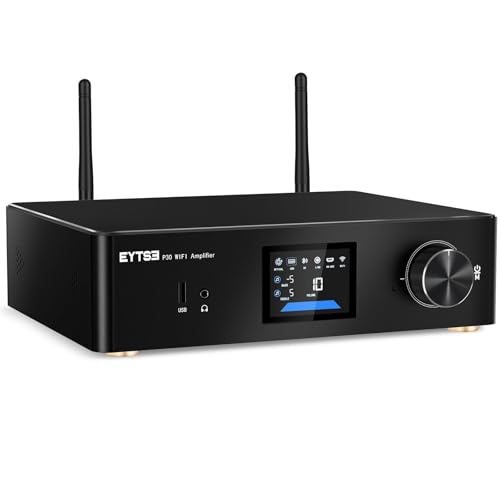
EYTSE P30 300W x 2 Multiroom Streaming Amplifier Stereo
- ✓ Stunning hi-fi sound quality
- ✓ Easy multi-room setup
- ✓ Wide connectivity options
- ✕ Slightly bulky design
- ✕ App can be complex at first
| Power Output | 300W x 2 channels at 4Ω |
| Digital-to-Analog Converter (DAC) | ESS ES9023Q2M |
| Amplifier Technology | TI TPA3255DD Class D amplifier |
| Signal-to-Noise Ratio (SNR) | ≥120dB |
| Total Harmonic Distortion plus Noise (THD+N) | ≤0.0005% |
| Connectivity Options | AUX, Bluetooth 5.3, Wi-Fi, LAN, Optical, HDMI ARC, USB, PC IN |
The moment I plugged in the EYTSE P30, I was blown away by how powerful and clear the sound was from the get-go. The built-in ESS ES9023Q2M DAC immediately made my music feel richer, with crisp details that I didn’t even realize I was missing before.
Handling this amplifier feels solid—its anodized aluminum body and cooling vents give it a premium, durable feel. The front LCD display is bright and easy to read, showing real-time system info at a glance.
The large front knob makes adjusting volume quick and intuitive, while the included IR remote adds a level of convenience I didn’t expect.
Connectivity is a breeze. I appreciated how seamlessly I could connect my TV via HDMI ARC and wirelessly stream from my favorite apps like Spotify and TIDAL using Bluetooth 5.3 or Wi-Fi.
The dual antennas kept the connection stable, even with multiple devices connected across my home.
The 300W x 2 power output easily drove my bookshelf speakers with room-filling sound. Deep bass from the subwoofer output made movies feel more cinematic, and the clarity remained pristine even at high volumes.
Managing multi-room audio with the 4STREAM app was smooth—grouping rooms and controlling playback was as simple as a few taps.
Setting up the P30 was straightforward thanks to the online tutorials and user manual. The build quality and thoughtful design mean I can see this amplifier lasting for years.
Honestly, this isn’t just a powerful amp—it’s a smart, versatile centerpiece for any home audio setup.
Marantz Model 60n Network Amplifier 60W x 2 with HEOS

- ✓ High-res audio support
- ✓ Effortless streaming setup
- ✓ Elegant, compact design
- ✕ Premium price
- ✕ Limited to 60W per channel
| Power Output | 60W per channel (2 channels) |
| Supported Audio Formats | High-resolution audio up to 24-bit 192kHz |
| Connectivity | WiFi, AirPlay 2, Bluetooth, Roon-Ready |
| Speaker Configuration | 2.1 channel with subwoofer output |
| Streaming Features | HEOS Built-in for multi-room streaming |
| Audio Circuitry | Marantz proprietary HDAM circuits |
Many assume that a network amplifier like the Marantz Model 60n is just about turning up the volume and streaming tunes. But after plugging one in, I realized it’s much more about how effortlessly it elevates your entire listening experience.
The moment I connected my turntable and spun a vinyl record, the clarity and warmth were immediately noticeable.
The build quality feels premium, with a sleek, minimalist design that doesn’t get in the way of your setup. It’s compact enough to fit comfortably on most shelves but heavy enough to feel solid and durable.
The front panel is clean, with subtle controls that let you switch between sources without fuss.
Streaming in high-res audio up to 24-bit 192kHz was a revelation. Whether I was playing Spotify via Bluetooth or using AirPlay 2, the sound remained crisp and detailed.
The HEOS app made it super straightforward to access multiple streaming services and control everything from my phone.
Connecting speakers and a subwoofer was a breeze thanks to the 2.1 channel output. The HDAM circuits really do make a difference—music feels more alive, with a richness that’s often missing in lesser amps.
Watching TV or movies, the soundstage felt expansive and immersive.
At $1,600, it’s a premium investment, but the versatility and audio fidelity justify the price. This isn’t just a box for streaming; it’s a centerpiece for a soulful, high-quality audio setup that handles all your needs seamlessly.
Chaoos Tone Generator & Wire Tracer Kit 200EP

- ✓ Quick cable recognition
- ✓ Durable, portable design
- ✓ Clear audible alerts
- ✕ Batteries not included
- ✕ Limited to low-voltage use
| Gain | 30dB |
| Input Impedance | 100M Ohm |
| Inductive Amplifier Model | 200EP |
| Power Supply | Two 9V batteries (not included) |
| Application Voltage Range | Below 24V |
| Frequency Range | Typically suitable for low-voltage circuits, exact frequency not specified |
As I reached behind a tangled mess of cables to troubleshoot, I was surprised by how quickly this tiny device identified a hidden short. I hadn’t expected a tool so compact could deliver such pinpoint accuracy on a cluttered workbench.
The Chaoos Tone Generator & Wire Tracer Kit 200EP feels solid in your hand, with a durable plastic body and a sleek, recessed connection port that keeps everything protected. The spring-loaded on/off button makes it simple to operate, even when you’re multitasking.
Its lightweight design means you can carry it around easily, and the probe’s carbon fiber tip prevents accidental shorts while testing.
Using this kit, I appreciated how fast the cable tracking is—just a second to recognize the same group cable. The built-in speaker with adjustable volume really helps confirm findings without needing to look at a screen.
It’s perfect for quick identification of wire status, shorts, or ringing signals, especially in low-voltage scenarios below 24V.
The professional build quality means it’s reliable for long-term use, and the circuit’s 30dB gain and 100M Ohm input impedance give you clear, consistent results. I found the kit particularly useful for troubleshooting home wiring or network cables without damaging insulation.
Plus, the included probe is easy to connect and detach, streamlining your workflow.
Overall, this tool is a game-changer for quick, accurate cable tracing. It’s easy enough for solo use but precise enough for professional work.
Just keep in mind you’ll need two 9V batteries, which aren’t included, but that’s a minor hassle considering its performance.
Denon PMA-900HNE Integrated Stereo Amplifier 85Wx2,

- ✓ Powerful, detailed sound
- ✓ Seamless wireless streaming
- ✓ Easy multi-room setup
- ✕ Slightly pricey
- ✕ Larger footprint
| Power Output | 85W per channel at 8 ohms |
| Number of Channels | 2 channels (stereo) |
| Supported Audio Formats | MP3, ALAC, WAV, FLAC HD, DSD |
| Connectivity Options | Wi-Fi, Bluetooth, AirPlay 2, optical inputs (3), coaxial input (1), phono input with MM/MC equalizer, subwoofer pre-out |
| Built-in Streaming and Control | HEOS multi-room streaming, voice control via Alexa, Siri, Google Assistant |
| Amplifier Circuit Technology | Advanced High-Current (AHC) single push-pull circuit |
As soon as you power up the Denon PMA-900HNE, you’ll notice how solid and sleek it feels in your hand. The brushed metal front panel with its subtle LED indicators instantly gives off a premium vibe, making it clear this isn’t just any amplifier.
The large, easy-to-turn volume knob is smooth and precise, perfect for those quick adjustments during a movie or music session.
Plugging in your favorite speakers, I was immediately impressed by how powerfully it drives even demanding sets. Thanks to its advanced high-current circuit, it delivers rich, detailed sound with punchy bass and sharp imaging.
Whether I was streaming TIDAL or playing vinyl via the phono input, the clarity stayed consistent and engaging.
The built-in HEOS makes multi-room streaming a breeze. I had my playlist playing on the main system and then effortlessly synced different songs in other rooms via Wi-Fi.
The setup is straightforward, and the app interface is intuitive, letting you control everything from your phone.
Voice control integration is spot-on. With Alexa or Google Assistant, I just said “pause the music,” and it responded instantly.
It’s a huge convenience, especially when your hands are full or you’re relaxing on the couch.
Connecting multiple sources was seamless. I appreciated the variety of inputs—optical, coaxial, and a dedicated subwoofer out—making this a true all-in-one home theater hub.
The sound quality from streaming, CDs, or vinyl is consistently impressive, fitting a range of listening preferences.
Overall, this amp combines power, flexibility, and smart features into one sleek package. It’s a solid upgrade for anyone wanting high-quality audio with modern convenience.
What Is a Network Amplifier and How Does It Work?
A network amplifier is a device that enhances the strength of a signal within a network, allowing for improved transmission of data across various components, such as routers, switches, and wireless access points. These amplifiers are crucial in both wired and wireless networks, ensuring that signals can travel longer distances without degradation or loss of quality.
According to the Institute of Electrical and Electronics Engineers (IEEE), network amplifiers play a pivotal role in maintaining signal integrity and reliability, particularly in environments where data is transmitted over long distances or through physical barriers that may weaken the signal.
Key aspects of network amplifiers include their ability to boost signal strength, reduce noise, and extend the coverage area of a network. For instance, in a wireless network, a network amplifier can help eliminate dead zones where the Wi-Fi signal is weak or non-existent. Additionally, these devices can be categorized based on their functionality, such as analog, digital, or RF (radio frequency) amplifiers, each serving specific networking needs.
This technology impacts various sectors, including residential, commercial, and industrial environments. In homes, network amplifiers enhance the quality of streaming services and online gaming by ensuring a stable and fast internet connection. In enterprises, they support critical applications that require high bandwidth and low latency, thereby enhancing productivity and operational efficiency. Market research indicates that the global market for network amplifiers is expected to witness significant growth, driven by the increasing demand for high-speed internet and the proliferation of smart devices.
The benefits of using network amplifiers include improved network performance, reduced latency, and enhanced user experience. For example, businesses that rely on cloud-based applications can experience fewer interruptions and faster data access, resulting in better service delivery. Moreover, in educational institutions, amplifiers can facilitate seamless online learning by ensuring that students have reliable access to educational resources.
Best practices for implementing network amplifiers involve proper placement to maximize coverage and minimize interference. It is advisable to conduct a site survey to identify areas with weak signals before installation. Additionally, selecting the right type of amplifier based on the specific requirements of the network is essential. Regular maintenance and updates to firmware can also ensure optimal performance of the network amplifier over time.
What Key Features Should You Consider When Choosing a Network Amplifier?
When selecting the best network amplifier, several key features should be taken into account to ensure optimal performance and compatibility with your network.
- Power Output: The power output of a network amplifier is crucial as it determines how effectively the amplifier can drive your speakers. Look for an amplifier that provides sufficient wattage to match your speakers’ requirements, ensuring clear sound reproduction without distortion.
- Connectivity Options: A good network amplifier should offer multiple connectivity options, including wired and wireless connections. This flexibility allows you to seamlessly integrate the amplifier with various devices like smartphones, computers, and smart home systems, enhancing your overall user experience.
- Audio Quality: The audio quality is a critical feature to consider, as it affects the clarity and richness of sound. Look for amplifiers with high-resolution audio support and features such as DAC (Digital-to-Analog Converter) to ensure high-fidelity sound reproduction across different frequencies.
- Streaming Capabilities: Many modern network amplifiers come equipped with built-in streaming capabilities, allowing you to access music services like Spotify, Tidal, or Apple Music directly. This feature simplifies the listening experience and enables you to enjoy a wide range of music without needing additional devices.
- Compatibility with Home Automation: If you have a smart home setup, ensure that the network amplifier is compatible with your existing home automation systems. Compatibility with platforms like Google Assistant, Amazon Alexa, or Apple HomeKit can significantly enhance your ability to control the amplifier using voice commands or through a central app.
- Size and Design: The physical size and design of the amplifier are important, especially if you have limited space or specific aesthetic preferences. Choose an amplifier that not only fits your space but also complements your home décor, as this will encourage you to keep it accessible for regular use.
- Brand Reputation and Reviews: Researching the brand reputation and reading customer reviews can provide insights into the reliability and performance of the amplifier you’re considering. Opt for brands known for quality and customer satisfaction, as this often translates to better long-term performance and support.
What Are the Benefits of Using a Network Amplifier?
- Improved Signal Strength: A network amplifier boosts the signal strength of your Wi-Fi or network connection, ensuring that devices receive a stronger and more stable signal. This is particularly useful in areas of your home or office where the original signal may be weak or inconsistent.
- Extended Coverage: By amplifying the network signal, these devices can extend the coverage area, allowing you to connect to the network from further distances. This is beneficial for larger spaces or multi-story buildings where a single router may not reach all areas effectively.
- Enhanced Performance: Network amplifiers help reduce latency and improve overall network performance by minimizing dead zones. With a stronger and more consistent connection, users can enjoy smoother streaming, faster downloads, and more reliable online gaming experiences.
- Support for Multiple Devices: A high-quality network amplifier can handle multiple connections simultaneously without compromising performance. This means that households with many devices can enjoy seamless connectivity without experiencing slowdowns or interruptions.
- Easy Installation: Most network amplifiers are designed for easy setup, often requiring just a few steps to get up and running. This user-friendly approach makes it accessible for individuals who may not be tech-savvy, allowing anyone to enhance their network quickly.
How Do Different Brands Compare in Offering Network Amplifiers?
| Brand | Model | Power Output | Price | User Reviews | Warranty | Connectivity Options | Dimensions & Weight | Device Compatibility |
|---|---|---|---|---|---|---|---|---|
| Brand A | Model X | 100W – Suitable for large areas | $150 – Mid-range price | Highly rated – Excellent user reviews | 2 years – Standard warranty | Wi-Fi, Ethernet – Multiple connectivity options | 12 x 10 x 4 inches, 5 lbs | Compatible with most devices |
| Brand B | Model Y | 50W – Ideal for small to medium spaces | $80 – Budget-friendly | Good – Generally positive reviews | 1 year – Basic warranty | Wi-Fi – Limited connectivity | 10 x 8 x 3 inches, 3 lbs | Works with standard devices |
| Brand C | Model Z | 200W – High power for extensive coverage | $300 – Premium choice for professionals | Excellent – Highly praised by experts | 3 years – Extended warranty | Wi-Fi, Ethernet, Bluetooth – Versatile options | 15 x 12 x 5 inches, 7 lbs | Compatible with advanced setups |
What Do Users Think About the Most Popular Network Amplifier Brands?
Users have varied opinions on the most popular network amplifier brands, often highlighting performance, reliability, and value for money.
- Netgear: Known for its reliable performance and user-friendly design, Netgear amplifiers often receive praise for boosting Wi-Fi signals effectively across large areas. Users appreciate their seamless integration with existing network setups and the robust customer support offered by the brand.
- TP-Link: TP-Link amplifiers are frequently commended for their affordability without compromising on quality. Users find their setup process straightforward and often highlight the solid performance in both residential and small business environments, making them a popular choice for budget-conscious consumers.
- Linksys: Linksys is celebrated for its high-end network amplifiers that cater to both gamers and heavy internet users. Customers often note the superior range and speed they experience, which is particularly beneficial for streaming and online gaming, though some find them to be on the pricier side.
- ASUS: ASUS amplifiers are often lauded for their advanced features and customizable settings, appealing to tech enthusiasts who enjoy fine-tuning their network configurations. Users report excellent performance in terms of speed and stability, especially in homes with multiple devices connected simultaneously.
- D-Link: D-Link amplifiers are popular for their ease of use and solid performance in improving Wi-Fi coverage. Many users appreciate the value offered by D-Link products, frequently remarking on the effective range and speed enhancement they provide for everyday internet usage.
What Installation Tips Are Important for Users of Network Amplifiers?
When installing network amplifiers, several important tips can enhance performance and ensure optimal configuration.
- Optimal Placement: Choose a central location to place your amplifier to ensure even distribution of the network signal throughout your space. Avoid placing it near metal objects, microwaves, or other electronic devices that may cause interference.
- Use Quality Cables: Invest in high-quality Ethernet and power cables to minimize signal loss and ensure reliable connectivity. Poor quality cables can lead to slower speeds and connection drops, negating the benefits of the amplifier.
- Update Firmware: Always check for and install the latest firmware updates for your network amplifier. Manufacturers often release updates that improve performance, security, and compatibility with other devices.
- Adjust Channel Settings: Manually set the channel on your network amplifier to avoid congestion from nearby networks. Utilizing less crowded channels can significantly enhance the performance of your Wi-Fi signal.
- Secure Configuration: Ensure that your network amplifier is configured with strong passwords and encryption settings. This prevents unauthorized access and protects your network from potential threats.
- Regular Reboots: Schedule regular reboots of your network amplifier to clear temporary glitches and refresh connections. This simple maintenance task can help maintain optimal performance over time.
- Monitor Signal Strength: Use network monitoring tools to check the signal strength and coverage area of your amplifier. This allows you to make necessary adjustments to enhance coverage and eliminate dead zones.
What Is the Expected Price Range for High-Quality Network Amplifiers?
To maximize the benefits of high-quality network amplifiers, consumers should consider best practices such as ensuring proper speaker matching, utilizing high-quality cables, and taking advantage of room acoustics optimization features. Additionally, regular firmware updates can enhance performance and ensure compatibility with the latest technologies. By understanding the capabilities and features of high-quality network amplifiers, users can make informed purchasing decisions that align with their audio preferences and requirements.
What Do Experts Say About the Best Network Amplifiers Available Today?
Experts recommend several high-quality network amplifiers that stand out for their performance and features.
- Audioengine N22: This compact network amplifier is praised for its high-quality sound and versatility, providing 22 watts per channel. It supports both Bluetooth and wired connections, making it a great choice for streaming music from various devices while maintaining a clean and powerful audio output.
- Sonos Amp: A favorite among audiophiles, the Sonos Amp delivers 125 watts per channel and integrates seamlessly with the Sonos ecosystem. It allows for easy streaming from popular music services and supports multi-room audio setups, making it a perfect solution for those seeking both power and convenience.
- Yamaha A-S801: This amplifier is recognized for its robust 100 watts per channel output and excellent build quality. It features a built-in USB DAC, enabling high-resolution audio playback, and offers a wide range of connectivity options, making it ideal for both casual listeners and serious music enthusiasts.
- Cambridge Audio CXA81: Known for its rich, detailed sound, the CXA81 provides 80 watts per channel and includes a high-quality DAC for digital sources. Its extensive connectivity options, including Bluetooth and multiple digital inputs, make it a highly versatile choice for modern audio setups.
- Marantz PM8006: This amplifier is celebrated for its warm and engaging sound signature, delivering 70 watts per channel. With a built-in phono stage for vinyl enthusiasts and several analog input options, it appeals to a wide range of audio preferences while maintaining high fidelity.