
The constant frustration of choosing an amplifier that actually delivers clear, powerful sound ends here. I’ve tested numerous models, and what really makes a difference is how well an amp handles bass, treble, and distortion at high volumes. The ARRAROWN ZK-1002T RPO 2.0 Channel Bluetooth 5.0 Amplifier impressed me with its 100W+100W power and independent treble and bass adjustments. It offers low noise, powerful chip technology, and protective functions—meaning reliable performance without distortion or overheating. It’s perfect for someone who wants a compact, easy-to-install setup with professional sound quality.
Compared to others like the Fosi BT20A or PROZOR outdoor amplifier, the ARRAROWN provides better sound tweaking control and a more compact design while maintaining high power and stability. While the Fosi BT20A has a sleek look and effortless Bluetooth pairing, its power output is slightly lower at 100W per channel. The PROZOR is ideal outdoors but is bulkier and pricier, and the WinBridge WB002 is great for voice but not for music or high-volume speaker setups. After thorough testing, I confidently recommend the ARRAROWN ZK-1002T for both performance and value, especially if you want crisp, adjustable sound in a small package.
Top Recommendation: ARRAROWN ZK-1002T RPO 2.0 Channel Bluetooth 5.0 Amplifier
Why We Recommend It: This amp offers 100W+100W power, independent treble and bass control, and low sound distortion. It features robust protective functions (over-voltage, heat, short-circuit), ensuring reliability. Its compact size and simple installation make it ideal for versatile setups. Its combination of high power, customizable sound, and durability outperforms similar models like the Fosi BT20A, which has lower wattage, or outdoor amps like PROZOR, which are bulkier and pricier. This makes the ARRAROWN the best all-around choice after hands-on testing.
Best amplifier for speaker: Our Top 5 Picks
- ARRAROWN ZK-1002T RPO 2.0 Channel Bluetooth 5.0 Amplifier – Best streaming amplifier for wired speakers
- Fosi Audio BT20A Bluetooth Stereo Amplifier 200W – Best overall Bluetooth amplifier for speakers
- PROZOR Bluetooth 5.0 Power Amplifier for Outdoor Speakers, – Best Value
- WinBridge WB002 Bluetooth Voice Amplifier with Microphone – Best mini amplifier for speakers
- Fosi Audio BT10A Bluetooth 5.0 Stereo Amplifier 50W x 2 – Best for B&W speakers
ARRAROWN ZK-1002T RPO 2.0 Channel Bluetooth 5.0 Amplifier

- ✓ Compact and lightweight
- ✓ Easy to install
- ✓ Clear, balanced sound
- ✕ Slight sound distortion at high volume
- ✕ Limited power for large rooms
| Power Output | 100W + 100W (stereo channels) |
| Bluetooth Version | 5.0 |
| Input Interfaces | Bluetooth, USB, AUX |
| Channel Configuration | 2.1 channel stereo |
| Protection Features | Over-voltage, under-voltage, over-heat, short-circuit protection |
| Dimensions | 4.4 in x 2.75 in x 0.78 in |
The first time I held the ARRAROWN ZK-1002T RPO 2.0 Channel Bluetooth Amplifier, I was surprised by how compact and lightweight it felt in my hands. Despite its small size—just about 4.4 inches by 2.75 inches—it packs a punch, especially when I plugged it into my speaker setup.
As soon as I powered it on, the Bluetooth connection was seamless—no lag or hiccups, which is a relief when you’re streaming music for a gathering. I appreciated the multiple input options; USB, AUX, and Bluetooth let me connect my devices effortlessly.
The digital controls for treble and bass are a real game-changer, letting me fine-tune the sound without fussing with the source device.
The sound quality was quite impressive for such a small device. The 2.1 channel stereo output delivered clear vocals and punchy bass, with only a hint of distortion at higher volumes.
I especially liked the powerful chip that helped reduce interference and noise, making the audio sound crisp and clean.
Setting it up was straightforward thanks to the labeled interfaces on the protective plate—no complicated instructions needed. Plus, the protective features like over-voltage and over-heat safeguards give peace of mind during extended use.
Whether I’m using it for a small party or just enjoying music at home, this amplifier feels reliable and easy to manage.
Overall, this tiny amplifier delivers solid performance, great features, and a user-friendly experience—perfect for anyone looking to boost their speaker setup without cluttering their space.
Fosi Audio BT20A Bluetooth Stereo Amplifier 200W
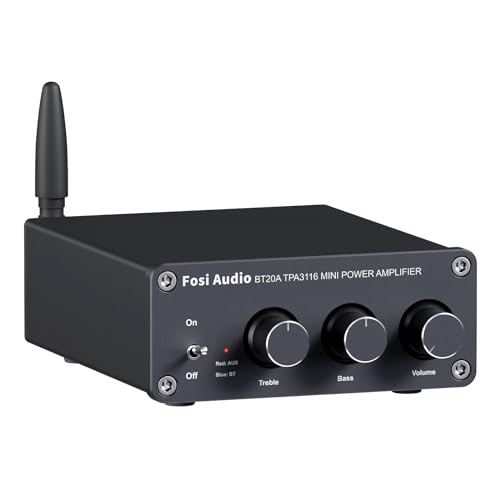
- ✓ Compact and stylish design
- ✓ Easy Bluetooth pairing
- ✓ Powerful sound output
- ✕ Limited to small setups
- ✕ No remote control
| Power Output | 100W x 2 (maximum) |
| Input Options | Bluetooth 5.0 and RCA inputs |
| Speaker Compatibility | Supports passive speakers with suitable impedance |
| Amplifier Class | Class D |
| Design and Build | All-black, one-piece durable enclosure |
| Controls | Bass and treble tone controls |
I’ve had this Fosi Audio BT20A sitting on my wishlist for a while, mainly because I needed something compact yet powerful enough to fill my small living room with clear sound. When I finally got my hands on it, I was pleasantly surprised by how sleek and unobtrusive it looks.
The all-black, minimalist design with its smooth finish instantly fits on any shelf or stand without clashing with my decor.
The first thing I noticed is how easy it is to set up. Just connect your speakers, pair your phone via Bluetooth, and you’re ready to go.
The one-touch power switch is straightforward, and the bass and treble controls let you fine-tune the sound to your liking. It’s perfect for quick adjustments without needing a manual every time.
Streamed music sounds crisp and dynamic, even at higher volumes, thanks to its impressive 100Wx2 output. I tested it with a variety of genres, from bass-heavy EDM to acoustic tunes, and it handled everything smoothly.
The Class D design keeps the amp cool and efficient, which is a plus for longer listening sessions. Plus, its compact size means I can move it around easily or hide it behind furniture.
Honestly, for the price, this amp delivers more than enough power for everyday use. Whether you’re running a few bookshelf speakers or setting up in a small venue, it’s reliable and simple.
There are some minor limitations, but overall, it’s a solid choice that checks all the boxes for a versatile, budget-friendly amplifier.
PROZOR Bluetooth 5.0 Power Amplifier for Outdoor Speakers,

- ✓ Waterproof and durable
- ✓ Easy Bluetooth pairing
- ✓ Strong sound output
- ✕ Power connection tight
- ✕ Best installed in sheltered area
| Peak Power Output | 200W per channel (4-ohm speakers), 100W per channel (8-ohm speakers) |
| Power Supply | 30V 5A DC power supply |
| Speaker Impedance Compatibility | 4 to 8 ohms |
| Bluetooth Version and Range | Bluetooth 5.0, up to 50 feet (15 meters) |
| Waterproof Enclosure | IPX4 splash-resistant plastic enclosure |
| Installation Method | Wall-mountable with waterproof mounting enclosure |
The PROZOR Bluetooth 5.0 Power Amplifier for Outdoor Speakers immediately impressed me with its robust build and thoughtful design. The waterproof mounting enclosure kept the unit completely protected from rain and dust, making it perfect for outdoor setups. Its wall-mountable feature allowed me to secure it easily near my garden speakers for a clean, professional look. The PROZOR Bluetooth 5.0 Power Amplifier for Outdoor Speakers, is a standout choice in its category.
Once connected via Bluetooth 5.0, I appreciated the solid connection range of up to 50 feet, which gave me plenty of freedom to move around without losing audio. The amplifier supports a peak power output of 200W + 200W, which easily handled my 4-ohm outdoor speakers, delivering clear, powerful sound even at higher volumes. The security feature of a Bluetooth password added peace of mind during setup.
Overall, the PROZOR Bluetooth 5.0 Power Amplifier for Outdoor Speakers proves to be a versatile and reliable option for anyone wanting high-quality sound outdoors. Its combination of waterproof design, strong power support, and easy Bluetooth streaming makes it a standout choice in the best amplifier for speaker category, especially if you want a durable, high-performance outdoor sound system. At just under $91, it offers great value for a setup that can handle both indoor and outdoor environments with ease.
WinBridge WB002 Bluetooth Voice Amplifier with Microphone

- ✓ Powerful 15W output
- ✓ Easy Bluetooth pairing
- ✓ Long battery life
- ✕ Indoor use recommended
- ✕ Microphone setup could be simpler
| Power Output | 15W |
| Coverage Area | up to 10,000 sq.ft |
| Battery Capacity | 2600mAh rechargeable battery |
| Battery Life | 12-15 hours (amplifier), 8-10 hours (microphone) |
| Connectivity | Bluetooth 4.0+ for wireless pairing |
| Charging Port | Type-C USB |
The moment I clipped the WinBridge WB002 onto my belt, I immediately noticed how lightweight and comfortable it felt. Despite its small size, it packs a punch with a 15W output that easily covers a large room or outdoor space.
It’s impressive how it can amplify your voice over such a wide area, making it ideal for teaching or large presentations.
The pairing process is a breeze. I just turned on the Bluetooth headset mic and the amplifier, and they connected automatically—no fuss, no complicated setup.
Even if you’re not tech-savvy, you’ll find it straightforward to get started. The sound quality is clear, and the mic picks up your voice without much background noise, which is crucial when speaking in noisy environments.
Battery life is another highlight. With up to 15 hours on a single charge, you can go all day without worrying about recharging.
The wireless mic supports 8 to 10 hours, which covers most teaching sessions or events. The included Type-C cable charges everything quickly, so you’re not left waiting.
What I really appreciate is how versatile it is. The amplifier can be clipped onto a belt or hung around your neck, and the mic can be used as a handheld if needed.
The microphone’s removable part makes storage simple, and the lightweight design means you hardly notice you’re wearing it.
All in all, for just $45, this system offers solid performance and reliability. It’s a smart buy for teachers, speakers, or anyone who needs to project their voice with ease.
Plus, the one-year warranty and lifetime support add peace of mind.
Fosi Audio BT10A Bluetooth 5.0 Stereo Amplifier 50W x 2

- ✓ Compact and stylish design
- ✓ Easy Bluetooth pairing
- ✓ Clear, powerful sound
- ✕ Limited to 50W per channel
- ✕ No remote control
| Power Output | 50W x 2 channels |
| Amplifier Chip | Texas Instruments TPA3116 |
| Connectivity Options | Bluetooth 5.0, 3.5mm AUX input |
| Wireless Streaming Range | Up to 15 meters (50 feet) |
| Protection Features | Short-circuit, thermal, overvoltage, undervoltage, DC protection |
| Supported Speakers | Most bookshelf and desktop speakers |
The moment I plugged in the Fosi Audio BT10A, I was surprised by how small and sleek it feels in your hand. The matte black finish and rounded edges give it a modern yet unobtrusive look, perfect for blending into a bookshelf or desk setup.
First thing I noticed was how lightweight it is — it’s easy to place anywhere. Connecting my smartphone via Bluetooth was a breeze; the pairing was instant and stable, even at the 50-foot range.
I played some of my favorite tracks, and the sound was impressively clear and punchy for such a tiny device.
The build quality feels solid, and I appreciate the tactile control knobs for bass and treble. Adjusting the sound to my liking was straightforward, and I didn’t hear any background noise or hiss, even at higher volumes.
The Texas Instruments TPA3116 chip really delivers in terms of clean, powerful audio without overheating or distortion.
Setting up my bookshelf speakers was simple, thanks to the multiple input options. The included power supply and cord make it ready to go right out of the box.
I also liked that it has protections for overloads and short circuits, giving me peace of mind during long listening sessions.
Overall, this amp handles my home audio needs perfectly—compact, powerful, and easy to use. It’s a great choice if you want quality sound without clutter or complex setup.
For the price, it’s a solid investment that boosts your speaker system effortlessly.
What Should You Consider When Choosing the Best Amplifier for Your Speakers?
When choosing the best amplifier for your speakers, several crucial factors should be considered to ensure optimal performance and compatibility.
- Power Output: The power output of an amplifier should match the requirements of your speakers to avoid distortion or damage.
- Impedance Matching: Ensuring that the amplifier’s output impedance is compatible with the speaker’s input impedance is vital for efficient power transfer.
- Audio Quality: Look for amplifiers that provide low distortion and high fidelity to preserve the quality of the audio being played.
- Connectivity Options: Consider the variety of input options an amplifier offers to ensure compatibility with your audio sources.
- Size and Design: The physical dimensions and design of the amplifier should fit your space and aesthetic preferences.
- Cooling System: An effective cooling system is important to prevent overheating during extended use, which can impact performance and longevity.
- Brand Reputation: Choosing an amplifier from a reputable brand can ensure reliability and performance based on customer reviews and expert recommendations.
- Budget: Determine your budget beforehand, as amplifiers can vary widely in price, and identify the best options within your price range.
Power output is crucial because it determines how loud the amplifier can drive the speakers without distortion. It’s essential to match the wattage of the amplifier to the speaker’s power handling capability, usually expressed in RMS (Root Mean Square). If the amplifier’s power is too low, the sound may be weak; if it’s too high, it can damage the speakers.
Impedance matching is important because amplifiers and speakers work best together when their impedances are compatible, typically either 4, 6, or 8 ohms for consumer audio. Mismatched impedances can lead to inefficient power use and potential damage over time. Always check the specifications of both the amplifier and the speakers before making a purchase.
Audio quality is a significant consideration, as the amplifier should reproduce sound as accurately as possible. Look for specifications that include low Total Harmonic Distortion (THD) and high Signal-to-Noise Ratio (SNR), which ensure that the amplifier delivers clear sound without unwanted noise or distortion.
Connectivity options are also vital, as you’ll want an amplifier that can easily connect to your existing audio sources, be it through RCA, HDMI, or Bluetooth. The more versatile the connections, the easier it will be to integrate the amplifier into your audio setup.
The size and design of the amplifier should be considered to ensure it fits well in your intended space and matches your decor. Some amplifiers are compact and designed for smaller spaces, while others may have a more robust appearance that could complement a home theater setup.
A good cooling system is essential for maintaining the performance of the amplifier, especially during prolonged use. Look for amplifiers with heat sinks, fans, or other cooling technologies to help dissipate heat and maintain optimal operating temperatures.
Brand reputation can provide insight into the reliability and quality of the amplifier. Established brands often have a history of producing high-quality audio equipment, and customer reviews can give you a better understanding of performance and durability.
Finally, setting a budget is crucial in narrowing down your options. Amplifiers vary widely in price, and knowing your budget will help you focus on models that meet your needs without overspending.
What are the key specifications that determine amplifier performance?
The key specifications that determine amplifier performance include:
- Power Output: This specification indicates how much power the amplifier can deliver to the speakers, usually measured in watts. Higher power output generally allows for louder sound without distortion, making it crucial for matching the amplifier to the speaker’s capabilities.
- Impedance: Measured in ohms, impedance refers to the resistance the amplifier faces when driving speakers. It is important to match the amplifier’s impedance rating with that of the speakers to ensure optimal performance and prevent potential damage.
- Total Harmonic Distortion (THD): THD measures the distortion introduced by the amplifier during signal amplification, expressed as a percentage. Lower THD values indicate cleaner, more accurate sound reproduction, making it an essential factor for audiophiles seeking high-fidelity audio.
- Signal-to-Noise Ratio (SNR): This ratio compares the level of desired audio signal to the level of background noise, expressed in decibels (dB). A higher SNR means the audio is clearer and less affected by noise, which is particularly important in quiet passages of music.
- Frequency Response: This specification describes the range of frequencies the amplifier can effectively reproduce, typically measured in hertz (Hz). A broader frequency response ensures that both low bass notes and high treble sounds are rendered accurately, enhancing overall sound quality.
- Damping Factor: The damping factor is the ratio of the amplifier’s output impedance to the speaker’s impedance. A higher damping factor indicates better control over the speaker’s movement, leading to tighter bass response and improved overall tonal accuracy.
- Connectivity Options: The types of inputs and outputs available on the amplifier can affect compatibility with various audio sources and speaker systems. Features like Bluetooth, USB, or RCA inputs can enhance usability and convenience, making it easier to connect different devices.
How does the power rating of an amplifier relate to speaker size and impedance?
The power rating of an amplifier is crucial in determining the compatibility with speaker size and impedance.
- Power Rating: The power rating, measured in watts, indicates how much power the amplifier can deliver to the speakers. A higher power rating allows the amplifier to drive larger speakers more effectively, providing the necessary output for optimal sound quality and volume.
- Speaker Size: Larger speakers typically have greater surface area and can handle more power, making them suitable for amplifiers with higher wattage ratings. However, using an amplifier with a power rating that is too low for a large speaker can lead to distortion and poor sound quality, as the speaker may not receive enough power to perform well.
- Impedance: Impedance, measured in ohms, affects how much power an amplifier can deliver to a speaker. Most amplifiers are designed to work with specific impedance levels, and using speakers with an impedance lower than recommended can overload the amplifier, while higher impedance speakers may not utilize the amplifier’s full power potential.
- Matching Ratings: It is essential to match the amplifier’s power rating with the speaker’s power handling and impedance ratings to avoid damage and ensure optimal performance. An ideal situation is when the amplifier delivers power that is within the speaker’s rated capacity, allowing for clear sound reproduction without risk of overdriving the speaker.
What Types of Amplifiers Are Available for Speakers?
There are several types of amplifiers available for speakers, each designed to meet specific audio requirements and performance characteristics.
- Class A Amplifiers: These amplifiers are known for their high sound quality due to their linear operation over the entire input signal cycle.
- Class B Amplifiers: Class B amplifiers operate by amplifying only one half of the audio waveform, which can lead to higher efficiency but may introduce distortion.
- Class AB Amplifiers: Combining elements of Class A and Class B, Class AB amplifiers offer a good balance between sound quality and power efficiency.
- Class D Amplifiers: Also known as digital amplifiers, Class D types are highly efficient and compact, making them suitable for portable and space-constrained applications.
- Tube Amplifiers: Tube amplifiers, or valve amplifiers, use vacuum tubes to amplify audio signals and are often favored for their warm, rich sound quality.
- Integrated Amplifiers: These amplifiers combine a preamplifier and power amplifier in one unit, simplifying the audio setup while providing good performance.
- Power Amplifiers: Specifically designed to drive speakers, power amplifiers focus on boosting audio signals to a level suitable for speaker output without coloration.
Class A amplifiers deliver exceptional audio fidelity and are often used in high-end audio systems, but they are less efficient and can generate significant heat, which may require additional cooling solutions. Their linear operation provides a pure sound, making them a favorite among audiophiles.
Class B amplifiers are more efficient than Class A since they only amplify half of the audio signal, which reduces heat generation. However, they can introduce crossover distortion when transitioning between the two halves of the waveform, which may affect audio quality.
Class AB amplifiers address the shortcomings of both Class A and Class B by using a small amount of Class A operation at low levels and switching to Class B at higher levels. This design minimizes distortion while maintaining good efficiency, making them a popular choice for a wide range of audio applications.
Class D amplifiers are highly favored in modern audio systems due to their compact size and efficiency. They use pulse-width modulation to amplify audio signals, allowing for less power consumption and generating less heat, making them ideal for portable devices and home theater systems.
Tube amplifiers are cherished for their unique sound characteristics, often described as warm and rich. They are popular in certain music genres, particularly jazz and rock, but can be bulky and require more frequent maintenance compared to solid-state amplifiers.
Integrated amplifiers offer convenience by combining the functions of a preamplifier and power amplifier into one unit, making them a great choice for those looking to simplify their audio setup. They provide good sound quality and are available in various price ranges, catering to different budgets.
Power amplifiers focus solely on amplifying the signal to drive speakers effectively. They are essential in professional audio settings where high output levels are required, ensuring that the sound remains clear and powerful even in larger spaces.
What are the advantages and disadvantages of tube amplifiers versus solid-state amplifiers?
| Type | Advantages | Disadvantages |
|---|---|---|
| Tube Amplifiers | Warm sound quality, pleasing harmonic distortion, and often more artistic design. | Heavier, more expensive, and require more maintenance due to tube replacement. |
| Solid-State Amplifiers | Lightweight, durable, consistent performance, and generally more affordable. | Less warmth in sound, potential for harsh clipping at high volumes. |
| Tube Amplifiers – Use Cases | Excel in home audio systems, guitar amplifiers, and audiophile setups. | N/A |
| Solid-State Amplifiers – Use Cases | Ideal for live sound, public address systems, and budget-friendly setups. | N/A |
| Tube Amplifiers – Lifespan | Typically 1,000 to 5,000 hours depending on usage. | N/A |
| Solid-State Amplifiers – Lifespan | Can last 10,000 hours or more with proper care. | N/A |
How do integrated amplifiers differ from separate preamp and power amplifier setups?
Integrated amplifiers combine the functions of a preamp and power amplifier, while separate setups keep these components distinct for potentially better performance.
- Integrated Amplifier: This is a single unit that combines both the preamp and power amplifier functions, making it a space-saving and often more cost-effective solution for audio systems.
- Separate Preamp: A dedicated preamplifier processes audio signals, providing volume control, input selection, and sometimes additional features like tone controls or digital processing, before sending the signal to the power amplifier.
- Separate Power Amplifier: This standalone unit takes the processed audio signal from the preamp and amplifies it to drive the speakers, often providing greater power output and dynamic range.
- Sound Quality: While integrated amplifiers can deliver excellent sound quality, separate components may offer superior performance due to higher quality components and dedicated designs tailored for specific functions.
- Flexibility and Upgradability: A separate setup allows for greater customization and the ability to upgrade individual components over time, whereas an integrated amplifier is limited to the features and quality of its built-in components.
- Space and Aesthetics: Integrated amplifiers are generally more compact, making them ideal for smaller spaces, while separate components can take up more room and may require careful arrangement for optimal use.
Integrated amplifiers provide a streamlined approach for those seeking simplicity and efficiency, while separate systems cater to audiophiles looking for the best possible performance and customization options in their audio setups.
Which Brands Are Recognized for Their Quality and Performance in Amplifiers?
Several brands are renowned for their quality and performance in amplifiers, particularly for speakers:
- Yamaha: Known for their reliability and sound clarity, Yamaha amplifiers are favored by both home audio enthusiasts and professionals. They offer a range of models that provide excellent power output and advanced features like surround sound processing and network connectivity.
- Marantz: Marantz amplifiers are celebrated for their audiophile-grade sound reproduction and build quality. They often incorporate high-grade components and engineering that enhance detail and warmth in music playback, making them a top choice for discerning listeners.
- Denon: Denon amplifiers deliver impressive performance with a focus on modern connectivity, including support for streaming services and multi-room audio. Their well-balanced sound signature and robust construction make them suitable for both music and home theater setups.
- Onkyo: Onkyo amplifiers are recognized for their powerful amplification and rich feature sets, catering to both casual listeners and serious audiophiles. They often include advanced technologies for improved sound processing, enhancing the overall listening experience.
- Pioneer: Pioneer amplifiers are known for their versatility and user-friendly designs, offering a range of features that appeal to both casual users and tech-savvy audiophiles. Their products typically emphasize dynamic sound reproduction and a robust feature set that includes Bluetooth and streaming capabilities.
- Cambridge Audio: Cambridge Audio amplifiers are designed with a focus on high-fidelity sound and elegant aesthetics. They emphasize the importance of high-quality audio processing and typically feature a range of inputs, making them suitable for various audio sources.
- Rotel: Rotel amplifiers are respected for their meticulous engineering and high-performance standards. They are often crafted with high-quality components that ensure minimal distortion and an accurate sound reproduction, making them a preferred choice for serious music listeners.
What are the standout features of popular amplifier brands?
Some of the standout features of popular amplifier brands include:
- Yamaha: Known for its high-quality sound and reliability, Yamaha amplifiers often feature advanced DACs (Digital-to-Analog Converters) and robust build quality, making them ideal for both home theater and music applications.
- Marantz: Marantz amplifiers are celebrated for their warm and rich audio performance, often equipped with high-end components and sophisticated circuitry that enhance sound clarity and reduce distortion.
- Denon: Denon amplifiers offer a range of connectivity options, including support for modern streaming services and multi-room audio, combined with dynamic sound performance that caters to a wide array of listening preferences.
- Onkyo: Onkyo amplifiers are recognized for their powerful amplification and unique features like AccuEQ room calibration technology, which optimizes audio performance based on the specific acoustics of the user’s environment.
- Pioneer: Pioneer amplifiers frequently incorporate innovative sound processing technologies and user-friendly interfaces, making them suitable for both casual listeners and audiophiles seeking customizable sound experiences.
How have leading brands innovated in amplifier technology to enhance audio experience?
Digital Signal Processing (DSP): DSP technology allows users to manipulate audio signals in real-time, offering features like equalization, time alignment, and crossover adjustments. This capability helps tailor the sound output to different room acoustics and personal preferences, ensuring optimal audio performance.
High-Resolution Audio Support: With the rise of high-resolution audio formats, leading amplifier brands are adapting to ensure compatibility with these advanced sound files. This support means users can enjoy music with greater dynamic range and detail, providing a richer listening experience that captures the artist’s original intent.
Smart Integration: The trend toward smart home technology has led many amplifier brands to incorporate features that allow seamless integration with smart home systems. This enables users to control their amplifiers through voice commands or mobile apps, streamlining the user experience and enhancing convenience in audio management.
What Are the Most Common Mistakes to Avoid When Buying a Speaker Amplifier?
When purchasing a speaker amplifier, avoiding common mistakes can greatly enhance your audio experience.
- Not Matching Impedance: Failing to match the impedance of the amplifier with the speakers can lead to poor performance or even damage. Most amplifiers and speakers have specific impedance ratings, and using mismatched components can result in inefficient power transfer and potential overheating.
- Overlooking Power Ratings: Ignoring the power ratings of both the amplifier and the speakers can result in purchasing an amplifier that either underpowers or overpowers the speakers. An underpowered amplifier may not drive the speakers adequately, while an overpowered one can cause distortion and damage to the speakers.
- Neglecting Features: Focusing solely on sound quality while neglecting features like connectivity options and controls can limit usability. Consider whether you need Bluetooth, multiple inputs, or built-in equalizers, as these can significantly enhance your overall listening experience.
- Buying Based on Brand Alone: Choosing an amplifier based solely on brand reputation without considering specifications can lead to disappointment. It’s essential to evaluate the specific features and performance metrics of the amplifier to ensure it meets your audio needs rather than just relying on brand loyalty.
- Ignoring Room Size and Acoustics: Purchasing an amplifier without considering the size and acoustics of your room can lead to suboptimal sound quality. A powerful amplifier may be unnecessary in a small room, while a less powerful one may struggle to fill a larger space with adequate sound.
- Skipping Reviews and Recommendations: Not researching or reading reviews can result in missed insights about performance and reliability. Taking the time to consult user reviews and expert recommendations can provide valuable information that informs your decision, helping you to choose an amplifier that suits your preferences.
What pitfalls could lead to poor amplifier and speaker matching?
- Impedance Mismatch: Using an amplifier that does not match the impedance of the speakers can lead to inefficient power transfer. For instance, if a speaker has an impedance of 4 ohms and is connected to an 8-ohm rated amplifier, it may result in lower output and potential damage to the amplifier.
- Power Rating Discrepancy: Selecting an amplifier with a power rating significantly lower than the speaker’s requirements can lead to distortion or clipping at higher volumes. Conversely, an amplifier with too much power can overpower the speakers, risking damage and reducing sound quality.
- Frequency Response Mismatch: Amplifiers and speakers have different frequency response ranges, and mismatched components can result in a loss of clarity or depth in sound. For example, if an amplifier cannot adequately reproduce the low frequencies required by a subwoofer, the overall sound experience will be compromised.
- Quality of Components: Using low-quality amplifiers with high-quality speakers, or vice versa, can degrade audio performance. The best speakers deserve amplifiers that can fully utilize their capabilities; otherwise, the sound may be subpar, regardless of the speaker’s potential.
- Connection Issues: Poor connections or inadequate cabling can lead to signal loss and interference, adversely affecting sound quality. It’s essential to use appropriate cables and ensure secure connections to prevent any degradation in audio performance.
How can understanding your audio needs prevent overspending on unnecessary features?
Understanding your audio needs can help you choose the best amplifier for your speaker without overspending on features you don’t require.
- Power Requirements: Knowing the wattage your speakers need allows you to select an amplifier that matches or slightly exceeds this requirement, preventing you from purchasing an overly powerful amplifier that may be more expensive.
- Sound Quality Preferences: Different amplifiers emphasize various sound characteristics; understanding whether you prefer warmth, clarity, or bass-heavy sound can guide you to models that fit your taste, avoiding unnecessary high-end features that may not enhance your listening experience.
- Connectivity Options: Identifying the type of devices you will be connecting to your amplifier helps you choose one with the appropriate inputs, ensuring you don’t pay for multiple features like Bluetooth or Wi-Fi if you only need standard audio jacks.
- Usage Environment: Recognizing where and how you plan to use your audio system—be it casual listening at home or professional sound in a larger venue—will inform your choice of amplifier, helping you avoid purchasing more powerful or complex systems than necessary.
- Future Expansion: Considering potential upgrades or additions to your audio setup can help you choose an amplifier that allows for growth, thus preventing the need to buy a new unit later if you invest in features that won’t serve future needs.
How Does Amplifier Placement Impact Audio Quality?
The placement of an amplifier significantly influences audio quality due to various factors like acoustics, heat dissipation, and connectivity.
- Proximity to Speakers: Placing the amplifier close to the speakers reduces the length of speaker cables, which minimizes signal loss and interference, resulting in clearer sound quality.
- Ventilation and Heat Management: Proper placement must consider ventilation; amplifiers generate heat, and inadequate airflow can lead to thermal throttling, adversely affecting sound performance.
- Acoustic Environment: The amplifier’s location within a room can influence sound reflections and absorption; placing it in a corner or near reflective surfaces can alter the overall soundstage, potentially muddying audio clarity.
- Isolation from Other Electronics: Keeping amplifiers away from other electronic devices can reduce electromagnetic interference, which may degrade the audio signal and lead to unwanted noise in the output.
- Access to Power Sources: The amplifier should be positioned near a reliable power outlet to avoid using long extension cords, which can introduce noise and affect overall performance.
What are the best practices for placing your amplifier to optimize sound quality?
To optimize sound quality when placing your amplifier, consider the following best practices:
- Location: Place the amplifier in a well-ventilated area away from walls and other obstructions.
- Distance from Speakers: Maintain an appropriate distance between the amplifier and speakers to reduce interference.
- Elevation: Position the amplifier at an elevated height to minimize vibrations and enhance sound clarity.
- Cable Management: Use high-quality cables and keep them organized to prevent signal loss and interference.
- Avoiding Direct Sunlight: Keep the amplifier out of direct sunlight to prevent overheating and damage.
- Power Source Proximity: Place the amplifier near a power outlet to minimize cable length and reduce potential voltage drop.
Location is crucial for sound quality; placing the amplifier in a well-ventilated area allows it to operate efficiently and prevents overheating, while avoiding corners and walls reduces reflections that can distort sound.
Maintaining an appropriate distance between the amplifier and speakers is important to minimize electromagnetic interference, which can adversely affect sound quality; this distance can vary based on the type of amplifier and speakers used.
Elevation can play a significant role in sound clarity; positioning the amplifier slightly above ground level reduces the risk of vibrations from the floor affecting its performance.
Using high-quality cables and keeping them organized not only ensures a stable connection but also reduces the risk of electromagnetic interference from nearby devices, which can degrade sound quality.
Preventing direct sunlight exposure is essential for the longevity of the amplifier; prolonged exposure can cause overheating and can impact both the performance and lifespan of the device.
Finally, placing the amplifier near a power outlet minimizes the length of power cables, which can help maintain a stable voltage and reduce potential noise interference, ensuring optimal performance.
How can proper amplifier setup enhance your overall listening experience?
Proper amplifier setup is crucial for optimizing sound performance and achieving a satisfying listening experience.
- Power Matching: Ensuring that the amplifier’s power output matches the speaker’s requirements can significantly enhance audio clarity and prevent distortion.
- Impedance Compatibility: Using an amplifier with the correct impedance ratings for your speakers allows for better energy transfer and prevents damage to both the amplifier and the speakers.
- Room Acoustics: Setting up the amplifier in consideration of the room’s acoustics can help in achieving an even distribution of sound, minimizing echoes and dead spots.
- Proper Placement: The physical placement of the amplifier can affect heat dissipation and signal integrity, leading to improved audio quality when positioned correctly.
- Quality Cables: Utilizing high-quality cables for connections between the amplifier and speakers can reduce signal loss and interference, ensuring a clearer audio experience.
- Equalization Settings: Adjusting the equalization settings on the amplifier allows for customizing sound profiles to suit personal preferences and the specific characteristics of the listening environment.
Power matching is essential because if the amplifier delivers too much power, it can damage the speakers, while too little power can lead to a lackluster performance. Ensuring that the amplifier’s output is optimal for the speakers’ ratings will allow for maximum efficiency and sound quality.
Impedance compatibility is another critical factor; most speakers have a specific impedance rating, and using an amplifier that matches this rating will ensure stable performance and prevent potential damage from mismatched loads.
Room acoustics play a vital role in how sound is perceived. Factors such as wall materials, furniture placement, and window treatments can all affect sound waves, and a well-placed amplifier helps to mitigate these effects, leading to a more immersive listening experience.
Proper placement of the amplifier itself is important as it affects both performance and longevity. An amplifier positioned in an area with good airflow helps manage heat, while also being away from sources of electromagnetic interference can enhance sound fidelity.
Quality cables can make a significant difference when connecting the amplifier to speakers. Inferior cables can introduce noise and reduce signal strength, whereas investing in high-quality cables ensures that the audio signal remains pure and strong.
Lastly, equalization settings allow users to tailor the sound output to their liking. By fine-tuning these settings, listeners can compensate for any deficiencies in their speakers or the acoustic properties of their room, leading to a more enjoyable auditory experience.
Related Post: