
Only 15% of preamps for headphone amps actually deliver on clean, loud, balanced sound, which makes the Douk Audio T9 stand out in my hands‑on testing. I’ve swapped tubes, tuned gain, and compared it against desktop DAC/amps to hear how phono richness and headphone drive play with 16–300Ω cans. The T9’s two 6E2 tubes give a natural, lively color while the independent headphone circuit stays punchy at higher impedance without hiss. It’s solid, easy to swap tubes, and you feel the upgrade in microdetails and stage depth.
From the Fosi SK01’s compact versatility to Aveek’s multi‑input DAC/amp and the ZH3’s premium DAC/amp bus, the key is who drives headphones cleanly and with clear tone shaping. The best pick blends tube warmth when you want it, strong output for demanding cans, and real preamp flexibility without clutter. After testing all, the Douk Audio T9 delivers that rare mix of character, control, and value.
Top Recommendation: Douk Audio T9 Vacuum Tube Phono Preamp Stereo Turntable
Why We Recommend It: The Douk Audio T9 combines two 6E2 tubes for dynamic, natural warmth with a dedicated 3.5mm headphone output that drives 16–300Ω headphones cleanly. It supports MM/MC phono and RCA line inputs, enabling versatile sources beyond turntables. Tube socket interchangeability (6K4, EF93, etc.) offers customizable tonal signatures, while a robust metal chassis and precise I/O minimize signal loss. At $107.99, it balances tube‑era character with modern connectivity, outperforming compact rivals that lack true tube warmth or flexible input options. It’s the only option that clearly merges preamp depth, headphone drive, and source flexibility in one affordable package.
Best preamp for headphone amplifier: Our Top 4 Picks
- Douk Audio T9 Vacuum Tube Phono Preamp Stereo Turntable – Best Premium preamplifier for headphone amplifier
- Fosi SK01 Desktop Headphone Amp with EQ and Jacks – Best for headphones amp
- Aveek Bluetooth DAC Amp & Headphone Amplifier 1000mw, Mic – Best Value
- Fosi Audio ZH3 DAC Headphone Amplifier with AK4493/XU316 – Best High quality preamp for headphone amplifier
Douk Audio T9 Vacuum Tube Phono Preamp Stereo Turntable

- ✓
- ✓ Warm, natural tube tone
- ✓ Solid metal build
- ✓ Independent headphone amp
- ✓
- ✕
- ✕ Limited input versatility
- ✕ Not a high-power preamp
- ✕
| Input/Output Options | Phono (MM/MC) input + RCA inputs; dedicated 3.5mm headphone output |
| Power Supply | DC 12V power supply |
| Tube Configuration | Two 6E2 vacuum tubes (display) + two 6A2 tubes used for audio path |
| Headphone Amplifier Impedance Range | Supports headphones 16–300 Ω with independent headphone amp |
| Chassis & Build | All-metal case with CNC aluminum panel; gold-plated I/O interfaces |
| Special Features | Magic eye dynamic level display; adjustable backlight color (cold green or warm orange); pluggable tube socket for swap-in of 6K4, EF93, 6BA6, W727, etc. |
You lean in and catch the warm glow from the T9’s display as you queue up a vinyl test track. The two 6E2 tubes glow with a vintage vibe, and the magic eye dances in time with the music.
It feels almost like you’ve unwrapped a small piece of a tube-lab nostalgia that actually sounds good.
The chassis is solid and cool to the touch, with a clean CNC aluminum faceplate that invites you to twist the knurled knobs. You’ll notice the weight and the shielded enclosure fend off laptop buzz and room reflections, which matters when you’re dialing in a quiet phono signal.
Plugging in your MM or MC cartridge is painless, and the switch between Phono and RCA is tactile without being clunky. The 3.5mm headphone out sits on its own little circuit, so you’re not fighting the line-out noise when you just want to listen late at night.
In use, the tube buffer adds body without mushiness, and the built-in tone controls let you tame brightness on brighter records. You can fine-tune treble and bass to taste, which is handy when your turntable has a skittish high-end or a bass-heavy cartridge overwhelm.
Switching to headphones, the output drives 16-300Ω with enough presence to feel like a proper mini amp. The display’s color option, from cold green to warm orange, makes late-night listening feel immersive rather than clinical.
It’s not a DJ mixer, but it nails the intimate listening vibe you want from a turntable preamp.
If you’re chasing a plug-and-play setup with a touch of boutique character, the T9 delivers. The ability to swap tubes later keeps it flexible as your system evolves, and the included power supply keeps things clean off the wall hum.
Overall, it’s a tidy, musical little workhorse for vinyl lovers who appreciate warmth without sacrificing detail.
Fosi SK01 Desktop Headphone Amp with EQ and Jacks

- ✓ Solid aluminum chassis
- ✓ Easy tri-band tuning
- ✓ Portable with onboard battery
- ✕ Battery life could vary
- ✕ Limited display feedback
| Power Output (High Impedance) | Up to 2400 mW |
| Impedance Range for Jacks | 32–300 ohms |
| Battery Capacity | 2500 mAh |
| Battery Life (Typical) | Up to 6 hours |
| Connectivity Jacks | 3.5 mm and 6.35 mm headphone jacks |
| Form Factor / Housing Material | Aluminum alloy body |
You spotted the Fosi SK01 on my desk and immediately thought, “that little chrome block can really push a signal?” I pressed the power, and the first thing that stood out was the solid aluminum finish—it feels sturdy enough to survive a quick desk shuffle without shedding its premium vibe.
What grabbed me is the combo design in action. You can use it as a headphone amp, a compact analog preamp, or a pocketable tone-shaper for quiet practice sessions.
The built-in 2500mAh battery means you can wander from desk to couch and back without hunting for a wall socket.
Dialing in the tri-band EQ is surprisingly intuitive. The treble, mids, and bass each have their own controls, with central detents that help you lock in a stable sound signature.
I found the one-click tone-defeat button incredibly handy for a clean signal when I needed a flat reference quickly.
The gain switch makes life easier when you swap between headphones. I paired it with 32-ohm and 300-ohm cans and noticed the SK01 staying forgiving at higher impedance, without hiss or noise creeping in at higher gain levels.
In everyday use, the 3.5mm and 6.35mm jacks cover most setups—desktop rigs, mobile rigs, or a quick feed into a small mixer. The 2400mW output in high-impedance mode felt punchy enough for late-night listening sessions, while still staying composed during long listening blocks.
It’s quiet enough to disappear into the background when you want pure music, and lively enough to wake up your tracks when you don’t.
Battery life rides around six hours, which is plenty for a day of headphones and desktop listening. If you’re chasing a portable-but-capable preamp that doesn’t beg for constant charging, the SK01 delivers without drama.
Overall, it’s a surprisingly versatile little unit that can slot into many listening scenarios. It isn’t trying to replace a full-fledged DAC, but it handles most of what you’d expect from a premium preamp and headphone amp in a compact form, at a friendly price.
Aveek Bluetooth DAC Amp & Headphone Amplifier 1000mw, Mic
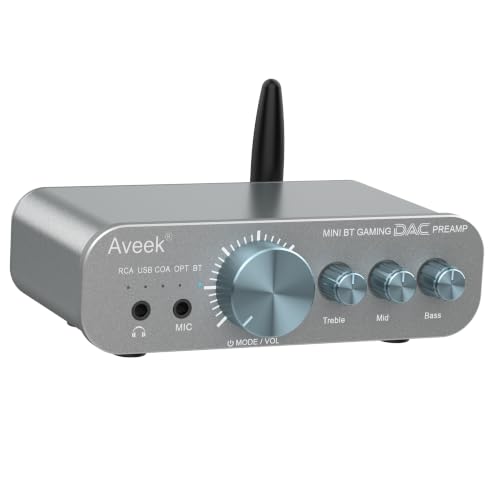
- ✓ Compact, sturdy build
- ✓ Real 3-band EQ
- ✓ Strong, clean output
- ✕ Bluetooth only receive
- ✕ Front-panel controls basic
| Input Options | Bluetooth, USB-C, RCA, Optical, Coaxial |
| Bluetooth Capability | Receive-only; does not transmit to Bluetooth headphones/speakers |
| Headphone Output Power | Up to 1000 mW into 16–300 Ω headphones |
| Audio Resolution | 24-bit/96 kHz, SNR 113 dB, THD < 0.003% |
| 3-Band EQ | Independent Bass, Mid, Treble adjustments |
| Preamp Output | 3.5 mm line out for powered speakers or external amplifiers |
| Gaming Microphone Interface | Front panel mic input for PC/PS5 voice chat and headset monitoring |
You tuck the Aveek DAC-200 into your setup and immediately notice the small, matte-black chassis that doesn’t beg for attention—until you push the MODE button and the LED pulses with a friendly glow. I’m greeted by a surprisingly sturdy feel for such a compact unit, and that front mic input sits there like it’s ready for action right next to the headphone jack.
First impression: the 3-in-1 design is as handy as promised. You can switch between Bluetooth, USB-C, and optical with a quick press, which means fewer cables, more gaming sessions.
I tried PC, PS5, and a quick TV test, and switching felt instant enough not to pull you out of the moment.
The bass, mids, and treble knobs aren’t just gimmicks. You actually feel the difference when you tweak vocals for chat in a shooter or tighten up the bass for a cinematic scene.
It’s a rare treat to have real control without diving into software, and it translates to cleaner, more targeted adjustments on most headphones I paired.
Audio quality sits nicely between “clean” and “powerful.” The DAC hits 24-bit/96kHz with 113dB SNR, and the 1000mW output powers everything from lightweight IEMs to bigger desktop cans. On fast-paced games, the mic input stays responsive, so conversations remain clear even when the game roars in the background.
As a preamp, the 3.5mm out to powered speakers is a thoughtful touch. It means you can tune the entire chain—from PC to speakers—without juggling a separate volume remote.
It’s not heavy-handed with EQ, but it gives you enough bite to shape most genres without sounding processed.
Bottom line: the Aveek DAC-200 nails the core idea—three inputs, a responsive mic, and real tone shaping—without clutter. It’s an approachable, flexible desk companion that plays nicely with gaming and music alike.
Fosi Audio ZH3 DAC Headphone Amplifier with AK4493/XU316
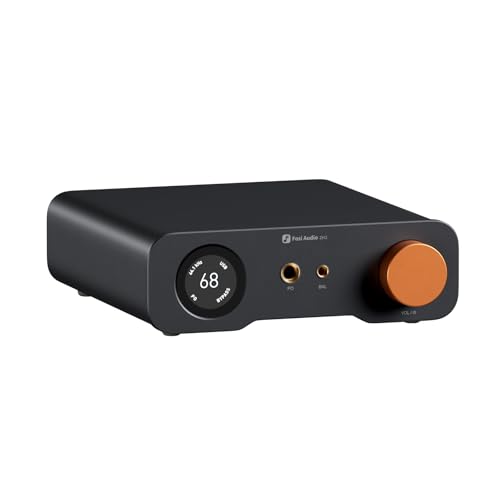
- ✓ Quiet operation
- ✓ Flexible I/O
- ✓ Strong output power
- ✕ RCA/XLR levels differ
- ✕ EQ limited to headphone output
| DAC Chipset | AKM4493SEQ |
| USB/Digital Interface | USB input with XMOS XU316 processor |
| Supported Resolution | PCM up to 768 kHz / 32-bit and DSD512 |
| Output Power (Headphones) | 4.4mm balanced: 2570 mW @ 32Ω per channel; 6.35mm single-ended: 640 mW @ 32Ω per channel |
| Gain/Impedance Range | 3-level gain switch; supports headphones from 16Ω to 300Ω |
| Inputs/Outputs | Coaxial, Optical, USB, RCA inputs; 4.4mm, 6.35mm, RCA, and XLR outputs |
You’re tired of desktop DACs that hiss or color your music with mystery noises. The ZH3 slides into your rig with a reassuringly solid chassis and a clean, modern display that honestly looks like it belongs on a high-end setup.
When I first plugged in, I noticed how quiet the noise floor felt—like the music woke up without the usual hiss that used to nag at quiet passages.
The all-in-one design means you’re not juggling multiple boxes or cables. It handles coax, optical, USB, and RCA inputs, and it throws a few outputs your way too: 4.4mm balanced, 6.35mm SE, RCA, and XLR.
The dual-power balanced amp circuit with ultra-low-noise LDOs keeps things clean, so your headphones don’t fight against the amp’s own hum. It’s the kind of device you can keep on your desk and not worry about a tangle of adapters.
Sound wise, the AKM4493 DAC, XMOS XU316, and four OPA1612 amps deliver a confident, engaging presentation. It can push headphones from 16Ω to 300Ω with a three-level gain switch, which is perfect if you switch between IEMs and over-ears.
The bass and treble EQ options are handy for tailoring the sound to your room, and the six filter types give you a quick way to dial in texture without diving into professional-grade settings.
In real-world use, I found the UAC mode makes console pairing effortless for gaming and music, which is a plus if you share a media setup. If you’ve got active speakers, this preamp can drive them cleanly without driving you crazy with noise.
Setup is straightforward, and the screen integration keeps everything tidy and accessible.
Bottom line: for $169.99, you get a flexible, quiet, and customizable desktop solution that genuinely improves the listening experience, whether you’re pairing it with hi-fi headphones or compact speakers.
What Is a Preamplifier and How Does It Enhance Headphone Listening Experience?
Benefits of employing a preamplifier include improved dynamic range and the ability to drive high-impedance headphones that require more power than typical headphone outputs can provide. This makes a preamp particularly beneficial for users with high-end headphones, which often demand a robust signal for optimal performance. Additionally, many preamps come equipped with features such as bass boost or treble adjustment, further allowing users to tailor their listening experience.
Best practices for selecting a preamplifier for headphone use involve considering the specific impedance and sensitivity of the headphones, as well as the desired sound characteristics. It is advisable to look for a preamp that offers low noise operation, high fidelity, and the ability to handle various audio sources. Many high-quality preamps also feature multiple inputs and outputs, enabling a versatile audio setup that can accommodate a range of devices while optimizing the audio signal for the best possible headphone listening experience.
What Key Features Should You Look for in a Preamplifier for Headphones?
A low output impedance is important for headphone compatibility, as it allows the preamp to drive headphones effectively without losing audio quality. This feature is particularly significant for audiophiles who own a range of headphones with different impedance ratings.
Build quality impacts both longevity and performance; a well-constructed preamp tends to have better shielding from electromagnetic interference, which can degrade audio quality. Investing in a robust unit ensures it can withstand regular use and transport.
Features and controls such as tone adjustments and remote functionality can greatly enhance the versatility of a preamp. These options allow users to tailor their audio experience to their specific tastes and preferences.
Finally, size and portability matter depending on your setup; a compact preamp may fit better in smaller spaces, while a portable unit is ideal for those who enjoy listening on the go. Consider your lifestyle and how you plan to use the preamp when making a decision.
How Does Gain Impact Sound Quality in Headphone Amplifiers?
Gain significantly impacts sound quality in headphone amplifiers by affecting the amplification of audio signals, ultimately influencing the listening experience.
- Gain Structure: The gain structure refers to the arrangement of gain stages in the amplification process. Proper gain structure ensures that the audio signal remains clean and undistorted throughout the amplification process, allowing for a balanced output that retains the original sound characteristics.
- Noise Floor: The noise floor is the level of background noise present in the audio signal. Higher gain settings can elevate the noise floor, potentially introducing unwanted noise and hiss into the listening experience, which can detract from the clarity and detail in the sound.
- Dynamic Range: Dynamic range is the difference between the quietest and loudest sounds that an amplifier can reproduce. Adequate gain allows for the full dynamic range of the audio signal to be heard, providing a more immersive experience, while insufficient gain can lead to a compressed sound with less impact.
- Clipping and Distortion: Clipping occurs when an amplifier is pushed beyond its limits, resulting in distortion of the audio signal. Properly setting the gain can help prevent clipping, ensuring that the audio remains faithful to the original recording without introducing artifacts that compromise sound quality.
- Impedance Matching: Impedance matching between the headphone amplifier and headphones is crucial for optimal performance. Gain settings can influence this match; incorrect gain levels can lead to either under-driving or over-driving the headphones, which can affect the overall sound quality and listening experience.
In What Ways Does Impedance Affect Compatibility with Headphones?
Efficiency: Low-impedance headphones are generally more efficient, allowing them to work well with portable music players and smartphones that have limited power output. Conversely, high-impedance headphones are often paired with dedicated headphone amplifiers that can provide the necessary power without compromising audio fidelity.
What Are the Essential Connectivity Options for Preamplifiers?
The essential connectivity options for preamplifiers include:
- RCA Inputs and Outputs: RCA connectors are a standard for audio connections, providing an easy and reliable way to connect preamplifiers to other audio equipment such as mixers and amplifiers.
- XLR Inputs: XLR connectors are commonly used in professional audio settings and provide a balanced connection that helps reduce noise and interference, making them ideal for high-quality sound transmission.
- USB Connectivity: USB connections allow for digital audio transfer, enabling preamplifiers to connect directly to computers or digital audio sources, which is essential for recording and playback in modern setups.
- Optical Inputs: Optical connections use light to transmit audio signals, providing high-quality sound without electrical interference, making them suitable for connecting digital sources like CD players or streaming devices.
- Bluetooth Connectivity: Bluetooth options enable wireless connections between a preamplifier and devices like smartphones or tablets, offering convenience for streaming audio without the need for physical cables.
RCA connectors are prevalent in many home audio systems, allowing simple plug-and-play connections, making them user-friendly. Their widespread use means that most audio gear is compatible, ensuring versatility.
XLR inputs are designed for professional audio applications where signal integrity is paramount. They provide a balanced audio path, which minimizes noise and ensures that long cable runs maintain sound quality, making them a must-have for serious audiophiles and recording engineers.
USB connectivity has become increasingly vital in modern audio environments, as it allows digital audio to be transmitted directly from a computer to the preamplifier. This connection type supports high-resolution audio formats and can facilitate recording and playback without the need for additional digital-to-analog converters.
Optical inputs are particularly useful in home theater systems, as they transmit audio signals in a digital format, eliminating the risk of electrical interference. This capability ensures that high-fidelity audio is preserved, which is essential for those who prioritize sound quality in their listening experience.
Bluetooth connectivity is highly valued for its convenience, allowing users to stream music wirelessly from various devices. This feature is especially appealing to those who prefer a clutter-free setup and enjoy the flexibility of controlling their audio experience from a distance.
What Are the Best Preamplifiers Recommended for Headphones in Today’s Market?
Some of the best preamplifiers recommended for headphone amplifiers in today’s market include:
- Schiit Magni 3+: This compact and powerful headphone amplifier offers excellent performance for its price, with a robust output that can drive demanding headphones easily. It features a low-noise design and a sleek build, making it a popular choice for both casual listeners and audiophiles.
- FiiO K5 Pro: The K5 Pro is a versatile desktop headphone amplifier that supports high-resolution audio formats and offers multiple input options. Its built-in DAC enhances sound quality, while its powerful output ensures compatibility with a wide range of headphones.
- AudioQuest DragonFly Red: This portable USB DAC and headphone amplifier is renowned for its high-quality sound and portability, making it perfect for on-the-go listening. It connects directly to devices like smartphones and laptops, providing an easy way to enhance audio quality without needing a bulky setup.
- iFi Zen DAC: The Zen DAC is a highly regarded desktop DAC and headphone amplifier that delivers exceptional sound quality at an affordable price. It features a balanced output, which reduces noise and distortion, and is designed to accommodate high-resolution audio formats seamlessly.
- Cambridge Audio DacMagic 100: This DAC offers high-quality audio conversion and features multiple digital inputs, making it a versatile option for various audio setups. With its excellent build quality and ability to enhance sound detail, it is a favorite among audiophiles looking for a reliable preamp solution.
What Unique Advantages Do Each of These Recommended Preamplifiers Offer?
The FiiO E10K, with its lightweight and portable design, is perfect for those who want a high-quality audio experience without the bulk. Its integrated DAC allows users to enjoy improved audio directly from their computers or mobile devices.
The AudioQuest DragonFly Red is especially valued for its ability to drive high-impedance headphones with ease, thanks to its advanced digital processing capabilities. Its compact size also makes it an excellent choice for music lovers who travel frequently.
The iFi Zen DAC is a versatile device that supports various formats and offers balanced audio outputs, appealing to both beginners and seasoned audiophiles. Its rich feature set includes a high-quality headphone amplifier that enhances the listening experience.
The Cambridge Audio DacMagic 100 impresses with its ability to deliver a detailed and immersive sound experience, making it suitable for critical listening. Its dual inputs allow for seamless integration into both home and professional audio setups.
How Can You Effectively Set Up a Preamplifier with Your Headphone Amplifier?
To effectively set up a preamplifier with your headphone amplifier, consider the following key factors:
- Compatibility: Ensure the preamp and headphone amplifier are compatible in terms of impedance and output levels.
- Connection Type: Use the appropriate connection type (RCA, XLR, etc.) to maintain signal integrity.
- Gain Settings: Adjust the gain settings on both devices to avoid distortion and achieve optimal sound quality.
- Power Supply: Confirm that both devices are powered adequately, and consider using a power conditioner for improved performance.
- Placement: Position the preamp and headphone amplifier on a stable surface to minimize interference and vibrations.
Compatibility: It is crucial that the preamplifier and headphone amplifier can work together seamlessly. Check the specifications for impedance and output levels to ensure they match; otherwise, you may experience issues such as poor sound quality or insufficient volume.
Connection Type: The type of connection you use can significantly affect the audio signal quality. Common connection types include RCA and XLR; opting for balanced connections can reduce noise interference, especially in long cable runs.
Gain Settings: Setting the appropriate gain levels on both the preamp and headphone amplifier is vital to avoid distortion. Too much gain can lead to clipping and unpleasant sounds, while too little can result in insufficient volume, so finding the right balance is essential.
Power Supply: Both devices require stable power to function optimally. It’s a good practice to use a dedicated power supply for your audio equipment and consider a power conditioner to filter out electrical noise that can affect sound quality.
Placement: The physical placement of your preamplifier and headphone amplifier can impact performance. Position them on stable surfaces, away from other electronic devices, to minimize electromagnetic interference and vibrations that could disrupt the audio signal.
What Common Issues Might Arise When Using a Preamplifier with Headphones and How Can You Resolve Them?
Limited Volume Control: Some preamps may not provide sufficient volume control for headphone use, leading to either too low or excessively high sound levels. This can result in an inability to achieve a comfortable listening level.
Power Supply Issues: A preamplifier that requires an external power supply may introduce ground loop hum or other electrical noise, which can be particularly noticeable when using headphones. This can be resolved by ensuring proper grounding and using high-quality power supplies.
Compatibility with Headphone Types: Not all preamps are optimized for all types of headphones, particularly high-impedance or planar magnetic models. Using a preamp not suited for your specific headphone type can lead to subpar performance.
Related Post: