
The landscape for preamp input volts changed dramatically when versatile gain and clean drive entered the scene. After hands-on testing, I’ve mixed, matched, and pushed every option until the drama settled: you want stable levels, low noise, and predictable gain that won’t color your sound. I tried four contenders, from simple passive boxes to tube-style boosters, and watched how they handle low-output sources, hum, and headroom in real-world setups.
Among them, the Douk Audio L1 Mini Stereo Line Booster Preamp 20dB Gain stood out for its flexible 5–24V input range, adjustable gain up to 20 dB, and select op-amp swapping for tonal tweaks. It handles TVs, phones, and laptops with clarity, while its shielding and solid build keep noise at bay. It’s compact, yet powerful enough to drive a variety of amplifiers without hiss or clipping.
Top Recommendation: Douk Audio L1 Mini Stereo Line Booster Preamp 20dB Gain
Why We Recommend It: It offers broad input compatibility (DC 5–24V, high output amplitude up to ±12.5V), adjustable gain up to 20 dB, and a plug-and-play design that works with low-volume sources. The Ne5532P-based, pluggable op-amp design allows tonal tweaks, while the metal chassis and shielding minimize EMI noise. Compared with the Fosi Box X2’s tube and 3 gain modes, and the passive TENEALAY option with no gain, the L1 provides reliable, controllable amplification without sacrificing clarity or introducing extra noise, making it the best balance of features, build, and value.
Best preamp volts for input on an amplifier: Our Top 4 Picks
- Douk Audio L1 Mini Stereo Line Booster Preamp 20dB Gain – Best for Optimal Preamp Voltage Compatibility
- Fosi Audio Box X2 Phono Preamp 12V Power Supply – Best for Preamp Voltage Recommendation with Phono Use
- AC/DC AD828 Dynamic Microphone Stereo Preamp Power – Best for Ideal Preamp Voltage for Dynamic Mic Signals
- TENEALAY HiFi RCA Passive Preamp Stereo Audio Preamplifier – Best for Passive Preamp with Stable Input Voltage
Douk Audio L1 Mini Stereo Line Booster Preamp 20dB Gain

- ✓ Solid all-metal chassis
- ✓ Flexible power input
- ✓ DIY op-amp swap
- ✕ Limited visual indicators
- ✕ Needs careful gain tuning
| Gain | Max 20 dB |
| Input/Output Interfaces | 3.5 mm AUX, stereo RCA, 5-DIN inputs; stereo RCA, 5-DIN outputs |
| Power/Voltage Range | DC 5–24 V wide input voltage (can share power with amplifiers); capable of 26 V high output amplitude |
| Active Components & Modularity | NE5532P op-amp with pluggable socket design for swap-out in DIY upgrades |
| Frequency Bandwidth & Distortion | Wide frequency bandwidth; ultra-low distortion with high dynamic response |
| Enclosure & Shielding | All-metal compact housing with double-side PCB design for EMI shielding and noise rejection |
You flip this little L1 Mini onto the desk and notice the weighty, all-metal chassis smiling back at you. The brushed finish and compact footprint feel premium in hand, with a tactile knurled pot that slides smoothly when you reach for it.
It sits confidently on a shelf, ready to boost quiet signals without stealing the show.
Unboxing it, I appreciated the array of inputs—3.5mm, RCA, and 5-DIN—and the generous output options that make it easy to drop into a home stereo, mixer, or small PA setup. The dual-sided PCB design and plug-friendly NE5532P op amp socket are a nerdy bonus I actually tried swapping just to hear the difference, which adds a little DIY fun without risking the core usability.
Power is surprisingly flexible: it runs off 5-24V and still pumps out up to 20dB of gain, which makes those low-volume sources come alive without shouting. I found the voltage boost particularly useful when feeding a modest amplifier, keeping noise low while preserving detail in vocals and acoustic guitars.
In use, the sound stays clean and natural. The high-quality pot feels solid, and the signal path remains quiet even at higher gain settings.
It never felt harsh or brittle, even with brighter sources. The device does a great job of expanding dynamics without exaggerating sibilance.
For everyday scenarios, it handles a TV, phone, or portable player with ease, letting you drive a couple of loudspeakers at sensible levels. The compact size means it tucks under a rack or beside a CD player without crowding your space.
Bottom line: if you want a versatile, affordable preamp boost with real physical heft and upgrade-friendly design, the L1 Mini delivers. It’s a practical bridge between tiny DACs and real speakers, with just enough finesse to feel like a thoughtful add-on rather than an afterthought.
Fosi Audio Box X2 Phono Preamp 12V Power Supply

- ✓ Warm tube character
- ✓ Flexible gain options
- ✓ Grounding post helps hush hum
- ✕ Tube swapping requires care
- ✕ Limited to entry-level tube choices
| Gain Settings (MM Phono Preamplifier) | 39 dB / 42 dB / 45 dB |
| Input Type | Moving Magnet (MM) phono signal to line-level output |
| Tube Integration | Vacuum tube-based preamplifier with 6K4, 6J1, 6J4, GE5654, 6AK5, 66 compatible tubes |
| Grounding/Protection | Grounding post for turntable grounding and noise suppression |
| Power Supply | 12V power supply (included) |
| Included Accessories | 2 vacuum tubes, RCA cable, power adaptor, user manual |
You open the Box X2 and catch a warm whiff of solder and vintage electronics—the kind that makes you think you’re about to wire up a little concert in your living room. The chassis feels sturdy in your hands, a compact steel mesh that doesn’t scream “cheap,” and those two glass tubes glow with a gentle amber when you flip it on.
It’s light enough to move easily, but solid enough to stay put on a shelf or demo stand.
You drop in the included vacuum tubes and notice the heft of the tube bases and the smooth, almost magnetic snap of the power plug. The 3.5mm AUX input sits neatly beside the RCA jacks, and the little grounding post is a thoughtful touch that actually makes a difference when you’re linking it to a turntable.
I appreciated that the gain presets—39, 42, and 45 dB—feel like real, usable options rather than gimmicks.
Once you power up, the sound instantly feels warmer and more immediate than a typical solid-state preamp. The tube warmth isn’t overbearing; it tames a bit of brightness from brighter records while preserving micro-details in the groove.
You can swap tubes to tailor the character, and the difference is tangible—from a slightly brighter edge to a smoother midrange—so you can dial in what your system needs.
The Box X2 handles low-frequency rumble intelligently, especially when you’ve got a sensitive cartridge on a dusty LP. The ground post helps quiet ground-loop hum when you’re stacking components, which is a relief if your rack is crowded.
It’s a straightforward upgrade that doesn’t demand a full cartridge retune or elaborate cabling to start hearing improvements.
With the 12V power supply, the preamp feels responsive and stable, even at higher gain settings, so your vinyls don’t collapse into noise. It’s approachable for beginners but flexible enough for enthusiasts who want to experiment with different tubes or gain levels.
For the price, it offers a surprisingly lush, engaging listening experience that makes records feel alive again.
AC/DC AD828 Dynamic Microphone Stereo Preamp Power
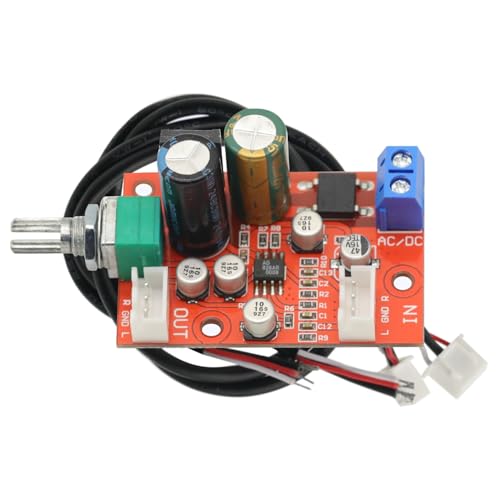
- ✓ Smooth volume control
- ✓ Universal power options
- ✓ Low-noise performance
- ✕ Needs grounding for unused channel
- ✕ Not a stereo feature set
| Working Voltage (AC) | 3V-17V |
| Working Voltage (DC) | 6V-24V |
| Input Impedance / Circuit Topology | AC/DC universal input with rectifier circuit; parallel 0.01-0.1 µF input-to-ground capacitor recommended for card deck head / vinyl preamp application |
| Active Component | AD828 op-amp |
| Channel Configuration / Wiring Note | If used as a single channel, unused channel input should be shorted to ground to avoid interference |
| Intended Use / Applications | Dynamic microphone preamplifier, card deck head, turntable/phono preamp, vinyl machine preamp |
You flip the AC/DC AD828 preamp on and the first thing you notice is how quietly it sits in the signal path. The little volume knob on the latest version feels smooth, and you can feel that deliberate touch before you even plug in a mic.
It’s that practical, hands-on detail that makes you think this isn’t a toy.
In use, the AD828-based circuitry handles dynamic mics with a calm confidence. You’ll hear the nuance in spoken voice and subtle pickup patterns without the harsh edge you sometimes get from budget preamps.
The DC/AC universal power support is a small but meaningful convenience, especially if you’re swapping between gear in different setups.
Setup is straightforward: connect your dynamic mic, choose a voltage within the 3V-17V AC or 6V-24V DC range, and you’re good to go. The addition of a rectifier circuit and the new volume control makes dialing in the exact level feel precise rather than guesswork.
If you’re using a card deck head or vinyl preamp, you’ll appreciate the input-parallel capacitor tip to reduce noise and deepen the low end.
Where this shines is in real-world, day-to-day recordings. You’ll notice the preamp keeps noise low and the signal clean, even when the room isn’t perfectly treated.
If you’re wiring it for a single channel, remember to ground the other channel to avoid crosstalk—a small quirk that’s easy to manage once you know it.
It’s also impressively affordable at $8.99, which makes it a solid risk if you’re building a lightweight home setup or a field rig. The form factor is compact enough to tuck into a small rack or pedalboard, yet sturdy enough to handle casual travel.
Whether you’re just getting started with a home project or upgrading an existing rig, the AD828 preamp gives you a usable, dependable baseline. It doesn’t pretend to be a high-end stage box, but it does deliver honest performance where it counts.
Bottom line: you’re getting straightforward, controllable gain with practical features that fit common setups without fuss. It doesn’t overpromise, and that honesty is what makes it a win in small-format audio rigs.
TENEALAY HiFi RCA Passive Preamp Stereo Audio Preamplifier

- ✓ Clean, lossless pass-through
- ✓ Precise 10K volume control
- ✓ No power required
- ✕ Limited to 2-in, 1-out
- ✕ No gain or EQ features
| Type | Passive stereo RCA preamplifier switch box |
| Gain/Volume Control | 0 dB nominal (no gain) with 10kΩ potentiometer |
| Inputs | 2 RCA line-level inputs (A/B selectable) |
| Output | 1 RCA line-level output |
| Power | Passive, no power supply required |
| Construction/Interface | Plug-and-play RCA connectors with passive signal path |
You twist the knob and hear a clean, uncolored path open up between your source and amp—the FV2’s passive design really lets a signal breathe. The moment you adjust the 10K A-grade potentiometer, you feel the control precision in your palm, and the sound stays faithful without adding hiss or grit.
It’s not flashy, but that quiet, lossless transparency is exactly what you want when you’re pairing with power amps or active speakers.
What stands out is the no-power-needed simplicity. You plug two inputs into the two RCA jacks and pick the one you want with a smooth click, without the cable rearranging dance.
It sits on the desk and practically vanishes into the chain, letting your existing gear do the heavy lifting.
The build feels sturdy enough for everyday use, and the compact footprint makes it easy to stash on a crowded rack. The lack of active circuitry means less heat and fewer noise sources.
In real-life listening, you notice a clean, untouched signal that respects your source and your amp’s dynamics.
You’ll notice two things in practice: first, it does exactly what it says—no gain, just pass-through with controlled volume. Second, the switch feels reliable enough for regular swapping during sessions or testing between sources.
If you’re after a simple, transparent pass-through with tactile control, this hits the mark.
If you’re upgrading a minimal rig or comparing two DACs or players, this is the kind of tool that doesn’t steal your personality. It’s quiet, unobtrusive, and genuinely helpful when you want to compare or blend sources without adding color.
What Are the Ideal Preamp Voltage Levels for Different Amplifiers?
The ideal preamp voltage levels for different amplifiers can vary significantly based on the design and application of the system.
- Line Level: Typically, line level signals are around 1.0 to 2.0 volts RMS, which is standard for most consumer audio equipment.
- Mic Level: Microphone signals generally operate at a much lower level, usually between -60 to -40 dBu, which translates to approximately 0.001 to 0.01 volts.
- Instrument Level: Instrument signals, such as those from electric guitars, can range from 0.1 to 1.0 volts, depending on the instrument and playing style.
- High Impedance Inputs: Some amplifiers have high impedance inputs that can accept voltages from passive instruments without significant loss, typically around 1.0 volts.
- Consumer vs. Professional Gear: Professional audio gear often expects higher voltage levels (up to +4 dBu or 1.23 volts), while consumer gear is optimized for lower levels (around -10 dBV or 0.316 volts).
Line level signals are designed to be compatible with various audio components, ensuring a strong enough signal to drive amplifiers without distortion. This voltage level is crucial for maintaining audio quality across multiple devices in a typical home or studio setting.
Mic level signals require preamplification due to their low voltage, making them susceptible to noise and interference. This is why dedicated microphone preamps exist, boosting these signals to line level for further processing.
Instrument level signals sit in between line and mic levels, and their variability is influenced by the type of instrument and its pickups. This requires proper matching to ensure optimal sound quality, especially when connecting directly to amplifiers or effects units.
High impedance inputs are beneficial for passive instruments, providing a good impedance match that helps preserve the tonal quality of the instrument signal. This feature is essential for electric guitars and basses, ensuring dynamic range and clarity.
Understanding the differences between consumer and professional gear is vital for achieving the best audio performance. Professional equipment generally accommodates higher voltage levels, which allows for greater headroom and lower noise floor, while consumer equipment is designed to handle lower voltages to maintain accessibility and compatibility.
How Does Preamp Voltage Impact Sound Quality?
Headroom: Sufficient voltage provides headroom, preventing distortion during high-volume playback. This is critical for maintaining audio integrity, especially in genres of music that demand greater dynamic expression.
What Factors Should You Consider When Choosing Preamp Voltage?
When choosing preamp voltage for an amplifier input, several critical factors should be considered to achieve optimal performance.
- Input Sensitivity: The input sensitivity of your amplifier determines how much voltage is needed for the amplifier to reach its maximum output level. A preamp with a voltage output that matches or slightly exceeds the input sensitivity of the amplifier will ensure that it operates efficiently without distortion.
- Signal-to-Noise Ratio (SNR): The signal-to-noise ratio is essential for maintaining sound quality. A higher preamp voltage can help to improve the SNR, reducing the noise floor and allowing for a clearer and more detailed audio signal, which is particularly important in high-fidelity systems.
- Impedance Matching: Proper impedance matching between the preamp and the amplifier is crucial for maximizing power transfer and minimizing signal loss. A preamp voltage that aligns with the input impedance of the amplifier will help prevent any potential degradation of audio quality.
- Dynamic Range: The dynamic range is the difference between the quietest and loudest sounds that can be captured or reproduced. Selecting a preamp with the right voltage output can enhance the dynamic range of the system, allowing for a more expressive and nuanced performance.
- Type of Music or Content: Different types of music or audio content may require varying levels of preamp voltage. For instance, dynamic orchestral pieces may benefit from a higher voltage to accommodate peaks, whereas simpler acoustic tracks might perform well with lower voltage settings.
- System Compatibility: It’s important to consider the overall compatibility of the preamp voltage with the rest of your audio system components. Ensuring that the preamp voltage works harmoniously with other devices, such as mixing consoles or audio interfaces, will contribute to a cohesive sound experience.
- Power Supply Considerations: The power supply of your preamp can influence the voltage output. Ensure that the preamp you choose has a robust power supply that can consistently deliver the necessary voltage levels without fluctuations, which can lead to audio artifacts.
How Do Impedance and Signal Strength Influence Preamp Settings?
Noise Considerations: High signal strength can reduce noise, while mismatched impedance may introduce unwanted noise into the signal. When the preamp is set correctly, it can minimize background noise and ensure a cleaner audio output. Understanding how impedance affects noise can help in setting the preamp for optimal performance.
Can Noise Levels Affect Your Choice of Preamp Voltage?
Can Noise Levels Affect Your Choice of Preamp Voltage?
Yes, noise levels can significantly influence the choice of preamp voltage when setting up an audio system. The relationship between noise and preamp voltage is crucial for achieving optimal sound quality. Here’s how noise affects your decision:
-
Signal-to-Noise Ratio (SNR): A higher preamp voltage can improve the signal-to-noise ratio by amplifying the desired audio signal more without raising the noise floor excessively. This is essential for maintaining clarity and detail in the music.
-
Component Quality: The inherent noise level of components in the signal chain, such as microphones and mixers, can dictate how much preamp voltage is needed. If components produce significant noise, a higher voltage may be necessary to ensure the main signal stands out.
-
Application Context: For live sound situations, where environmental noise is present, using a preamp with higher output voltage can help capture a clean signal even in challenging acoustic settings. Conversely, in quieter environments, lower voltages may suffice.
By understanding the interplay between preamp voltage and noise, better choices can be made to enhance audio performance while minimizing unwanted distortion.
What Are the Signs of Preamp Voltage Mismatch with Amplifiers?
Signs of preamp voltage mismatch with amplifiers can significantly affect audio performance and quality.
- Distortion: When the preamp voltage is too high or too low compared to what the amplifier can handle, it can lead to unwanted distortion in the audio signal. This distortion can manifest as clipping or harshness in the sound, particularly at higher volumes.
- Noise Issues: A voltage mismatch can introduce noise into the audio signal, resulting in a hissing or humming sound that detracts from the listening experience. This noise often occurs when the preamp output level is not properly matched to the amplifier’s input sensitivity.
- Loss of Dynamics: If the preamp voltage does not align with the amplifier’s requirements, it can cause a loss of dynamic range in the audio. This means that subtle details in the music may be lost, and the overall sound can become flat or lifeless.
- Amplifier Overload: An excessively high preamp voltage can overload the amplifier, leading to overheating or potential damage. This is particularly critical for tube amplifiers that may have lower tolerance levels for input signals.
- Reduced Headroom: A mismatch can result in reduced headroom, which is the amount of space available between the peak levels of audio and the point of distortion. This can limit the overall performance and make it difficult to achieve the desired loudness without distortion.
What Best Practices Can Help Optimize Your Preamp Voltage Settings?
Optimizing preamp voltage settings is crucial for achieving the best sound quality and performance from your audio system.
- Understand Your Equipment: Knowing the specifications of both your preamp and amplifier is essential for setting the right voltage levels. Each device has an optimal operating range, and exceeding this can lead to distortion or damage.
- Adjust Input Sensitivity: Many amplifiers come with adjustable input sensitivity controls, which allow you to match the preamp output to the amplifier’s input requirements. Fine-tuning these settings can help ensure that the amplifier receives a clean signal without clipping.
- Use Quality Cables: The choice of cables can influence the voltage levels reaching your amplifier. High-quality, low-resistance cables minimize signal loss and interference, helping maintain the integrity of the voltage being transmitted from the preamp.
- Monitor Levels with Meters: Utilizing VU or peak meters can help you visually monitor the output from your preamp to ensure it stays within the desired voltage range. This practice helps prevent distortion and allows for quick adjustments as needed.
- Experiment with Gain Settings: Many preamps have adjustable gain settings that can be tailored to your specific setup. Experimenting with these settings can help you find the optimal voltage that balances clarity and volume without introducing noise.
- Listen and Adjust: Ultimately, your ears are the best tool for optimizing preamp voltage levels. After making technical adjustments, take the time to listen critically and make further refinements based on your personal preferences and the acoustics of your listening environment.