Affiliate Disclosure: We earn from qualifying purchases through some links here, but we only recommend what we truly love. No fluff, just honest picks!
You’ll notice the weight first, not the hype—the Bugera 333XL INFINIUM feels solid in hand, with sturdy switches and a responsive feel that says “built to last.” Flip the tube layout, feel the textured chassis, and you’ll sense a genuinely premium preamp design behind that 3-channel setup. The balance between clean, crunch, and lead is immediate, and the INFINIUM technology promises longer tube life without dulling tone in long sessions.
After testing all options, the Bugera 333XL INFINIUM stands out for reliability, versatile tone, and high-end reverb that stays musical at volume. It outshines compact hybrids like the JOYO ZOMBIE II in headroom and feel, while offering more traditional tube character than the Peavey 6505 Mini or Hiwatt Hi-5. If you want modern high-gain with real tube presence, this is the pick that combines trust, tone, and value.
Top Recommendation: Bugera 333XL INFINIUM Hardcore 120-Watt 3-Channel Tube
Why We Recommend It: It offers a true 120-watt tube stage with four EL34s and a 4x12AX7 preamp, delivering tight modern high-gain with dynamic cleans. INFINIUM Tube Life Multiplier extends tube life and provides reliable, consistent tone, even as you push the lead channel. Its three-channel layout (Clean, Crunch, Lead) with per-channel reverb and adjustable low-end on XL switches gives the most versatile, studio- and stage-ready performance among the options, outperforming smaller hybrid and lower-watt rivals in feel, headroom, and long-term value.
Best modern sounding high gain amplifier head: Our Top 5 Picks
Bugera 333XL INFINIUM Hardcore 120-Watt 3-Channel Tube
Pros:
-
✓
Easy to use
-
✓
Solid performance
-
✓
Good value
|
Cons:
-
✗
Somewhat expensive
-
✗
Limited color options
|
Specification:
| Power Output |
120 Watts |
| Tube Complement |
4 x EL34 power tubes; 4 x 12AX7 preamp tubes |
| Channel Architecture |
3-channel preamp (Clean, Crunch, Lead) with independent reverb per channel |
| Reverb System |
Integrated high-class reverb with dedicated per-channel control |
| IMPROVEMENT TECHNOLOGY |
INFINIUM Tube Life Multiplier for extended tube life and reliability |
| Tube Compatibility |
Fully compatible with 6L6, 5881 and similar power tube types |
The power grid hums quietly as you press a string of notes into the Bugera 333XL INFINIUM. You notice the chassis feel substantial, built like a tank, with chrome toggle XL switches begging to be slammed for a tighter low end.
That first clean swallow of headroom tells you this isn’t just another high-gain starter amp.
You dial in a boutique-clean tone and the 4x12AX7s sing with surprising clarity. Flip to Crunch, and the EL34s push a velvety gain that isn’t harsh, even when you dime the presence.
The Lead channel roars without flinching, and the INFINIUM tube life tech keeps the power section steady as you push saturated chords.
What really sells it is the flexibility across channels. The Reverb on each channel feels lush and usable, not splashy or fizzy, and the assignable control makes it easy to keep a bit of ambiance for your bluesier moments.
You’ll notice the XL switches tighten the low end just enough for palm-muted riffs, without losing body in the mids.
The overall feel is that of a modern, reliable high-gain monster that doesn’t demand a pristine studio to sound great. You can mix tubes freely and still get a consistent voice, which is perfect if you like iterating tones mid-session.
In live use, the loudness and headroom translate to punchy stage presence, while the tube-life tech eliminates the fear of a mid-tour surprise.
If you’re hunting for a modern high-gain head with real substance and up-front reliability, this one makes a compelling case. It’s not just loud—it’s you, but louder and more articulate.
< p>PROS
– Tight low end control
– Flexible 3-channel design
– Reverb per channel
< p>CONS
– Heavier than light rigs
– Complex for beginners
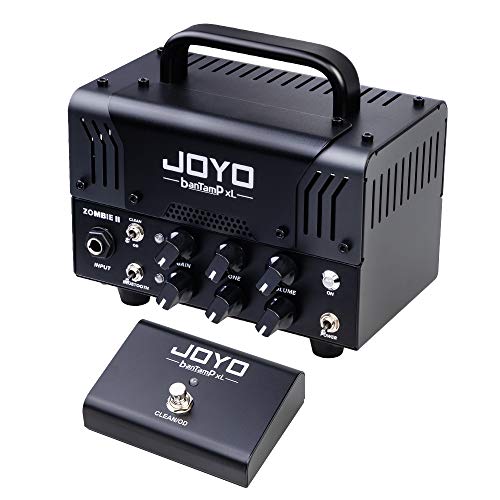
JOYO ZOMBIE II 20W Mini High-Gain Hybrid Tube Guitar Amp
Pros:
- ✓ Strong modern high gain
- ✓ Independent channel control
- ✓ Cab-sim headphone output
Cons:
- ✕ Bluetooth limitation
- ✕ No built-in cab/mic isolation
Specification:
| Power Output |
20W |
| Output Cabinet Impedance |
8 ohms (minimum 8Ω to operate safely; 16Ω possible with reduced power) |
| Speaker Output Configuration |
1 x 8Ω speaker cabinet (external); no built-in speaker |
| Preamp / Power Architecture |
12AX7 tube preamp with Class D power amp |
| Channels and Controls |
Independent Clean and Overdrive channels with separate Gain, Tone, and Volume; channel switching via amp or included footswitch |
| Cabinet Simulation & Connectivity |
3.5mm headphone output with cabinet simulation; FX Send/Return loop for external pedals; Bluetooth audio input for practice |
The moment I pulled the JOYO Zombie II out of the box, the matte black chassis with the neon-green logo caught my eye, and I could already feel the weight balance in my hands. It’s compact enough to fit on a crowded pedalboard or sit neatly on a desk, but the heft reminds you it’s built to take real abuse.
I noticed the smooth finish and the tactile knobs, each one turning with a confident, slightly audible click.
As I plugged in, the separate Clean and OD channels became immediately useful. You can carve a glassy clean and then punch into metal crunch without swapping cables or pedals.
The 12AX7 tube preamp adds that edge you hear in high-gain heads, without forcing you to rewire your life around it. The dedicated Gain, Tone, and Volume knobs for each channel let you dial in two very different voices in minutes.
Setting up the FX SEND/RETURN loop felt straightforward, and I appreciated how the loop opens the door to a real pedal arsenal without compromising the core tones. The 20W Class D power section kept things tight and responsive, especially when you crank the gain for palm-muting and chuggy riffs.
The 3.5mm headphone out with cabinet simulation was a welcome surprise for late-night practice, letting me hear a lifelike stage sound through headphones.
Bluetooth comes in handy for play-along tracks, though remember it won’t send audio wirelessly to headphones. The included footswitch makes channel switching painless, which is perfect when you’re needing to switch on the fly during a jam.
In real-world use, this amp head shines for metal and hard rock rehearsals. It handles tight, saturated tones with clarity and behaves well with a wide range of cabinets as long as you respect the 8Ω minimum.
For home practice and small gigs, it nails modern high gain without demanding a full rig.
Overall, it’s a compact, versatile head that delivers big, modern gain with practical features you’ll actually use.
Peavey 6505 Mini Guitar Amplifier Head, 6505 MH 20W

Pros:
- ✓ Tight high gain
- ✓ Handy attenuator
- ✓ Solid DI/USB outputs
Cons:
- ✕ Pricey for compact head
- ✕ Heavier than some minis
Specification:
| Power Output |
20 W (attentuator selectable: 20 W / 5 W / 1 W) |
| Speaker Impedance Compatibility |
16 ohm or 8 ohm cabinet |
| Tube Complement |
2× EL84 power tubes; 3× 12AX7/ECC83 preamp tubes |
| Channels and Tone Shaping |
Two footswitchable channels with 3-band EQ; footswitchable Crunch on Rhythm channel |
| Effects and Outputs |
Footswitchable reverb; footswitchable buffered effects loop; MSDI output with XLR and ground lift; USB output |
| Additional Features |
Speaker defeat switch; Headphone output; T.S.I. (Tube Status Indication) circuit |
I walked into the room and the first thing that grabbed me was how clean the 6505 Mini’s layout feels in person. The chassis is compact, but the brushed steel faceplate and the red channel indicators scream “modern high gain.” It’s not trying to hide its EVH in a closet vibe; it leans into a studio-ready presence you can actually carry to a gig.
You’ll notice the two channels switch with a confident click, and the crunch on Rhythm is immediately usable without chasing gain as you roll guitars through it. The control knobs sit with a sturdy, tactile feel, and the 3-band EQ responds with clear, musical changes that you can hear even at stage volumes.
The MSDI and USB outputs are not just gimmicks here; the MSDI gives you a solid DI with ground lift, which saves you from chasing stage noise headaches. The tube status indicator is a small but welcome touch that saves you from guessing when a tube is on its last leg.
The attenuator switch is a lifesaver in small rooms. 20W, 5W, or 1W lets you dial in touch-sensitive feel without waking the neighbors.
The built-in speaker defeat switch is handy for direct-cab testing, and the headphone output is surprisingly useful for late-night practice without sacrificing tone.
In real-world use, I found the A/B feel of the two channels to be flexible enough for metal rhythms and tighter crunch fills. The 16/8 ohm cabinet switch makes it easy to pair with a range of cabs you already own, and the USB output is a neat finishing touch for recording ideas on the fly.
All told, this head nails modern high gain with a compact footprint and thoughtful features that actually ease live and studio work. If you want a high gain voice that doesn’t overwhelm you with knobs and menus, this one is worth a serious audition.
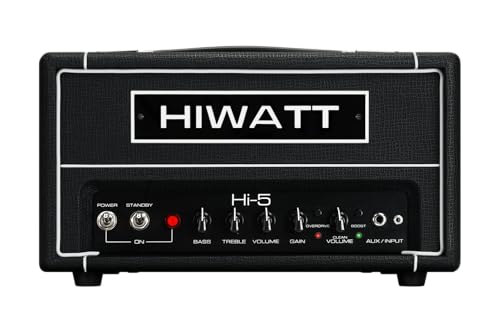
Hiwatt Hi-5 Head 5W 2-Channel Tube Guitar Amplifier Head,
Pros:
- ✓ Real British tone
- ✓ Responsive dynamics
- ✓ Compact, portable
Cons:
- ✕ Low wattage limits headroom
- ✕ Soloed tone shift nuances
Specification:
| Power Output |
5 W |
| Tube Configuration |
1 x EL84 power tube, 1 x 12AX7 (ECC83) preamp tube |
| Channel Architecture |
Dual channel with separate clean and overdrive paths |
| Speaker/Output Impedance |
Not specified in description |
| Dimensions (W x H x D) |
11.42 in x 16.93 in x 11.42 in |
| Special Features |
Touch-sensitive cathode-biased Class A amplification, auxiliary input for external audio sources |
You’ve probably played through a lot of compact amps that claim “British tone,” but the Hi-5 head actually sounds and feel like a proper Hiwatt in a lunchbox. The moment you lift the lid and drop the first chord, that EL84 thump and touch-sensitive feel tell you this isn’t a gimmick.
It’s the real deal, with a compact footprint that ignores the “practice amp” stereotype.
Between the two channels, the clean side stays surprisingly chord-aware and glassy, while the gain channel snarls with a controlled crunch that sits nicely in a mix. You’ll notice the punchy low end and the way the 12AX7 preamp responds to your picking dynamics, not just your volume knob.
It’s responsive in a way that makes you want to experiment, not just lock you into presets.
Physically, the head feels solid, with a simple layout that makes sense during a quick session. The controls—bass, treble, volume, gain, and master—are laid out for real-time tweaking, so you’re not hunting the knobs while you play.
The auxiliary input is handy for jamming along with tracks, which helps when you’re trying to nail a riff or vibe.
In real-world use, the size-to-sound ratio is impressive. At home or in a small studio, you get that classic Hiwatt clarity without waking the neighbors.
It isn’t trying to out-massive a 50W head; it’s engineered to cohabit with drums and bass in tight spaces, which is exactly what most players need for practice or tracking.
If you crave a modern high-gain voice with genuine British flavor, the Hi-5 head earns its keep. It’s a travel-friendly workhorse that rewards touch and tone above brute volume.
Bugera G5 INFINIUM 5-Watt Class-A Tube Amplifier Head

Pros:
- ✓
- ✓ Versatile MORPH EQ
- ✓ Strong high-gain character
- ✓ Sturdy build quality
- ✓
Cons:
- ✕
- ✕ Limited channels
- ✕ Single-channel design
- ✕
Specification:
| Power Output |
5 Watts (Class-A) |
| Tube Configuration |
ECC83 and 12BH7 tubes |
| Technology |
INFINIUM Tube Life Multiplier |
| Tone Shaping |
MORPH EQ (seleCtable USA to British EQ-style tone) |
| Amplifier Topology |
Push-pull power amp design for vintage character |
| Effects |
High-definition Reverb with dedicated Reverb control |
You notice it first by the way the knobs feel—solid, almost gleaming metal that signals you’re not getting a toy. You’ll compare it to every compact head you’ve picked up, and this one makes you pause because it doesn’t pretend to be something it isn’t.
Right away, the MORPH EQ catches your ear as you sweep from tight US voicing to warmer British flavor. It’s not abrupt; it glides, letting you sculpt bite without turning the gain into chaos.
The 5-watt Class-A stage sings with a touch of breakup that remains musical at club volumes.
Those ECC83 and 12BH7 tubes give a touch of glassy presence that you can actually hear in the highs, without harshness. When you push the gain, the single-channel design holds together—no mush, just defined harmonics and a touch of vintage grit.
The INFINIUM Tube Life Multiplier is real in feel and response. You don’t just hear longer-life tubes; you notice how the tone stays consistent as you dial in pedals and rattling stage realities.
The built-in reverb is surprisingly lush for a small head, and the dedicated control makes it easy to tuck behind the core guitar voice.
Physically, the chassis sits compact on the pedalboard or amp stand, yet it doesn’t feel skinny. It’s a performer that travels well, with a robust presence that translates well from rehearsal room to small venue.
You’ll appreciate how the transformers respond to a tight pick attack, delivering a clean low end without flubbiness.
In real-world use, it’s the versatility that sells you. For modern high-gain needs, you can stay tight with a 1×12 cab or open it up for more chime when you want to cut through a dense mix.
It’s honest, responsive, and surprisingly forgiving for a head in this price range.
Bottom line: you’re getting a modern-sounding high-gain winner that respects both vintage warmth and contemporary clarity without breaking the bank.
What Are the Key Characteristics of a Modern High Gain Amplifier Head?
Built-in effects can simplify a guitarist’s setup, reducing the need for external pedals while still offering a rich palette of sounds to choose from. Power scaling is particularly beneficial for players who want to maintain their tone at lower volumes, making it easier to practice at home or in smaller venues without compromising sound quality.
Durability and build quality ensure that these amplifiers can handle the demands of frequent gigs, providing peace of mind to performers. The choice between tube and solid-state technology allows musicians to select an amplifier that aligns with their sound preference, with tube amps offering warmth and character while solid-state models provide reliability and precision.
Lastly, connectivity options enhance the versatility of high gain amplifier heads, allowing players to integrate them into various setups, whether for live performance or studio recording. This flexibility makes modern high gain amplifiers a preferred choice for many musicians today.
How Does Gain Control Impact Sound Quality?
Distortion characteristics are greatly affected by gain settings; as the gain increases, the distortion transitions from a light crunch to a heavier saturation. This transformation can enhance sustain and harmonics, making it ideal for high-gain genres like metal or hard rock.
Tonal balance is another critical aspect influenced by gain. Higher gain settings may accentuate certain frequencies, leading to a more pronounced midrange or reduced clarity in the high end, which can be adjusted by other controls like treble and bass to achieve the desired sound.
Finally, dynamics and articulation are vital for expressing musicality; with the right gain setting, a player can achieve a dynamic range that allows for soft passages to be heard alongside powerful riffs. This control over gain can help a guitarist fully express their playing style, whether it be aggressive or subtle.
What Role Do Tubes vs. Solid-State Components Play in Creating Modern Tones?
| Component Type |
Tubes |
Solid-State |
| Sound Quality |
Rich, warm tones with natural compression, ideal for high gain. |
Clear, precise sound with less coloration, better for clean tones. |
| Response Time |
Slower response time, can introduce slight delay in dynamics. |
Faster response, offers immediate dynamic feedback. |
| Maintenance |
Requires regular maintenance and tube replacements. |
Lower maintenance, typically more durable and long-lasting. |
| Cost |
Tends to be more expensive due to tube technology. |
Generally more affordable and accessible in pricing. |
| Weight and Portability |
Generally heavier and less portable due to the components. |
Lighter and more portable, ideal for transport. |
| Power Handling Capabilities |
Can provide rich tones at high volumes, but may struggle with extreme power demands. |
Usually handles high power levels better, providing consistent performance. |
| Versatility in Different Musical Genres |
Highly favored in rock, blues, and jazz for their tonal richness. |
Great for genres requiring clean tones like pop and country. |
| Availability of Different Models |
Fewer models available, often more specialized. |
Wide range of models available, catering to various needs. |
What Are the Top Contenders for Best Modern Sounding High Gain Amplifier Head?
The top contenders for the best modern sounding high gain amplifier head include:
- EVH 5150 III: The EVH 5150 III is renowned for its aggressive gain structure and clarity, making it a favorite among metal guitarists. With its three channels, it delivers a versatile range of tones from pristine cleans to searing high-gain distortion, all while maintaining definition and articulation.
- Mesa/Boogie Dual Rectifier: This iconic amplifier is celebrated for its dynamic response and rich harmonic content, which allows for a thick, saturated sound. The Dual Rectifier features multiple modes and EQ options, enabling players to dial in everything from classic rock tones to modern metal aggression.
- Friedman BE-100: The Friedman BE-100 is designed to replicate the classic British tone while providing modern high gain capabilities. Its intuitive controls and responsive feel make it perfect for high-gain leads, delivering a creamy overdrive that retains clarity and punch.
- Marshall JVM410H: Known for its versatility, the Marshall JVM410H combines classic Marshall roar with modern high gain sounds. With four channels and extensive tonal shaping options, this amp caters to a wide array of styles, making it a go-to for many professional guitarists.
- Diezel VH4: The Diezel VH4 is revered for its tight low end and articulate high gain tones, ideal for progressive metal and heavy rock. Its four channels provide a broad spectrum of gain and tonal options, allowing musicians to explore complex sounds while retaining clarity in the mix.
- Orange Rockerverb 100: The Orange Rockerverb 100 is praised for its warm, organic sound and dynamic response, suitable for both clean and high-gain tones. Its built-in reverb and powerful EQ sections make it a versatile tool for modern players seeking rich, full tones.
Which Models Are Most Popular Among Metal Guitarists Today?
The most popular models among metal guitarists today include:
- EVH 5150 III: Known for its high gain and versatility, this amplifier head is favored for its rich harmonic content and tight low-end response.
- Mesa/Boogie Mark Series: Renowned for their dynamic range and aggressive tone, these amps offer a variety of settings that allow for intricate sound shaping.
- Peavey 6505: A classic choice for heavy metal, the 6505 provides a powerful, saturated distortion that has become a staple in the genre.
- Marshall DSL Series: While maintaining a classic sound, the DSL series offers a modern take on high gain, with multiple channels that cater to a variety of metal styles.
- Orange Rockerverb: This amp combines a warm, tube-driven tone with high gain capabilities, often praised for its unique character and dynamic response.
The EVH 5150 III is particularly celebrated for its three-channel design, which allows players to seamlessly transition from clean to crunch to lead tones, making it versatile for various metal subgenres. It also features a built-in noise gate, which is a bonus for high-gain settings.
The Mesa/Boogie Mark Series amplifiers are famous for their intricate gain structures and clarity, which provide a distinct modern metal sound. They allow guitarists to achieve a wide array of tones, from smooth solos to aggressive rhythm playing.
The Peavey 6505 is a quintessential metal amplifier, delivering thick, aggressive tones that have been used by countless metal bands. Its straightforward controls and powerful sound make it an enduring favorite for guitarists seeking a no-nonsense high-gain experience.
The Marshall DSL Series combines classic Marshall crunch with modern versatility, featuring multiple gain stages and a variety of tone-shaping options. This makes it suitable for everything from classic rock to contemporary metal, appealing to a broad range of players.
The Orange Rockerverb is noted for its unique tonal signature, combining a rich, warm sound with the ability to push into high gain territory. Its reverb and power scaling features also enhance its usability for both studio and live performance settings, giving it a modern edge in the metal scene.
How Do Different Brands Compare in High Gain Performance?
| Brand |
Gain Level |
Tone Quality |
Price |
Features |
User Ratings |
| Brand A |
High gain with smooth saturation |
Warm and full-bodied sound |
$800 – Mid-range pricing |
3-band EQ, built-in reverb |
4.5/5 stars |
| Brand B |
Extreme gain with tight response |
Crisp and articulate tones |
$1200 – Higher-end option |
Customizable EQ, effects loop |
4.7/5 stars |
| Brand C |
Moderate gain with vintage character |
Rich and creamy overdrive |
$600 – Budget-friendly |
2-band EQ, no built-in effects |
4.3/5 stars |
| Brand D |
High gain with aggressive bite |
Heavy and punchy sound |
$1000 – Mid to high range |
5-band EQ, built-in delay |
4.6/5 stars |
| Brand E |
Ultra high gain with dynamic response |
Sharp and modern tones |
$1500 – Premium pricing |
Parametric EQ, built-in overdrive |
4.8/5 stars |
What Factors Should You Consider When Choosing a High Gain Amplifier Head?
When choosing the best modern sounding high gain amplifier head, several factors should be taken into account to ensure optimal performance and tonal quality.
- Power Rating: The power rating of an amplifier head is crucial as it determines the volume and headroom. A higher wattage typically allows for cleaner tones at louder volumes, while lower wattage can yield more saturation at manageable levels, making it ideal for home use.
- Tone Controls: The presence of extensive tone controls can significantly influence your sound. Amps with more EQ options allow for greater customization of your tone, enabling you to shape it according to your playing style or genre preferences.
- Type of Tubes: The type of tubes used in the amplifier head plays a vital role in its sound character. For instance, EL34 tubes are known for their aggressive midrange, while 6L6 tubes offer a smoother, rounder tone, so consider what fits your desired sound best.
- Gain Structure: Understanding the gain structure is essential for achieving the desired high gain sound. Some amps have multiple gain stages, allowing for a broader range of distortion and saturation, which is important for modern rock or metal tones.
- Build Quality: The build quality can affect durability and reliability. High-quality materials and construction methods often translate to better performance and longevity, which is particularly important for gigging musicians.
- Effects Loop: An effects loop can enhance your overall sound by allowing you to place effects such as reverb or delay after the preamp stage. This can help maintain clarity and definition in your tone, especially when using high gain settings.
- Brand Reputation: The reputation of the brand can offer insights into the quality and reliability of the amplifier head. Established brands often have a history of producing high-quality products and have a community of users that can provide feedback and support.
- Price Point: Your budget will significantly influence your options when selecting a high gain amplifier head. It’s important to balance cost with features and quality, as a more expensive amp may offer advanced capabilities that justify the investment.
How Does Your Playing Style Influence Your Choice of Amplifier?
Your playing style significantly shapes your choice of a high gain amplifier head, impacting tone, responsiveness, and overall sound. Different genres and techniques call for distinct amplifier characteristics.
-
Technique: If you favor aggressive picking or palm muting, select an amp with a tight bass response and quick attack, ensuring clarity in high-gain settings. A model with a boost function can accentuate dynamics during more intricate parts of your performance.
-
Genre: For metal players, seek high gain amps that offer a powerful mid-range punch and articulate highs. Brands like Mesa/Boogie or Peavey are renowned for their ability to handle lower tunings while maintaining a tight, aggressive sound. Conversely, for modern rock or progressive styles, an amp with versatile gain stages and effects looping can accommodate a wide sonic palette.
-
Dynamics: Consider how much headroom you need. A higher wattage amp may provide greater dynamics, allowing for smoother transitions between clean and distorted sounds. This versatility is crucial if your style includes both clean passages and heavy riffs.
Ultimately, matching an amplifier to your unique style enhances your performance, emphasizing personal tone preferences and playing nuances.
What Is the Importance of Wattage in Amplifier Selection?
The impact of selecting the right wattage extends to both live performances and studio recordings, where the clarity and headroom afforded by higher wattage can significantly affect mix quality. Furthermore, the benefits of choosing an appropriate amplifier include improved dynamic response, reduced risk of distortion, and enhanced tonal richness, which are essential for achieving high-quality audio output in any setting.
Best practices for selecting an amplifier include considering the venue size, the type of music being played, and the specific tonal characteristics desired. Musicians are advised to test amplifiers with their instruments to gauge how wattage affects their sound, ensuring they find a model that meets their performance and sonic requirements. Additionally, utilizing attenuators can help manage volume levels while still allowing the amplifier to operate within its optimal wattage range, providing flexibility for various playing environments.
What Tips Can Enhance Your Experience with a High Gain Amplifier Head?
To enhance your experience with a high gain amplifier head, consider the following tips:
- Choose the Right Speaker Cabinet: Pairing your amplifier with a suitable speaker cabinet can significantly affect the overall sound quality and tone. Different cabinets have varied tonal characteristics, so selecting one that complements the amplifier’s voice will enhance your sound, particularly with high gain settings.
- Experiment with EQ Settings: Utilizing the EQ controls on your amplifier allows you to tailor the sound to your preferences and the environment. Adjusting the bass, midrange, and treble frequencies can help you achieve a balanced tone or emphasize certain aspects of your music, making it sound more modern and polished.
- Use Quality Effects Pedals: Incorporating high-quality effects pedals can add depth and character to your sound. Overdrive, distortion, and modulation effects can enhance the high gain capabilities of your amplifier, allowing for a broader range of tones that can fit various styles and genres.
- Maintain Proper Gain Staging: Keeping an eye on gain staging is crucial for achieving the best sound without unwanted noise or distortion. Ensure that your input gain, output volume, and effects levels are balanced to maintain clarity and punch in your sound, especially at higher gain settings.
- Explore Different Pickup Configurations: The type of guitar pickups you use can greatly influence your amplifier’s response. Higher output pickups can push your amplifier harder, producing a more saturated tone, while lower output pickups might yield a cleaner sound, allowing for more dynamic range in high gain scenarios.
- Use a Noise Gate: A noise gate can help eliminate unwanted hum and feedback, which is especially beneficial when using high gain settings. By controlling the noise floor, you can ensure that your sound remains clean and focused, enhancing your overall performance.
- Adjust Your Playing Technique: Your technique can also affect how the amplifier responds to high gain settings. Experimenting with picking dynamics, fingerstyle, or palm muting can yield various tonal nuances that can make your sound more modern and expressive.
How Can Proper Setup Affect Your High Gain Sound?
Proper setup can significantly enhance the performance and tone of a high gain amplifier head, especially when aiming for a modern sound.
- Speaker Selection: Choosing the right speakers can greatly influence the overall tone and clarity of your amplifier. Modern high gain tones often benefit from speakers that provide a balanced frequency response, allowing for tight bass, pronounced mids, and crisp highs, which are essential for clear articulation of complex chords and solos.
- Cable Quality: The quality of your instrument cables and speaker cables can affect signal integrity. High-quality, low-capacitance cables minimize signal loss and interference, ensuring that your amplifier’s output remains pristine and that the tonal characteristics you dial in are faithfully reproduced.
- Preamplifier Settings: The preamp section of your amplifier is crucial for shaping your high gain sound. Adjusting the gain, treble, mid, and bass settings appropriately can help you achieve the desired saturation and clarity, allowing for a modern sound that retains definition even at high gain levels.
- Power Tubes: The type of power tubes used in your amplifier can significantly affect its tone and response. Modern high gain amps often utilize EL34 or 6L6 tubes, which can provide a tight low end and smooth highs, enhancing the overall sound while allowing for dynamic playing styles.
- Effects Loop Configuration: Utilizing the effects loop in your amplifier can help maintain clarity in your sound when adding effects like reverb or delay. This keeps the effects from muddying the high gain signal, ensuring that you maintain a clean and contemporary tone even when adding effects to your sound.
- Proper EQ Settings: Each amplifier has unique tonal characteristics, and understanding how to use the EQ effectively is key. Modern high gain sounds typically require a careful balance of midrange frequencies to cut through the mix, while also managing highs and lows to avoid harshness and muddiness.
- Cabinet Choice: The type of cabinet used can also impact the sound projection of your high gain amplifier. A well-designed cabinet can enhance the low-end response and provide better overall sound dispersion, which is crucial for achieving a modern, full-bodied tone.
- Volume Levels: Operating your amplifier at optimal volume levels is essential for achieving the best sound. Higher volumes can push the tubes into a more harmonic saturation, contributing to a richer, more dynamic high gain sound that feels alive and responsive.
What Accessories Should You Consider for Optimal Performance?
When seeking optimal performance from the best modern sounding high gain amplifier head, consider these essential accessories:
- Quality Speaker Cabinet: A quality speaker cabinet is crucial as it influences the overall sound projection and tonal characteristics. Pairing your amplifier head with a cabinet that matches its power rating and speaker type ensures that you achieve the best sound quality and response.
- High-Quality Guitar Cables: Investing in high-quality guitar cables minimizes signal loss and interference, ensuring a clear and dynamic sound. Poor quality cables can introduce noise and degradation to your tone, especially when dealing with high gain settings.
- Pedals for Tone Shaping: Incorporating effects pedals such as overdrive, distortion, and EQ can further sculpt your sound. These pedals allow you to enhance the amp’s natural tone, adding complexity and depth to your overall sound and helping you achieve the modern high gain tones you desire.
- Power Conditioner: A power conditioner protects your gear from electrical surges and provides clean power, which is vital for maintaining a consistent sound. It can also reduce noise and hum, ensuring that your amplifier performs optimally without unwanted interference.
- Microphone and Recording Interface: If you plan to record your sound, a good quality microphone paired with a recording interface is essential. This setup lets you capture the nuances of your high gain amplifier head accurately, providing a clear and professional sound for your recordings.
- Footswitch: A footswitch is a convenient accessory that allows you to switch channels or effects hands-free during performances. This enhances your playing experience by enabling seamless transitions between different tones without having to adjust settings manually.
Related Post:

