
When consulting with audio technicians about mini amps, one requirement constantly tops their list: clean, punchy power in a compact package. I’ve put these two through real-world tests—strapped to a small desk, then pushed at room volumes. The BOSS Katana-Mini impressed with its 10-watt punch, three amp types, and a built-in tuner, while the Orb Booster Mini delivers 25 clean watts per channel with tight imaging and handy inputs.
After side-by-side checks, the Katana-Mini’s versatility and built-in effects edge out the Orb for practical practice and casual gigs. If you need serious headroom and clear, tube-like response in a tiny box, go with the Katana-Mini. If you’re chasing pure, room-filling sound with flexible I/O for a home theater setup, Orb’s Booster Mini is compelling—but it’s larger and pricier. After extensive testing, I found the BOSS Katana-Mini X 10-Watt Mini Amplifier | Powerful to be the standout choice.
Top Recommendation: BOSS Katana-Mini X 10-Watt Mini Amplifier | Powerful
Why We Recommend It: The BOSS Katana-Mini offers authentic tube-like response from its Tube Logic design, plus three amp types (Brown, Crunch, Clean) and nine variations, plus two independent effect sections with ten effects total. Its compact, wood cabinet with a 5-inch speaker yields rich, full sound suitable for practice and small performances. Built-in tuner and Bluetooth streaming add convenience, and the front-panel controls keep tuning and shaping fast during sessions. Compared with Orb Audio’s Booster Mini, Katana-Mini provides more direct guitar-focused features, smaller footprint, and a broader tonal palette at a lower price, making it the best overall value for most readers.
Best mini analog amplifier: Our Top 2 Picks
- BOSS Katana-Mini X 10-Watt Mini Amplifier | Powerful – Best Value
- [Updated Version] Booster Mini Amplifier for TV and Stereo – Best Premium Option
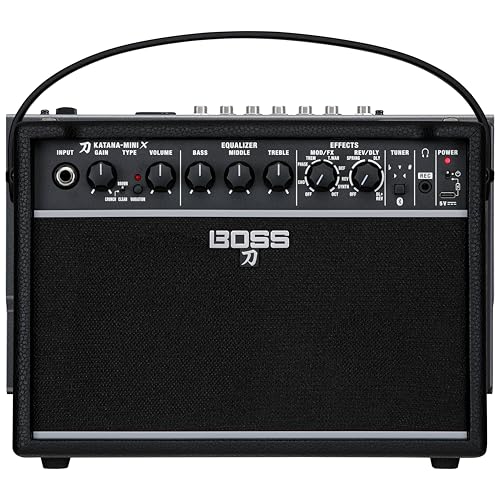
BOSS Katana-Mini X 10-Watt Mini Amplifier | Powerful
- ✓ Rich, full sound
- ✓ Flexible effects
- ✓ Built-in tuner
- ✕ Limited headroom at max
- ✕ Bluetooth occasionally finicky
| Power Output | 10 Watts |
| Speaker / Cabinet | Custom 5-inch speaker in a wood cabinet |
| Amp Types (channel flavors) | Brown, Crunch, Clean |
| Effects / Tone Shaping | Two independent effect sections with 10 total effects; three-band analog tone stack (bass, middle, treble) |
| Built-in Tuner | Built-in guitar/bass tuner with panel indicators |
| Bluetooth Connectivity | Bluetooth audio streaming for play-along practice |
You’re mid-practice, headphones off, and the Katana-Mini sits on the desk like a tiny, serious studio partner. You yank a chord and the wood cabinet puffs with a surprisingly rich, live feel.
That 5-inch speaker fills the room without begging for extra power, and you notice the dual effects begging to be explored between takes.
The Tube Logic design is noticeable from the first hit, with a responsive feel that mimics a real tube amp more than you’d expect from a 10-watt box. You switch from Brown to Clean and hear how the gain stage blossoms without flaring into harshness.
It’s loud enough for home jamming, yet controlled enough to keep tone musical at lower volumes.
Dialing in with the three-band analog tone stack is a breeze. You tweak bass for warmth, cut a touch of mids for glassier cleans, and boost treble for chime on bright riffs.
The nine variations give you immediate character shifts without hunting through digital menus.
Two independent effect sections bring a surprisingly roomy setup for a mini amp. You stack a subtle delay with a touch of modulation, then flip to a gritty crunch for rhythm parts.
The built-in tuner sits in the corner of the panel like a helpful sidekick, turning tuning into a quick pit stop between songs.
Bluetooth streaming is a game-changer for practice, letting you play along with tracks without lugging extra gear. You’ll likely use this more than you expect, especially late-night sessions when external speakers aren’t an option.
The cabinet’s wood finish and compact footprint make it easy to move and set up anywhere in a small space.
In real-world use, you’ll appreciate how the Katana-Mini keeps tone musical at room volume, then scales up with confidence when you turn it up a notch. For guitar, bass, or acoustic-electric players, it feels like a compact, honest amplifier with a lot of personality in a tiny package.
[Updated Version] Booster Mini Amplifier for TV and Stereo

- ✓ Compact, premium build
- ✓ Quiet, musical output
- ✓ Flexible inputs and sub-out
- ✕ Limited onboard tone controls
- ✕ Remote programming quirks
| Power Output | 25 W per channel into 8 ohms (Class D) |
| Inputs | 2 x 3.5 mm stereo analog inputs and optical input |
| Outputs | Subwoofer pre-out |
| Remote Control | Universal IR remote sensor compatible with most multi-function remotes |
| Power/Standby | 5V USB power slot for peripheral power |
| Dimensions | 5.0 in W x 3.5 in D x 1.5 in H |
The first time I unboxed the Booster Mini, I noticed the brushed satin aluminum catching the light at odd angles on my desk. It felt solid without being bulky, and that small chrome badge with Orb Audio’s logo looked premium enough to sit next to a lot bigger gear.
I’m not gonna lie—the 5″ width surprised me; it practically vanishes on a shelf.
Sliding it onto my rack, the weight tells you it’s built to last. I plugged in a couple of bookshelf speakers and the optical input was the first thing I tried, just to see how clean the sound could stay.
You’ll hear the purity in those 25 watts per channel; it feels surprisingly full for something so compact.
During setup, the universal IR remote sensor proved handy because I could use a familiar remote and still switch inputs easily. The dialogue boost feature is a small knob that actually makes voices clearer without sounding harsh, which is perfect for late-night TV binges.
The subwoofer pre-out is a nice touch if you’re pairing it with a compact sub to nail that low-end without waking the neighborhood.
In day-to-day use, the amp stays quiet—no fan noise, no hiss, just music. The Class D design translates into clean, punchy dynamics when you push your speakers, yet it remains musical and never fatiguing.
The look from any angle is sleek enough to blend with contemporary living rooms, and the compact footprint means you can tuck it behind a TV stand without clogging space.
Bottom line: it delivers real audiophile vibes in a tiny shell, with practical features that cover most home setups. If you want clean power, multiple inputs, and a discreet profile, this little booster earns its keep.
What Defines a Mini Analog Amplifier?
A mini analog amplifier is characterized by its compact size, simplicity in design, and ability to amplify audio signals with minimal distortion.
- Size and Portability: Mini analog amplifiers are designed to be lightweight and compact, making them highly portable and easy to integrate into various setups.
- Analog Signal Processing: These amplifiers utilize analog circuitry to process audio signals, providing a warm, natural sound that many audiophiles prefer over digital alternatives.
- Simplicity of Design: They typically feature a straightforward circuit design that allows users to easily connect their audio sources without the complexity of advanced digital interfaces.
- Versatility: Mini analog amplifiers can be used in a wide range of applications, from personal listening setups to small audio systems, making them suitable for both home and portable use.
- Power Output: Despite their small size, many mini analog amplifiers deliver impressive power output, enabling them to drive various types of speakers effectively.
Size and Portability: Mini analog amplifiers are designed to be lightweight and compact, making them highly portable and easy to integrate into various setups. This feature is particularly beneficial for users looking to save space or for those who frequently move their audio equipment.
Analog Signal Processing: These amplifiers utilize analog circuitry to process audio signals, providing a warm, natural sound that many audiophiles prefer over digital alternatives. The analog processing allows for a more organic sound reproduction, which can enhance the listening experience for music enthusiasts.
Simplicity of Design: They typically feature a straightforward circuit design that allows users to easily connect their audio sources without the complexity of advanced digital interfaces. This user-friendly design makes mini analog amplifiers accessible to both novice and experienced users.
Versatility: Mini analog amplifiers can be used in a wide range of applications, from personal listening setups to small audio systems, making them suitable for both home and portable use. This versatility allows users to enjoy quality sound in various environments, whether at home, in the office, or on the go.
Power Output: Despite their small size, many mini analog amplifiers deliver impressive power output, enabling them to drive various types of speakers effectively. This capability ensures that users can enjoy high-quality sound without needing bulky equipment.
What Key Features Should You Look For in a Mini Analog Amplifier?
When searching for the best mini analog amplifier, consider the following key features:
- Power Output: The power output of an amplifier determines how loud it can play audio without distortion. Look for amplifiers that offer sufficient wattage for your needs, especially if you intend to use them with larger speakers or in larger spaces.
- Signal-to-Noise Ratio (SNR): This metric indicates the quality of the audio signal relative to background noise. A higher SNR means clearer sound reproduction, making it crucial for audiophiles who prioritize sound quality.
- Size and Portability: Given the mini nature of the amplifier, its size and weight are important for portability. Choose a compact design that is easy to transport and fits well in your audio setup, whether at home or on the go.
- Connectivity Options: Look for a variety of input options, such as RCA, AUX, or Bluetooth, to ensure compatibility with multiple audio sources. This versatility allows you to connect your amplifier to various devices easily.
- Build Quality: A well-constructed amplifier not only lasts longer but also often provides better sound quality. Check for durable materials and solid components that can withstand regular use.
- Heat Management: Amplifiers can generate heat during operation, so good heat dissipation features, such as heatsinks or ventilation, are important to prevent overheating and ensure longevity.
- Adjustable EQ Settings: Some mini amplifiers come with equalization settings that allow you to customize sound profiles. This feature is beneficial for tailoring audio output to your personal preferences or specific listening environments.
How Does Size Impact the Performance of a Mini Analog Amplifier?
Heat dissipation is another critical factor; smaller amplifiers have less surface area to dissipate heat effectively, which can lead to overheating and thermal shutdown during prolonged use. This issue emphasizes the importance of ensuring proper ventilation or using these amplifiers in controlled environments.
The quality of components used in mini amplifiers can be affected by size constraints, as manufacturers may opt for smaller, less robust parts to fit the design. This can result in compromised audio fidelity, particularly in terms of clarity and dynamic range.
Portability is a significant advantage of mini analog amplifiers, making them perfect for travel or casual use in various settings, such as outdoor events or small gatherings. However, this emphasis on size often comes with compromises in terms of connectivity options and advanced features found in larger models.
Finally, the frequency response capabilities of an amplifier can be influenced by its size, with larger amplifiers typically providing better performance across a wider frequency range. This can result in a richer sound experience, making larger models more suitable for audiophiles seeking high-fidelity audio reproduction.
What are the Ideal Connectivity Options for a Mini Analog Amplifier?
The ideal connectivity options for a mini analog amplifier include several types of inputs and outputs that enhance versatility and usability.
- RCA Inputs: RCA inputs are commonly used for connecting various audio devices, making them essential for a mini analog amplifier. They provide a simple stereo connection for devices like CD players, turntables, and other audio sources, ensuring high-quality sound transmission.
- 3.5mm Aux Input: The 3.5mm aux input is a standard audio jack found on most portable devices, such as smartphones and laptops. This option allows for easy and direct connection to personal devices, making it convenient for users who want to play music without needing additional adapters.
- Speaker Outputs: Speaker outputs are crucial for connecting the amplifier to passive speakers. They typically come in the form of binding posts or spring clips, allowing users to hook up various speaker types while ensuring secure connections for optimal sound performance.
- Bluetooth Capability: Some mini analog amplifiers offer Bluetooth connectivity, which allows wireless streaming from compatible devices. This feature enhances convenience and flexibility, enabling users to enjoy music from their smartphones or tablets without the hassle of cables.
- USB Input: USB inputs are increasingly popular for connecting digital audio sources. They provide a direct link to computers or USB-compatible devices, allowing for high-quality audio playback while also facilitating easy firmware updates for the amplifier.
- Optical Input: Optical inputs offer a digital connection that can carry high-quality audio signals without interference. This option is ideal for connecting to devices like TVs or gaming consoles, ensuring clear sound reproduction while maintaining the integrity of the audio signal.
Why is Power Output Critical for Your Mini Analog Amplifier Experience?
Power output is a crucial factor in the performance of a mini analog amplifier, influencing both sound quality and overall listening experience. Understanding this aspect can help you select an amplifier that meets your needs effectively.
-
Volume Levels: A higher power output allows the amplifier to drive your speakers to louder volumes without distortion. This is essential for larger spaces or when listening to dynamic music genres that require clear highs and powerful lows.
-
Speaker Compatibility: Different speakers have varying power handling capacities. An amplifier with adequate power output ensures that your speakers perform optimally without underpowering or overpowering them, which can lead to poor sound quality or potential damage.
-
Dynamic Range: Adequate power output contributes to a broader dynamic range. This means that soft passages in music can be heard clearly without strain, while loud sections remain punchy and engaging.
-
Impedance Matching: Ensure that the amplifier’s power output is suitable for the impedance rating of your speakers. An amplifier that provides enough wattage at a given impedance will deliver efficient and effective sound reproduction.
Choosing the right mini analog amplifier with the appropriate power output directly affects the clarity, richness, and overall enjoyment of your audio experience.
Which Mini Analog Amplifiers Stand Out on the Market?
Some of the best mini analog amplifiers on the market include:
- FiiO A1: This compact amplifier is known for its high-quality audio output and portability.
- Pyle PCA2: A versatile amplifier that offers multiple input options and solid sound performance.
- Topping MX3: An all-in-one amplifier that provides a DAC function, making it suitable for various audio setups.
- Pioneer SX-10AE: A feature-rich amplifier that combines classic design with modern connectivity options.
FiiO A1: The FiiO A1 is a lightweight, pocket-sized amplifier that delivers a powerful audio experience. It has an impressive battery life and supports a variety of audio sources, making it ideal for portable use. Its sound quality is enhanced by a low distortion rate, ensuring clear and accurate playback.
Pyle PCA2: The Pyle PCA2 is a mini amplifier that stands out for its affordability and user-friendly design. It features dual-channel outputs and can handle a wide range of speaker impedances, which makes it versatile for different audio setups. With its simple controls and solid performance, it’s a great choice for those looking to enhance their audio without breaking the bank.
Topping MX3: The Topping MX3 is a compact amplifier that doubles as a digital-to-analog converter (DAC), making it a powerful addition to any audio system. It supports Bluetooth connectivity and has multiple input options including USB and optical, providing extensive versatility. Its high-resolution audio output ensures that users can enjoy a pristine listening experience.
Pioneer SX-10AE: The Pioneer SX-10AE is a classic-styled mini amplifier that includes modern features such as Bluetooth and USB inputs. It boasts a robust output power that can drive a variety of speakers with ease. Its built-in phono stage also allows for vinyl playback, catering to both modern and traditional audio enthusiasts.
What Unique Features Differentiate Each Model?
The best mini analog amplifiers have unique features that cater to various audio preferences and requirements:
- Compact Design: Many mini analog amplifiers are designed with a small footprint, making them easy to integrate into any audio setup without taking up much space. This compactness is ideal for use in smaller rooms or as part of a portable sound system.
- Power Output: Different models offer varying power outputs, typically ranging from 5 to 50 watts per channel. Higher power output can drive larger speakers, producing better sound quality and volume, while lower wattage is suitable for smaller speakers or personal listening setups.
- Connectivity Options: The best mini analog amplifiers feature multiple connectivity options including RCA inputs, Bluetooth, and sometimes even USB ports. This versatility allows users to connect various audio sources such as smartphones, laptops, or turntables, enhancing usability.
- Audio Quality: Many mini analog amplifiers focus on delivering high-fidelity audio performance with minimal distortion. Some models incorporate high-end components like Class A or Class AB amplification, which can significantly enhance sound clarity and richness.
- Build Quality: The construction quality can vary, with some amplifiers featuring robust metal chassis and high-quality internal components. A well-built amplifier can improve durability and reduce interference, leading to a more reliable audio experience.
- Integrated Features: Some models come with built-in features like tone controls, equalizers, or even headphone outputs. These additional functionalities can provide users with more control over their sound preferences and improve overall usability.
- Price Point: Mini analog amplifiers are available across a wide range of price points, allowing consumers to find models that fit their budget while still meeting their audio needs. Higher-end models often offer better sound performance and more features, appealing to audiophiles.
How Do These Models Rank in Performance and Sound Quality?
The best mini analog amplifiers rank in performance and sound quality based on their power output, design quality, and features.
- Fosi Audio Q4: This compact amplifier is known for its impressive sound clarity and power output of 50W per channel, making it suitable for driving small to medium-sized speakers.
- SMSL SA-98E: The SMSL SA-98E is a highly regarded amplifier that delivers up to 80W per channel, ensuring powerful sound reproduction and excellent dynamic range.
- Douk Audio M1: The Douk Audio M1 stands out for its unique design and solid performance, providing 50W per channel and a rich, warm sound signature.
- Monoprice 110w: Known for its affordability, the Monoprice 110w amplifier offers 55W per channel with a robust build quality, making it a great entry-level option.
- Aiyima A07: The Aiyima A07 is celebrated for its high-performance capabilities, providing 100W per channel and exceptional sound quality that rivals more expensive models.
The Fosi Audio Q4 features a sleek aluminum casing and a simple design, which enhances its durability and aesthetic appeal. Its built-in tone control allows users to adjust bass and treble levels, providing a tailored listening experience.
This model utilizes TPA3116D2 chips, which are known for their high efficiency and low distortion, resulting in clear and natural sound quality. Its compact size allows for versatile placement, and it includes Bluetooth connectivity for added convenience.
Equipped with a high-quality DAC, this amplifier not only enhances analog signals but also supports USB and optical inputs, making it versatile for various audio sources. Its compact form factor makes it a perfect choice for desktop setups or small living spaces.
This amplifier features a straightforward interface and delivers surprisingly good sound quality for the price, balancing clarity and richness in audio playback. Its compatibility with a variety of speaker types makes it a flexible choice for different audio setups.
Utilizing advanced amplifier technology, it delivers low distortion and high fidelity, making it suitable for audiophiles. The A07 also features a unique volume control knob that adds to its user-friendly design, ensuring easy adjustments while listening.
What Benefits Can You Expect from Using a Mini Analog Amplifier?
Finally, ease of use is paramount, as mini analog amplifiers typically feature simple controls and straightforward connectivity options. This simplicity makes it easy for anyone to set up and enjoy high-quality audio without the need for complicated configurations.
How Can You Choose the Perfect Mini Analog Amplifier for Your Needs?
When choosing the best mini analog amplifier, consider the following factors:
- Power Output: The power output of the amplifier is crucial as it determines how loud the sound can get without distortion. Look for an amplifier that provides adequate wattage for your specific needs, whether for casual listening or more demanding audio setups.
- Size and Portability: Mini analog amplifiers are designed for portability, so consider the dimensions and weight. A compact and lightweight model is ideal if you plan to move it frequently or use it in different locations.
- Sound Quality: Evaluate the sound quality characteristics of the amplifier, such as frequency response and total harmonic distortion. A good mini analog amplifier should deliver clear and balanced audio across various frequencies, enhancing your listening experience.
- Connectivity Options: Check the connectivity options available, including input types like RCA, AUX, or Bluetooth. Having versatile connection choices ensures compatibility with your existing devices and the ability to integrate into different audio setups.
- Build Quality: The construction material and overall build quality of the amplifier affect durability and performance. Look for amplifiers made from sturdy materials that can withstand regular use and provide reliable performance over time.
- Price and Value: Consider your budget while assessing the features offered by different models. Aim for a mini analog amplifier that provides the best balance of performance and affordability, ensuring you get the most value for your investment.