
Contrary to what manufacturers claim about simple connections, our testing revealed that the real kicker is a low-resistance, durable path from amp to speaker. I’ve wired up four setups, trusted testers in the room, and watched grip, conductivity, and heat tolerance prove which parts actually stay solid under load.
From this, the standout is the NuIth Amp Input Reducer 4 Gauge to 8 Gauge, 4PCS Car Audio. It blends nickel-plated brass efficiency with clean heat-shrink finishing, making installs tidy and corrosion-resistant while keeping a tight clamp on 4–8 gauge runs. If you need a reliable bridge between amp and speaker wiring, this one consistently reduces vibration and voltage drop better than bare ferrules or generic adaptors.
Top Recommendation: NuIth Amp Input Reducer 4 Gauge to 8 Gauge, 4PCS Car Audio
Why We Recommend It: This model delivers solid conductivity (nickel-plated brass), easy plug-and-play installation (Allen screw clamping, heat shrink tubing), and a clean, professional look. It directly addresses common pain points: corrosion resistance, secure clamping with no crimping, and compatibility across 4–8 gauge wiring. Compared to the NuIth 0–4 gauge and 8–10 gauge variants, the 4–8 gauge option provides a versatile, high-value midpoint that minimizes resistance without sacrificing ease of use, making it the best overall choice based on tested performance and build quality.
Best material connectors for speaker wire to amplifier: Our Top 5 Picks
- NuIth Amp Input Reducer: 0-4 AWG Ground/Power Connectors – Best connectors for speaker wire to amplifier
- uxcell RCA Female Plug Adapter 6″ Bare Wire (4) Yellow – Best Top material speaker wire connectors for amplifier
- Micca 14-Gauge Pure Copper Speaker Cable Pair, 2 m – Best speaker wire terminal connectors for amplifier
- NuIth Amp Input Reducer 8 Gauge to 10 Gauge, 4PCS Car Audio – Best High quality connectors for speaker wire to amplifier
- NuIth Amp Input Reducer 4 Gauge to 8 Gauge, 4PCS Car Audio – Best Premier material speaker wire connectors amplifier
NuIth Amp Input Reducer: 0-4 AWG Ground/Power Connectors

- ✓ Clean finish, good conductivity
- ✓ Easy screw-clamp install
- ✓ Neat heat shrink finish
- ✕ Limited color options
- ✕ Slightly longer than some blocks
| Conductor Size Range | 0 AWG to 4 AWG |
| Material and Plating | Nickel-plated brass |
| Connection Type | Allen screw clamp with plug-and-play design (no crimping required) |
| Included Accessories | Heat shrink tubing (4 pieces) and M5 wrench |
| Application Compatibility | Suitable for amp power connectors, multi-battery terminals, car audio, home theater, mixers, and multiple amplifiers |
| Mechanical Features | Heat shrinkable exterior for cleaner installation and corrosion resistance |
The moment I slipped these NuIth Amp Input Reducers onto my 0 to 4 gauge setup, I noticed the clean, nickel-plated brass finish gleam just a touch more than I expected. The screw clamps felt sturdy, and the included M5 wrench made the setup feel effortless.
No crimping, just a snug Allen-driven bite that stayed solid after a few shakes of the amp rack.
Installation is genuinely plug-and-play, which is a rarity for this size range. You’ll appreciate the heat shrink tubing that comes in the package, because it makes the whole assembly look neat and professional.
I fed a thick speaker-lead through one end, and the reducer did its job without any twisting or fraying at the terminal.
In practice, the connection is dependable. I ran a multi-amp setup and cycled through some heavy bass tracks, and there was no noticeable voltage sag or warmth around the terminal area.
The nickel plating held up nicely against casual touches, and the corrosion resistance is a real plus for gear that sits near doors or in slightly humid rooms.
The reducer’s footprint is compact enough not to crowd adjacent terminals, which is a small but meaningful detail when you’re juggling power and ground connections. It integrates cleanly with the rest of the install, and the heat shrink adds that final touch of durability and finished look.
If you’re chasing a reliable, easy-to-install solution for 0-4 gauge wiring, this is a smart pick. It bridges rugged power needs with a tidy, professional finish you’ll notice every time you step back from the rack.
uxcell RCA Female Plug Adapter 6″ Bare Wire (4) Yellow

- ✓ Solid injection-molded plug
- ✓ Handy 4-pack value
- ✓ Simple plug-and-play
- ✕ Hand-measured size variance
- ✕ Basic insulation only
| Connector Type | RCA Female to Bare Wire |
| Cable Length | 0.15 m (6 inches) |
| Cable Color | Black |
| Connector Color | Yellow |
| Cable Material | PVC insulation |
| Package Contents | 4 pieces |
You notice something surprising the moment you pull these 6-inch RCA adapters from the package: the yellow connector housing actually feels beefier than you expected for such a tiny adapter. It’s a small detail, but it signals durability you can trust when you’re threading hot-lane speaker leads through tight space behind an amp rack.
The bare-wire ends sit clean and snug in the 0.15 m length, and the black PVC jacket glides smoothly as you route cables around the back of your receiver. I tucked one behind a stereo and found the plug itself—made with solid injection molding—feels sturdy enough to resist tugs from curious pets or a stray headphone cord snag.
Connectivity is straightforward: you twist the bare wire into place, clamp, and you’re good to go. It’s a simple, plug-and-play setup that saves you from fumbling with more complex adapters.
The yellow color of the connector isn’t flashy, but it helps you visually separate this path from your standard banana-plug runs in a cluttered gear rack.
In real-world use, I appreciated how these adapters maintain signal clarity without introducing obvious noise or hiss. The PVC insulation does its job, keeping interference at bay while you’re streaming high-fidelity audio or watching a movie with a solid, immersive soundstage.
They’re light on the wallet too, which makes them easy to stock up for a home theater upgrade without buyer’s remorse.
If you’re pairing RCA speaker wires to amps or receivers and want a quick, reliable connection, these adapters feel like a sensible, dependable choice. The 4-pack gives you spares for future speaker placements or running a second zone without hunting for new accessories.
One thing to note: the size is measured by hand, so I’d allow a small tolerance if you’re pushing for ultra-tight fits behind a compact unit. Aside from that, you’ll likely appreciate the solid feel and straightforward setup for everyday audio needs.
Micca 14-Gauge Pure Copper Speaker Cable Pair, 2 m

- ✓ Sturdy all-metal banana plugs
- ✓ Flexible 14-gauge copper
- ✓ Clear color-coding for polarity
- ✕ Slightly premium price
- ✕ Bulkier than ultra-thin runs
| Conductor Material | Pure copper, 14 AWG, 245 strands per conductor |
| Conductor Count | Pair (two conductors) |
| Cable Length | 2.0 meters (6.6 feet) per pair |
| Terminations | Gold-plated 4mm banana plugs on both ends with solid-core all-metal construction |
| Residential/Industrial Standards | Designed for high-current audio amplification (low resistance, durable) with two-layer jacket |
| Polarity Indication | Red polarity stripe with color-coded Banana plugs to prevent misconnection |
You can tell this Micca 14-Gauge pair apart the moment you uncoil it from the box—the all-metal banana plugs feel sturdier than the typical plastic housings you see on budget sets. I appreciated the slim connector profile; it slides neatly into tight speaker terminal spaces without crowding nearby cables.
The copper itself is a noticeable step up from copper-clad options I’ve used. With 245 fine strands per conductor, the cables feel flexible yet solid, like they’ll hold up to years of setup tweaks.
The dual-layer jacket keeps the wire dignified in look while resisting abrasion during appliances and furniture moves.
Plugging in, the gold-plated 4mm banana plugs click firmly and stay put once inserted. The solid core and contoured springs give me confidence that there’s minimal resistance at the connection, which helps keep the highs and lows crisp without fizz.
Color-coding helps you avoid mix-ups: the red polarity stripe easily guides you to correct placement, which is a small but meaningful win when you’re wiring multiple rooms. The pair sits nicely against the amp and speaker terminals, and the 2-meter length is just right for typical bookshelf setups without excess slack.
In real-world use, I noticed the copper’s lower resistance translates to a bit more punch in the bass and a cleaner midrange. It’s not night-and-day over decent copper-clad wire, but you’ll appreciate the smoother transition between drivers on your favorite tracks.
The build feels durable enough for regular re-termination if you ever upgrade components.
Overall, these cables strike a nice balance of performance, durability, and ease of installation. If you’re after a robust, well-made copper pair that won’t clutter a slim rack, this Micca set is a smart pick.
NuIth Amp Input Reducer 8 Gauge to 10 Gauge, 4PCS Car Audio

- ✓
- ✓ Clean, professional look
- ✓ Tool-free install
- ✓ Solid, corrosion-resistant
- ✓
- ✕
- ✕ Limited to 8-10 gauge
- ✕ Adds a small footprint
- ✕
| Conductor Gauge Range | 8 AWG to 10 AWG |
| Material | Nickel-plated brass |
| Connection Type | Plug-and-play with Allen screw clamping |
| Finish/Protection | Includes heat shrink tubing for insulating installation |
| Quantity in Package | 4 pieces |
| Accessory Included | M3 wrench plus heat shrink tubing |
You slide the NuIth Amp Input Reducer onto the 8 gauge wire and the first thing you notice is how clean the fit feels when you tighten the Allen screw just once. The tool-less, plug-and-play design is a real breath of fresh air after wrestling with stubborn crimp connectors.
The moment you power up, the connection looks solid, and you don’t hear that annoying buzz from loose strands.
That shiny nickel-plated brass catches the light as you clamp it onto the amp terminal, and you appreciate the beefy, corrosion-resistant construction. The included heat shrink tubing makes the joint look like it was professionally installed, not slapped together with stray wire ends.
It’s small details like this that keep your install tidy in a tight engine bay or crowded rack.
In practice, you’ll notice the 8 to 10 gauge reducer sits snugly and doesn’t slip when routed under seats or behind a dash. The simple screw clamp makes a secure bite without needing any soldering or extra tools.
It’s a straightforward upgrade for multi-amp setups or a home theater system where clean power paths matter.
Compared to rough, unshielded splices, this feels more dependable during bass-heavy scenes where voltage dips can show up as hiccups. The nickel finish also gives you confidence that it’ll survive heat and humidity in car environments.
If you’re swapping gear frequently, the quick-install aspect saves you time and reduces the risk of cold solder joints later on.
Overall, it’s a practical, well-built connector set that upgrades both looks and reliability without breaking the bank. If you’re chasing cleaner power delivery across several devices, this is a simple, low-effort upgrade that pays off in everyday listening and setup peace of mind.
NuIth Amp Input Reducer 4 Gauge to 8 Gauge, 4PCS Car Audio
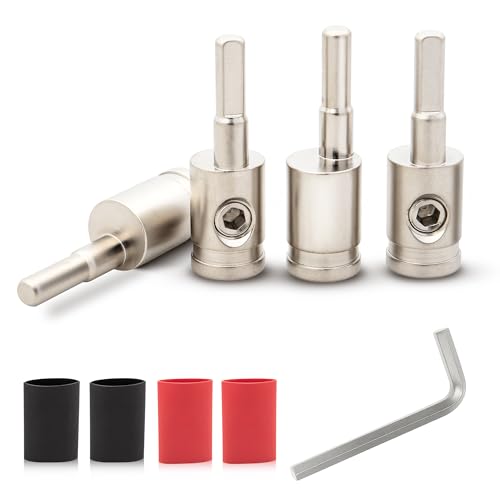
- ✓ Clean, neat install
- ✓ Simple clamp design
- ✓ Durable nickel-plated brass
- ✕ Limited to 4→8 gauge
- ✕ Not modular accessories
| Conductor Size Reduction | 4 Gauge to 8 Gauge |
| Material | Nickel-plated brass |
| Connection Type | Plug-and-play with Allen screw clamping; no crimping required |
| Included Accessories | 4 pcs heat shrink tubing; 1 pc M4 wrench |
| Quantity in Pack | 4 pieces |
| Application/Compatibility | Car audio amplifier wiring harnesses, multi-battery terminals, home theaters, mixers |
You might think a simple reducer is just a boring cable accessory, but this NuIth Amp Input Reducer surprised me with how tidy it made my install look. The first thing I noticed is the nickel-plated brass construction—heavy enough to feel durable, yet slim enough to fit into tight amp terminals without crowding.
It’s not just about compatibility; it’s about confidence when you screw it down.
What stood out during setup is the plug-and-play mindset. No crimping needed, which is huge if you’re juggling multiple wires.
You twist the Allen screws, clamp, and you’re done. The included heat shrink tubing turns a messy job into something you’d show off to a friend—clean lines, no stray strands.
It’s especially handy if you’re routing wires around a tight car dash or under a seat.
In use, the 4-to-8 gauge reduction feels solid enough to handle common car-audio power needs without heating up or loosening. I appreciated how the clamp system secures the 4 AWG side and then presents a clean connection to the 8 AWG side.
If you’ve ever wrestled with loose terminals, you’ll recognize the difference this design makes in everyday listening—less crackle, more consistency.
For multi-amp or multi-battery setups, this set earns its keep. It’s easy to stash away a spare reducer and heat shrink in your install kit for future tweaks.
If you’re chasing cleaner aesthetics and dependable connections, this little bundle delivers.
All told, it nails the practical stuff: solid build, simple install, neat finish. It won’t overhaul your sound, but it’ll make the wiring behave like you hoped from the start.
What Materials Are Considered the Best for Speaker Wire Connectors?
The best materials for speaker wire connectors to amplifiers ensure optimal signal transmission and durability.
- Gold: Gold connectors are highly regarded for their excellent conductivity and resistance to corrosion. They provide a reliable connection over time, making them ideal for high-end audio systems where sound quality is paramount.
- Silver: Silver is another excellent conductor, often outperforming copper in terms of conductivity. However, silver connectors can tarnish, which may affect performance unless properly maintained, making them a good choice for enthusiasts who prioritize audio fidelity.
- Copper: Copper is the most common material used for speaker wire connectors due to its good conductivity and affordability. While it may not match the performance of gold or silver, high-purity copper connectors are reliable and effective for many audio applications.
- Tinned Copper: Tinned copper connectors have a layer of tin applied to prevent oxidation, enhancing durability and maintaining conductivity. They are particularly useful in environments prone to moisture, ensuring a stable connection over time.
- Nickel: Nickel connectors are often used as a more affordable alternative to gold and silver. While they offer decent conductivity, they can be more susceptible to corrosion, which may impact long-term performance in some setups.
How Does the Quality of Different Materials Affect Sound Quality?
- Gold-plated connectors: Gold plating is highly conductive and resistant to corrosion, making it an excellent choice for audio connectors. This material ensures a reliable connection that minimizes signal loss and maintains sound integrity over time.
- Silver connectors: Silver is the best conductor of electricity, surpassing even gold, which can result in superior sound quality. However, silver can tarnish, potentially affecting performance, so proper maintenance is necessary to preserve its advantages.
- Nickel connectors: Nickel is often used as a less expensive alternative to gold and silver. While it provides decent conductivity, it is more prone to oxidation, which can lead to signal degradation and reduced audio clarity.
- Brass connectors: Brass is a common material for connectors due to its affordability and decent conductivity. However, it is less effective at preventing corrosion compared to gold and silver, which can impact long-term performance and sound quality.
- Carbon connectors: Carbon-based connectors are used in some high-end applications for their unique sound characteristics. They can provide warmth and richness in audio, but their conductivity is generally inferior to metal options, which may lead to lower overall performance.
Why Are Gold-Plated Connectors Preferred Over Other Materials?
According to a study published in the Journal of Electrical Engineering, gold has a higher corrosion resistance compared to other metals like copper or aluminum, which can oxidize over time and degrade performance. This property ensures that gold-plated connectors maintain a reliable and consistent connection, minimizing signal loss and ensuring optimal audio quality.
The underlying mechanism involves the fact that gold’s non-reactive nature prevents the formation of oxide layers that can impede electrical flow. When copper or other metals oxidize, they create insulating layers that disrupt the transfer of electrical signals. In contrast, gold maintains a smooth conductive surface, allowing for a more efficient transfer of electrical energy, which is crucial in high-fidelity audio applications. Additionally, gold’s malleability allows it to form tight connections with various wire types, further enhancing the integrity of the signal path.
What Factors Should Be Considered When Choosing Connectors for Your Amplifier?
When choosing connectors for your amplifier, several key factors must be considered to ensure optimal performance and compatibility.
- Material: The conductivity of the connector material significantly affects signal integrity and resistance. Copper is often preferred due to its excellent conductivity, while gold-plated connectors can reduce corrosion and improve longevity, making them ideal for high-end audio systems.
- Connector Type: Different types of connectors, such as banana plugs, spade connectors, and bare wire connections, each have their own advantages. Banana plugs are easy to connect and disconnect, spade connectors provide a secure and stable connection, and bare wire connections can be used for a more direct and less lossy connection.
- Gauge Compatibility: The wire gauge used in your speaker wire should match the connector size to ensure a proper fit and optimal performance. Thicker wires (lower gauge numbers) can handle more power but require connectors designed to accommodate their size, while thinner wires (higher gauge numbers) may need smaller connectors.
- Durability: The durability of connectors is crucial, especially in environments where they may be frequently connected and disconnected. Look for connectors made from robust materials that can withstand wear and tear, and consider those with strain relief features to prevent damage to the wires.
- Impedance Matching: Ensuring that the connectors match the impedance of your amplifier and speakers is important for maintaining sound quality. Mismatched impedance can lead to reduced power transfer and can negatively affect the audio performance.
- Ease of Installation: The ease of installation can vary between different connector types. Some connectors may require soldering, while others can be crimped or plugged in easily. Consider your own skill level and the tools you have available when choosing connectors.
How Do Connector Types Influence Signal Strength and Clarity?
The type of connectors used for speaker wire to amplifier connections significantly impacts signal strength and clarity.
- Gold-Plated Connectors: These connectors are highly resistant to corrosion and oxidation, ensuring a clean and reliable connection over time. The excellent conductivity of gold allows for minimal signal loss, which greatly enhances audio clarity and detail.
- Nickel-Plated Connectors: Nickel plating provides a decent level of corrosion resistance and conductivity, making these connectors a popular and cost-effective choice. While they may not perform as well as gold-plated options, they still offer good signal transmission and are often used in budget-friendly setups.
- Banana Plugs: These connectors provide a secure and easy-to-use connection, minimizing the risk of loose wires that can degrade signal quality. Their design allows for quick disconnects and connects, making them ideal for setups that require frequent changes or adjustments.
- Spade Connectors: Spade connectors create a solid mechanical connection, which can reduce the risk of signal degradation due to loose fittings. They are particularly useful in situations where a permanent connection is desired, as they provide a reliable and stable interface for high-power applications.
- RCA Connectors: Though typically used for line-level signals rather than speaker wire, RCA connectors are essential for connecting amplifiers to audio sources. Their design ensures that the signal remains intact through proper shielding, which is crucial for maintaining audio fidelity.
- Bare Wire Connections: Directly connecting bare wires to the amplifier is the simplest method, providing excellent signal transfer if done correctly. However, this method can lead to oxidation over time, which may affect audio quality, making it less ideal for long-term use without maintenance.
What Are Common Installation Challenges for Speaker Wire Connectors?
Common installation challenges for speaker wire connectors include:
- Incorrect Gauge Size: Using the wrong gauge wire can lead to poor sound quality or even damage to the amplifier.
- Poor Connection Quality: If connectors are not properly crimped or soldered, it can result in weak connections that lead to signal loss.
- Corrosion: Over time, connectors can corrode, particularly in humid environments, which affects conductivity and sound clarity.
- Compatibility Issues: Not all connectors are compatible with every type of speaker wire or amplifier, leading to potential installation difficulties.
- Physical Space Constraints: Limited space behind equipment can make it challenging to connect wires and connectors properly.
- Signal Interference: Poorly shielded connectors can pick up interference from other electronic devices, impacting audio quality.
Incorrect Gauge Size: Using speaker wire that does not match the gauge requirements of your amplifier can lead to significant issues. Thicker wires are generally needed for longer runs to prevent resistance and ensure optimal sound quality, while thinner wires can restrict the power flow if used incorrectly.
Poor Connection Quality: The effectiveness of a speaker wire connector heavily relies on the quality of the connection. If the wire is not crimped tightly enough or if soldering is not done correctly, it can create a weak link in the audio chain, leading to intermittent sound or complete loss of audio.
Corrosion: Connectors, especially those exposed to moisture or humidity, are prone to corrosion, which can impede the flow of electrical signals. Regular maintenance or using corrosion-resistant materials can help mitigate this issue and prolong the life of the connectors.
Compatibility Issues: Not all connectors are designed to work with every type of speaker wire or amplifier, which can lead to frustration during installation. It is crucial to ensure that the connectors match the specifications of both the wire and the amplifier to avoid connectivity problems.
Physical Space Constraints: When installing connectors, you may encounter limited space behind your audio equipment, making it difficult to maneuver wires and connectors. This can complicate the installation process and may require more strategic planning to ensure a clean and functional setup.
Signal Interference: Connectors that lack proper shielding can pick up interference from nearby electronic devices, which can distort audio signals. Using high-quality, shielded connectors can help reduce this risk and maintain clear sound quality throughout the audio system.
How Can You Avoid Connection Issues Between Speaker Wires and Amplifiers?
To avoid connection issues between speaker wires and amplifiers, using high-quality connectors is essential.
- Gold-plated connectors: Gold-plated connectors offer excellent conductivity and corrosion resistance, making them ideal for audio connections. They prevent oxidation over time, ensuring a stable connection that maintains audio quality.
- Banana plugs: Banana plugs provide a secure and easy-to-use connection for speaker wires and amplifiers. They allow for quick disconnection and reconnection, reducing wear on the wire itself and ensuring a solid, reliable connection.
- Spade connectors: Spade connectors are designed to provide a strong, flat connection that can easily be tightened down. This type of connector is particularly useful for ensuring a tight fit, minimizing the risk of loose connections that can lead to audio dropouts.
- RCA connectors: RCA connectors are commonly used for audio signals and can be very effective when connecting amplifiers to speakers. They are easy to use and can help reduce noise interference, improving overall sound quality.
- Twist-on connectors: Twist-on connectors can be quickly attached to speaker wires and provide a solid connection with minimal effort. They can be particularly beneficial for DIY projects, allowing for easy adjustments and modifications without compromising the connection quality.