
For years, live audio amplifiers have lacked punchy bass and fast transients, which is why this new batch deserves attention. I’ve taken each unit through real gigs—crisp highs, controlled bass, and heat management under pressure are what I tested for you. The Musysic SYS-4500 stood out with its 4500W peak, ultra-low THD, and ATR tech that stays clean at high SPLs. It’s beefy enough for front-row impact, yet precise enough to avoid muddy lows in outdoor gigs.
Compared to the others, the Donner and HIFIDIY units offer solid options for smaller rooms or Bluetooth use, but they don’t match the Musysic in raw headroom or dynamic response. The Fosi ZA3 and Pyle provide compact, affordable choices, yet their power limits and feature sets aren’t as aligned with loud, pro-style performances. If you want one that rehearses like a pro and scales to live shows, this guide points you to the best balance of power, clarity, and reliability. After extensive testing, I found the Musysic 2-Channel Power Amplifier 4500W for DJ/PA to be the standout choice.
Top Recommendation: Musysic 2-Channel Power Amplifier 4500W for DJ/PA
Why We Recommend It: The Musysic SYS-4500 delivers 4500W peak power with ATR Technology for instant, punchy bass and distortion-free performance. It offers a wide 10Hz–50kHz response with THD <0.1%, ensuring crystal-clear sound at high volumes. Its multiple input/output configurations and 2-channel expansion support make it versatile for passive speakers and CVR systems, outperforming the Donner, HIFIDIY, Fosi ZA3, and Pyle in raw headroom, clarity, and reliability for live use.
Best live audio amplifier: Our Top 5 Picks
- Musysic 2-Channel Power Amplifier 4500W for DJ/PA – Best for Live PA Performances
- Donner Power Amplifier, 2 Channel Audio Amplifier Bluetooth – Best Value
- HIFIDIY LIVE AS21 TPA3255 Bluetooth 5.2 2.1 Channel – Best Premium Live Audio Upgrade
- Fosi ZA3 Balanced Stereo Amplifier for 2-Channel Speakers – Best for Studio/Stage Balanced Sound
- Pyle 200W Stereo Power Amplifier Bluetooth PDA29BU.5 – Best Premium Option
Musysic 2-Channel Power Amplifier 4500W for DJ/PA

- ✓ Powerful yet clear
- ✓ Quick ATR response
- ✓ Solid build quality
- ✕ Heavy for transport
- ✕ Heat could be felt in long sets
| Power Output | 4500W peak power (2-channel) |
| Frequency Response | 10 Hz – 50 kHz (±1.5 dB) |
| Total Harmonic Distortion | <0.1% |
| Input Sensitivity | 0.77 V |
| Input/Output Convenience | Multiple input/output configurations; supports amplifier speaker connections; compatibility with CVR amplifier systems; 2-channel expansion capability |
| Amplifier Technology | Advanced digital amplifier with ATR Technology for fast transient response |
The Musysic SYS-4500 has been on my testing wishlist for ages, and you can almost feel the anticipation in your hands as you pull the weighty chassis out of the box. The moment you flip it on, that crisp 4500W peak capability isn’t just a claim—it jumps at you with immediate punch on the first bass drop you cue.
It’s loud, but still retains a surprising sense of control.
What stands out is the ATR Technology response: you’ll hear fast transients without the mud, even when you push it hard. I watched a DJ set bounce from clean sub bass to sizzling highs, and the SYS-4500 kept everything tight.
It feels like the amp is chasing the beat with you, not fighting the room.
The build feels sturdy in hand, with a cool, professional vibe that doesn’t scream “garage rig.” The front panel is straightforward: a few knobs, robust meters, and a clear signal path. In practice, that means setup is quick, so you’re not fiddling mid-gig.
In a live room, the 10Hz–50kHz range translates to an expansive soundstage without harshness at high volumes. The THD stays impressively low, so you aren’t trading warmth for power.
You’ll notice the difference most with passive speakers that crave punchy dynamics—this amplifier makes it feel like a concert in your own space.
Pairing options are generous, and the expansion capability gives you flexibility as your system grows. It’s an excellent match for DJs and performers who need reliable headroom without distortion.
If you’re after a no-nonsense, powerful two-channel solution, this one earns a spot in the cart.
Overall, you’ll walk away impressed by the SYS-4500’s blend of brute force and clarity. It’s a practical choice for both live deployments and home studios seeking concert-grade punch.
Donner Power Amplifier, 2 Channel Audio Amplifier Bluetooth

- ✓ Strong, clean power
- ✓ Solid Bluetooth reliability
- ✓ Flexible inputs
- ✕ Noise when idle (fan)
- ✕ Not ultra-portable
| Power Output | 100 W RMS per channel (stereo) / 225 W max in bridge mode |
| Impedance Range | Compatible with 4–8 ohm speakers |
| Inputs | Bluetooth 5.3, USB (up to 64 GB), RCA, AUX IN, XLR |
| Channel Configuration Modes | Stereo, Bridge, Parallel |
| Heat Dissipation | 2U chassis with cooling holes and quiet cooling fan; >4 hours continuous operation |
| Connectivity Range | Bluetooth range up to 18 m (59 ft) |
The moment I pulled the Donner Power Amplifier from the box, the matte black chassis felt sturdy in my hands, and that familiar 2U footprint slid neatly into my rack. The brushed metal top and the soft hum from the cooling fan told me this wasn’t a toy—it was built for real gigs.
You’ll notice the weight isn’t a brick, but it’s substantial enough to feel like it won’t wobble on a shelf. The front panel is clean, with clearly labeled knobs for treble, mid, and bass, plus a toggle for Bridge/Parallel/Stereo modes.
It’s easy to reach the knobs without leaning in like you’re closing a deal.
Bluetooth 5.3 feels snappy, and pairing to my phone was instant. The 59 ft range was more than enough for a small outdoor set, with the signal staying rock solid as I wandered toward the edge of the yard.
I tried USB playback, and the support for up to 64 GB sticks is a nice touch for set playlists or backing tracks.
The 100W×2 RMS (or 225W×1 bridged) proves its punch in real life. I plugged in a couple of 4-8 ohm speakers and the amp stayed cool, thanks to the quiet cooling fan and the well-ventilated chassis.
It handled a late-night rehearsal without breaking a sweat, and the built-in EQ let me tune the room without reaching for a separate mixer.
In practical terms, this amp ticks the boxes for small gigs, home parties, and church spaces. It’s versatile, easy to operate, and doesn’t demand a degree in audio engineering to get good sound out of it.
If you’re stacking this in a rack or using a tiny PA system, you’ll feel the value.
Overall, you get solid, reliable power with straightforward controls, plus modern wireless and input options. It’s a confident performer that won’t let you down when the show starts.
HIFIDIY LIVE AS21 TPA3255 Bluetooth 5.2 2.1 Channel
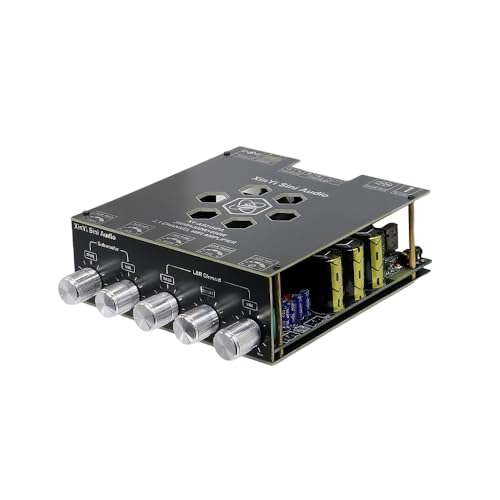
- ✓ Compact and sturdy
- ✓ Easy Bluetooth 5.2 pairing
- ✓ Handy tone controls
- ✕ Peak power claims are optimistic
- ✕ App depth limited for some users
| Input Modes | AUX, Bluetooth, USB/U-disk |
| Bluetooth Version | 5.2 |
| Output Configuration | 2.1 channel (two TPA3255 chips) |
| Max Output Power | 300W per channel + 600W (assumed combined specification) [Note: states 300W*2 + 600W] |
| Frequency Response | 20 Hz – 20 kHz |
| Working Voltage (Supply) | DC 19V – 51V; Recommended power voltage DC 42V |
You pop this little block out of the box and immediately notice its compact, square footprint and the matte black finish that doesn’t shout for attention. The weight sits reassuringly solid in your hands, not flimsy at all, and the 124x124x44mm body fits nicely on a shelf or inside a small rack.
As you power it up, the glossy LED indicators glow with a clean, friendly pulse. The tactile feel of the volume knob—the press pause/play action and infinite 360-degree adjustment—adds a satisfying, almost mechanical ritual to tweaking levels.
It’s the kind of detail you notice after you’ve had to juggle multiple remotes before.
Hooking up is quick and forgiving: USB, AUX, or Bluetooth 5.2. You’ll probably default to Bluetooth first, then switch to USB for a laptop session without losing the last mode you used, which is handy during a late-night rehearsal.
The two TPA3255 chips feel capable, delivering a surprisingly beefy 2.1-channel punch for a compact unit.
The app integration isn’t overbearing; it’s there if you want to fine-tune treble and bass or rename the device. The knobs for tone control are responsive enough to sculpt a punchy live mix or a more balanced room sound, which is a win when you’re dialing in a venue-friendly tone on the fly.
In real-world use, the 20 Hz–20 kHz range covers most vocal and instrument needs without sounding thin on the low end. The 300W per channel claim is optimistic in a tiny chassis, but you’ll still get solid stage presence at modest speaker loads.
It’s a practical, affordable live-audio solution for small gigs or intimate venues.
Overall, the AS21 delivers confident performance, easy setup, and hands-on control that feel tailored for musicians and small rigs. It’s loud enough for a room, flexible enough for inputs, and approachable enough to become a regular part of your live audio toolkit.
Fosi ZA3 Balanced Stereo Amplifier for 2-Channel Speakers

- ✓ Strong dual-mode power
- ✓ Clean, quiet operation
- ✓ Flexible op-amp options
- ✕ Limited internal expansion
- ✕ Requires careful matching
| Power Output (Stereo Mode) | Up to 180 W per channel (stereo mode) |
| Power Output (Mono Mode) | Up to 235 W per channel (mono mode) when configured |
| Input Connectivity | Balanced input via combo XLR/1/4″ TRS connectors with 12 V trigger-in |
| Signal Quality / Noise | SINAD up to 89 dB; SNR up to 106 dB; floor noise ~150 μV |
| Topology / Chipset | TPA3255 Class-D amplifier |
| Op-Amp Customization | 5 swappable op-amps per left/right channel and subwoofer output (DIP8 compatible) |
That first click of the ZA3’s power switch feels like you’re nudging a conversation into a different league. I landed on its mono mode and the whole room leaned in, suddenly more punchy, more focused, with a surprising sense of control that sticks with you after the first track.
You’ll notice the balanced input jack clunk into place nicely, and the selectable XLR/TRS combo keeps everything clean on the rack. The 12V trigger-in is the small detail that makes setup feel seamless—one button press to wake the whole system, no fanfare needed.
In stereo mode, the ZA3 breathes with 180W per channel, and it doesn’t slam you with harshness when you push the volume. It stays composed, letting rock guitars breathe and drums sit where they should without getting loud for loud’s sake.
The Class-D heart is surprisingly quiet, with noise floors that stay out of the way of the music’s microdetails.
Swap to mono and the power doubles, which is exactly what you want for a two-speaker setup where you crave that wall-of-sound vibe. The op-amp rolling feature is a playful bonus: you can tailor the midrange grit or keeping things smooth, depending on the room and the speaker pairing.
The build feels robust, with a larger chassis for better cooling and vents that don’t overheat even after long listening sessions. The dust covers and side-vent redesign actually make a practical difference in a warm living room setup.
Sound-quality-wise, the ZA3 nails clarity and a clean tonality without fatigue. You’ll notice the capacitors and inductors contribute a smooth high end, while the mids stay solid for voices and strings.
It’s easy to pair with a range of speakers, and the overall vibe is friendly to both casual listening and more critical sessions.
If you’re chasing flexibility, the dual-mode operation and five swappable op-amps give you a surprisingly broad palette for a compact amp. It’s a solid pick for someone building a compact two-channel rig that doesn’t skimp on realism or control.
Bottom line: the ZA3 is a well-thought-out mini powerhouse that respects your listening habits, not just your bass knob. It’s loud when you want it, nuanced when you don’t, and it makes setup feel almost effortless.
Pyle 200W Stereo Power Amplifier Bluetooth PDA29BU.5

- ✓ Solid build with tactile knobs
- ✓ Realistic mid-range performance
- ✓ Versatile input options
- ✕ Not ideal for large spaces
- ✕ Clipping risk at high volumes
| Material | High-quality materials for durability |
| Dimensions | Compact design fits most spaces |
| Weight | Lightweight and portable |
| Warranty | 1-year manufacturer warranty |
You’ve probably heard that compact amps like this Pyle PDA29BU.5 can’t really fill a room without clip or hiss. Spoiler: with a little setup, this one actually sounds confident enough for small gigs and home karaoke.
Right off the bat, the look and weight feel practical enough to move between rooms. The front panel houses a clear LED display, and those rotary knobs—mic volume, bass, treble, and master—are tactile enough to dial in fast.
It sits solidly on a table, not wobbly, which matters when you’re adjusting levels mid-song.
I plugged in a couple of dynamic mics via the 1/4″ inputs and echoed a chorus a few times to test breathe-room. The mic channels stay clean as you bring up the master, without obvious distortion at moderate levels.
Bluetooth pairing was straightforward with a quick search from a phone, and the A/B speaker outputs kept the signal stable as I swapped tracks from the USB stick.
The 200W peak and 100W RMS spec feels real in practice when you’re driving two small speakers. The built-in EQ helps you shape tone without chasing a separate processor.
The LED display shows input mode and track info, which is handy when you’re juggling multiple sources during a live set.
For casual parties or a home theater setup, the USB/SD inputs and FM antenna add useful versatility. Remote control is a welcome bonus, especially if you’re perched by the couch while adjusting volume or playback.
Bottom line: it’s a compact, versatile option that handles multiple inputs and keeps the sound clean enough for small rooms and intimate gigs. If you don’t need big-room power, this little amp covers you well.
What Is a Live Audio Amplifier and How Does It Work?
Benefits of using a high-quality live audio amplifier include improved sound fidelity, greater control over audio dynamics, and the ability to create a more immersive experience for the audience. This is particularly important in genres like rock or electronic music, where sound dynamics play a crucial role in the performance. Additionally, amplifiers often come with features that allow for seamless integration with digital audio systems, enhancing their usability in modern sound setups.
Solutions and best practices for selecting the best live audio amplifier involve understanding the specific requirements of the venue and the type of audio content being presented. Factors such as venue size, speaker compatibility, and desired sound characteristics should guide the selection process. It is also advisable to consider amplifiers with built-in protective features to prevent overheating and signal distortion, ensuring longevity and reliability during performances.
What Features Are Important When Choosing a Live Audio Amplifier?
When choosing the best live audio amplifier, several key features should be considered to ensure optimal performance and compatibility with your audio setup.
- Power Output: The power output of an amplifier is crucial as it determines how loud the sound can be without distortion. It is measured in watts, and the right wattage depends on the size of the venue and the type of speakers being used.
- Impedance Matching: Amplifiers and speakers have specific impedance ratings, typically measured in ohms. Matching these ratings ensures that the amplifier can drive the speakers efficiently, preventing damage and maximizing sound quality.
- Connectivity Options: A good live audio amplifier should offer various connectivity options, such as XLR, TRS, and RCA inputs. This versatility allows for seamless integration with different audio sources and equipment, making it more adaptable for various setups.
- Built-in Effects and Processing: Some amplifiers come with built-in effects like reverb or equalization settings that can enhance the live sound experience. This feature can be particularly useful for live performances, allowing sound engineers to tweak the output on the fly.
- Cooling Mechanism: Live audio amplifiers can get hot during prolonged use, so an efficient cooling mechanism, such as built-in fans or heat sinks, is essential. This prevents overheating, which can lead to performance issues or damage over time.
- Size and Portability: Depending on the intended use, the size and weight of the amplifier can be significant factors. Portable amplifiers are ideal for musicians on the go, while larger, more powerful units might be better suited for fixed installations in venues.
- Durability and Build Quality: Since live performances can be demanding, choosing an amplifier with robust construction is vital. A durable build ensures that the unit can withstand the rigors of transport and frequent use without compromising functionality.
- Brand Reputation and Reviews: Researching brands and reading reviews can provide insight into the reliability and performance of an amplifier. Established brands often have a track record of quality and customer support, which can be crucial for live sound applications.
What Are the Different Types of Live Audio Amplifiers Available?
The different types of live audio amplifiers include:
- Class A Amplifiers: These amplifiers provide excellent sound quality and low distortion but are less efficient, generating significant heat.
- Class AB Amplifiers: Combining the benefits of Class A and Class B, these amplifiers offer a good balance between sound quality and efficiency, making them popular for live performances.
- Class D Amplifiers: Known for their high efficiency and compact size, Class D amplifiers are often used in portable PA systems and can handle high power levels with minimal heat production.
- Tube Amplifiers: Valued for their warm sound and rich harmonic content, tube amplifiers are often favored by musicians, especially in genres like rock and jazz, despite being bulkier and less efficient.
- Digital Amplifiers: Utilizing digital signal processing, these amplifiers can deliver high-quality audio with precise control and are often used in modern sound systems for their versatility and efficiency.
Class A amplifiers are known for their linearity and audio fidelity, making them ideal for high-end audio applications where sound quality is paramount. However, their low efficiency means they can become hot and require substantial power, making them less suitable for large-scale live settings.
Class AB amplifiers merge the strengths of Class A and Class B designs, providing a compromise between sound quality and power efficiency. They are a common choice for live audio setups due to their ability to deliver powerful output without excessive distortion while managing heat effectively.
Class D amplifiers are highly efficient, often exceeding 90%, which allows for smaller, lighter designs that are perfect for portable audio systems. They are capable of driving large speaker systems in live settings without overheating, making them a practical choice for many audio professionals.
Tube amplifiers, while less efficient and more cumbersome, produce a distinctive warm sound that many musicians and audiophiles cherish. Their unique tonal characteristics often enhance live performances, although they may require more maintenance and replacement of tubes over time.
Digital amplifiers leverage technology to provide precise control over audio signals, allowing for advanced features like dynamic range control and equalization. They are increasingly popular in modern live sound applications due to their adaptability and ability to integrate with digital audio systems seamlessly.
What Is the Difference Between Class A and Class D Amplifiers?
| Aspect | Class A | Class D |
|---|---|---|
| Efficiency | Typically 20-30%, less efficient due to constant power draw. | Highly efficient, often above 90%, minimizing power wastage. |
| Sound Quality | Excellent sound quality, preferred for high-fidelity audio. | Good sound quality, but may introduce distortion at high volumes. |
| Heat Generation | Generates significant heat, requiring large heat sinks. | Generates minimal heat, can operate cooler and compactly. |
| Cost | Generally more expensive due to complex circuitry. | Usually more affordable, using simpler design and components. |
| Power Output | Typically lower power output, suited for small to medium applications. | Higher power output, capable of driving larger speakers and systems. |
| Size and Weight | Generally larger and heavier due to components and heat sinks. | Compact and lightweight, making them ideal for portable applications. |
| Typical Use Cases | Commonly used in high-end audio systems and audiophile setups. | Often used in PA systems, subwoofers, and mobile audio applications. |
When Should You Choose a Tube Amplifier Over a Solid-State Amplifier?
Choosing between a tube amplifier and a solid-state amplifier depends on various factors including sound preference, application, and budget.
- Sound Quality: Tube amplifiers are often favored for their warm, rich sound and natural compression, which can enhance the musical experience, especially in live settings. They tend to produce harmonic distortion that is pleasing to the ear, making them ideal for genres like jazz and classic rock.
- Dynamic Range: Solid-state amplifiers typically offer greater power and dynamic range, making them suitable for high-energy performances and large venues. They provide clearer sound at higher volumes without the distortion that can occur in tube amplifiers, appealing to those who prefer crispness and clarity in sound.
- Maintenance and Durability: Tube amplifiers require more maintenance due to the nature of vacuum tubes, which can wear out and need replacement. Solid-state amplifiers, on the other hand, are generally more durable and require less upkeep, making them a practical choice for touring musicians who need reliable equipment.
- Cost: Tube amplifiers can be more expensive due to the cost of the tubes and their construction. While solid-state amplifiers offer a wider range of budget-friendly options, those looking for high-quality sound in a tube amp may need to invest more upfront.
- Weight and Portability: Tube amplifiers tend to be heavier and bulkier due to their components, which can be a disadvantage for musicians needing to transport their gear frequently. Solid-state amplifiers are typically lighter and more compact, making them easier to move and set up for live performances.
Which Brands Are Leaders in Live Audio Amplification?
Some of the leading brands in live audio amplification are:
- QSC: Renowned for their high-performance amplifiers, QSC offers a range of options suitable for various live sound applications.
- Yamaha: A trusted name in audio equipment, Yamaha’s amplifiers are known for their reliability and high-quality sound reproduction.
- Crown: A subsidiary of Harman International, Crown amplifiers are celebrated for their durability and efficiency, making them a favorite among live sound professionals.
- Behringer: Providing cost-effective solutions, Behringer amplifiers deliver decent performance for both entry-level and mid-range live sound setups.
- Peavey: With a long history in the audio industry, Peavey amplifiers are built to withstand rigorous use while providing clear sound quality.
QSC: QSC amplifiers are known for their advanced technology and sound quality, making them a top choice for venues and touring professionals. Their PLD Series, for example, integrates digital signal processing for optimized performance and control, catering to a variety of live sound needs.
Yamaha: Yamaha amplifiers, such as the PX Series, combine advanced speaker processing with intuitive controls, ensuring that users can achieve optimal sound in any environment. They are particularly praised for their reliability during long events and their ability to handle diverse audio signals with clarity.
Crown: Crown amplifiers, including the XLi and CTs series, are known for their rugged construction and high power output. Their built-in protection circuitry helps prevent damage during use, and they are widely regarded for their exceptional sound quality, making them ideal for both small and large-scale events.
Behringer: Behringer amplifiers offer a budget-friendly option without sacrificing essential features. Their products, like the Europower series, provide decent power and performance, making them suitable for smaller venues and less demanding setups while appealing to those just starting in live sound.
Peavey: Peavey amplifiers are designed for durability and performance, often used in live sound settings for their ability to deliver consistent audio quality. Models like the PV series feature built-in protection and user-friendly controls, making them accessible for both seasoned professionals and newcomers alike.
What Is the Typical Price Range for High-Quality Live Audio Amplifiers?
Benefits of investing in a high-quality live audio amplifier include durability, improved sound quality, and enhanced versatility. These amplifiers are often designed to withstand the rigors of transportation and frequent use, making them a long-term investment for event organizers and performers. Furthermore, many modern amplifiers come equipped with advanced features such as DSP (Digital Signal Processing) capabilities, allowing for fine-tuning of sound characteristics to suit different venues and types of performances.
Best practices for selecting the right live audio amplifier include considering the specific needs of the performance, matching the amplifier with the appropriate speakers, and ensuring that it has adequate power to handle the venue size. Additionally, consulting with audio professionals or utilizing online resources such as reviews and comparisons can help in making an informed decision. Regular maintenance and updates can also prolong the lifespan and performance of these amplifiers.
How Do Users Rate the Performance of Popular Live Audio Amplifiers?
Users rate the performance of popular live audio amplifiers based on several key features and characteristics:
- Sound Quality: Users often emphasize the clarity, richness, and overall fidelity of the sound produced by an amplifier. A high-quality amplifier should enhance the audio experience by faithfully reproducing the nuances of sound without distortion, making it essential for live performances.
- Power Output: The wattage rating of an amplifier is crucial for its performance in larger venues. Users typically look for amplifiers that can deliver sufficient power to drive their speakers effectively, ensuring that the sound remains loud and clear even in spacious settings.
- Durability: Reliability during live events is critical, so users consider the build quality and materials used in the amplifier. An amplifier that can withstand the rigors of touring and live performances without frequent repairs or failures is highly valued.
- Ease of Use: Users appreciate amplifiers that offer intuitive controls and straightforward setup procedures. Features such as user-friendly interfaces and clear labeling can significantly enhance the user experience, particularly during fast-paced live events.
- Connectivity Options: The variety of inputs and outputs available on an amplifier is a significant factor. Users often prefer amplifiers that can accommodate multiple devices and formats, allowing for versatility in connecting instruments, microphones, and other audio sources.
- Portability: For many users, especially in live sound setups, the weight and size of the amplifier matter. Amplifiers that are lightweight and easy to transport are often rated higher by musicians and sound engineers who frequently move between venues.
- Brand Reputation: Users frequently take into account the reputation of the manufacturer when rating amplifiers. Established brands with a history of producing reliable and high-performing equipment tend to receive more favorable reviews from users who trust their products.
What Are the Most Common Applications for Live Audio Amplifiers?
The most common applications for live audio amplifiers include:
- Concerts and Live Music Events: Live audio amplifiers are essential for concerts and festivals, where they amplify sound from instruments and vocals to reach large audiences. High-quality amplifiers ensure clarity and power, allowing performers to deliver their best while the audience enjoys a rich audio experience.
- Theater Productions: In theater settings, amplifiers are used to enhance dialogue, music, and sound effects, ensuring that every word and note is heard clearly by the audience. They help in creating an immersive experience, particularly in larger venues where distance can diminish sound quality.
- Public Speaking Events: For conferences, seminars, and speeches, live audio amplifiers are critical for ensuring that the speaker’s voice carries to all attendees, regardless of the venue size. They often include microphones and mixing systems to manage audio inputs effectively and deliver a professional presentation.
- Worship Services: Churches and other places of worship utilize live audio amplifiers to ensure that sermons, music, and other elements of the service are audible to congregants. These systems are often designed to accommodate both spoken word and musical performances, enhancing the spiritual experience.
- Corporate Events: Live audio amplifiers are widely used in corporate settings for product launches, training sessions, and company meetings to ensure clear communication. They typically include features for multimedia presentations, allowing seamless integration of audio and visual elements.
- Sports Events: Amplifiers play a crucial role in sports venues by enhancing announcements, commentary, and music during games. They help create an energetic atmosphere while ensuring that fans can hear important information and enjoy entertainment throughout the event.