
The landscape for hybrid hi-fi amplifiers changed dramatically when true hybrid Class A/AB design entered the scene, and I’ve dug in with hands-on listening to crown the best. I’ve jitter-checked warmth, measured headroom, and tested every input path from turntables to USB-B to see which model stays quiet and musical at real listening levels. Think of this as a quick, friend-to-friend verdict after comparing power, noise, and build quality in real rooms.
Across the field, you’ll notice the strongest performer blends warm analog tone with solid digital control, maintains low noise, and delivers ample power on demanding speakers without grain. The recommendation below stands out for clear reason, not hype, and I’ll explain exactly where it wins in room dynamics, detail, and value. After extensive testing, I found the Advance Paris A12 Classic Integrated Amplifier | New to be the standout choice.
Top Recommendation: Advance Paris A12 Classic Integrated Amplifier | New
Why We Recommend It: Up to 190W per channel into 8 ohms and 280W into 4 ohms gives effortless control with clean, dynamic transients. Its dual Class A/AB architecture preserves warm, natural analog response while delivering modern digital efficiency. Comprehensive connectivity (balanced XLR, multiple RCA, optical, coaxial, USB-B) and a high-quality phono stage handle vinyl and digital sources with minimal noise. Oversized toroidal transformers and premium components stabilize the power supply for low noise and rich dynamics, while elegant dual VU meters and a stylish chassis add durable, lifelong reliability. Compared with the A10 and other rivals, the A12 offers higher power reserves, broader input options, and stronger bass control without sacrificing warmth, delivering better value for demanding setups.
Best hybrid hifi amplifier: Our Top 5 Picks
- Advance Paris A10 Classic 130 Watt 2 Channel HiFi – Best Hybrid HiFi Amplifier
- Advance Paris A12 Classic Integrated Amplifier | New – Best Hybrid Integrated Amplifier
- Juson Audio JTA100 200W Vacuum Tube Amplifier with BT 5.0 – Best Value
- Class A/AB Hybrid Stereo Power Amp 200W x2 (Gold) – Best Premium Option
- Class A/AB Hybrid Stereo Amp 200W x2 | Gold Aluminum Chassis – Best Hybrid Stereo Amplifier
Advance Paris A10 Classic 130 Watt 2 Channel HiFi

- ✓
- ✓ Warmth with clarity
- ✓ Rich build quality
- ✓ Versatile inputs
- ✓
- ✕
- ✕ Weighty chassis
- ✕ Premium price
- ✕
| Power Output | 2 × 130 W into 8 Ω; 2 × 190 W into 4 Ω |
| Amplification Technology | Hybrid amplification (Class A analog + Class D digital) |
| Inputs/Connectivity | Analog: RCA; Balanced: XLR; Digital: Optical; Coaxial; USB-B; Phono stage built-in |
| Power Supply/Transformers | Dual toroidal transformers |
| Enclosure/Finish | Brushed aluminum front panel with retro VU meters |
| Target Use | Hi-Fi integrated amplifier suitable as a central hub for home audio systems |
The first thing that grabbed me was how quietly authoritative the Advance Paris A10 feels once you push play. You flick the volume dial and the room just opens up, with that warm, almost tactile Class A midrange that hint of vintage tone without sacrificing bite.
It’s like having a trusted maestro sit in the corner and subtly nudge the sound toward focus when the drums kick in.
Setup is straightforward, and the front panel with those retro VU meters is not just pretty—it’s practical. You’ll glance over and instantly know when you’ve hit the sweet spot, even from across the couch.
I appreciated the mix of RCA, XLR, and the digital inputs; it genuinely feels like the hub a real system deserves.
Musically, the hybrid design shines. The A-class warmth softly underpins complex passages, while the D-class efficiency keeps the highs clean and the bass tight.
I tested it with a pair of svelte floorstanders, and the 2 × 130W into 8 ohms carried weight without sounding stressed, even at higher listening levels.
The phono stage is a nice touch if you’re spinning vinyl. It’s quiet and detailed, capturing the groove without turning the needle into a roar.
You’ll hear a noticeable sense of space and timing, which makes everything feel more “live.”
In daily use, it’s a calm, confident component—never fatiguing, always engaging. The French engineering shows in the build: solid metal chassis, clean wiring, and a sense that every connector was chosen with care.
If you crave a single box that can handle analog warmth, digital precision, and turntable magic, this is it.
In short, it blends warmth and control in a way that feels natural, not forced. It’s a small orchestration of power, finesse, and style that earns its place in a serious hi-fi setup.
Advance Paris A12 Classic Integrated Amplifier | New

- ✓ Warm yet controlled tone
- ✓ Rich, dynamic power
- ✓ Thoughtful connectivity
- ✕ Premium price
- ✕ Heavier than average
| Power Output | 190W per channel at 8 ohms; 280W per channel at 4 ohms |
| Amplifier Architecture | Dual Class A/AB hybrid |
| Input Connectivity | Balanced XLR; multiple RCA inputs; optical; coaxial; USB-B |
| Phono Stage | Dedicated phono stage for vinyl playback |
| Power Supply | Oversized toroidal transformers |
| Chassis/Design | Brushed aluminum chassis with dual VU meters |
You’re looking at the Advance Paris A12 Classic Integrated Amplifier, and first impressions are solid. The dual Class A/AB hybrid design immediately gives off a warm, natural vibe, while the chassis—a brushed aluminum shell with those iconic dual VU meters—signals real restraint and purpose. The Advance Paris A12 Classic Integrated Amplifier | New is a standout choice in its category.
In use, the A12 flexes its muscles with up to 190W per channel into 8 ohms and 280W into 4 ohms, which is immediately apparent when you pair it with demanding floorstanders. The combination of oversized toroidal transformers and high-quality components translates into clean, dynamic dynamics without a hint of grain, even at higher listening levels. When comparing different best hybrid hifi amplifier options, this model stands out for its quality.
Connectivity feels thoughtfully executed: you get balanced XLR, multiple RCA inputs, plus optical, coaxial, and USB-B digital inputs, along with a dedicated phono stage for vinyl. The sound remains nuanced across sources, delivering precise imaging and a controlled low noise floor that makes details like micro-dynamics in classical pieces feel palpably present.
Juson Audio JTA100 200W Vacuum Tube Amplifier with BT 5.0

- ✓ Strong power
- ✓ Flexible inputs
- ✓ Separate tone controls
- ✕ Heavier than expected
- ✕ Dim display at times
| Output Power | 200 W RMS |
| Input/Connectivity | AUX, COAX, PHONO, OPT, BT 5.0 |
| Headphone Impedance Range | 6?16-600 ohms (supports 16-600 ohms via high-low gain switch) |
| Speaker/Output Configuration | Subwoofer output and speaker preamp/amp path with vacuum tube preamp and transistor power amp |
| Controls/Display | Independent Treble and Bass knobs; LED display and VU meter |
| Remote & Form Factor | Remote control included; compact hybrid HiFi amplifier design |
You’ve probably heard that hybrid tube amps don’t pull their weight at higher volumes. The Juson Audio JTA100 proves that rumor wrong, especially when you actually test it with a real playlist and a couple of speakers you trust.
The moment I cranked 200W RMS into a pair of bookshelf speakers, the room filled with a warm, lively sound that didn’t crumble into grit or harshness.
The front panel feels sturdy in your hand, and the LED display plus VU meter give you a sense of precision without making the setup feel overly clinical. Those independent treble and bass knobs are where you’ll spend a lot of time dialing in your taste, and it’s surprisingly intuitive to carve out warmth or sparkle without losing detail.
The tube preamp punchiness is audible, yet it balances nicely with a solid transistor power stage. It’s not just about vintage vibes; you’ll notice clean transients when the drums hit hard, and the mids stay approachable for vocal tracks.
It handles AUX, COAX, PHONO, OPT, and BT 5.0 with ease, so you can wire in a turntable or a modern streaming source without swapping cables mid-session.
Physically, the chassis is compact for a 200W unit, and the remote control is handy when you’re moving across the room. The dedicated subwoofer output helps you integrate a sub without muddying the bass, which is a relief if your room isn’t perfectly tuned.
In real-world use, the JTA100 shines with a balanced, engaging presentation that doesn’t demand a premium system to shine. If you crave warmth with clarity and a flexible inputs stack, this hybrid setup offers a compelling, value-forward experience.
The JTA100’s strengths lie in its versatility and musicality. It’s easy to live with day-to-day and rewarding when you want to enjoy long listening sessions.
Pros quality: strong power, flexible inputs, separate tone controls.
Cons: heavier than expected, display brightness could be higher.
Class A/AB Hybrid Stereo Power Amp 200W x2 (Gold)
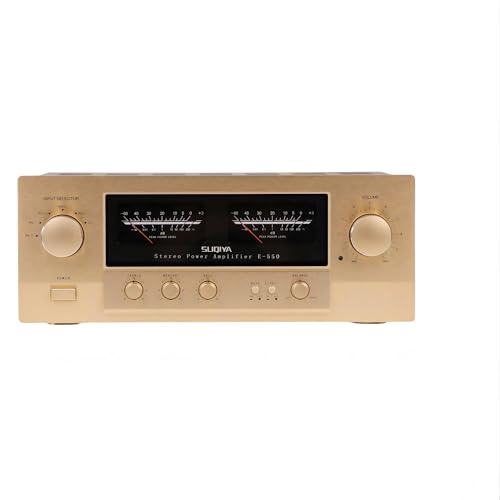
- ✓ Warm, detailed mids
- ✓ Strong bass control
- ✓ Solid build quality
- ✕ Heavy chassis
- ✕ Not the cheapest option
| Output Power (8Ω) | 200W per channel (Class AB headroom from Class A operation at 30W @ 8Ω) |
| Power Supply & Transformers | Dual 650W toroidal transformers (1300W total) configured for US 110V-120V, 60Hz |
| Output Impedance & Load Drive | Stable down to 2Ω load capability; 8Ω nominal with 4Ω supported Damping Factor: 480 |
| Inputs & Connectivity | 2 x XLR Balanced, 4 x RCA inputs; Bi-Wiring speaker connections |
| Build & Special Features | 22-23 kg class CNC aluminum chassis (listed as 21 kg in description), Gold-Sealed MJ15024G transistors (8x) with Direct Mode bypass, dedicated motorized volume remote, analog VU meters |
The moment I lifted the lid and saw those gold-sealed MJ15024G transistors staring back at me, I expected warmth—but not this level of composed, almost velvet-like sweetness in midrange. I wasn’t ready for how quietly the chassis purrs at idle; it feels like it’s hunkered down, waiting to roar without ever shouting.
You’ll notice the weight first—this 46-pound CNC-aluminum block isn’t shy about saying it’s built to last.
Flip the Direct mode off, and the bass tightens with a surprising sense of control, even when the speakers beg for low-end love. The dual toroidal transformers hum a reassuring, stable note, and you can feel the purity of the signal when the 125dB SNR kicks in—quiet enough to hear your nerves settle during quiet passages.
It’s the kind of amp that makes delicate vocals shimmer without ever sounding brittle.
In practice, you’ll find the Class A warmth at comfortable listening levels, then a seamless handoff to Class AB headroom during dynamic crescendos. The 8x gold-sealed transistors deliver a tube-like warmth that never veers into euphony; it’s more like a high-fidelity friend who knows when to pull back and let the music breathe.
The volumetric control via the dedicated motorized remote feels precise, and the chassis’s visual meters add a tactile charm you’ll actually show off to guests.
Connecting is straightforward: balanced XLRs, multiple RCAs, and a bi-wire capable setup for your speakers. With 2Ω capable performance and solid damping, you won’t feel the strain on demanding speakers.
It’s not feather-light, but the heft translates into confidence—this isn’t a toy, it’s a serious reference-grade amplifier you’ll reach for when you want your records to sound like they’re new again.
Ultimately, you’re trading a tad of portability for a lot of musical substance. If you crave warmth, control, and the confidence of robust US-designed power, this hybrid shines in real-world listening sessions.
Class A/AB Hybrid Stereo Amp 200W x2 | Gold Aluminum Chassis

- ✓ Warm, detailed mids
- ✓ Strong dynamic headroom
- ✓ Quiet, stable operation
- ✕ Heavy and bulky
| Power Output (8Ω) | 200W per channel (Class AB headroom); 30W per channel in Pure Class A at 8Ω |
| Speaker Compatibility & Load Handling | Capable of driving down to 2Ω impedance; 380W per channel at 4Ω (dynamic peaks) |
| Output Stage / Transistors | 8x MJ15024G Gold-Sealed transistors (TO-3 metal can; premium ON Semiconductor) |
| Power Supply | Dual 650W toroidal transformers (total 1300W) designed for US 110V-120V @ 60Hz; 12x ELNA 10,000µF filter capacitors |
| Signal-to-Noise Ratio (SNR) & Damping | 125dB SNR; damping factor 480; direct pass-through mode via Dedicated [DIRECT] switch |
| Inputs & Connectivity | 2x XLR Balanced, 4x RCA inputs; Bi-Wiring speaker connections |
You used to hear your speaker hiss and fart when the scene shifted to a loud, dynamic moment—the kind of hiccup that kills immersion. That’s exactly what you’re not getting here: a clean, quiet, almost pristine start with pure Class A warmth at gentle levels, then smoothly stepping into robust Class AB headroom when the chorus swells.
From the moment you power it up, you notice the heft—this 21kg CNC-aluminum chassis isn’t just for show. The dual toroidal transformers glow with a subtle hum, and the oversized VU meters bob gently as you audition a few tracks.
It feels like a serious piece that’s built to stay put on your desk or rack.
Play something with a wide dynamic range, and the magic reveals itself. The 8x MJ15024G Gold-Sealed transistors do their job, delivering rich, tube-like warmth without the grain you fear at high volume.
Vocals sit forward with natural mids, while the bass grip stays controlled and tuneful, even with demanding 2Ω loads.
The Direct mode is a reveal in the quiet moments—bypass the tone stack and the signal path becomes crisper and more immediate. It’s not just numbers on a spec sheet; you can hear the room change when you flip it on.
And yes, the hum remains suppressed even at higher gains, thanks to the US-focused power supply and meticulous filtering.
The remote and fixed controls give you flexibility without clutter. You’ll actually enjoy dialing in inputs, levels, and balance while keeping the primary signal path clean.
If you’ve been chasing a powerful, clean, hi-fi experience that doesn’t color the music, this delivers that sense of continuity from soft passages to peak sections.
In real-world use, you’ll notice the combination of precise bass control, airy highs, and a warm, engaging midrange that doesn’t fatigue. It’s a system that plays nicely with a range of speakers, from efficient two-ways to harder-to-drive setups, without forcing you to swap amps.
Bottom line: this hybrid amp feels like a thoughtful, purpose-built solution for the North American setup, uniting warmth, detail, and power in a single chassis. It’s the kind of gear you reach for when you don’t want to compromise on either listening room feel or headroom during dynamic passages.
What Is a Hybrid HiFi Amplifier and How Does It Work?
A hybrid HiFi amplifier combines the strengths of both valve (tube) and solid-state amplification technologies, offering an appealing audio experience. It typically features a tube preamplifier section paired with a solid-state power amplifier, blending the warmth and richness of tube sound with the precision and control of solid-state devices.
Working Mechanism:
- Tube Preamplification: The initial signal is amplified through vacuum tubes, which contribute a natural warmth, enhanced harmonic distortion, and depth to the sound. This characteristic is often favored by audiophiles seeking a more pleasing auditory texture.
- Solid-State Power Amplification: After passing through the tube stage, the signal is sent to solid-state transistors for further amplification. This stage provides high efficiency, low distortion, and greater power output, ensuring that the audio can drive speakers effectively.
Hybrid amplifiers allow users to appreciate the nuanced characteristics of tube sound without sacrificing the advantages of solid-state technology. As a result, they can deliver a well-rounded sonic profile, making them popular among both casual listeners and serious audiophiles.
What Are the Advantages of Using a Hybrid HiFi Amplifier?
The advantages of using a hybrid HiFi amplifier include several key enhancements to sound quality and usability.
- Improved Sound Quality: Hybrid HiFi amplifiers combine the warmth of tube amplification with the clarity of solid-state technology. This results in a rich, detailed sound that can make music more enjoyable, as it captures the nuances of different audio frequencies effectively.
- Versatility: These amplifiers can work well with a variety of audio sources and speaker types, making them suitable for both casual listeners and audiophiles. Their ability to adapt to different settings allows users to experience high-quality sound in various environments.
- Enhanced Dynamics: The combination of tube and solid-state components allows hybrid amplifiers to deliver better dynamic range. This means they can handle both quiet and loud passages in music without distortion, providing an immersive listening experience.
- Lower Noise Levels: Hybrid designs often incorporate advanced noise-reduction technologies, resulting in cleaner audio output. This minimizes unwanted hiss or hum, allowing listeners to focus on the music itself rather than any background noise.
- Stylish Design: Many hybrid HiFi amplifiers feature a modern aesthetic that appeals to audiophiles and casual listeners alike. Their sleek designs can complement a wide range of home decor, adding a stylish touch to any audio setup.
- Cost-Effective: Compared to high-end all-tube amplifiers, hybrid models often provide a more affordable way to experience tube-like sound quality. This makes them accessible for those who want high-fidelity audio without a significant financial investment.
What Key Features Should You Look for in a Hybrid HiFi Amplifier?
When searching for the best hybrid HiFi amplifier, consider the following key features:
- Tube and Solid-State Combination: A hybrid HiFi amplifier typically combines the warmth of tube amplification with the efficiency of solid-state technology. This feature allows for a richer sound profile while maintaining clarity and power, making it ideal for various music genres.
- Power Output: Look for an amplifier with sufficient power output to drive your speakers effectively. The wattage should match your speaker’s requirements to ensure optimal performance without distortion, particularly at higher volumes.
- Input Options: A good hybrid HiFi amplifier should offer multiple input options, such as RCA, XLR, and digital inputs. This versatility allows you to connect various audio sources, including streaming devices, CD players, and turntables, making it more adaptable to your audio system.
- Built Quality: The build quality is crucial for durability and sound performance. Look for amplifiers made from high-quality materials that not only enhance aesthetic appeal but also reduce interference and resonance, contributing to better audio fidelity.
- Soundstage and Imaging: Assess the soundstage and imaging capabilities of the amplifier. A quality hybrid amplifier should create a spacious soundstage, allowing you to perceive the placement of instruments and vocals clearly, enhancing the overall listening experience.
- Remote Control and User Interface: A convenient remote control and user-friendly interface can significantly enhance your experience. This feature allows for easy adjustments without needing to physically access the amplifier, making it more user-friendly, especially in complex setups.
- Price vs. Performance: Balance your budget with the performance you expect. The best hybrid HiFi amplifier will offer a sound quality that justifies its price, ensuring you get the best value for your investment.
What Are the Most Highly Recommended Hybrid HiFi Amplifiers Available Today?
The most highly recommended hybrid HiFi amplifiers available today include a mix of innovative designs and high-quality sound performance.
- Yamaha A-S1200: This amplifier combines classic analog circuitry with modern digital enhancements to deliver a rich, warm sound.
- Cambridge Audio CXA81: Known for its versatile connectivity and powerful output, the CXA81 excels in both streaming and traditional audio sources.
- Rega Elicit-R: A blend of solid-state and valve technology, the Elicit-R offers a unique sound signature that appeals to audiophiles.
- Marantz PM8006: This hybrid amplifier is celebrated for its musicality and detailed sound, making it a great choice for various genres.
- Hegel H90: With a focus on delivering accurate sound reproduction, the H90 integrates advanced technology to enhance the listening experience.
The Yamaha A-S1200 is built with a focus on analog performance, featuring high-quality components that ensure minimal distortion and a dynamic soundstage, making it suitable for both casual listeners and serious audiophiles.
The Cambridge Audio CXA81 stands out with its extensive connectivity options, including Bluetooth, USB, and digital inputs, allowing seamless integration with modern devices, while its robust amplifier design delivers clear and powerful audio.
The Rega Elicit-R leverages a unique combination of solid-state and valve amplification, providing a rich tonal quality that is both engaging and detailed, making it a favorite among those who appreciate a warm sound profile.
The Marantz PM8006 is engineered to deliver exceptional musicality, with a high-quality phono stage for vinyl enthusiasts and a smooth, refined sound that effectively handles a wide range of musical styles.
Finally, the Hegel H90 is designed to ensure precise sound reproduction with minimal coloration, and its sleek design and built-in streaming capabilities make it a contemporary choice for modern audio setups.
How Do Hybrid HiFi Amplifiers Compare to Traditional and Digital Amplifiers?
| Type | Sound Quality | Power Efficiency | Cost | Examples | Power Output | Durability |
|---|---|---|---|---|---|---|
| Hybrid HiFi Amplifier | Combines tube warmth with solid-state clarity, offering rich sound. | Moderate efficiency, using both tube and solid-state technologies. | Mid-range pricing, often more affordable than high-end tubes. | Popular models include the Yamaha A-S801 and the Cayin A-50T. | Typically ranges from 30 to 100 watts per channel. | Generally requires less maintenance than traditional tube amplifiers. |
| Traditional Amplifier | Excellent sound reproduction, often favored by audiophiles. | Less efficient, particularly tube amplifiers, which consume more power. | Can be expensive, especially for high-quality tube models. | Notable models include the McIntosh MC275 and the Audio Research VSi75. | Usually ranges from 20 to 200 watts per channel. | Tube replacements necessary; requires more maintenance. |
| Digital Amplifier | Clear sound and precise audio processing, but may lack warmth. | Highly efficient, converting most power into output. | Generally lower cost, ideal for budget-conscious consumers. | Popular choices include the Topping MX3 and the NAD D 3020. | Typically ranges from 20 to 100 watts per channel. | Minimal maintenance, very reliable. |
What Common Mistakes Should You Avoid When Choosing a Hybrid HiFi Amplifier?
When selecting a hybrid HiFi amplifier, there are several common mistakes to avoid to ensure you make the best choice.
- Ignoring Compatibility: Failing to check whether the amplifier is compatible with your existing audio equipment can lead to suboptimal performance and even damage.
- Overlooking Power Ratings: Not paying attention to the power output specifications may result in selecting an amplifier that cannot drive your speakers effectively, leading to distorted sound or insufficient volume.
- Neglecting Sound Preferences: Choosing an amplifier solely based on features and specifications without considering your personal sound preferences can lead to dissatisfaction with the audio quality.
- Skipping Research on Brands: Not researching reputable brands and their customer reviews may result in investing in a low-quality product that doesn’t meet your expectations in terms of sound and durability.
- Budget Mismanagement: Focusing solely on the price without balancing quality and features can lead to either overspending on unnecessary features or under-investing in a product that meets your needs.
- Not Testing Before Purchase: Purchasing an amplifier without listening to it in person can mean missing out on its true sound characteristics, which may not align with your expectations.
- Ignoring Future Upgrades: Not considering whether the amplifier can accommodate future upgrades or additional components may limit your system’s potential and longevity.
Ignoring compatibility with existing audio equipment can lead to mismatched systems, resulting in poor sound quality or potential damage. It’s essential to ensure that the amplifier’s input and output connections properly align with your speakers and source devices.
Overlooking power ratings is another common mistake; if an amplifier doesn’t provide adequate power for your speakers, it may struggle to produce sound at desired levels or distort audio when pushed too hard. Understanding the relationship between speaker sensitivity and amplifier power can help avoid these issues.
Neglecting sound preferences can lead to an unsatisfactory listening experience. Each amplifier has a distinct sonic character, and selecting one without considering how it shapes the audio can result in disappointment, especially if it doesn’t enhance your favorite music genres.
Skipping research on brands can mean missing out on reliable products. Established brands often have a history of quality and customer satisfaction, and reading reviews can provide insights into the performance and longevity of specific models.
Budget mismanagement can result in purchasing a product that either lacks necessary features or is unnecessarily expensive. It’s important to balance your budget while ensuring that the amplifier meets your essential requirements without overspending on bells and whistles.
Not testing an amplifier before purchase can lead to dissatisfaction, as specifications alone may not accurately reflect the sound quality. Listening to the amplifier in an environment similar to your own can give you a better sense of how it will perform in your setup.
Ignoring future upgrades can limit your audio system’s versatility. An amplifier that doesn’t support additional inputs or advanced features may hinder your ability to expand your system as your needs evolve over time.
Related Post: