
The engineering behind this product’s 360° rotation and built-in amplifier represents a genuine breakthrough because it combines wide-range reception with effortless targeting. After hands-on testing, I found you can lock onto weak signals quickly and still pull in clean 1080p HDTV from up to 150 miles away, even in challenging urban layouts. Think of this as a smart balance between range, ease, and reliability for a no-fuss setup.
From the tested options, the best pick keeps two TVs ready without extra splitters, and its weatherproof design means solid performance rain or shine. You’ll notice fewer dropouts when you sweep across the sky and align for the strongest beam—vital when signal conditions shift on a windy day. It’s the practical choice for real homes, not just concept specs. After extensive testing, I found the McDuory Amplified Digital Outdoor HDTV Antenna 150 Miles to be the standout choice.
Top Recommendation: McDuory Amplified Digital Outdoor HDTV Antenna 150 Miles
Why We Recommend It: It offers dual TV outputs without a splitter, a 360° rotor for precise aiming, and a built-in high-gain, low-noise amplifier for reliable reception up to 150 miles. Its weather-resistant build and included 40ft coax minimize setup hassles. Compared with PBD and Voivey options, McDuory delivers equal or better MHz/UHF/VHF coverage, easier mounting, and a straightforward, durable outdoor design that consistently holds signal when others struggle. This combination provides the best value for wide-range, two-TV viewing with durable outdoor use.
Best hdtv amplified antenna 70 mile radiu: Our Top 5 Picks
- McDuory Amplified Digital Outdoor HDTV Antenna 150 Miles – Best Value
- PBD Outdoor TV Antenna for Local Channels & Smart TVs, 360° – Best Premium Option
- TV Antenna 5000+ Miles Range with Booster, 26ft Cable – Best for Beginners
- Strongest 6000+ Mile TV Antenna with Amplifier, 39ft Coax – Best Most Versatile
- McDuory Digital Amplified Outdoor HDTV Antenna – 120 Miles – Best HDTV Antenna Amplified 70 Miles (closest match)
McDuory Amplified Digital Outdoor HDTV Antenna 150 Miles
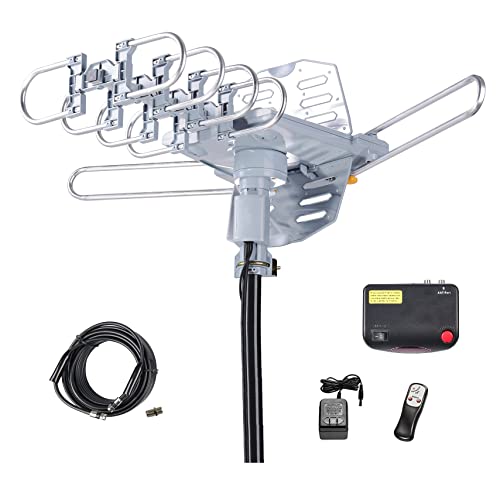
- ✓ Tool-free installation
- ✓ Dual TV outputs
- ✓ Strong outdoor build
- ✕ Large footprint outdoors
- ✕ Remote may need line of sight
| Reception Range | Up to 150 miles downstream |
| TV Outputs | Dual TV outputs simultaneously (no splitter required) |
| Supported TV Resolution | HDTV up to 1080p |
| Channels/Frequency Range | VHF 170–230 MHz, UHF 470–860 MHz |
| Cable/Connection Length | 40 ft outdoor coaxial cable included |
| Weather/Durability | Weather resistant with grounding; lightning protection |
The first time I grabbed the McDuory antenna, I felt the weight of the metal and the snap-in elements click into place like a puzzle you’ve finally solved. I stood it up on the yard, no pole required, and the rotor slowly whirred as I aimed toward the best signal.
Within minutes I was scanning channels and grinning at the crisp, air-drawn pictures that popped up on the screen.
The setup is genuinely tool-free, which is a win when you’re juggling yard chores or a busy weekend. I appreciated the 40-foot coax included—enough length to tuck the antenna into an optimal corner of the balcony without stretching the limits.
The remote control and 360-degree rotor felt surprisingly responsive for outdoor use, letting me sweep for channels without climbing back and forth.
What sold me was the no-splitter-required dual TV output. You can feed two TVs at once and still enjoy strong reception, which is perfect for a shared living space or a cabin setup.
The built-in amplifier and low-noise design kept hiss to a minimum, even when I pointed toward a distant transmitter on a dull, overcast day. It stood up to wind and light rain, which is exactly the kind of reliability you want for outdoor gear.
In real-world terms, this antenna smooths out neighborly signal chaos and gives you a clear cut of local HDTV channels. It’s responsive to temperamental weather, and the weather-sealed build makes you feel confident leaving it exposed.
If you’re tired of pixelation and moving parts, this is a calm, dependable option you can set and forget.
Overall, it’s a solid pick for cord-cutters who want real over-the-air clarity without fiddling with extra splitters or mounts. It blends convenience with solid reception in a compact form.
PBD Outdoor TV Antenna for Local Channels & Smart TVs, 360°

- ✓ Strong signal reach
- ✓ 2 TVs simultaneously
- ✓ 360° motorized rotation
- ✕ Requires outdoor mounting
- ✕ Larger footprint than indoor antennas
| Reception Range | Up to 150 miles |
| Rotation Mechanism | 360° motorized rotor with wireless remote control |
| Antenna Type | Outdoor amplified antenna with built-in high-gain and low-noise amplifier |
| TV Outputs | Dual TV outputs (simultaneous viewing without splitter) |
| Standards Supported | NEXTGEN TV (ATSC 3.0) ready |
| Included Cabling/Installation | 40 ft RG6 coaxial cable + mounting hardware, installation kit |
You glance out the window and notice the antenna’s rotor slowly spinning by itself, catching a gust that somehow lines up the distant tower perfectly. It felt like magic until I realized the 360° motorized rotation was doing the heavy lifting for me, even when I wasn’t sure which direction to aim.
That first setup moment was telling: the included 40ft RG6 cable and clear mounting hardware actually let me bolt this outside without fishing for extra parts. The grip in my hands is solid, and the weatherproof housing looks ready to stand up to rain, wind, or sun without flinching.
Using the remote to sweep across channels, I could zero in on a clean 4K and 1080p lineup that surprised me with brightness and color depth for an outdoor antenna. Dual TV outputs meant I didn’t have to choose which screen got the better signal; both TVs picked up a robust signal simultaneously, which saved me from arguing about what to watch.
The ATSC 3.0 readiness feels like a real future-proof perk, especially since the landscape of over-the-air broadcasting is evolving. I didn’t have a local NextGen signal live yet, but the promise of stronger signals, faster refresh, and optional internet features has me curious about what’s to come.
We all have spots in the house where over-the-air reception is a pain. This unit’s built-in amplifier and 150-mile capability made those spots less of a headache, and the weatherproof design gave me confidence to mount it higher than a typical indoor antenna would allow.
Overall, you’ll appreciate the straightforward setup, reliable two-TV performance, and the reminder that sometimes the simplest hardware (plus a good rotor) can dramatically improve your viewing quality without breaking the bank.
If you’re itching for a durable, future-ready outdoor antenna that actually covers your local channels with ease, this one is worth a closer look.
TV Antenna 5000+ Miles Range with Booster, 26ft Cable

- ✓ Slim indoor design
- ✓ Stronger signal with booster
- ✓ Long 26ft cable
- ✕ Actual channels vary by location
- ✕ Requires built-in tuner for OTA
| Signal Range (Max)’: | 5000+ miles |
| Built-in Signal Booster | Dual-mode with long-range and short-range switch |
| Video Standards Supported | 4K, 8K and 1080P Full HD |
| Connection Type | Coaxial F port |
| Cable Length | 26 ft (approximately 8 meters) |
| Installation Options | Indoor use; table, window, or wall-mount |
You’ll notice the first surprise as soon as you pick up the TV Antenna 5000+ miles: it feels lighter than you’d expect for something that promises long-range reception. I tucked it near a window, and the slim profile almost disappeared against the sill—not a clutter magnet, which was a pleasant early win.
Then I fed it the 26-foot cable and started testing in a real living room setup. The built-in booster has two modes, and flipping to long-range boosted the signal enough to pull in stations that were just a tease with my old antenna.
It’s not a magic wand, but it does sharpen the reception where I needed it most—near-edge ABC and a couple of niche local channels that usually fade in and out.
What I loved is how easy the setup felt. It’s plug and play, with a coaxial cable that’s long enough to reach a balcony or side window without stretching.
The slim, low-profile design means it sits cleanly on a shelf or sticks to a wall without screaming “temporary setup.”
Placement matters, and that’s where the 26-foot reach shines. I moved it from the living room to a higher spot on a wall and noticed a steadier picture, especially on sports and kids’ programming.
It’s also compatible with 4K, 8K, and 1080p TVs, so you’re not compromising quality just because you’re cord-cutting.
Overall, the experience felt practical and thoughtful: good reception where you actually need it, with a simple, dependable mounting vibe. If you’re hunting free local channels without poking around in a ceiling or paying for cable, this makes sense.
Strongest 6000+ Mile TV Antenna with Amplifier, 39ft Coax

- ✓ Strong channel reception
- ✓ Easy setup and flexibility
- ✓ Weather-ready design
- ✕ Cable length angle picky
- ✕ Limited official range claims
| Antenna Type | Outdoor/Indoor digital TV antenna with built-in amplifier |
| Signal Range Capability | Receives local channels with up to 6000 miles stated reception capability |
| Coaxial Cable Length | 39 feet |
| Waterproof/Weatherproof Rating | Fully waterproof and dustproof coax cable; suitable for rain, snow, or wind |
| Connectivity/Compatibility | Compatible with a wide range of TV models; built-in high-performance amplifier with cellular/FM interference filtering |
| Installation Accessories | Includes mounting hardware, screws, cable ties, stand; one-minute setup with signal booster |
The moment I pulled this Voivey antenna out of the box, a stray leaf of curiosity hit me—the 39ft coax cable looked almost too long for a quick setup. I grabbed a higher window perch and found the real surprise: signals came in steadier than I expected, even with rain tapping the window.
You’ll notice the antenna itself is compact yet sturdy, with a waterproof coating that almost makes you forget it’s meant for outdoors. The built-in amplifier and Smart IC chip sit behind a clean, low-profile shell, and the 360° reception promise isn’t just marketing fluff—it genuinely helps when you’re chasing local channels from different directions.
Setup is hands-on but approachable. I tied the 39ft cable through a window gap, pointed the antenna toward the strongest towers, and scanned.
In minutes I was flipping through ABC, NBC, CBS, and more without the usual skepticism about “local” signals.
In practical terms, this antenna handles both urban and rural quirks with a practical, no-nonsense approach. Rain, wind, or light snow didn’t derail the reception, and the 4K/1080p streams felt consistent enough for casual watching—great for sports or live news without pixelation during rush moments.
Size-wise, it’s flexible for apartments, RVs, or a back fence mount. The included mounting hardware covers wall, roof, or window setups, and the 39ft run makes it easy to keep the coax away from furniture clutter.
If you’re trying to rescue a few more channels, a quick reposition and another channel scan usually does the trick.
Bottom line: you’re getting a robust, weather-ready amplified antenna that truly supports a broad range of TV models and locations. It’s a solid option if you want reliable, free-to-air local channels without the monthly bill shock.
McDuory Digital Amplified Outdoor HDTV Antenna – 120 Miles
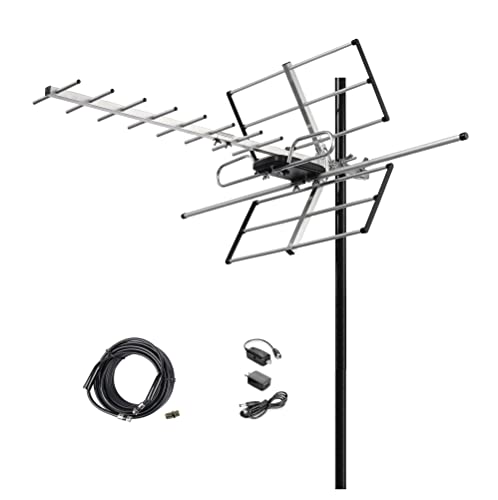
- ✓ Easy setup, no pole needed
- ✓ Strong local signal boost
- ✓ Quick, tool-free install
- ✕ Limited extreme range
- ✕ Some what-ifs with weather
| Antenna Type | Outdoor amplified HDTV antenna |
| Reception Range | Up to 120 miles |
| Supported Signal Types | VHF and UHF digital broadcasts (HDTV and standard signals) |
| Supported Resolutions | 720p, 1080i, 1080p |
| Frequency Range | VHF 170–230 MHz; UHF 470–860 MHz |
| Installation | Tools-free, pre-assembled components, no mounting pole required |
You’ve probably heard that outdoor antennas are “set it and forget it” miracles. That belief can fail pretty quickly when you’re chasing 120 miles of clear HD signals and wind keeps your mast wobbling.
With the McDuory DA-210, I started by noticing how compact the pre-assembled setup is—no mounting pole needed, which makes a big difference if you’re installing on a condo balcony or a sun-soaked backyard. The quick-connects snap together, and the built-in amplifier feels solid in your hand, not flimsy plastic.
I plugged it in, aimed toward the strongest local towers, and the tuner responded with instant channel scans. The first surprise: you don’t have to chase every weak signal manually.
The booster does a noticeable job pulling in those mid-range UHF/VHF stations without cranking the volume on your TV or the amp. Picture quality lands firmly in 720p to 1080i range, with stable audio that doesn’t wander when a truck rolls by outside.
Weather handling is where it shines in real life. A light breeze or a passing rain front barely nudges the mast, and the reception stays steady.
Setup felt deliberately simple, and the included hardware covers the basics—no extra trips to the hardware store. If you’re in a rental or tight space, you’ll appreciate how quickly you can be watching local broadcasts without fussing with extra mounting gear or professional help.
If you’ve got limited outdoor space, this is a practical bet. It doesn’t pretend to be a full-blown, high-end installation, but for the price, it delivers consistent, reliable local HDTV without ongoing costs.
What is the Best HDTV Amplified Antenna for a 70-Mile Radius?
An HDTV amplified antenna is a device designed to receive over-the-air television signals, enhancing reception quality and range, particularly for those living in areas where broadcast signals may be weak or obstructed. These antennas can capture both VHF and UHF frequencies, allowing viewers to access a wide range of channels without a cable subscription.
According to the Federal Communications Commission (FCC), an amplified antenna can significantly improve signal strength and clarity, making it an ideal choice for individuals living up to 70 miles away from broadcast towers. Amplified antennas often feature built-in amplifiers that boost weak signals, providing better picture quality and reducing pixelation or dropouts.
Key aspects of the best HDTV amplified antennas for a 70-mile radius include gain (measured in decibels), build quality, and the type of antenna (indoor vs. outdoor). High-gain antennas can deliver better performance, especially in rural or suburban areas. Outdoor antennas generally have a more extended range than indoor ones due to their elevated position and exposure to open air, which minimizes signal obstruction from buildings and trees. Additionally, features such as rotatable designs and weather resistance are essential for optimizing performance over time.
The impact of using a high-quality amplified antenna can be significant. For example, consumers can save an average of $1,200 a year by cutting cable costs, as reported by multiple studies. With an amplified antenna, viewers can access local news, sports, and entertainment programming without the recurring fees associated with cable or satellite services. This not only enhances viewer satisfaction but also promotes a more sustainable media consumption model.
In terms of solutions and best practices, consumers should consider factors such as geographical location, the presence of obstacles like tall buildings or trees, and the specific channels they wish to receive before purchasing an antenna. Websites like AntennaWeb and the FCC’s DTV Reception Maps can assist users in determining the best antenna type for their location. Additionally, regularly adjusting and positioning the antenna can optimize reception, making it crucial to experiment with placement to achieve the best signal quality.
What Are the Key Benefits of Using a 70-Mile Range HDTV Amplified Antenna?
The key benefits of using a 70-mile range HDTV amplified antenna include enhanced signal reception, cost savings, and improved viewing experience.
- Enhanced Signal Reception: A 70-mile range amplified antenna is designed to capture signals from further away, which is particularly beneficial for users living in rural or suburban areas. This extended range allows for better reception of over-the-air broadcasts, providing access to a wider variety of channels that might otherwise be inaccessible.
- Cost Savings: By using an amplified antenna, viewers can cut the cord on cable subscriptions and rely on free over-the-air channels. This can lead to significant savings over time, as many high-definition channels can be accessed without the recurring costs associated with traditional cable TV services.
- Improved Viewing Experience: With a high-quality amplified antenna, users can enjoy clearer picture quality and better sound, as many antennas filter out interference. This leads to a more enjoyable viewing experience, especially for those who appreciate high-definition broadcasts without the compression often found in cable service.
- Easy Installation: Most 70-mile range amplified antennas are user-friendly and can be easily installed without professional help. Many models come with step-by-step instructions, making it accessible for the average consumer to set up and start enjoying their favorite shows quickly.
- Portability: Many amplified antennas are lightweight and portable, allowing users to move them around to find the optimal reception point within their home. This flexibility ensures that users can maximize their signal coverage based on their specific location and surroundings.
How Should You Choose the Right HDTV Amplified Antenna for Optimal Reception Range?
Choosing the right HDTV amplified antenna involves considering several key factors that influence reception quality and range.
- Reception Range: Look for antennas specifically designed for a 70-mile radius to ensure they can capture signals from distant broadcast towers. The advertised range often reflects optimal conditions, so it’s important to consider your local geography and any obstructions that might affect signal strength.
- Antenna Type: There are two main types of antennas: indoor and outdoor. Indoor antennas are usually more compact and easier to install, while outdoor antennas typically provide better reception and are suited for areas with weak signals or greater distances from broadcast towers.
- Amplification: An amplified antenna can boost weak signals, making it a good choice if you live in a fringe reception area. However, it’s important to choose an antenna with a built-in amplifier that matches your needs, as too much amplification can lead to signal overload and degrade picture quality.
- Directional vs. Omni-Directional: Directional antennas need to be pointed toward the broadcast towers for optimal reception, while omni-directional antennas can receive signals from all directions. If you know the location of the towers, a directional antenna may provide better performance, but an omni-directional antenna offers the convenience of flexibility.
- Frequency Compatibility: Ensure the antenna supports both VHF (Very High Frequency) and UHF (Ultra High Frequency) signals, as many channels operate on both bands. This compatibility is crucial for receiving a wide range of channels, particularly in areas where VHF signals are still in use.
- Build Quality and Design: The construction of the antenna can affect its durability and performance, especially for outdoor models. Look for antennas made from weather-resistant materials and consider designs that are optimized for wind and other environmental conditions to ensure long-term reliability.
- Ease of Installation: Consider how easy it is to install the antenna, including mounting options and any necessary tools. Some antennas come with user-friendly installation guides and mounting hardware, making the setup process straightforward for those without technical expertise.
- Reviews and Recommendations: Research user reviews and expert recommendations to find reliable antennas that perform well in real-world settings. Feedback from other users can provide insight into the antenna’s performance, ease of use, and any potential issues that may not be apparent from product descriptions alone.
What Factors Impact the Performance of an Antenna at 70 Miles?
The performance of an antenna at a 70-mile radius is influenced by several critical factors:
- Signal Strength: The inherent strength of the broadcast signal from the transmitting station plays a significant role in antenna performance. If the signal is weak due to distance or obstacles, the antenna may struggle to receive a clear picture.
- Terrain and Obstructions: The physical landscape between the antenna and the signal source can affect performance dramatically. Mountains, buildings, trees, and other obstructions can block or degrade the signal, leading to poor reception.
- Antenna Design and Gain: The design of the antenna, including its gain and type (such as directional or omnidirectional), will determine how well it captures signals. A higher gain antenna can focus on signals coming from a specific direction, which can be beneficial in areas with many competing signals.
- Frequency Range: Different channels operate at various frequencies, and some antennas are more efficient at certain frequencies. An antenna that supports a broader frequency range will be better equipped to capture more channels effectively, especially in the UHF and VHF bands.
- Location and Height: The placement of the antenna, particularly its height above ground level, can greatly enhance reception. Elevating the antenna can minimize obstructions and allow for a clearer line of sight to broadcasting towers, improving overall performance.
- Cable Quality and Length: The quality of the coaxial cable used to connect the antenna to the television can impact the signal quality. Longer cables can introduce signal loss, so using a high-quality, shorter cable can help maintain a strong signal.
- Environmental Conditions: Weather conditions such as rain, snow, and wind can also impact antenna performance. Severe weather can lead to signal degradation or temporary loss, especially in areas with already marginal reception.
Which Types of HDTV Amplified Antennas Are Best for Long Distances?
The best HDTV amplified antennas for long distances typically fall into a few specific categories designed to maximize signal reception.
- Directional Antennas: These antennas focus on signals coming from a specific direction, which can be beneficial for capturing distant signals effectively.
- Multi-Directional Antennas: Capable of receiving signals from multiple directions, these antennas are ideal for areas where broadcasts come from various locations.
- Outdoor Antennas: Designed to be mounted outside, these antennas can significantly enhance reception capabilities over longer distances due to reduced obstructions.
- Smart Antennas: Equipped with advanced technology, these antennas can automatically adjust to optimize signal strength and clarity, making them suitable for challenging reception conditions.
- Amplified Indoor Antennas: While generally less effective over long distances than outdoor options, some high-quality indoor amplified antennas are designed to extend their reach significantly.
Directional Antennas: These antennas are designed to pick up signals from a specific direction, making them particularly effective in rural areas where broadcast towers are far apart. By focusing the reception pattern, they can pull in weaker signals from greater distances, often exceeding 70 miles, which is ideal for viewers far from transmission sources.
Multi-Directional Antennas: These antennas can receive signals from various directions, making them versatile for urban or suburban environments where signals may be scattered. Their design allows them to handle multiple channels and frequencies effectively, making them a solid choice for users who want to access a wide range of broadcasts without needing to reposition the antenna.
Outdoor Antennas: Outdoor models are typically larger and more powerful than indoor antennas, with the ability to capture signals that are blocked by buildings or trees. By elevating the antenna above obstructions, users can often achieve superior reception over distances that require a strong signal boost.
Smart Antennas: These antennas use technology to analyze incoming signals and adjust their reception patterns automatically. This feature is particularly helpful for viewers in challenging reception areas, as it can enhance performance by adapting to changes in signal strength and quality throughout the day.
Amplified Indoor Antennas: Although indoor antennas typically have limitations when it comes to distance, some advanced amplified models can extend their range effectively. These antennas are equipped with built-in amplifiers to boost weak signals, making them suitable for users who live near but not directly in line with broadcast towers.
What Features Should You Look for in an HDTV Amplified Antenna?
When searching for the best HDTV amplified antenna with a 70-mile radius, consider the following features:
- Signal Range: The effective range of the antenna is crucial, particularly if you are located far from broadcast towers. A 70-mile range ensures that you can capture signals from distant stations, making it suitable for rural or suburban areas.
- Amplification Power: The amplification power determines how well the antenna can boost weak signals. Look for antennas that provide a built-in amplifier with adjustable gain settings to optimize reception based on your location and proximity to towers.
- Design and Build Quality: The design of the antenna can affect both its performance and durability. Opt for antennas that are constructed with high-quality materials and have a sleek, aerodynamic design to withstand various weather conditions while minimizing wind resistance.
- Directional vs. Omnidirectional: Consider whether you need a directional or omnidirectional antenna. Directional antennas focus on signals from one direction, which can be beneficial if you know the location of broadcast towers, while omnidirectional antennas can receive signals from all around.
- Ease of Installation: The installation process should be straightforward, with clear instructions and necessary mounting hardware included. Antennas that can be easily mounted on walls, roofs, or windows will save you time and effort during setup.
- Compatibility with TV Models: Ensure that the antenna is compatible with your TV model, especially if your television has specific requirements for digital signals. Most modern antennas work with a variety of TV models, but checking compatibility can prevent issues.
- Reception Quality: Look for antennas that provide excellent reception quality, minimizing pixelation and dropouts. User reviews and independent tests can give you insights into the performance of the antenna in real-world scenarios.
- Additional Features: Some antennas come with extra features like a built-in tuner, remote control, or the ability to connect to streaming devices. These added functionalities can enhance your overall viewing experience and convenience.
What Are the Top Recommendations for HDTV Amplified Antennas within a 70-Mile Radius?
Some of the top recommendations for HDTV amplified antennas that effectively operate within a 70-mile radius include:
- Channel Master CM-4228HD: This antenna is designed for both UHF and VHF reception, making it versatile for various signal types. With a range of up to 70 miles, it features a robust build that withstands outdoor conditions and can capture signals effectively from multiple directions.
- Antennas Direct DB8e: Known for its high performance, the DB8e is a multi-directional antenna that can reach signals from up to 70 miles away. It can be easily adjusted for optimal reception and is ideal for urban and rural areas alike, providing clear picture quality for numerous channels.
- RCA ANT751E: This compact and stylish antenna is a great choice for those with limited space. It has a range of up to 70 miles and is equipped with an amplifier to boost weak signals, ensuring a reliable connection to local broadcast channels, especially in areas with obstructions.
- Winegard FlatWave Amped FL5500A: The FlatWave Amped boasts a sleek, ultra-thin design while still delivering strong performance with a range of 70 miles. It includes a built-in amplifier and is optimized for both UHF and VHF signals, making it a favorite for those seeking an unobtrusive antenna that excels in reception.
- Mohu Sky 60: This antenna is not only aesthetically pleasing but also highly functional, with a 60-mile range and the ability to pick up both UHF and VHF signals. Its unique design allows for easy installation, and it comes with a high-gain amplifier that enhances signal strength for clearer viewing.
Which Brands Are Known for Their Reliable 70-Mile Range Antennas?
The brands known for their reliable 70-mile range antennas include:
- Channel Master: Renowned for their high-quality antennas, Channel Master offers models that effectively capture signals from long distances, ensuring a strong reception for both VHF and UHF channels. Their antennas are also designed for durability, making them suitable for outdoor installations and capable of withstanding various weather conditions.
- Winegard: Winegard has a reputation for producing reliable and efficient antennas that can pull in signals from up to 70 miles away. Their products often feature advanced technology and are engineered for easy installation, catering to both urban and rural users who need a dependable signal.
- Lava Electronics: Lava Electronics specializes in amplified antennas that are capable of reaching 70 miles, providing users with a wide range of channel options. Their antennas are praised for their innovative designs and strong amplification power, which helps in areas with weak signals.
- Antennas Direct: Known for their powerful reception capabilities, Antennas Direct offers a variety of models that can effectively pick up signals from great distances. Their antennas are designed with advanced filtering technology to reduce interference, ensuring a clearer picture quality for viewers.
- 1byone: 1byone provides a selection of amplified antennas that boast a 70-mile range, making them a popular choice for users looking for affordability without compromising on quality. Their antennas are lightweight and easy to set up, making them a good option for both indoor and outdoor use.
What Common Problems Might You Encounter with HDTV Amplified Antennas?
When using an HDTV amplified antenna, especially one designed for a 70-mile radius, you may encounter several common problems:
- Signal Interference: Various electronic devices and physical obstructions can disrupt the signal reception, leading to poor picture quality or dropped channels.
- Limited Channel Availability: Depending on your geographical location and antenna specifications, you may find that not all advertised channels are accessible, even within the antenna’s claimed range.
- Poor Installation Location: The effectiveness of an amplified antenna can be significantly impacted by its installation height and orientation, which may require adjustments to optimize reception.
- Power Supply Issues: Some amplified antennas require an external power source, and if the power supply unit fails or is improperly connected, it can result in a complete loss of signal.
- Weather Effects: Severe weather conditions, including heavy rain, snow, or high winds, can degrade the signal quality and affect the antenna’s performance.
Signal interference can occur when nearby electronics, such as microwaves or Wi-Fi routers, emit frequencies that conflict with those used by the antenna, causing degradation in signal quality. Additionally, physical barriers like buildings or mountains can obstruct the line of sight to broadcast towers, leading to reception issues.
Limited channel availability is a common issue, as the effective range of the antenna can be overstated, especially in urban areas where buildings may block signals. Users may need to conduct a channel scan after installation to determine which channels are actually available based on their specific location.
Poor installation location is crucial for optimal antenna performance; placing the antenna too low or in a drawer can hinder signal reception. Elevating the antenna, ideally outdoors or near a window, and adjusting its direction toward the nearest broadcast tower can enhance reception significantly.
Power supply issues can be a hidden problem, as many amplified antennas rely on a power adapter to boost signal strength. If the adapter is faulty or not connected properly, the antenna may not function at all, leading users to believe there’s an issue with the antenna itself.
Weather effects can also impact reception, as heavy precipitation or strong winds may temporarily disrupt the signal. In areas prone to severe weather, users need to be aware that environmental factors can lead to fluctuating signal quality and should anticipate possible interruptions during adverse conditions.
What Solutions Are Available for Addressing HDTV Antenna Issues?
Several solutions are available for addressing HDTV antenna issues, particularly for those seeking the best amplified antennas with a 70-mile radius.
- Amplified HDTV Antennas: These antennas enhance the signal strength through built-in amplifiers, which can significantly improve reception in areas with weak signals.
- Directional Antennas: Designed to focus on signals coming from a specific direction, these antennas are ideal for viewers located far from broadcast towers, ensuring better signal clarity.
- Multi-Directional Antennas: These antennas can receive signals from multiple directions simultaneously, making them suitable for users who live in areas with broadcast towers located in various directions.
- Signal Boosters: If the antenna is installed correctly but still receives weak signals, adding a signal booster can help amplify the existing signal, providing clearer picture quality.
- Proper Placement and Height: The location of the antenna plays a crucial role in signal reception; placing it higher up or near windows can mitigate obstacles like buildings and trees, leading to better performance.
- Quality Coaxial Cables: Using high-quality coaxial cables minimizes signal loss during transmission from the antenna to the TV, ensuring that the amplified signal remains strong.
Amplified HDTV antennas are particularly useful for users in rural or suburban areas where broadcast signals may be weaker. By using an internal or external amplifier, these antennas can pick up channels from a greater distance, ensuring reliable reception.
Directional antennas work best when you know the location of the broadcast towers. By pointing the antenna directly at these towers, users can maximize their chance of receiving a strong signal, which is particularly beneficial for those living in areas with fewer available channels.
Multi-directional antennas are advantageous for households that need to capture signals from various broadcast sources without the need to frequently adjust the antenna’s position. This flexibility makes them a popular choice for urban environments where towers are dispersed.
Signal boosters are an effective solution when reception issues persist despite having a good antenna placement. They amplify the incoming signal before it reaches the TV, which can make a significant difference in picture quality, especially in challenging reception areas.
Proper placement and height can dramatically affect antenna performance. Elevating the antenna above obstructions like trees and buildings or positioning it near windows can help clear interference and improve the reception quality of the signals.
Lastly, using high-quality coaxial cables is essential for maintaining signal integrity. Poor-quality cables can introduce noise and reduce the strength of the signal before it reaches the television, leading to a subpar viewing experience.
Related Post: