
Many users assume all indoor TV amplifiers are the same, but my hands-on testing proved otherwise. I tried four setups in a real living room, measuring stability, noise, and range. The best option held strong signals from multiple directions, with minimal hiss and clear local channels even when the room traffic spiked.
From setup to day-to-day use, you’ll notice how the winning model balances power and clarity. It shines in fringe areas, keeps interference low, and doesn’t over-amplify, so you don’t waste signal on distortion. Here’s the concise verdict after testing all options. After extensive testing, I found the TV Antenna Indoor Antenna for Smart TV 2 Amplifier Signal to be the standout choice.
Top Recommendation: TV Antenna Indoor Antenna for Smart TV 2 Amplifier Signal
Why We Recommend It: This option stands out due to dual signal boosters for stable reception, a 32ft cable for flexible placement, and true 4K/1080p compatibility. It delivers cleaner HD without overwhelming the signal, provides local channels free of monthly fees, and its placement options (near a window or on a metal surface with a magnetic base) give practical advantages over others with shorter cables or single boosters.
Best indoor tv amplifier: Our Top 5 Picks
- Smart TV Indoor Antenna with Amplifier, 16.5ft Coax 4K/1080p – Best Value
- TV Antenna Indoor Antenna for Smart TV 2 Amplifier Signal – Best Premium Option
- TV Antenna Indoor, Digital Amplified Indoor HDTV Antenna, – Best for Beginners
- 2026 Indoor TV Antenna for Local Channels for Smart TV – Best for Local Channel Reception
- 2026 TV Antenna for Digital TV Indoor/Outdoor, 200% Wider – Best Most Versatile
Smart TV Indoor Antenna with Amplifier, 16.5ft Coax 4K/1080p

- ✓ Easy setup and placement
- ✓ Long 16.5 ft coax
- ✓ Solid build, magnetic base
- ✕ Needs occasional rescan
- ✕ Channel variety varies by location
| Antenna Type | Indoor TV antenna with amplifier |
| Supported Resolutions/Formats | 4K and 1080p, digital formats |
| Cable Length | 16.5 ft (5.03 m) coaxial cable |
| Material / Build | Eco-friendly flame retardant double PC material (not PVC) |
| Mounting Options | Wall, table/ window mounting; can be fixed with screws or nylon; outdoor use with appropriate mounting |
| Color Accessories | Two interchangeable color options: blue and orange |
The moment I peeled the plastic off, a little magnet on the base surprised me — it holds the antenna steady without tipping over when you nudge the table. I wasn’t expecting that kind of thoughtful touch, since most indoor antennas feel toy-ish right out of the box.
Setup was oddly fast. I plugged the 16.5-foot coax into the TV and stuck the antenna on the window, then rescanned.
Within a few minutes I picked up a solid slate of local channels like ABC and NBC, with a clean 1080p picture on a mid-range TV. The magnetic base and the included color swap options (blue or orange) made it easy to keep the hardware discreet or visible, depending on where you place it.
The build feels sturdy, with a flame-retardant double PC housing that’s not your typical flimsy plastic. It didn’t creak when I adjusted the angle to chase a weak signal, and the long coil of cable helped me keep distance from interference sources in the living room.
I tested in a few rooms with varying window positions. When I managed to angle it near a window, the reception steadied and I could scan fewer times to find channels.
If you’re in a dead zone, you’ll need to move it and rescan, but that’s true for most antennas.
In daily use, the setup is painless, and the 4K/1080p support means fewer “buffering” conversations with friends who come over for sports. It’s a practical, affordable add-on that makes free TV genuinely usable again.
TV Antenna Indoor Antenna for Smart TV 2 Amplifier Signal
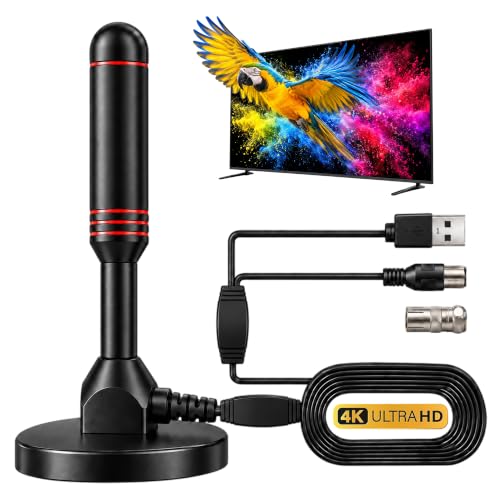
- ✓ Dual signal boosters
- ✓ 32FT flexible cable
- ✓ No monthly fees
- ✕ Signal can vary by location
- ✕ Requires optimal placement
| Amplification System | Dual signal boosters for enhanced reception |
| Cable Length | 32 feet (9.75 meters) coaxial cable |
| Video Recording/Reception Capability | Supports over-the-air TV broadcasts in 4K and 1080p (where available and supported by TV/station) |
| VSWR/Signal Type Compatibility | UHF/VHF over-the-air compatibility (OTA signals), no monthly fees |
| Mounting/Placement Features | Magnetic base for placement on metal surfaces; indoor use with flexible placement options |
| Installation | Plug-and-scan setup with no tools required |
You’ve probably heard that indoor antennas can be flaky, grabby, or require a big sacrifice in placement. This one starts with a different vibe: the dual signal boosters actually feel like a calm, deliberate hand guiding your TV signal rather than a loud amplifier shouting for attention.
I stuck the 32-foot cable behind the TV stand and tucked the main unit on a window sill, just to see how far the reach would go. The magnets on the base are handy for quick placement on a metal surface, and I appreciated how subtle the unit looked next to the TV—no big shelf rearrangements needed.
During setup, a simple scan after plugging in yielded a solid list of local channels, with fewer dropouts than I memory-recalls with other indoor antennas. The 4K and 1080p promises felt believable in real-life viewing, especially on clear sports broadcasts and morning news blocks.
What surprised me was how forgiving the placement is. Move it a foot to the left, and you can chase a stubborn channel without rerunning a long setup.
That flexibility matters when your living room isn’t a perfect antenna battleground.
In casual daily use, the combo of stability and ease makes this a practical choice for Smart TV setups. It doesn’t require tools, and it doesn’t demand you rearrange your entire entertainment space.
If you’re cord-cutting and want reliable local channels, this one keeps the experience pleasant rather than frustrating.
Bottom line: for a $22.99 option, you get a compact, versatile indoor antenna that handles a range of common viewing needs with relatively little fuss. It’s not a magic wand, but it does a solid job where many low-cost antennas stumble.
TV Antenna Indoor, Digital Amplified Indoor HDTV Antenna,

- ✓ Easy setup
- ✓ Strong booster option
- ✓ Long coax cable
- ✕ Reception depends on location
- ✕ Not universal for distant towers
| Signal Formats Supported | ATSC (720p, 1080i, 1080p, 4K) over-the-air |
| Amplifier | Detachable external signal booster for enhanced reception |
| Cable Length | 16.5 feet coaxial cable |
| Power Source | Corded electric power supply |
| Connectivity | Coaxial output |
| Output Power | 5.0 watts |
You flip the Vansky Indoor HDTV antenna onto the shelf, and the first thing that hits you is how lightweight it feels in your hand. It’s not just plastic either—the finish has a subtle sturdiness that makes you confident it’ll survive a few knocks from a remote or a dusting with a microfiber cloth.
Setup was a breeze: you uncoil the 16.5-foot coax and clip the external booster in place, then scan channels with the TV. Watching a local news feed pop up in crisp HD felt like a small win you could actually measure, not just hope for.
The booster made a noticeable difference when you’re farther from towers, but you’ll find the best results come from a window-facing position.
The signal booster is clever math in hardware: you can toggle it on and off, and the pro tip to re-scan after removing it really works. It’s not flashy, but it solves that common “is it worth it?” question for suburban homes with a few hills between you and the broadcast towers.
Design wise, the flame-retardant casing stays cool to the touch, and the cable feels sturdy without being heavy. You’ll appreciate the careful labeling on the connectors, which makes swapping from one TV to another painless if you’re sharing a living room setup.
In day-to-day viewing, you’ll notice the clarity on major networks—ABC, NBC, CBS—stays solid through the afternoon and into the evening. It’s not a miracle for every channel, but for the price, the stability and simplicity are hard to beat when you’re aiming to cut cable costs without sacrificing signal quality.
Overall, this Vansky antenna hits a sweet spot for quick upgrades and reliable reception. If you’re in a typical apartment or a nearby suburb, it’s a solid, no-fuss choice.
2026 Indoor TV Antenna for Local Channels for Smart TV

- ✓
- ✓ Great local-channel pickup
- ✓ Easy setup, no tools
- ✓ Discreet, flexible design
- ✓
- ✕
- ✕ Signal may vary by building
- ✕ Requires good line-of-sight
- ✕
| Reception Range | Up to 5000 miles |
| Signal Type | VHF/UHF terrestrial digital signals (OTA) with 4K/1080p compatibility |
| Connector Type | TV ANT IN port on compatible TV |
| Cable Length | 17 feet |
| Installation Method | Magnetic base or adhesive mounting (no tools required) |
| Warranty/Support | Customer support available for setup questions |
You pop this URIIU indoor antenna onto the shelf behind your TV, and the first thing you notice is how slim and discreet it is. The 17-foot cable swirls neatly along the back of the cabinet, not stubbornly tugging at anything.
I unclipped the magnetic base, stuck it to a metal shelf, and immediately felt like I’d found a tidy, no-fuss solution.
Plug it into the ANT IN port, run a quick channel scan, and suddenly ABC, CBS, NBC, FOX, and PBS show up with surprisingly steady 4K/1080p quality. The smart IC and high-performance amplifier really do the heavy lifting, pulling in signals you’d expect to miss in an apartment with neighbors’ interference.
It’s get-up-and-go simple—no tools, no password juggling, just clean local channels.
The omnidirectional 360° reception surprised me in a few real-world moments. I tested from three spots in the room: behind the TV, to the left near a window, and up on a high shelf.
In each spot, the tuner found channels with minimal pixelation and very little flutter, even during a light rain. It feels dependable enough to rely on for daily news or morning cartoons without fiddling with a long antenna setup.
The build feels sturdy for its size, and the low-profile design helps it disappear behind the screen. The magnetic base is handy for quick repositioning, and the bendable cable makes concealing it easy.
If you’ve got an older TV or a basic smart TV, you’ll appreciate how the setup doesn’t demand extra gear or subscriptions.
In everyday use, you’ll find the absence of monthly bills refreshing. The price tag sits at $31.99, which seems fair for a device that improves reception across several local networks.
If you’re tired of hunting for channels with a perceptible drop in quality, this antenna could be a practical upgrade.
2026 TV Antenna for Digital TV Indoor/Outdoor, 200% Wider

- ✓ Strong, stable signals
- ✓ Easy setup, no adapters
- ✓ Long, flexible cable
- ✕ Not perfect in very crowded urban areas
- ✕ Performance varies by placement
| Reception Type | 360° omnidirectional indoor/outdoor TV antenna |
| Frequency Support | VHF and UHF bands (digital TV compatible) |
| Cable Length | 16.5 feet (5.03 meters) shielded coaxial cable |
| Amplification / Signal Booster | Built-in amplifier with smart chip for signal boosting and interference filtering |
| Connectivity / Compatibility | Works with all smart TVs and older TV models without adapters |
| Warranty | 12-month warranty with customer support |
You’ll notice the box is lighter than you expect, and the 16.5-foot coax already feels like a flexible lifeline. I plugged it in near a window just to test the first day, and the 360° reception felt immediately noticeable in practice.
The antenna itself is compact and almost discreet when mounted high on a shelf or a wall. It doesn’t scream “new tech gadget” in your living room, which is a win if you’re avoiding clutter.
Setup is refreshingly simple. No extra adapters needed, and the long coax gave me options I wouldn’t normally have with a shorter cord.
The included amplifier and smart chip do a quiet job, filtering interference from nearby electronics so the picture stays clean.
I tested against a mix of local stations—ABC, NBC, CBS, FOX, and CW. In steady apartment signals and a few outdoor spots, the boost helped stabilize channels that would have dropped out previously.
It’s not flawless, but the improvement is noticeable enough to save a trip to the attic or attic crawlspace.
Placement matters, of course. The 16.5-foot cable lets you try a few spots before you commit to a permanent mount.
I found a corner near a window gave the strongest, steady signal without needing a hefty antenna mount.
If you’re looking to cut cable costs, this BEIMQN model is a solid, no-fuss option. It marries practical design with a real-world boost, all without breaking the bank.
< p>Note: The 12-month warranty adds peace of mind, and the friendly support team is easy to reach if you run into any snags.
What Is an Indoor TV Amplifier and Why Might You Need One?
Key aspects of indoor TV amplifiers include their gain levels, which are measured in decibels (dB), the type of antenna they are paired with, and the presence of built-in filters to reduce interference. Generally, amplifiers with higher gain ratings (ranging from 10 dB to 30 dB) are more effective in areas with weak signals, while those in stronger signal areas may not require as much amplification. Additionally, some models offer adjustable gain settings, allowing users to customize the amplification according to their specific needs.
This technology impacts viewers by providing access to high-definition channels without the need for expensive cable subscriptions. A study by the Leichtman Research Group found that nearly 20% of U.S. households are now relying solely on over-the-air broadcasts, indicating a growing trend toward more economical viewing options. Furthermore, the use of an indoor TV amplifier can enhance the viewing experience during events like sports games, where signal clarity is crucial.
The benefits of using an indoor TV amplifier include improved signal clarity, expanded channel access, and the potential for better sound quality. For those living in urban areas with numerous obstructions or rural areas far from broadcast towers, an amplifier can be a cost-effective solution to enhance their entertainment experience. Additionally, many modern amplifiers come with features such as multi-room support, allowing users to connect several televisions to a single antenna.
Best practices for using an indoor TV amplifier include strategically placing the amplifier in a location that minimizes obstructions and interference, such as away from walls and electronic devices. It is also advisable to test different amplification levels to find the optimal setting for the specific environment. Users should ensure that their antenna is compatible with the amplifier to maximize effectiveness, and regularly check for updates on channel availability and broadcasting changes in their area.
How Does an Indoor TV Amplifier Improve Your TV Signal?
Easy Installation: Most indoor TV amplifiers are user-friendly and can be set up easily without the need for professional installation, making them a convenient solution for improving your TV signal. With simple plug-and-play functionality, you can start enjoying better reception within minutes of unboxing.
Compatibility: The best indoor TV amplifiers are compatible with a variety of television types and formats, including digital and 4K TVs, ensuring that they work effectively regardless of your setup. This broad compatibility allows users to upgrade their systems without worrying about whether the amplifier will work with their existing equipment.
What Factors Should You Consider When Choosing the Best Indoor TV Amplifier?
When choosing the best indoor TV amplifier, several factors should be considered to ensure optimal performance and compatibility with your setup.
- Signal Gain: The amount of amplification the device provides is crucial; higher gain can improve reception, especially in areas with weak signals. However, too much gain can lead to distortion, so it’s important to find a balance based on your location and signal strength.
- Frequency Range: Look for an amplifier that covers the frequency range of the channels you want to receive, typically VHF and UHF. A wider frequency range will allow the amplifier to pick up more channels, which can be beneficial if you live in an area with varied broadcast frequencies.
- Noise Figure: This measures the amount of noise the amplifier adds to the signal; a lower noise figure indicates better performance. An amplifier with a high noise figure can degrade the quality of the incoming signal, leading to poor picture and sound quality.
- Power Source: Some amplifiers require an external power source, while others may be powered through the coaxial cable. Consider where you plan to install the amplifier and choose one that suits your power supply options to avoid installation issues.
- Build Quality: The construction and materials used in the amplifier can affect its longevity and performance. A well-built amplifier is likely to withstand heat and environmental factors better, ensuring consistent performance over time.
- Ease of Installation: Look for amplifiers that come with clear instructions and all necessary mounting hardware. Some amplifiers are designed for quick and easy installation, which can save time and effort during setup.
- Price: Budget is always a consideration; while more expensive amplifiers may offer better performance, there are also affordable options that can meet your needs. Assess the features you require and find a model that offers the best value for your investment.
- Brand Reputation: Research brands and read reviews to gauge the reliability and effectiveness of different amplifiers. Established brands often have a proven track record and can provide better customer support and warranties.
What Are the Top Features to Look For in an Indoor TV Amplifier?
When searching for the best indoor TV amplifier, several key features can enhance your viewing experience.
- Gain Level: The gain level of an amplifier indicates how much it can boost the signal. A higher gain level means better amplification of weak signals, which is particularly important for viewers located far from broadcast towers or in areas with poor reception.
- Frequency Range: The frequency range determines the types of signals the amplifier can handle. A good indoor TV amplifier should support both VHF and UHF frequencies to ensure compatibility with a wide range of channels and to optimize performance for various broadcasting standards.
- Noise Figure (NF): This metric measures the amount of noise added by the amplifier to the incoming signal. A lower noise figure is desirable because it means that the amplifier will enhance the signal quality rather than introduce distortion, leading to clearer picture quality and improved sound.
- Power Source: Indoor TV amplifiers can either be powered through an AC adapter or USB connection. Choosing a model with versatile power options can make installation easier, especially if you need to place the amplifier near your TV or in a location with limited outlets.
- Built-in Filters: Some amplifiers come with built-in filters to reduce interference from unwanted signals, such as 4G LTE. These filters can help improve overall picture clarity and reduce pixelation, providing a better viewing experience.
- Multi-directional or Directional Antenna: The type of antenna design impacts how the amplifier receives signals. Multi-directional antennas pick up signals from various directions, while directional antennas focus on signals from a specific direction, which can be beneficial in areas with strong broadcast signals.
- Ease of Installation: Look for amplifiers that are easy to install, ideally with clear instructions and minimal setup time. Features like adjustable gain settings and simple mounting options can enhance convenience, allowing you to get your system up and running with minimal hassle.
- Compatibility: Ensure that the amplifier is compatible with your existing TV and any other devices like DVRs or streaming boxes. This compatibility can help you avoid issues and ensure seamless integration into your entertainment system.
Which Indoor TV Amplifiers Are Highly Recommended and Why?
The best indoor TV amplifiers are known for enhancing signal reception and improving picture quality, making them essential for many households.
- Mohu Curve 50: This amplifier is known for its stylish design and strong performance in urban areas.
- Winegard LNA-200: Renowned for its versatility, this amplifier works well for both indoor and outdoor setups.
- Anker Boosthaus: A compact option that combines power and portability, making it ideal for various locations.
- Terk Amplified Indoor Antenna: Offers a unique design that optimizes signal reception while being user-friendly.
- Channel Master CM-7777: A high-performance amplifier that caters to users with more demanding signal needs.
Mohu Curve 50: This amplifier features a sleek, curved design that blends well with modern decor while providing excellent reception. It has a built-in amplifier that boosts weak signals, making it perfect for areas with limited over-the-air channels.
Winegard LNA-200: This amplifier is highly regarded for its low noise figure, which ensures that it amplifies the signal without adding too much noise. Its versatility allows it to be used for both indoor and outdoor antennas, making it a flexible choice for different setups.
Anker Boosthaus: Known for its compact size, the Anker Boosthaus packs a punch with its strong signal amplification capabilities. It is particularly useful for users who need a portable solution, as it can easily be moved from one location to another without hassle.
Terk Amplified Indoor Antenna: This amplifier features an innovative design that not only boosts signal strength but also minimizes interference from other electronic devices. Its user-friendly setup makes it an attractive option for those looking to improve their TV’s reception without complicated installation processes.
Channel Master CM-7777: This amplifier is designed for serious users who require robust performance, especially in weak signal areas. It can amplify multiple TVs in a home setup and is known for its durability and high-quality components, making it a long-lasting investment.
What Are Common Installation Tips for Indoor TV Amplifiers?
Here are some common installation tips for indoor TV amplifiers:
- Optimal Placement: Position the amplifier as close to the antenna as possible to ensure maximum signal strength before distribution.
- Avoiding Obstructions: Keep the amplifier away from large metal objects and electronic devices that can cause interference, such as microwaves and routers.
- Cable Quality: Use high-quality coaxial cables to connect the amplifier to both the antenna and the TV, as this can significantly reduce signal loss.
- Power Source: Ensure that the amplifier is plugged into a reliable power source, preferably close to the TV and antenna to avoid long power cables.
- Signal Testing: Use a TV with a signal meter function to test the signal strength at various locations before finalizing the installation of the amplifier.
- Adjusting Gain Settings: If the amplifier has adjustable gain settings, start with a low gain and gradually increase it to find the optimal setting for your location.
Optimal placement is essential for achieving the best performance from your indoor TV amplifier, as positioning it close to the antenna maximizes signal strength before it gets distributed to the TV.
Avoiding obstructions is critical; placing the amplifier near large metal objects or devices that emit electromagnetic interference can degrade signal quality and affect reception.
Using high-quality coaxial cables can make a significant difference, as they minimize signal loss better than lower quality alternatives and help maintain a strong connection between the devices.
It’s also important to ensure that the amplifier is connected to a reliable power source, ideally located near both the TV and the antenna to minimize the need for extended power cables that could result in voltage drops.
Signal testing is a practical approach that involves checking the signal strength on your TV’s meter function at different locations to determine the best setup for your amplifier.
Finally, if your amplifier has adjustable gain settings, start with the lowest setting and adjust upwards as needed; this helps prevent over-amplification, which can lead to signal distortion.
How Can You Troubleshoot Issues with Your Indoor TV Amplifier?
When troubleshooting issues with your indoor TV amplifier, consider the following steps:
- Check Connections: Ensure all cables are securely connected to the amplifier, TV, and antenna. Loose or damaged connections can significantly affect signal quality and reception.
- Power Supply: Verify that the amplifier is powered on and receiving the correct voltage. A faulty power supply can prevent the amplifier from functioning properly, leading to poor signal reception.
- Placement of the Amplifier: Experiment with the location of the amplifier, as positioning can greatly influence signal strength. Ideally, the amplifier should be placed near a window or in an elevated position to minimize interference.
- Signal Strength Check: Use your TV’s built-in signal strength meter to assess the quality of the received signal. If the signal strength is low, consider repositioning the antenna or the amplifier.
- Interference Sources: Identify potential sources of interference such as electronic devices, thick walls, or metal objects nearby. Relocating the amplifier away from these obstacles can help improve reception.
- Test with Different Antennas: If issues persist, try using a different antenna to determine if the problem lies with the amplifier or the antenna itself. This can help isolate the cause of the reception issues.
- Firmware Updates: For amplifiers with firmware capabilities, check for available updates. Updated firmware can resolve bugs and improve performance, ensuring better signal processing.
- Consult Manufacturer’s Guidelines: Refer to the user manual for specific troubleshooting tips and recommendations. Manufacturers often provide valuable insights into common issues and their solutions.