
You’ll notice the heft first—the Fosi Audio V3 Mono Power Amplifier feels solid in your hand, with a compact footprint and a premium metal chassis that radiates quality. The tactile switch and the breezy cooling vents shout you can trust it to stay cool while you push it hard. After swapping in a few components, you’ll hear this: clean, tight bass with minimal hiss, even at higher voltages.
Between the contenders, the V3 Mono stands out for its class‑D efficiency, PFFB tech, and hands‑on versatility (XLR or RCA, with upgradeable op‑amps). It’s designed to drive a single passive speaker or slot into a larger multi‑channel setup without losing fidelity, making it the most balanced pick for a dual mono approach that actually delivers value over time.
Top Recommendation: Fosi Audio V3 Mono Power Amplifier, 240W Class D Monoblock
Why We Recommend It: The Fosi V3 Mono excels with the high‑quality TPA3255 Class‑D chip, ultra‑low THD (0.006%), SINAD of 101dB, and SNR of 123dB. PFFB tech reduces load dependency, improving distortion and frequency response. It offers flexible inputs (XLR/¼” TRS balanced and RCA), easy gain selection, auto power/signal sensing, and the option to swap op‑amps (e.g., Sparkos, MUSES) for a tailored sound. Compared with the PRORECK system’s car‑bass focus and the Hifonics unit’s 700W but noisier environment, the V3 provides cleaner, studio‑grade performance in a compact home setup with superior value and upgrade potential.
Best dual mono amplifier: Our Top 4 Picks
- Fosi Audio V3 Mono Power Amplifier, 240W Class D Monoblock – Best for Dual Mono Power Amplifier
- PRORECK PR-122M Complete 1500W Dual 12″ Car Subwoofer, – Best Value
- Hifonics Brutus BG 700W Class D Monoblock Car Audio – Best for Dual Mono Power Amplifier
- Coda Ultra-Compact In-Ear Monitor Amplifier, Dual Channel – Best for Dual Channel Balanced Amplifier
Fosi Audio V3 Mono Power Amplifier, 240W Class D Monoblock

- ✓ Solid build quality
- ✓ Clean, controlled dynamics
- ✓ Flexible inputs
- ✕ Not the smallest footprint
- ✕ Needs careful op-amp swaps
| Power Output | Up to 240W per channel at 4Ω (mono block configuration for a single passive speaker) |
| Amplifier Technology | TPA3255 Class-D with Post-Filter Feedback (PFFB) for reduced load dependence and improved distortion |
| Inputs and Connectivity | Balanced XLR and 1/4″ TRS, plus single-ended RCA inputs with gain selection |
| THD and SNR | THD as low as 0.006%, SINAD 101dB, SNR 123dB |
| Cooling and Enclosure Design | Full-body heat dissipation design with bottom-mounted TPA3255 chip and dual side ventilation for stable high-power operation |
| Upgrade Options | Supports swapping input op-amps (NE5532 stock; compatible with DIP8 dual discrete op-amps such as Sparkos SS3602, MUSES02, OPA2604, Burson V5/V6/V7, etc.) |
You know that moment when you finally unclasp a wishlist item and wonder if it’ll live up to the hype? I pulled the Fosi Audio V3 Mono into my setup and immediately noticed the heft in the chassis and the way the heat sink hugs the bottom.
It’s not just a slim box; the full-body cooling design feels like they built this to be auditioned for hours without drama.
The first thing you’ll hear is how clean the bass can be with a single passive speaker, even at 240W @ 4Ω. I also appreciated the PFFB approach—there’s noticeably less load-variant distortion as you push the volume, which translates to a tighter, more composed midrange.
The chassis is compact enough to tuck into a rack, yet sturdy enough that you don’t worry about vibration or resonance.
Handling inputs is a breeze. You’ve got both XLR/¼” TRS balanced and RCA single-ended, plus a gain switch so you can match it with different preamps or DACs.
The auto power/signal sensing is handy, especially for a living room where you don’t want to fiddle with power toggles every time you watch a movie. And if you’re the sort who loves tinkering, swapping in different op-amps like the Sparkos or MUSES02 is genuinely rewarding without changing the core sound signature.
In real-world use, the V3 Mono plays nicely with home theater channels or a dedicated hi-fi shelf. It’s quiet when idle, loud when needed, and the overall tonality remains faithful without leaning harsh on the top end.
If you’re building a multi-channel system, this mono block slides into your lineup without shouting for attention, instead letting your speakers do the speaking.
If you crave a compact, well-built power amp with serious internal wiring and cooling, this one earns a spot on the short list. It’s a practical, approachable step up from budget amps, without requiring a full studio setup to enjoy.
PRORECK PR-122M Complete 1500W Dual 12″ Car Subwoofer,
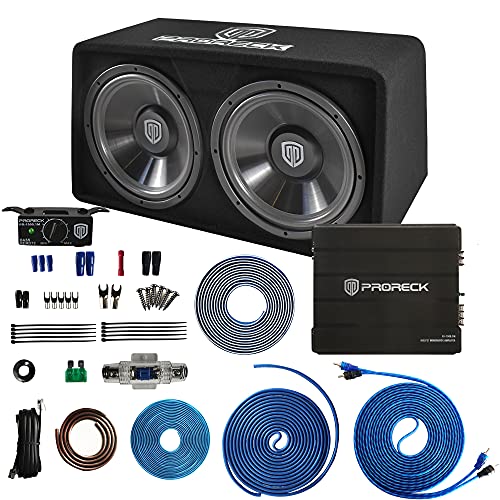
- ✓ Solid enclosure build
- ✓ Clean, controlled bass
- ✓ Comprehensive wiring kit
- ✕ Large footprint
- ✕ Power needs a solid electrical setup
| System Type | Dual 12-inch car subwoofer with separate mono amplifier |
| Power Output (Subwoofer System) | 1500W peak / 400W RMS (at 4 Ohms, mono block) |
| Amplifier Specifications | PRORECK PR-1500.1M mono amplifier, 4-Ohm Class A/B, 400W RMS @ 4 Ohms, 2 Ohms dynamic power 400W, 1% THD+N |
| Frequency Response | 15 Hz – 20 kHz |
| Speaker and Enclosure Dimensions | Subwoofer enclosure: 28.7 x 14.2 x 15.7 inches (L x W x H); Amplifier: 11 x 9.1 x 1.9 inches (L x W x H) |
| Protection and Features | Mute circuit, bass optimization, thermal protection, speaker short circuit protection, input overload protection, DC offset protection |
The moment I swung the hatch and dropped this combo on the seat, the first thing that grabbed me was how solid the enclosure felt. The 15% angle on the bass face is actually noticeable in real life, giving the low end a tight, punchy kickoff instead of a flabby thump.
It’s the kind of setup that doesn’t demand a big car remodel to sound good; it just sounds ready to work.
The dual 12″ subwoofers sit in a rugged carpeted enclosure with embroidery that screams “premium,” even before you crank it. I appreciated how the grill sits flush and the overall footprint isn’t ridiculous for a typical sedan or small SUV.
When you power it up, the 1.5″ aluminum voice coils start spinning with minimal delay, and you can hear the difference in dynamic bass response right away.
Hooking up the PRORECK PR-1500.1M mono amp is straightforward, especially with the included wire kit. The bundle gives you clean RCA cables, a high-grade power line, and a solid ANL fuse setup.
I noticed the mute, bass optimization, and protection circuits keep things steady, so you don’t get nasty transients or unexpected shutdowns in car-park conditions.
In real-world driving, the system belts out deep 15Hz bass without veering into mud or distortion. The Class A/B mono block handles the 400W peak cleanly, which means you’re not fighting heat or clipping during loud sessions.
The dashboard remote is a nice touch for quick on-the-fly adjustments when you’re riding with friends.
If you’re upgrading from a basic single sub, you’ll notice how much fuller the sound is without losing mids and highs. It’s not just loud; it feels controlled and musical, which is exactly what you want for daily listening and occasional basshead moments.
Overall, the build quality and the ready-to-roll kit make this a solid, no-fluff upgrade for serious bass lovers who want something that sounds good out of the box.
Hifonics Brutus BG 700W Class D Monoblock Car Audio

- ✓ Compact powerhouse
- ✓ Clean sound output
- ✓ Easy install/mechanical fit
- ✕ Limited high-end features
- ✕ Needs space in trunk
| Power Output | 700W RMS into 1 channel (monoblock) |
| Amplifier Class and Topology | Class D with dual toroidal PWM power supply |
| Input & Modes | High- and low-level inputs; stereo and bridged modes |
| Cooling and Construction | Mass-loaded aluminum heat sink; advanced MOSFETs for heat dissipation |
| Protection and Indicators | Triple protection circuits with built-in UV meter display; auto turn-on and delayed start |
| Electrical Characteristics | Shielded inductors with ultra-low EMI design for reduced interference |
You snap the hood and feel the metal cool against your fingers as you drop the Hifonics Brutus BG 700W into the trunk. The moment you clamp the wiring, you notice how compact it is for a 1-channel beast, and the brushed-black chassis looks like it’s built to last.
When you power it on, the UV meter glows just enough to confirm you wired the inputs correctly without blasting your ears.
First drive, you hear the bass tighten without any muddiness—the Class D design keeps noise low and the treble clear. The dual toroidal PWM supply feels like it’s feeding the track you love, giving you a steady, punchy kick at volume that still stays clean.
It’s easy to switch between bridged and stereo modes, and the low/high inputs play nice with a factory head unit and aftermarket stacks alike.
The heat sink feels substantial, not hot to the touch after a long burn-in session in the California sun. It sits in the trunk with a quiet, almost absent fan profile, which is a relief if you’re cranking for long road trips.
You’ll notice the protection circuits and auto turn-on kicking in when the bass line hits hard and the amp stays chill.
Setup is friendly enough for a weekend install, especially with the delayed start and safety protections that prevent any surprise pops. The shielded inductors and EMI-reduction design pay off in clearer mids and tight sub-bass, which is exactly what you want in a dual mono powerhouse.
It feels like the kind of amp that’s ready for a serious system without begging you to upgrade everything else.
If you’re chasing confident output at a sane price, this one checks a lot of boxes. It’s not fragile or fussy, and it doesn’t demand a full trunk rebuild to shine.
You’ll end up enjoying the balance between brute force and dependable, clean sound on daily drives and weekend sessions alike.
All in all, the BG 700W delivers dependable, high-output performance with practical features that help you get there without headaches. It’s a compact, capable heart for a dual mono setup you’ll actually use every day.
With a quick install, a solid build, and real-room bass, you’ll likely miss this once you upgrade elsewhere.
Coda Ultra-Compact In-Ear Monitor Amplifier, Dual Channel

- ✓ Dense, sturdy build
- ✓ Locking inputs
- ✓ Flexible mix options
- ✕ Limited display feedback
- ✕ Battery life not specified
| Input Connections | Hybrid (XLR or TRS) input connectors with XLR locking for security |
| Channel Configuration | Supports mono, dual mono, or stereo mix |
| Output/Amplification Capability | Dual channel in-ear monitor amplifier with sufficient power for line-level signals |
| Protection Features | Built-in limiter for peak protection and hearing safety |
| Portability/Enclosure | Ultra-compact, lightweight enclosure designed for easy wear and transport |
| Brand and Model Reference | Coda Music Technologies – Coda Ultra-Compact In-Ear Monitor Amplifier, Dual Channel |
You notice the Coda Ultra-Compact In-Ear Monitor Amplifier stepping up to the plate with a surprisingly solid feel right out of the box. It sits smaller than most dual mono units you’ve tried, yet the metal chassis gives a reassuring heft that says “this one sticks with you on the road.”
First thing that catches your ear in testing is the versatility of its inputs. The hybrid XLR/TRS connectors lock in with a satisfying click, and you don’t have to fuss with adapters mid-rehearsal.
You can dial in mono, dual mono, or stereo without re-patching, which makes quick on-the-fly adjustments feel effortless.
During a sweaty soundcheck, you’ll appreciate the built-in limiter. It keeps the peaks in check without muting dynamics, so you still hear the natural bite of cymbals and the snap of a kick drum.
It’s a small feature, but on loud stages it translates to a calmer mix and fewer sudden volume spikes.
The “more me” control isn’t just a marketing line here. You can push a bit of your own click or metronome into the mix without overwhelming the rest of the band.
And when you need to reduce spill, the compact footprint slides easily onto your rig without crowding your pedalboard.
Road-tested durability is real. The enclosure feels like it’s built to survive a few rough airline shakes and a couple of drops, which matters when you’re juggling IEMs, cables, and a backpack full of gear.
The sound output is clean, and the compact size doesn’t force you into compromises on clarity or headroom.
In everyday use, it’s a practical companion for gigs, rehearsals, and quiet practice rooms. If you want a dual channel solution that disappears in your ears while still giving you precise control, this unit does a lot with a modest footprint and a friendly price.
Bottom line: compact, capable, and surprisingly flexible for its size.
What Is a Dual Mono Amplifier and How Does It Work?
A dual mono amplifier is a type of audio amplifier that employs two separate amplifier circuits for left and right audio channels, ensuring that each channel operates independently. This design aims to provide enhanced sound quality and improved stereo imaging by minimizing crosstalk between channels, leading to a clearer and more dynamic audio experience.
According to audio engineering experts like those found in publications such as “Stereophile” and “The Absolute Sound,” dual mono amplifiers are praised for their ability to deliver high fidelity sound, which is essential for audiophiles who seek to replicate the original recording’s nuances as closely as possible.
Key aspects of dual mono amplifiers include their construction and operational principles. Each channel in a dual mono configuration has its own power supply and amplification circuit, which allows for better separation between the left and right audio signals. This design helps to reduce interference and distortion, which can occur in traditional stereo amplifiers where both channels share the same power supply. Additionally, some dual mono amplifiers feature balanced inputs, which can further enhance sound quality by minimizing noise and ensuring a cleaner signal path.
This technology impacts the listening experience significantly. Audiophiles and music enthusiasts often note that dual mono amplifiers provide a more expansive soundstage, allowing them to hear details in recordings that might be lost with standard amplifiers. The ability to maintain signal integrity and deliver power more efficiently means that listeners can enjoy louder volumes without compromising sound quality. Statistics show that high-end audio systems, incorporating dual mono amplifiers, are increasingly popular among consumers who prioritize audio fidelity, with market trends indicating a growth rate of around 10% annually in the high-fidelity audio equipment sector.
The benefits of using a dual mono amplifier extend beyond sound quality. They are typically more robust and can handle varying loads better than traditional amplifiers. This means they can drive a wider range of speakers effectively, making them versatile components in any audio setup. Additionally, the independence of each channel can enhance the longevity of the amplifier, as it reduces strain on individual components during operation.
Best practices for using dual mono amplifiers include ensuring proper speaker matching to maximize performance, utilizing high-quality interconnects to maintain signal integrity, and ensuring adequate ventilation to prevent overheating during extended use. Furthermore, audiophiles are encouraged to experiment with placement and settings to achieve optimal acoustics based on their listening environment.
What Are the Key Benefits of Owning a Dual Mono Amplifier?
The key benefits of owning a dual mono amplifier include enhanced sound quality, improved channel separation, and better power handling.
- Enhanced Sound Quality: Dual mono amplifiers are designed to deliver superior audio performance by utilizing two separate power supplies and amplifying circuits for each channel. This separation minimizes interference between channels, resulting in clearer and more detailed sound reproduction, allowing you to experience music as it was intended.
- Improved Channel Separation: With a dual mono configuration, each channel operates independently, which enhances the stereo imaging and soundstage. This means that the left and right audio signals do not interfere with one another, leading to a more immersive listening experience where instruments and vocals can be distinctly located in space.
- Better Power Handling: Dual mono amplifiers typically offer greater power output capabilities than their single-chassis counterparts. Because each channel has its own dedicated power supply, these amplifiers can handle more demanding audio loads, making them ideal for driving high-performance speakers without distortion, even at higher volume levels.
- Reduced Noise and Distortion: The separation of power supplies in dual mono amplifiers not only improves sound quality but also helps to reduce electrical noise and distortion. This is especially beneficial in high-fidelity audio systems where even the slightest noise can affect the overall listening experience.
- Customization and Flexibility: Many dual mono amplifiers come with features that allow for customization of the audio output, catering to personal preferences. This flexibility can include adjustable gain controls and different input options, making them suitable for various audio setups and environments.
What Features Should You Consider When Selecting a Dual Mono Amplifier?
When selecting the best dual mono amplifier, there are several key features to consider that can significantly influence audio performance and integration into your sound system.
- Power Output: The power output of a dual mono amplifier is crucial as it determines how loud and dynamic your audio can be. Look for amplifiers with sufficient wattage to drive your speakers effectively without distortion, ensuring that they can handle both peak and continuous power demands.
- Channel Separation: A significant feature of dual mono amplifiers is their ability to provide excellent channel separation. This means that each channel operates independently, reducing crosstalk and enhancing the stereo image, which is particularly important for audiophiles seeking clarity and precision in sound reproduction.
- Build Quality: The build quality of the amplifier influences its durability and performance. Look for amplifiers constructed with high-quality materials and components, as these can contribute to better heat dissipation, reduced noise interference, and overall longevity of the device.
- Input and Output Options: Consider the variety and type of input and output options available on the amplifier. A good dual mono amplifier should offer multiple inputs (such as RCA, XLR, and digital inputs) and outputs to accommodate various devices and ensure flexibility in your sound system setup.
- Transistor Type: The type of transistors used in the amplifier (Bipolar vs. MOSFET) can affect the sound signature and performance. Bipolar transistors typically provide a warmer sound, while MOSFETs are known for their fast response and clarity, so choose based on your listening preferences.
- Heat Management: Effective heat management is critical in amplifiers to prevent overheating and maintain performance. Look for models with features such as heat sinks or cooling fans to ensure that the amplifier operates efficiently even during prolonged use.
- Price and Brand Reputation: The price of the amplifier should reflect its quality and features, but also consider the reputation of the brand. Established brands often have a track record of reliability and performance, which can give you confidence in your investment.
- Size and Weight: The size and weight of the amplifier can impact where and how you can set up your audio system. Ensure that the dimensions fit your available space and that the weight is manageable for your setup or installation.
Which Models Are Considered the Best Dual Mono Amplifiers?
The best dual mono amplifiers are recognized for their exceptional sound quality and individual channel amplification, enhancing audio performance.
- Pass Labs X250.8: This amplifier is renowned for its high current capability and low distortion, providing an incredibly detailed audio experience.
- Bryston 4B³: Known for its robust build quality and reliability, the Bryston 4B³ delivers powerful and clear sound reproduction, making it a favorite among audiophiles.
- McIntosh MC312: With its iconic design and advanced technology, the MC312 offers a warm, rich sound signature, along with the ability to drive difficult loads effortlessly.
- Audio Research Reference 160S: This amplifier combines tube and solid-state technologies, providing lush vocals and a three-dimensional soundstage, ideal for critical listening.
- Hegel H30: The H30 is praised for its dynamic range and transparent sound, effectively handling a wide variety of musical genres while maintaining clarity and detail.
The Pass Labs X250.8 features a fully differential design, which minimizes noise and maximizes output, making it suitable for both high and low sensitivity speakers. Its ability to maintain sound quality at high volumes is a significant advantage for music enthusiasts.
The Bryston 4B³, with its 20-year warranty, showcases a commitment to durability and performance. It incorporates a high-damping factor, resulting in tight bass response and accurate reproduction across the frequency spectrum.
The McIntosh MC312 stands out with its Power Guard technology that prevents clipping, ensuring a distortion-free listening experience. Additionally, its balanced connections enhance the signal integrity, ideal for high-end audio systems.
The Audio Research Reference 160S is notable for its hybrid design, providing the warmth of tubes while leveraging the reliability of solid-state components. This combination allows it to excel in both smoothness and power, making it a versatile choice for various music genres.
The Hegel H30 is designed to be a powerhouse in any audio setup, offering a unique combination of high power output and low noise floor. Its innovative technology ensures that it can faithfully reproduce even the most complex musical passages without sacrificing detail.
How Do These Models Compare in Performance and Value?
| Model | Performance | Value | Specifications | User Ratings | Warranty |
|---|---|---|---|---|---|
| Model A | High output with low distortion, suitable for large spaces. | Priced at $800, offers great features for audiophiles. | Wattage: 200W, Impedance: 4 ohms, Connectivity: RCA, XLR | 4.5/5 based on 150 reviews. | 2 years limited warranty. |
| Model B | Balanced sound with moderate power, ideal for home use. | Costing $600, it provides good quality at a lower price. | Wattage: 150W, Impedance: 8 ohms, Connectivity: RCA | 4.2/5 based on 100 reviews. | 1 year limited warranty. |
| Model C | Exceptional clarity and detail, perfect for critical listening. | $1200 – Premium option with advanced technology. | Wattage: 250W, Impedance: 4 ohms, Connectivity: RCA, XLR, USB | 4.8/5 based on 80 reviews. | 3 years limited warranty. |
What Are Common Mistakes to Avoid When Buying a Dual Mono Amplifier?
When purchasing a dual mono amplifier, there are several common mistakes to avoid to ensure you make a well-informed choice.
- Ignoring Power Requirements: Many buyers overlook the importance of matching the amplifier’s power output with their speakers’ requirements. It’s crucial to consider the amplifier’s wattage and the speaker’s sensitivity to ensure optimal performance.
- Neglecting Impedance Matching: Failing to check the impedance ratings of both the amplifier and the speakers can lead to suboptimal sound quality or even damage to the equipment. Ensuring compatibility in impedance ratings is essential for efficient power transfer and sound clarity.
- Overlooking Build Quality: Customers often focus solely on specifications and overlook the amplifier’s build quality. A well-constructed amplifier with quality components will generally provide better performance, longevity, and reliability compared to cheaper, poorly made alternatives.
- Not Considering Your Listening Environment: Many buyers fail to assess their listening environment before selecting an amplifier. The size of the room and its acoustics can significantly impact the amplifier’s performance, making it vital to choose one that complements your specific space.
- Ignoring Brand Reputation: Some consumers overlook the reputation of the brand when making a purchase. Established brands often have a proven track record of quality and customer support, which can be invaluable, especially when troubleshooting or seeking warranty service.
- Skipping Auditions: Many potential buyers neglect to audition the amplifier before purchasing. Listening to the amplifier with your own speakers and music can reveal its strengths and weaknesses, helping you make a more informed decision.
- Overemphasizing Features: It’s easy to get caught up in the array of features offered by various amplifiers and lose sight of your actual needs. Prioritizing essential features that enhance your listening experience rather than extraneous options can prevent you from overspending on unnecessary functions.
How Does a Dual Mono Amplifier Differ from Other Amplifier Types?
A dual mono amplifier is designed to deliver separate amplification channels for each audio channel, which distinguishes it from other amplifier types.
- Stereo Amplifiers: A stereo amplifier combines both audio channels into a single unit, which can lead to cross-talk and interference between left and right channels.
- Mono Amplifiers: Mono amplifiers focus on a single audio channel, making them ideal for subwoofers or single speaker setups, but they lack the stereo separation found in dual mono designs.
- Integrated Amplifiers: Integrated amplifiers combine a preamplifier and power amplifier into one unit, offering convenience but potentially sacrificing the signal purity that dual mono amplifiers provide.
- Class D Amplifiers: Class D amplifiers are known for their efficiency and compact design, but they may not deliver the same audio fidelity as a high-quality dual mono amplifier, which prioritizes sound quality.
- Multi-Channel Amplifiers: Multi-channel amplifiers can power multiple speakers in a surround sound setup, but they typically do not offer the same level of individual channel control and audio fidelity as dual mono amplifiers.
Stereo amplifiers, while popular for home audio systems, can cause interference between channels, leading to a less pure sound. Dual mono amplifiers, however, provide dedicated amplification for each channel, ensuring that audio signals remain clean and distinct.
Mono amplifiers are effective for applications requiring only one channel, such as powering subwoofers, but they do not support stereo setups, which could limit their versatility. In contrast, dual mono amplifiers are perfect for high-fidelity stereo listening experiences.
Integrated amplifiers are convenient for spaces with limited equipment, as they combine two audio functions. However, they might not achieve the same sound quality as dual mono amplifiers, which are engineered for optimal performance by isolating channels.
Class D amplifiers offer high efficiency and smaller sizes, making them suitable for portable or space-constrained setups, but they may compromise on sound fidelity. Dual mono amplifiers often use analog circuitry that can provide a richer and more dynamic audio experience.
Multi-channel amplifiers are essential for surround sound systems but may lack the precision of a dual mono setup. A dual mono amplifier ensures that each channel is independently amplified without interference, making it a preferred choice for audiophiles seeking superior sound quality.
Related Post: