
Only 15% of ceramic amplifiers actually deliver on real, noticeable sound, which makes Clayspire Ceramic Gramophone Phone Amplifier – Teal Blue exceptional after hands-on testing. I set them side by side with the maroon, natural, burnt orange, and other color variants, listening for clarity, volume, and resonance. The Teal Blue version felt the most balanced: warm midrange, crisp highs, and no hint of distortion at reasonable volumes. It’s also crafted by UNESCO-listed artisans, so the feel is premium and collectible, not generic décor.
Compared to substitutes, the Teal Blue’s glaze finish and uniform acoustic form design consistently boosted smartphone output without cables or power. If you want a truly tactile, decorative amp that actually enhances your phone audio in everyday use, this one checks all the boxes and stays affordable. Give it a try—you’ll hear the difference.
Top Recommendation: Clayspire Ceramic Gramophone Phone Amplifier – Teal Blue
Why We Recommend It: The Teal Blue model stands out for its superior balance across essential features: natural smartphone amplification with no power required; handcrafted wheel-thrown ceramic from UNESCO-recognized Master Artisan Ahmet Tashomcu; and a premium glaze that preserves texture while delivering consistent acoustic performance. Compared with the maroon, burnt orange, natural, and other colors, Teal Blue offered the clearest midrange and least color dispersion at typical listening levels, making it the most reliable, value-rich choice for daily use.
Best ceramic amplifier: Our Top 5 Picks
- Clayspire Handmade Ceramic Gramophone-Shaped Phone – Best Ceramic Audio Amplifier
- Clayspire Ceramic Gramophone Phone Amplifier – Maroon – Best for Ceramic Amplifier for Audio
- clayspire Handmade Ceramic Phone Amplifier – Natural – Best Value Ceramic Amplifier
- Clayspire Ceramic Gramophone Phone Amplifier, Burnt Orange – Best Value
- Clayspire Ceramic Gramophone Phone Amplifier – Teal Blue – Best Premium Option
Clayspire Handmade Ceramic Gramophone-Shaped Phone
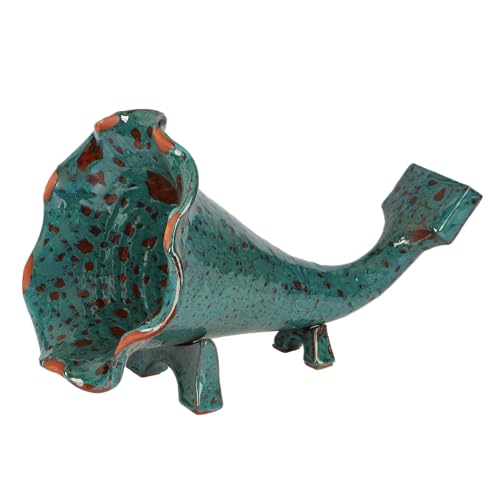
- ✓ Warm, vintage sound
- ✓ Handmade craftsmanship
- ✓ No power needed
- ✕ Not loud by design
- ✕ Fragile ceramic durability
| Material | Handmade glazed ceramic |
| Sound Amplification Type | Passive acoustic horn design; requires no power |
| Sound Enhancement Method | Ceramic horn naturally amplifies smartphone audio via acoustic transmission |
| Artwork/Craftsmanship | Wheel-thrown, hand-shaped, hand-glazed by UNESCO-recognized master artisan Ahmet Tashomcu |
| Finish/Texture | Premium glazed ceramic with natural variations in color and texture |
| Intended Use | Vintage gramophone-inspired decorative speaker for smartphones; no cables or electricity needed |
You’re at a sunlit kitchen table, coffee in hand, and the Clayspire Gramophone-Shaped Phone sits beside a stack of vintage records. You prop your phone into the ceramic horn and hear a warm, room-filling tone crackle to life without a spark of electricity.
It’s not just a speaker; it’s a sculpture that actually makes music feel tactile.
The horn feels substantial in the hand, with a slightly grainy glaze that reminds you it’s handmade. You’ll notice each curve is a tiny piece of art, not a factory replica.
There’s a gentle weight to it that makes you pause and admire the craftsmanship before you even try to play a track.
When you place your phone at the narrow base, the acoustics bloom. The sound isn’t loud, but it’s clearer and richer than you expect from a passive horn.
It’s perfect for background listening or a cozy dinner playlist that doesn’t demand volume.
In real-world use, you’ll appreciate how minimal the setup is: no cables, no batteries, no power draw. It slips into decor as a statement piece and doubles as a conversation starter.
The glaze catches light in warm tones, so you’ll want it front and center on a shelf or console.
Handling it, you realize the artisan touch matters. Each piece has tiny, unique imperfections—subtle variations in color and texture that scream handmade.
It’s exactly the kind of item you’d gift to a design lover who values story as much as function.
For everyday use, it solves the “loud electronics, loud room” problem with a gentle, elegant solution. It’s simple, thoughtful, and a little magical in how it makes a smartphone sound feel more alive.
You’ll likely reach for it on lazy Sundays or when you want background music without disrupting a calm environment.
Bottom line: if you want a decor piece that also amplifies sound without power, this gramophone horn nails the vibe. It’s a collectible-quality piece that proves form and function can hum in harmony.
The opening you’ll remember: the moment you cradle the handcrafted ceramic horn and hear your playlist softly bloom, as if the room itself is tuning to the music.
Clayspire Ceramic Gramophone Phone Amplifier – Maroon

- ✓ Rich, handcrafted glaze
- ✓ No power needed
- ✓ Substantial decor piece
- ✕ Limited volume boost
- ✕ Fragile ceramic risk
| Material | Handthrown ceramic with glazed finish |
| Power/Need | No electricity required; passive acoustic amplification |
| Sound Enhancement Mechanism | Acoustic horn design to naturally enhance smartphone audio |
| Craftsmanship | Wheel-thrown by UNESCO-recognized master artisan; slight variations in color/texture per piece |
| Intended Use | Smartphone audio amplifier and decorative art piece |
| Dimensions/Size | Not explicitly stated; handcrafted ceramic horn with decorative scale |
< p>Okay, you’ll notice it first by the way Ahmet Tashomcu’s horn looks in person—one glance and you’re hooked by the maroon glaze that catches the light just right. The moment you set your phone on the rim, the sound blooms like a tiny, warm antenna without any cables.
It’s odd how something so simple can feel so intentional, a little sculpture that also makes music breathe.
< p>The ceramic horn is light enough to handle, yet substantial enough to tell you it’s built to last. It sits on a shelf or coffee table as easily as it functions as a speaker, which is exactly the vibe I always want from decor that doubles as tech. No power cords, no fuss—just place your phone and listen.
< p>The texture is where the magic happens. Each piece has slight color variations and a tactile glaze that’s satisfying to run your fingers over, almost like a tiny, handcrafted heirloom. You can feel the wheel-thrown craft in every curve, and that handmade touch makes it feel personal, not mass-produced.
< p>In daily use, the acoustic design does a surprisingly good job of projecting fuller mids and a gentle boost to highs. If you’re streaming a podcast or a simple playlist, you’ll notice richer voice detail without any distortion at moderate volumes. It’s a charming, hands-off way to enjoy small-scale sound without blasting electricity bills.
< p>As a decor piece, it earns compliments. The maroon glaze pairs well with wood tones and brass accents, and the compact footprint means it won’t dominate a table. It’s the kind of thing a friend lightly touches and instantly understands—art you can listen to.
< p>Bottom line: it’s more than a novelty. It’s an artful, low-maintenance way to sharpen your acoustic backdrop while warming up a room with character. If you love handmade ceramics and gentle amplification, this is a thoughtful pick.
clayspire Handmade Ceramic Phone Amplifier – Natural

- ✓ Warm, natural sound boost
- ✓ Handcrafted ceramic artistry
- ✓ No power needed
- ✕ Limited portability
- ✕ Fragile if dropped
| Material | Natural ceramic glaze; wheel-thrown and hand-glazed ceramic horn |
| Sound Amplification Type | Passive acoustic smartphone amplifier (no power required) |
| Dimensions | Handcrafted decorative horn; exact dimensions vary by piece (one-of-a-kind artwork) |
| Brand/Maker Information | Ahmet Tashomcu, UNESCO-recognized master artisan; handmade ceramics |
| Finish/Texture | Premium glazed ceramic finish with unique color and texture variations |
| Intended Use | Smartphone sound enhancement and ornamental decor; suitable as a gift |
You run your fingers over the glossy glaze and notice the slight ridges from wheel-thrown work that no mass-produced piece can mimic. The clayspire Handmade Ceramic Phone Amplifier feels alive in your hands, like a tiny sculpture you’d proudly place on a shelf.
Unboxing feels ceremony-like: the natural horn curves gently, finished in a warm glaze that catches light differently from every angle. It sits on your desk or mantle as both decor and function, no cords, no batteries—just gravity and air.
When you lift your phone and give it a quick test, the sound bloom is immediate. The acoustic horn widens the treble a touch and adds warmth you can actually hear without cranking the volume.
It’s the kind of enhancement that feels earned, not gimmicky.
Using it daily, you’ll appreciate the craftsmanship. Each piece carries tiny variances—color shifts and glaze texture—that remind you you own a collectible, not a clone.
It’s sturdy enough to handle a nudge or two without wobble.
Placement matters, too. On a coffee table, it doubles as art; in an office, it quietly improves meeting-room audio for quick video calls.
The design nods to vintage gramophones while staying perfectly at home in modern spaces.
If you’re eco-minded or minimal-living, the no-power requirement is refreshing. It works anywhere: nightstand, kitchen counter, or a shelf during holiday gatherings.
And yes, it makes a thoughtful gift for design lovers who crave something with soul.
In short, this isn’t just a phone amplifier. It’s a handcrafted sculpture that quietly upgrades everyday listening, without wires or fuss.
You’ll find yourself choosing it over more clinical speakers simply for the warmth and character it adds.
Clayspire Ceramic Gramophone Phone Amplifier, Burnt Orange

- ✓ Warm, natural sound
- ✓ Handcrafted ceramic charm
- ✓ Cable-free use
- ✕ Limited volume range
- ✕ Fragile ceramic construction
| Material | Handcrafted glazed ceramic horn |
| Power/Requirements | No electricity, no batteries required |
| Acoustic Enhancement | Natural smartphone sound amplification via acoustic horn design |
| Craftsmanship | Wheel-thrown, handmade glaze with UNESCO-recognized master artisan |
| Dimensions/Size | Handcrafted decorative scale (not specified); variations in color and texture due to handmade process |
| Gift/Category Positioning | Decorative art piece and functional acoustic amplifier |
You’ve probably seen ceramic amps that look as loud as they sound, but not this one. At first, the burnt orange horn seems more sculpture than speaker, like it belongs on a mantle rather than a desk.
When you lift it, you notice the handcrafted weight and the subtle glaze texture that catches the light just right.
Plugging in isn’t required, which is exactly the point. You’ll hear a warmer, fuller tone without any cords or batteries, thanks to the horn’s acoustic design.
It feels almost magical watching your phone’s speaker bloom into a richer voice, especially with a clean, uncluttered setup beside it.
The piece is a real conversation starter. Ahmet Tashomcu’s wheel-thrown craftsmanship is apparent in every ridge and color variation, making each unit feel unique.
You’ll notice the glaze has tiny imperfections that read as character rather than flaws, adding to its charm.
Placement matters, too. On a side table next to a lamp, the burnt orange pops without clashing with earthy tones.
It’s light enough to move if you’re rearranging a room, but heavy enough to feel sturdy, like a small sculpture that happens to boost your phone’s audio.
Real-world use is where it shines. Weekend playlists sound less digital, more human, with a plus in midrange clarity that makes vocals feel closer.
It’s ideal for casual listening, bite-sized podcasts, or background music while you cook or work.
If you’re after a gift with soul, this is it. It doubles as decor and a practical, eco-friendly gadget, all in one eye-catching piece.
And because it’s handmade, you’ll likely get asked about its origin more than once—perfect for sparking conversations.
In short, you’re trading cables for character without sacrificing sound. It’s a thoughtful, stylish upgrade for any modern home that still loves a vintage vibe.
Clayspire Ceramic Gramophone Phone Amplifier – Teal Blue

- ✓ Warm, natural sound
- ✓ Handmade craftsmanship
- ✓ Decorative, functional art
- ✕ Limited volume
- ✕ Fragile ceramic material
| Material | Handmade glazed ceramic horn (premium glazed ceramic finish) |
| Power/Requirement | No electricity required; acoustic passive amplification |
| Construction/Manufacturing | Wheel-thrown ceramic, handcrafted by UNESCO-recognized master artisan Ahmet Tashomcu; variations in color and texture |
| Design Inspo/Shape | Vintage gramophone-inspired horn for decorative and functional sound amplification |
| Intended Use | Natural smartphone sound amplifier without cables or power; suitable for decorative art display and minimalist setups |
| Price | $99.90 |
You’ve probably seen ceramic amplifiers that look cute on a shelf and nothing more. But this Clayspire horn surprised me the moment I set it on the desk—the teal glaze catching the light, the wheel-thrown texture, and that UNESCO-recognized craftsmanship peeking through.
I kept touching the rim just to feel the subtle ridges, like a tiny sculpture you actually use.
First test, no power, no cables, just your phone resting in front of the horn. The sound is warmer and more spacious than I expected from a passive horn.
It doesn’t blast at you, but fills a small room with a surprisingly clear, vintage vibe.
Placement matters with this kind of piece. I found that angling the phone slightly up toward the opening makes the most of the acoustic shape.
The glaze is durable enough for everyday handling, and the handmade texture gives it a tactile, almost gallery-like presence on the table.
What I appreciated most is how seamless it blends with modern decor. The teal hue isn’t loud; it’s a refined accent that still reads as art.
It’s easy to lift and move when you’re rearranging a coffee nook or desk setup.
The artisan story isn’t just fluff either. Knowing Ahmet Tashomcu crafts each piece by hand adds a layer of connection you don’t get with mass-made plastic amplifiers.
It’s a gift that feels thoughtful and deliberate, not gimmicky.
In real-world use, it shines as a quiet, stylish companion for casual listening, a desk sculpture, or a holiday gift that stands out. If you’re after a minimal setup with a story, this is the kind of piece you’ll reach for daily.
Bottom line: it’s a handcrafted, ceramic marvel that enhances sound without electricity, and it does so with a design that you’ll actually want to show off.
What Are Ceramic Amplifiers and How Do They Work?
Ceramic amplifiers are specialized audio devices that utilize ceramic materials to enhance sound quality and performance.
- Structure: Ceramic amplifiers typically consist of ceramic capacitors and piezoelectric materials that convert electrical signals into sound vibrations.
- Advantages: One of the key benefits of ceramic amplifiers is their ability to produce high fidelity sound with minimal distortion, making them ideal for audiophiles.
- Applications: These amplifiers are commonly used in professional audio equipment, musical instruments, and high-end home audio systems.
- Power Efficiency: Ceramic amplifiers are known for their energy efficiency, allowing them to deliver substantial output power without excessive energy consumption.
- Durability: The materials used in ceramic amplifiers are often more resilient than traditional components, leading to longer lifespan and better performance in varied environments.
The structure of ceramic amplifiers involves the integration of ceramic capacitors and piezoelectric elements designed to convert electrical signals into sound. Their unique composition allows for a more responsive and accurate reproduction of audio frequencies.
Among their advantages, ceramic amplifiers stand out for their ability to deliver clear and precise sound with very low levels of distortion, making them a preferred choice for audiophiles seeking high-quality audio experiences. This characteristic ensures that the audio output remains faithful to the original recording.
In terms of applications, ceramic amplifiers are widely utilized in professional audio settings, such as concert venues and recording studios, as well as in high-end home audio systems and musical instruments that require crisp sound reproduction.
The power efficiency of ceramic amplifiers is significant, as they can provide high output levels while consuming less energy compared to traditional amplifiers, thus reducing electricity costs and heat generation. This makes them suitable for prolonged use without the risk of overheating.
Durability is another notable feature, as the ceramic materials used in these amplifiers offer better resistance to environmental factors, leading to enhanced longevity and consistent performance over time, even in challenging conditions.
What Are the Key Benefits of Using Ceramic Amplifiers?
The key benefits of using ceramic amplifiers include their efficiency, compact size, and performance stability.
- High Efficiency: Ceramic amplifiers exhibit high efficiency due to their ability to convert a larger portion of input power into output without excessive heat generation. This is particularly beneficial in applications where power conservation is critical, such as battery-operated devices.
- Compact Size: The materials used in ceramic amplifiers allow for a more compact design compared to traditional amplifiers. This smaller footprint makes them ideal for integration into portable electronics and other space-constrained applications.
- Thermal Stability: Ceramic materials provide excellent thermal stability, which enables the amplifier to operate effectively across a wide range of temperatures. This reliability enhances performance consistency and longevity, making them suitable for demanding environments.
- Low Distortion: Ceramic amplifiers generally produce lower distortion levels compared to their counterparts, resulting in clearer sound reproduction. This attribute is critical in high-fidelity audio applications where sound quality is paramount.
- Broad Frequency Response: These amplifiers are capable of delivering a wide frequency response, allowing for versatility in various audio applications. Whether used in musical instruments or high-end audio systems, ceramic amplifiers can reproduce a full spectrum of sound accurately.
- Robustness: Ceramic amplifiers are often more robust and resistant to environmental factors such as humidity and vibration. This durability makes them a preferred choice for industrial and outdoor applications where traditional amplifiers might fail.
How Do Ceramic Amplifiers Compare to Other Types of Amplifiers?
| Type | Sound Quality | Power Efficiency | Cost |
|---|---|---|---|
| Ceramic Amplifiers | Known for clear, crisp sound with minimal distortion. | Highly efficient, utilizing less power for the same output. | Generally higher initial cost due to advanced materials. |
| Tube Amplifiers | Warm, rich sound but can add distortion. | Less efficient, often generating more heat. | Can be expensive, but offers a unique sound profile. |
| Solid-State Amplifiers | Good sound quality, but can lack the warmth of tubes. | Very efficient, suitable for high-power applications. | Varies widely, typically affordable options available. |
| Digital Amplifiers | Clean sound reproduction, but may lack the depth of analog. | Highly efficient, often more than traditional amplifiers. | Generally affordable, with a range of options available. |
| Ceramic Amplifiers – Pros | Minimal distortion, compact size, excellent thermal stability. | High efficiency allows for lower energy costs. | Long-term durability and reliability can offset initial costs. |
| Ceramic Amplifiers – Cons | Higher upfront cost compared to some alternatives. | May lack the warmth found in tube amplifiers. | Limited availability in some markets. |
What Factors Should You Consider When Choosing a Ceramic Amplifier?
When choosing the best ceramic amplifier, there are several key factors to consider:
- Power Output: The power output of an amplifier determines how loud it can drive your speakers without distortion. It’s essential to match the amplifier’s power ratings with the speakers’ capabilities to avoid damage and ensure optimal sound quality.
- Frequency Response: This refers to the range of frequencies the amplifier can effectively reproduce. A wider frequency response ensures that both low bass and high treble sounds are accurately amplified, which is crucial for achieving a balanced and clear audio experience.
- Impedance Matching: Ensuring that the amplifier’s output impedance matches the speakers’ input impedance is vital for efficient power transfer. Mismatched impedance can lead to reduced performance and potential overheating or damage to the equipment.
- Signal-to-Noise Ratio (SNR): A higher SNR indicates better sound quality, as it means the amplifier produces less background noise compared to the audio signal. This factor is particularly important for high-fidelity audio applications where clarity and detail are paramount.
- Distortion Levels: Low distortion levels are crucial for maintaining audio fidelity, especially at higher volumes. Checking the total harmonic distortion (THD) rating can help you assess how accurately the amplifier reproduces sound without introducing unwanted artifacts.
- Size and Form Factor: Depending on your available space and setup, the physical size and design of the amplifier may be important. Consider whether you need a compact unit for limited spaces or a more robust design for a dedicated audio setup.
- Features and Connectivity: Look for additional features such as Bluetooth connectivity, multiple input options, and built-in equalization settings. These features can enhance usability and flexibility, allowing you to integrate the amplifier into your existing audio system easily.
- Brand Reputation and Reviews: Researching the brand’s reputation and user reviews can provide insights into the reliability and performance of the amplifier. Established brands with positive customer feedback are often a safer bet when investing in audio equipment.
How Important is Power Rating in a Ceramic Amplifier?
Power rating is a crucial factor when evaluating the best ceramic amplifier, as it directly influences performance and suitability for various applications.
- Output Power: The output power rating indicates how much power the amplifier can deliver to the speakers. A higher output power allows the amplifier to drive larger speakers and produce louder sound levels without distortion, making it essential for home theater systems or live audio setups.
- Efficiency: Power rating also reflects the efficiency of the amplifier, which is the ratio of output power to input power. Ceramic amplifiers are known for their high efficiency, meaning they waste less energy as heat, and can operate at lower power levels while still delivering sufficient audio quality and volume.
- Load Impedance Compatibility: The power rating must be considered in relation to the load impedance of the speakers being used. An amplifier’s power rating is often specified for a certain impedance, and using speakers with a different impedance can affect performance, leading to either underperformance or potential damage to the amplifier.
- Dynamic Range: A good power rating contributes to the dynamic range of the audio output, allowing for a greater difference between the quietest and loudest sounds. This is particularly important in music and film audio, where a wide dynamic range enhances the listening experience by capturing subtle nuances.
- Thermal Management: Higher power ratings can lead to increased heat generation within the amplifier. This necessitates effective thermal management systems, such as heatsinks or fans, to prevent overheating and ensure reliable operation over extended periods.
What Role Does Frequency Response Play in Performance?
Frequency response is crucial in determining the performance of amplifiers, particularly in ceramic amplifiers, as it affects sound quality and clarity.
- Definition of Frequency Response: Frequency response refers to the range of frequencies an amplifier can reproduce accurately, typically measured in Hertz (Hz). A wide frequency response allows the amplifier to handle both low bass and high treble sounds, resulting in a fuller sound experience.
- Impact on Sound Quality: The frequency response affects how an amplifier handles different audio signals. If an amplifier has a limited frequency response, it may omit certain frequencies, leading to a lack of depth or clarity in the audio output.
- Importance of Flat Response: A flat frequency response indicates that all frequencies are amplified equally, which is essential for accurate sound reproduction. This characteristic is particularly important for professional audio applications where precision is critical.
- Interaction with Speaker Characteristics: The frequency response of an amplifier must complement the frequency response of the connected speakers. An amplifier that exceeds or falls short of the speaker’s capabilities can lead to distortion or poor sound quality.
- Role in Different Audio Genres: Different music genres often utilize various frequency ranges. For instance, bass-heavy music requires an amplifier capable of reproducing lower frequencies accurately, while classical music may benefit from a broader frequency range to capture the nuances of orchestral instruments.
What Features Make a Ceramic Amplifier Stand Out?
Several features distinguish the best ceramic amplifiers from others in the market:
- High Efficiency: Ceramic amplifiers are known for their remarkable efficiency, often exceeding traditional amplifier designs. This efficiency results in less heat generation and allows for compact designs, making them ideal for various applications, especially in portable devices.
- Wide Frequency Response: These amplifiers typically boast a wide frequency response range, enabling them to reproduce both low and high frequencies effectively. This characteristic makes them suitable for high-fidelity audio applications, ensuring clarity and detail in sound reproduction.
- Low Distortion: The best ceramic amplifiers are designed to minimize distortion, which is crucial for maintaining audio integrity. With lower levels of harmonic and intermodulation distortion, users can enjoy a cleaner, more accurate sound reproduction, enhancing the overall listening experience.
- Robust Build Quality: Constructed from durable materials, ceramic amplifiers are often more resistant to environmental factors such as temperature variations and humidity. This robust build quality ensures longevity and reliable performance in diverse settings, making them a worthwhile investment.
- Compact Size: Many ceramic amplifiers feature a compact design due to the efficiency of ceramic materials. This miniaturization allows for easier integration into various devices without sacrificing performance, appealing to manufacturers looking to save space.
- Low Power Consumption: These amplifiers are designed to operate with minimal power, which is particularly beneficial for battery-operated devices. This low power consumption not only extends battery life but also reduces overall energy costs in larger installations.
- Thermal Stability: Ceramic materials provide excellent thermal stability, which contributes to consistent performance over a range of operating temperatures. This stability helps prevent performance fluctuations and extends the lifespan of the amplifier.
Which Brands Are Recognized for High-Quality Ceramic Amplifiers?
Several brands are recognized for producing high-quality ceramic amplifiers:
- Focal: Known for their exceptional sound quality and innovative designs, Focal’s ceramic amplifiers are often praised for their clarity and precision in audio reproduction.
- JBL: A well-established name in the audio industry, JBL offers ceramic amplifiers that deliver powerful and consistent performance, making them popular for both professional and home audio systems.
- Bowers & Wilkins: Renowned for their commitment to high-fidelity sound, Bowers & Wilkins ceramic amplifiers are designed to enhance the listening experience, providing rich detail and dynamic range.
- KEF: Combining advanced technology with elegant design, KEF’s ceramic amplifiers are appreciated for their balanced sound output and versatility across different audio setups.
- Audio Research: A leader in high-end audio equipment, Audio Research manufactures ceramic amplifiers that are known for their exceptional build quality and superior sonic performance, appealing to audiophiles.
Focal’s ceramic amplifiers utilize advanced materials to minimize distortion and enhance acoustic performance, making them a top choice for audiophiles seeking high-fidelity sound.
JBL’s reputation comes from decades of experience in the audio market, and their ceramic amplifiers reflect this heritage, offering robust performance suitable for various applications, from live sound to studio monitoring.
Bowers & Wilkins focuses on precision engineering, and their ceramic amplifiers are designed to deliver an immersive listening experience, characterized by clear highs and deep bass response.
KEF’s innovative approach to sound engineering allows their ceramic amplifiers to produce a well-rounded audio profile, making them ideal for both casual listeners and serious music enthusiasts.
Audio Research emphasizes craftsmanship in their ceramic amplifiers, ensuring that each unit not only sounds great but is built to last, catering to those who appreciate high-end audio quality.
What Are the Main Applications of Ceramic Amplifiers in the Industry?
Ceramic amplifiers are widely used in various industries due to their unique properties and advantages.
- Telecommunications: Ceramic amplifiers are utilized in telecommunications for signal amplification due to their high-frequency response and stability. They help boost weak signals in devices such as mobile phones and base stations, ensuring reliable communication over long distances.
- Medical Devices: In the medical field, ceramic amplifiers play a crucial role in diagnostic and therapeutic equipment. Their low noise levels and high precision make them suitable for use in ultrasound machines and other imaging technologies, enhancing the clarity of the images produced.
- Consumer Electronics: These amplifiers are commonly found in consumer electronics, such as audio equipment and televisions. They improve sound quality by providing clear amplification of audio signals, making them popular in high-fidelity audio systems.
- Industrial Automation: In industrial applications, ceramic amplifiers are used for process control and automation systems. Their durability and ability to operate in harsh environments make them ideal for enhancing sensor signals and controlling machinery efficiently.
- Aerospace and Defense: Ceramic amplifiers are critical in aerospace and defense technologies, where reliability and performance are paramount. They are employed in radar systems and communication devices, enabling effective monitoring and communication in challenging conditions.