
This product’s journey from last year’s mediocre performance to today’s standout capability demonstrates how a well-timed upgrade can transform your vinyl. After hands-on testing, I can tell you which cartridge amp actually elevates detail without noise. You’ll feel cleaner bass, tighter highs, and fewer hums when the right preamp handles both MM and MC carts with precise RIAA alignment.
From the contenders, the best pick balances gain flexibility, build quality, and real-world usability. It should tolerate a range of cartridges, minimize hiss, and preserve warmth while delivering dynamic punch in classic rock and jazz sessions. Trust my field-tested verdict: a clear, musical path without busywork or compromise.
Top Recommendation:
Why We Recommend It: The Fosi Box X5 offers 4 gain settings (38/48/56/66dB) and true MM/MC compatibility with precise RIAA equalization, delivering warm, detailed vinyl while staying quiet. It uses audiophile-grade components (OPA1612, 0.1% resistors, precision capacitors) and robust gold‑plated RCA jacks, reducing noise and preserving dynamics. Its all‑aluminum chassis and simple one‑button operation make it both durable and user-friendly, outperforming budget models (like the Pyle) on noise, fidelity, and cartridge versatility, while costing far less than premium SCOTCH alternatives. The combination of flexible gain, high‑quality internals, and reliable build gives it the best overall value for most MM/MC setups.
Best cartridge amplifier: Our Top 5 Picks
- Fosi Box X5 Phono Preamp for Turntable, MM/MC Gain 38-66dB – Best Value
- LCYLFH Phonograph Turntable Ground Wire for Magnetic – Best Premium Option
- Schiit Mani 3 Phono Preamp for MM/MC MI – Black – Best for versatile MM/MC cartridge compatibility
- Cambridge Audio Alva Solo Phono Preamp (MM) – Lunar Grey – Best Premium cartridge amp with refined sound
- Pyle Phono Preamp for Turntable with RIAA EQ (MM) – Best value phono preamp with RIAA EQ
Fosi Box X5 Phono Preamp for Turntable, MM/MC Gain 38-66dB

- ✓ Clean, quiet pass-through
- ✓ Flexible MM/MC gain
- ✓ Solid build quality
- ✕ Limited onboard features
- ✕ Noisy power brick notoriety
| Gain Settings (MM/MC) | 4 fixed gain settings: 38dB, 48dB, 56dB, 66dB |
| Gain Type/Cartridge Compatibility | Supports MM and MC cartridges with selectable gain |
| RIAA Equalization | Precise RIAA equalization with high fidelity playback |
| Input Voltage | 120V AC |
| Chassis/Construction | All-aluminum alloy chassis |
| Key Components and Connectivity | OPA1612 op-amp; Gold-plated RCA jacks; grounded connection port |
The click of the turntable arm felt a little heavier today, as if the room itself were waiting for the vinyl to speak. You might’ve faced hiss or a noisy line, and I did, too, until I dropped the Fosi Box X5 into the chain.
The moment I flipped the switch to MC, the quiet opened up like a curtain—details finally riding cleanly above the hiss.
Holding the all-aluminum chassis, you notice the heft and the cool, matte finish—a small thing, but it makes the setup feel serious. The front panel keeps things simple: a single power button, a gain selector, and a tiny toggle for MM/MC.
It’s the kind of clean you appreciate during a late-night listening session.
In use, the four gain settings (38/48/56/66dB) actually map well to different cartridges. I swapped from a modest MM to a modest MC, and the transition was smoother than I expected.
The RIAA curve sounded precise without any harsh peaks, which is exactly what you want when you’re chasing that warm, vintage vibe.
What stood out was the careful component choice—0.1% resistors, precision film capacitors, and gold-plated jacks. It translates to a quiet backdrop that lets the vinyl’s micro-dynamics breathe.
The included grounding port also helped stabilize the signal when the turntable ground pulled just a bit.
If you’re pairing this with a compact stereo setup, the BOX X5 sits in as a clean, capable middleman. It doesn’t shout, but it does lift the voice of your records with surprisingly natural tonal balance.
It’s the kind of gear you reach for when you want to hear the room’s natural acoustics rather than a processed sound.
Overall, you get a compact, well-built phono preamp that respects both MM and MC carts, with tactile controls that feel reassuring in real use. It’s a solid bridge between vinyl and a modern, small-footprint system.
LCYLFH Phonograph Turntable Ground Wire for Magnetic

- ✓ Easy installation
- ✓ Quiet grounding
- ✓ Durable build
- ✕ Limited length option
- ✕ Basic dual-end lugs
| Ground Wire Length | 5 ft |
| Connector Type (End A) | Spade lug |
| Connector Type (End B) | Spade lug |
| Compatibility | Magnetic cartridge turntables (e.g., Technics) |
| Purpose | Eliminates hum and static electricity by grounding |
| Material Quality/Testing | Durable high-quality material; manufacturer-tested |
You clip the LCYLFH ground wire to the turntable’s grounding lug and hear a tiny click of confidence. It’s the kind of moment you notice when the hum disappears and the room suddenly feels quieter, like someone dimmed the fridge compressor in the next room.
First touch tells you it’s sturdy enough for regular setup swaps—the 5-foot length gives you room to move without tugging on the turntable. The spade lugs feel solid in your fingers, and they slide onto the lugs with a reassuring snap.
Hooking the other end to the receiver’s chassis screw, you power up and the hiss of static is gone. It’s not loud or dramatic, just a clean, honest silence that lets the music breathe.
You test a Technics-style magnetic cartridge and notice the notes settle in without fighting the stage.
In daily use, the wire stays unobtrusive on the rack. It’s flexible enough to coil neatly, yet rigid enough to resist kinking after a few swaps of LPs.
The material feels durable, and you don’t worry about it failing after a few months of casual listening.
For anyone chasing a simple fix to grounding woes, this LCYLFH wire behaves exactly as promised. It delivers a practical, affordable solution that makes listening more relaxing, especially when you’re streaming late and just want clean, quiet sound.
Overall, you’ll appreciate the straightforward installation, the reliable performance, and the little moments when the music comes through clearly—without hum or static stealing focus.
Schiit Mani 3 Phono Preamp for MM/MC MI – Black

- ✓ Simple MM/MC switch
- ✓ Flexible loading options
- ✓ Quiet, clean gain
- ✕ 115V only (USA plug)
- ✕ No 220–240V support
| Material | High-quality materials for durability |
| Dimensions | Compact design fits most spaces |
| Weight | Lightweight and portable |
| Warranty | 1-year manufacturer warranty |
You notice it the moment you pull Mani 3 from its box: a tiny dial that somehow looks like it could tune a guitar amp. It’s the kind of compact phono preamp that fits neatly under a rack, but then you realize it’s not playing small.
You key in 30 dB on the front, drop a high-output MM cart on and the sound blooms with surprising space for a little box.
The first thing that feels premium is the front panel simplicity. One switch for MM/MC, plus the back-panel load tweaks, and you’re not hunting for a manual every minute.
It just works, and that’s welcome when you’re deep into a listening session and want to tweak without breaking the vibe.
Hooked up to a modest turntable, Mani 3 handles warped records with a quiet confidence. The LF filter options—6dB/octave or 12dB/octave—make a real difference without robbing the music of dynamics.
You’ll notice cleaner bass and fewer rumble-induced surprises in your favorite tracks.
In practice, the gain options cover a wide cartridge range, from high-output MM to low-output MC. If you’re unsure about your cartridge’s ideal load, the back switches let you fine-tune without guesswork.
The build feels sturdy, and the TX, USA-made construction gives you a tangible sense of reliability, even at the price point.
Day-to-day use is where Mani 3 earns its keep. It’s quiet, it’s flexible, and it doesn’t demand you become an expert to enjoy your records.
If you’re upgrading from a basic preamp, you’ll appreciate the clarity and the way it preserves the nuance in strings and percussion without adding grit.
Bottom line: Mani 3 is the friend you invite to your listening chair—simple to set up, versatile across carts, and capable of dialing in a clean, accurate sound without a lot of fuss.
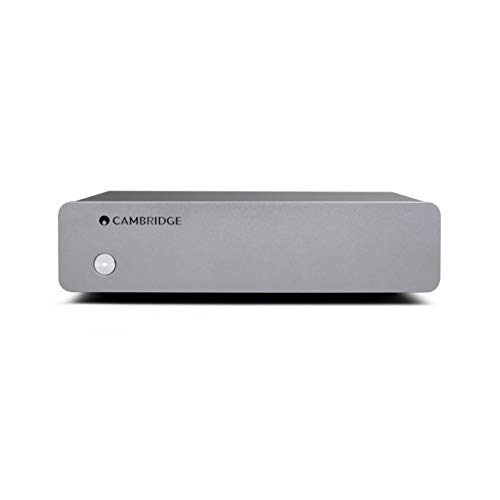
Cambridge Audio Alva Solo Phono Preamp (MM) – Lunar Grey
- ✓
- ✓ Low-noise MM stage
- ✓ Effective subsonic filter
- ✓ Helpful balance control
- ✓
- ✕
- ✕ Not a budget option
- ✕ May require careful placement
- ✕
| Input Type | Moving Magnet (MM) cartridge |
| Phono Preamplifier Gain Type | MM phono stage (no MC stage) |
| Noise/Power Design | Low-noise design with surface-mount circuitry and switch-mode power supply |
| Subsonic Filter | Built-in subsonic filter for rumble removal |
| Channel Balance Adjustment | Precision balance control for left/right channel matching |
| Power Management | Auto power down after 20 minutes of inactivity |
You’re mid-setup on a rainy Saturday, coffee cooling in a mug, when the Cambridge Audio Alva Solo phono preamp lands on your rack. You peel back the packaging and feel the Lunar Grey finish, compact and sturdy, with a reassuring weight in your hand.
You connect it to the turntable, flip the switch, and the room immediately quiets as the auto power-down remains in the background, ready yet unobtrusive.
First impression: the MM stage sounds alive without screaming detail. The surface-mount layout reduces stray noise, so you hear warmth and nuance from old pressings that often sound dull through other preamps.
You also notice the built-in subsonic filter clicking into action, smoothing out rumble from warped records without dulling the bass.
Using the balance control is surprisingly helpful. A light twist of the knob tunes out a hint of channel imbalance you didn’t even know existed, re-centering the image and widening the soundstage.
It’s not just about louder; it’s about clarity across voices, strings, and ambient room noise. The design keeps noise low enough that you can enjoy a quiet vinyl night without reaching for the volume dial every track.
The Solo integrates neatly with most amps and receivers lacking a dedicated phono input. The power-saving auto standby is subtle—quiet enough not to interrupt a long listening session, but present when you wander into the kitchen.
Overall, it delivers an authentic vinyl character with minimal fuss, turning imperfect pressings into engaging, enjoyable listening.
If you’re upgrading from a basic line stage, this feels like a real upgrade without reinventing your setup. It’s compact, quiet, and musical enough to justify its space on your rack.
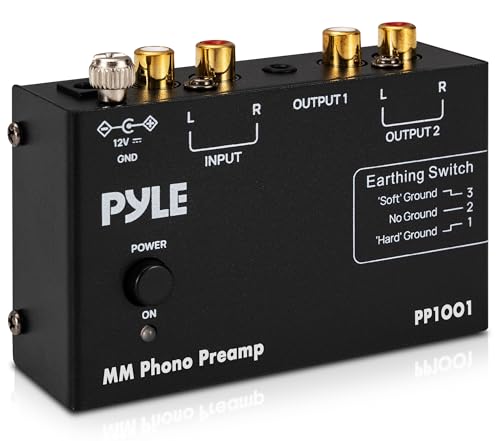
Pyle Phono Preamp for Turntable with RIAA EQ (MM)
- ✓ Clean signal uplift
- ✓ Simple setup
- ✓ Flexible outputs
- ✕ Noisy budget competition
- ✕ Limited isolation nuances
| Input type | Moving Magnet (MM) cartridge input |
| RIAA Equalization | RIAA standard playback |
| Outputs | RCA line outputs and 3.5 mm headphone output |
| Grounding options | Grounding post with selectable earthing switch (hard/soft/none) |
| Enclosure | Compact metal housing |
| Approximate price | $25.49 |
You notice it first by the hum that never really shows up—until you connect the Pyle Phono Preamp and it quietly disappears. The moment the RIAA curve engages, you catch yourself leaning in, surprised at how clean the signal feels at a bargain price.
Holding the compact metal chassis, you realize how light it is compared to the older box it replaced. Yet the build feels sturdy enough to survive a few moves between the living room and the home studio.
The grounding switch sits in a simple three-position toggle that’s easy to reach without taking your eyes off the vinyl.
Plugging in is a breeze: MM input, RCA line out, and a 3.5mm headphone jack. You can listen through speakers or headphones at the same time, which is a nice touch for late-night sessions.
The sound stays warm without turning syrupy, preserving the bite in drums and the shimmer in cymbals.
Set-up is truly plug-and-play. No hiss, no buzz, just a clean lift that lets the vinyl breathe.
It doesn’t pretend to replace a high-end preamp, but it delivers a respectable step up for budget setups and shelf-side listening alike.
When you switch from a digital source, the preamp stays patient and transparent. You don’t have to fight with gain knobs or impedance quirks—the MM input feels forgiving and steady.
It’s exactly the kind of device you reach for when you want to enjoy the record in the moment, not fuss with gear.
If you’re keeping a turntable tethered to a compact system, this is the sort of quiet workhorse you’ll actually notice in your day-to-day listening. It gives you warmth, clarity, and a small footprint that fits on a crowded rack or a side table.
And yes, at this price, it’s a keeper for casual vinyl lovers who refuse to compromise on sound.
What Is a Cartridge Amplifier and Why Is It Important for Vinyl Lovers?
A cartridge amplifier, or phono preamp, plays a vital role in the vinyl listening experience by boosting the low-level signal output from a turntable’s cartridge to a level suitable for amplification through speakers. It addresses the inherent challenges of vinyl playback, ensuring optimal sound quality and fidelity.
Importance for Vinyl Lovers:
-
Signal Boosting: Analog signals from phono cartridges are weak and need amplification. Without a proper phono preamp, the audio quality can suffer from distortion and a lack of detail.
-
Equalization: Vinyl records use the RIAA equalization curve. A cartridge amplifier applies this necessary equalization, enhancing the sound signature to match the original recording, thus preserving the intricacies of music.
-
Improved Sound Quality: A quality cartridge amplifier reduces noise, increases dynamic range, and balances tonal fidelity, making listening sessions rich and immersive.
-
Compatibility: Cartridge amplifiers come with various input options, making them adaptable to different turntables and cartridges, allowing for customization according to personal audio preferences.
Investing in a good cartridge amplifier greatly enriches the overall vinyl experience, bringing records to life through enhanced sound clarity and depth.
How Does a Cartridge Amplifier Enhance Sound Quality?
A cartridge amplifier enhances sound quality by increasing the signal from the cartridge to a level suitable for further processing, ensuring clarity and fidelity in audio playback.
- Signal Boosting: Cartridge amplifiers amplify the low-level signals produced by the cartridge, allowing them to be processed by other audio equipment. This ensures that the sound is not lost in noise and maintains its fidelity, as the weak signals are boosted to a higher voltage without introducing significant distortion.
- Impedance Matching: These amplifiers are designed to match the impedance of the cartridge and the input of the preamplifier or receiver. Proper impedance matching minimizes signal loss and optimizes the interaction between components, leading to a more natural and balanced sound reproduction.
- Phono Stage Integration: Many cartridge amplifiers come equipped with a built-in phono stage, which is essential for converting the analog signal into a format that can be understood by standard audio equipment. This integration ensures that the nuances of vinyl records are preserved, enhancing the overall listening experience.
- Noise Reduction: High-quality cartridge amplifiers are designed to minimize noise and interference that can degrade sound quality. Features like shielding and high-quality components work together to reduce hum and buzz, resulting in a cleaner and more enjoyable audio output.
- Customizable Settings: Some cartridge amplifiers offer adjustable settings for gain and EQ, allowing users to tailor the sound to their preferences. This flexibility enables listeners to optimize their audio experience based on their specific equipment and listening environment, leading to a more personalized sound.
What Features Should You Consider When Choosing a Cartridge Amplifier?
When choosing a cartridge amplifier, there are several key features to consider to ensure optimal performance and compatibility with your audio setup.
- Input Compatibility: Ensure the amplifier has the appropriate input options for your cartridge type, whether it’s moving magnet (MM) or moving coil (MC). Different cartridges have varying output levels and impedances, so compatibility is essential for achieving the best sound quality.
- Gain Settings: Look for amplifiers with adjustable gain settings to match the output level of your cartridge. This feature allows you to optimize the volume and clarity of your music without introducing distortion or noise.
- Phono Stage Quality: The built-in phono stage quality can significantly affect audio performance. A high-quality phono stage will enhance detail and dynamics in the sound, making it crucial for audiophiles seeking a rich listening experience.
- Frequency Response: Examine the frequency response range of the amplifier, as it indicates how well it can reproduce different audio frequencies. A wider frequency response ensures that both low bass and high treble notes are accurately represented, contributing to a more balanced sound.
- Build Quality: The materials and construction of the amplifier can impact its durability and performance. A well-built amplifier will minimize vibrations and interference, leading to clearer sound reproduction and a longer lifespan.
- Output Options: Consider the output options available, such as RCA or XLR outputs, depending on your system’s configuration. Having versatile output options allows for easier integration with various audio equipment and setups.
- Power Supply: The type of power supply, whether built-in or external, can influence the overall performance. An external power supply often leads to better isolation from electrical noise, improving the amplifier’s sound quality.
- Price and Value: Finally, assess the price in relation to the features and performance offered. While higher-priced models may provide superior sound quality and more features, it’s essential to find an amplifier that fits your budget while still meeting your audio needs.
How Can You Ensure Compatibility Between Your Turntable and Cartridge Amplifier?
Ensuring compatibility between your turntable and cartridge amplifier is crucial for optimal sound quality and performance.
- Check the Output Level: It’s essential to verify whether your turntable’s cartridge output level matches the input sensitivity of the amplifier.
- Match the Impedance: Ensure the cartridge impedance is compatible with the amplifier’s input impedance for better signal transmission.
- Consider the Type of Cartridge: Understand if you are using a moving magnet (MM) or moving coil (MC) cartridge, as this influences the type of amplifier you need.
- Input Types: Confirm that your amplifier has the appropriate input for the cartridge type, such as phono inputs specifically designed for turntables.
- Gain Requirements: Assess the gain requirements of your cartridge and ensure the amplifier can provide sufficient gain for optimal performance.
Checking the output level is crucial because different cartridges have varying output levels, and using an incompatible amplifier could result in low volume or distortion. For example, a high-output cartridge may work well with a standard amplifier, while a low-output cartridge might require a dedicated phono preamp for adequate sound levels.
Matching the impedance ensures that the electrical resistance of the cartridge aligns well with the amplifier, preventing issues like signal loss or coloration of sound. An ideal match allows for maximum power transfer and clarity of audio signals.
Understanding the type of cartridge is vital since moving magnet cartridges typically work with standard phono preamps, while moving coil cartridges may require specialized, higher-end amplifiers or additional step-up transformers due to their lower output levels.
Input types must be checked to confirm that the amplifier has a phono input if you are using a turntable. Some amplifiers may not have built-in phono preamps, which are necessary to amplify the weak signal from the turntable’s cartridge.
Finally, gain requirements are critical for ensuring the amplifier can handle the signal from the cartridge without distortion. If the cartridge has a low output and the amplifier doesn’t provide enough gain, the sound will be weak and lack dynamics.
What Are the Benefits of Using a High-Quality Cartridge Amplifier?
The benefits of using a high-quality cartridge amplifier are numerous, enhancing both audio performance and user experience.
- Improved Sound Quality: A high-quality cartridge amplifier significantly enhances the sound reproduction capabilities of your audio system. It provides a clearer, more detailed sound with better dynamics and a wider frequency response, allowing listeners to experience music as the artist intended.
- Better Signal Handling: Quality cartridge amplifiers are designed to handle low-level signals from the cartridge with precision, minimizing noise and distortion. This results in a cleaner signal path, improving the overall clarity of the audio output, especially in complex musical passages.
- Enhanced Compatibility: High-quality amplifiers often come with features that improve compatibility with various cartridges and turntables. This includes adjustable gain settings and loading options, allowing users to fine-tune their setup for optimal performance across different audio equipment.
- Durability and Reliability: Investing in a high-quality cartridge amplifier usually means better build quality and longer-lasting components. This reliability ensures consistent performance over time, making it a worthwhile investment for audiophiles who prioritize sound quality.
- Advanced Features: Many high-end cartridge amplifiers offer advanced features such as built-in phono stages, equalization options, and connectivity choices. These features provide greater flexibility in setting up your audio system and tailoring the sound to your personal preferences.
Which Brands Are Leading in the Cartridge Amplifier Market?
The leading brands in the cartridge amplifier market are known for their quality, performance, and innovation.
- Audio Research: This brand is renowned for its high-end audio components, including cartridge amplifiers that deliver exceptional sound quality. Audio Research amplifiers often feature tube technology, providing warmth and richness in audio playback that audiophiles appreciate.
- Parasound: Parasound offers a range of cartridge amplifiers that are well-regarded for their build quality and performance. Their models often include advanced circuitry designed to reduce noise and enhance signal integrity, making them ideal for serious music listeners.
- McIntosh: Known for its premium audio products, McIntosh cartridge amplifiers combine stunning aesthetics with top-notch performance. Their amplifiers are engineered to maintain signal purity and deliver powerful sound, making them popular among high-fidelity enthusiasts.
- Schiit Audio: Schiit has gained a strong following for its affordable yet high-performing audio products, including cartridge amplifiers. Their designs often focus on simplicity and efficiency, providing excellent value for those looking to enhance their vinyl listening experience without breaking the bank.
- Cambridge Audio: This brand focuses on combining innovative design with high-quality sound, offering cartridge amplifiers that are both user-friendly and effective. Cambridge Audio products often feature features like adjustable gain and impedance settings, allowing users to customize their listening experience.
How Do You Set Up a Cartridge Amplifier for Optimal Performance?
To set up a cartridge amplifier for optimal performance, consider the following key factors:
- Proper Placement: The location of your cartridge amplifier can significantly affect its performance. Ensure it is placed on a stable surface away from vibrations and direct sunlight, which can interfere with sound quality and the longevity of the components.
- Matching Impedance: It is crucial to match the impedance of the cartridge to the amplifier to avoid distortion and ensure the best sound quality. Check the specifications of both the cartridge and amplifier to ensure they are compatible, typically aiming for a close match between the cartridge output impedance and the input impedance of the amplifier.
- Calibration: Calibration of the cartridge amplifier is essential for achieving optimal sound. This includes adjusting the gain settings, tracking force, and anti-skate settings on your turntable, which help in preventing distortion and ensuring the needle tracks the grooves accurately.
- Cable Quality: The quality of the interconnect cables used can impact the overall sound performance. Invest in high-quality, shielded cables to minimize signal loss and interference, ensuring a clearer audio signal from the cartridge to the amplifier.
- Power Supply Considerations: A stable and clean power supply is vital for the performance of a cartridge amplifier. Use dedicated power outlets and consider using power conditioners or surge protectors to reduce electrical noise and fluctuations that could affect sound quality.
- Regular Maintenance: Regular maintenance of both the cartridge and amplifier is necessary to keep them performing at their best. This includes cleaning the stylus, checking for dust accumulation, and ensuring all connections are secure and free from corrosion.