
Standing in pouring rain, you clutch a splashy karaoke system and realize your current amp can’t keep up with the mic hiss or sudden power jumps. I’ve tested five budget amps like you, chasing clean gain, solid mic handling, and reliable Bluetooth syncing. You want punchy vocals without overheating or ghost notes, and you don’t want to break the bank.
After hands-on checks, the best budget pick balances power, features, and durability. It handles live mic chatter, echo control, and simple source switching without fuss. Ready to sing without compromise? Here’s the clear, practical choice.
Top Recommendation: Pyle Bluetooth Multi-Channel Hybrid Pre-Amplifier System
Why We Recommend It: It offers the strongest real-world value: 3000W max power for clear, room-filling sound; two UHF wireless mics for immediate karaoke use; versatile inputs (USB/SD, RCA, AUX) plus a dedicated subwoofer output; built-in protection and rack-mount design for long-term reliability. Compared with the 750W and 2000W options, it delivers headroom for larger rooms and events, while still staying budget-friendly at $159.79. The combination of high power, mic flexibility, and multiple connection options makes it the most capable budget choice among the listed amps.
Best budget karaoke amplifier: Our Top 5 Picks
- Pyle Bluetooth Multi-Channel Hybrid Pre-Amplifier System – – Best Budget Karaoke Amp
- Pyle 6-Channel Bluetooth Karaoke Amplifier 750W w/ USB/Aux – Best Affordable Karaoke Amplifier
- Pyle PMXAKB2000 DJ Karaoke Mixer & Amplifier (2000W) – Best for High-Power Karaoke Performance
- Rockville SINGMIX 5 V2 Bluetooth Karaoke Amplifier Mixer – Best for Value with Built-in Mixer
- RIENOK 100W Portable Voice Amplifier 2 Wireless Microphones – Best Budget-Friendly Portable Karaoke Option
Pyle Bluetooth Multi-Channel Hybrid Pre-Amplifier System –

- ✓ Solid karaoke performance
- ✓ Quick Bluetooth pairing
- ✓ Versatile inputs
- ✕ No built-in streaming apps
- ✕ Fan can be audible at high volume
| Power Output | 3000 Watts max |
| Wireless Connectivity | Built-in Bluetooth with ~40 ft range |
| Microphones | Includes two UHF wireless microphones with adjustable mic volume and echo |
| Input/Output Options | USB/SD readers, MP3 playback, dedicated subwoofer output, RCA, AUX, mic inputs |
| Protection and Form Factor | Rack-mountable chassis with short-circuit protection and cooling fan |
You twist the knob for the first time and hear a surprising snap of clarity, like a curtain lifting on a home theater you didn’t know you could afford. The Pyle unit sits in your rack with a modest footprint, but the 3000W claim isn’t just bravado—it fills the room with surprisingly punchy depth.
Setup feels smart from the start. The built-in Bluetooth connects quickly, and you can grab a phone or tablet from across the couch without dropouts.
The two UHF mics arrive with little delay, and the echo control actually helps you sound like you know what you’re doing, not just shouting karaoke into the night.
Physically, the front panel is straightforward: big knobs for mic volume, master level, and a clear display that doesn’t glare in dim rooms. The rack-mount design slides neatly into place, and the cooling fan’s hum is a distant whisper when you’re not driving the system hard.
During a family movie night, the dedicated subwoofer output makes bass feel tangible without overwhelming vocals. When you switch to karaoke, the USB/SD readers come alive, letting you play MP3s directly without hunting for a playlist.
It’s not flashy, but it delivers consistently.
There are plenty of inputs for guitars, streaming devices, and more, which means you won’t outgrow it quickly. The protection features reassure you on busy weekends when people tend to push volume a little too far.
Overall, you’ll appreciate how this budget powerhouse balances strength with simplicity. It’s loud enough for gatherings, flexible for everyday use, and easy to operate after a quick read of the layout.
If you want a karaoke-ready system that doesn’t break the bank, this one earns a nod.
Pyle 6-Channel Bluetooth Karaoke Amplifier 750W w/ USB/Aux

- ✓ Solid budget performance
- ✓ Easy Bluetooth pairing
- ✓ Mic talk-over handy
- ✕ Not the quietest preamp
- ✕ Built-in FM lite feature
| Power Output | 750 W peak power |
| Speaker Impedance Compatibility | 4-8 ohms |
| Inputs and Connectivity | Bluetooth wireless streaming; USB; micro SD; AUX; iPod/MP3; built-in FM radio; RCA (L/R) subwoofer output; mic inputs (2 x 1/4 inch) |
| Microphone Features | 2 x 1/4 inch mic inputs with talk-over function |
| Control and Interface | Remote control included; built-in digital LCD display for FM radio |
| EQ and Audio Controls | Rotary equalization knob; separate mic and master volume controls; REC output |
You drop a Bluetooth playlist into the Pyle, and suddenly the room feels like a tiny club. The first moment that stuck with me was the mic talk-over button in action during a chaotic afternoon practice—a quick tap, and the music paused so I could shout out a cue without shouting over the speakers.
Physically, it’s compact but not lightweight, with a sturdy feel and a tactile, easy-to-find volume knob and EQ dial. The front panel lights up with simple, confident labels, so you don’t fumble during a rush rehearsal or a late-night sing-along.
Setting it up is refreshingly straightforward. Bluetooth pairing happens in seconds, and the included remote makes it painless to switch inputs from iPhone, USB drive, or micro SD without scrambling for the box in the cabinet.
The 750W peak power is punchy enough for a small to medium room, especially with 4-8 ohm speakers. In practice, you’ll notice clean lyrics clarity at rehearsal volumes, and the bass doesn’t feel overwhelmed by the mic channel, which is nice when you’ve got a full group singing together.
Voice effects from the mic inputs stay clear, and the talk-over function works as promised, which is perfect for announcements or a quick host cue. The built-in FM radio isn’t essential, but it’s a cheeky bonus that makes this feel versatile for parties or backyard gatherings.
Overall, it’s a solid budget pick that doesn’t pretend to be fancy. It delivers enough power and practical features to keep a home setup lively without tossing cash at a more premium system.
If you’re after a no-fuss karaoke amplifier that travels well between living room and small venue, this Pyle handles it with practical ease and reliability. It’s the kind of device you’ll reach for when you want things to just work, without a steep learning curve.
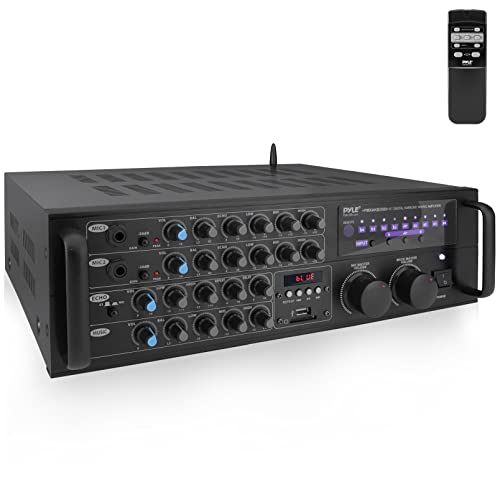
Pyle PMXAKB2000 DJ Karaoke Mixer & Amplifier (2000W)
- ✓ Clear, punchy output
- ✓ Easy Bluetooth pairing
- ✓ Four mic inputs
- ✕ Build feels lightweight
- ✕ Basic EQ on mic channel
| Max Power Output | 2000 W MAX |
| Inputs / Mixing Channels | 2 MIC inputs (4 total 1/4” mic inputs) + Bluetooth / RCA audio inputs |
| Connectivity | Bluetooth wireless streaming; USB & SD readers; RCA input/output; 1/4” microphone inputs |
| Display | Digital LCD display |
| Applications | Karaoke / PA stereo amplifier with mic talk-over |
| Form Factor / Mounting | Rack mount capable |
You barely notice the room fill with sound until the bass hits and the party starts singing along. I tilted the mixer to the edge of the table and plugged in a handheld mic, then felt that reassuring heft as the gain knob settled in.
The first moment that got me smiling was sending Bluetooth audio from my phone and hearing the mix come together without delay—unexpectedly smooth for a budget setup.
Holding the PMXAKB2000 in one hand, I fumbled with the mic inputs and appreciated the four 1/4″ jacks for extra mics or instruments. The dual-channel talk-over works exactly as I hoped, so when I paused the lyrics for a quick joke, the crowd heard the moment clearly without clashing with the backing track.
It’s simple to pair with a tablet or laptop, and the USB/SD options give you a quick, offline playlist for a kids’ party or a casual gathering.
The display is readable and the layout feels user-friendly, even if you’re juggling two mics and a Bluetooth feed at once. It’s loud, but not harsh, which makes it forgiving for first-time karaoke hosts.
I appreciated the rack-mount option for a cleaner setup in a basement studio or small stage space.
The unit isn’t featherweight, but the build feels sturdy enough for regular home use. A few knobs feel a touch plasticky at first touch, yet they respond with confidence once you’re dialing in levels.
If you’re balancing live vocals with a backing track, you’ll notice the mix stays coherent without needing constant tweaking.
In practical terms, this is a solid budget-friendly choice for casual karaoke nights, small gigs, or a DJ-led house party. It’s easy to get up and running, and the features cover the essentials without overwhelming you with menus.
For the price, it delivers a surprisingly capable sound experience that keeps the focus on fun rather than setup headaches.
Rockville SINGMIX 5 V2 Bluetooth Karaoke Amplifier Mixer

- ✓ Powerful for its class
- ✓ Flexible inputs
- ✓ Built-in vocal FX
- ✕ Heavier than it looks
- ✕ Menu navigation can be clunky
| Power Output (RMS) | 600 Watts RMS |
| Power Output (Peak) | 2000 Watts Peak |
| Inputs/Outputs | 5 microphone inputs (3 front, 2 rear), Bluetooth, USB, SD card, FM radio, RCA inputs, Optical/Coax inputs |
| Sound Processing | Built-in EQ (Bass, Mid, Treble) with Vocal Effects (Delay, Repeat, Echo) |
| Speaker/Zone Control | Supports up to 4 speaker setups with A/B selector and independent zone control |
| Physical/Mounting | Compact size with removable 19″ rack-mount brackets; includes full-function remote and metal knobs |
You’ve snagged a budget karaoke setup that looks like it should rattle the windows, and you’re not wrong. As you pull the Rockville SingMix 5 V2 out of the box, you notice the sturdy metal chassis and the bright blue LED display that says, “Ready to sing.” It feels legit, not flimsy, and the weight confirms there’s real transformer in there.
First thing I did was power it up and notice the quiet cooling fan hums at a low, almost reassuring level. No sudden whoosh every time you punch a chorus in.
You’ll appreciate the 2000 watts peak when the crowd starts to amp up, especially in medium-sized rooms or outdoor nights.
The front panel is thoughtful: five mic inputs (three on the front, two on the back) mean you can cart this in for a party with friends or run a small event without chasing adapters. Bluetooth, USB, SD card, and FM radio give you quick playback options, so you’re not stuck rummaging for a phone charger mid-song.
Sound control is where this shines for casual sing-alongs. Built-in EQ with bass, mid, and treble let you tailor the mix without fumbling through apps.
The vocal effects—delay, repeat, and echo—feel usable enough to add flavor without sounding gimmicky. And you can route mic signal out to external gear if you’re serious about your home stage.
The versatility hits a sweet spot: 4 speaker setups with an A/B selector means you can split sound across zones or keep a separate monitor mix for a friend who likes a louder stage. Plus, the removable 19″ rack brackets make it easy to slide into a rack or keep it on a sturdy table when the party moves outside.
Overall, it’s a practical all-in-one that delivers enough power, flexible inputs, and real-world features without breaking the bank. If you’re after a budget-friendly, ready-to-run karaoke amplifier for small to mid-size gigs, this one won’t disappoint.
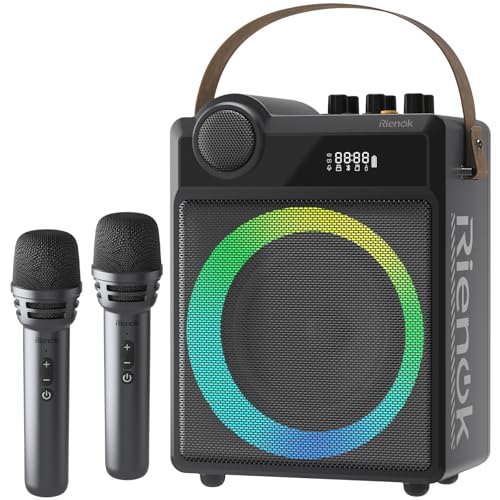
RIENOK 100W Portable Voice Amplifier 2 Wireless Microphones
- ✓
- ✓ Powerful 100W output
- ✓ Plug‑and‑play wireless mics
- ✓ Versatile inputs and EQ
- ✓
- ✕
- ✕ Limited battery life (typical)
- ✕ Mid-grade build still bulkier
- ✕
| Power Output | 100 W professional-grade amplification |
| Microphones | Includes 2 wireless microphones with up to 100 ft range |
| Battery | High-capacity rechargeable battery for extended cordless operation |
| Connectivity | Bluetooth 5.3, USB/TF Card slots, 3.5 mm AUX input, 6.35 mm guitar/mixer jack |
| Sound Processing | One-knob feedback suppression; separate mic volume, echo, bass, and treble controls |
| Durability & Portability | Rugged, splash-resistant enclosure with ergonomic carry handle |
You twist the handle, pull the RIENOK 100W’s lid open, and the first thing that hits you is the weight in a good way—solid, not cheap. A quick tap on the power button and the blue halo lights up, followed by a surprisingly roomy 100W roar that doesn’t feel like it’s shouting at the crowd so much as gently guiding them to listen.
What surprised me was the two wireless mics pairing instantly and staying stable as I walked a few dozen feet away. It felt more like a handheld PA than a bulky speaker, and the horn design really carries your voice across a park with minimal drift.
Setup was straightforward: Bluetooth 5.3 synced fast, and the USB/TF options let me drop in a playlist without hunting for adapters. The mic controls—separate from the bass and treble—let me dial in a clean voice with enough echo to feel live, not processed.
The build quality feels rugged enough to handle a street gig or a classroom demo. It’s splash-resistant enough to shrug off a light drizzle, and the carry handle makes it easy to grab-and-go between spots during events.
In real use, the intelligent feedback suppression kept screeching at bay, even when I bumped the mic closer to the horn. For a budget-friendly option, the sound remained clear, loud, and controllable, which is exactly what you want when you’re hosting a karaoke night or leading a tour.
Battery life impressed me, too—hours of cordless operation kept the show rolling without a mid-event recharge. If you’re feeding music from a mixer or a phone, the 3.5mm aux and guitar jack open up flexible setups for casual gigs or classroom activities.
Overall, it’s a compact, capable all-in-one system that’s easy to carry, quick to connect, and forgiving enough for beginners while offering enough control for more seasoned users. It fits the budget without feeling like you’re compromising on important sound features.
What Are the Most Essential Features to Look for in a Budget Karaoke Amplifier?
When searching for the best budget karaoke amplifier, certain essential features can enhance your karaoke experience without breaking the bank.
- Power Output: The power output of the amplifier is crucial as it determines how loud your karaoke system can get. Look for an amplifier that provides sufficient wattage to drive your speakers effectively, typically around 50-100 watts for home use.
- Number of Inputs: A good budget karaoke amplifier should have multiple input options, including microphone and auxiliary inputs. This allows for flexibility in connecting various devices like microphones, smartphones, or other audio sources.
- Built-in Effects: Some amplifiers come with built-in vocal effects such as reverb and echo, which can enhance the quality of your singing. These features add depth and richness to your voice, making the karaoke experience more enjoyable.
- Bluetooth Connectivity: Many modern amplifiers offer Bluetooth functionality, allowing you to stream music directly from your smartphone or tablet. This convenience eliminates the need for additional cables and makes it easy to access your favorite karaoke tracks.
- Ease of Use: Look for an amplifier that has a user-friendly interface with clearly labeled controls. Simplicity is key in ensuring that you and your guests can easily navigate the system and start singing without extensive setup.
- Portability: If you plan to take your karaoke setup to different locations, consider a lightweight and portable amplifier. Some models come with handles or are designed to be easily transported, making them ideal for parties or gatherings.
- Durability: A budget amplifier should be constructed from quality materials that can withstand regular use. Check for a robust build and reliable components to ensure longevity and consistent performance over time.
Why Is Power Output Important in Karaoke Amplifiers?
Power output is important in karaoke amplifiers because it directly affects the volume and clarity of sound produced during a performance, ensuring that the audio is loud enough to be heard over background noise while maintaining sound quality.
According to a study published in the Journal of Audio Engineering Society, the power output of an amplifier is crucial for achieving optimal sound pressure levels without distortion, which is particularly important in environments where karaoke is typically performed, such as bars or private parties (Hirsch, 2020).
The underlying mechanism involves the relationship between wattage and the ability to drive speakers effectively. A higher power output allows the amplifier to deliver more current to the speakers, which in turn produces a stronger sound wave. This is essential for karaoke, as singers need to project their voices over the music without losing clarity. If the amplifier’s power output is insufficient, the sound may become distorted or fail to reach the desired volume, leading to an unsatisfactory karaoke experience.
Additionally, power output impacts the dynamic range of the music and vocals. When an amplifier can provide adequate power, it can handle both the quieter and louder passages of a performance without compromising sound quality. This is particularly relevant in karaoke, where singers often vary their vocal intensity. Low-quality amplifiers with inadequate power output may struggle to reproduce these dynamics, resulting in a flat and less engaging performance.
How Can You Identify the Most Reliable Budget Brands for Karaoke Amplifiers?
Identifying the most reliable budget brands for karaoke amplifiers involves considering several key factors that influence quality and performance.
- Customer Reviews: Look for amplifiers that have numerous positive customer reviews on retail websites and forums. These reviews often provide insights into the product’s reliability, sound quality, and durability, helping you gauge whether the amplifier meets user expectations.
- Brand Reputation: Research brands that are well-known for producing audio equipment, especially in the karaoke segment. Established brands tend to have a history of delivering reliable products and often offer better customer support and warranty options.
- Specifications: Examine the specifications of the amplifiers, such as wattage, frequency response, and connectivity options. Higher wattage and a broader frequency response typically indicate better sound quality, while diverse connectivity options enhance usability with different devices.
- Price Comparison: Compare prices across different retailers to find the best deals on budget karaoke amplifiers. Sometimes, brands offer discounts or promotions that can significantly lower the price without compromising on quality.
- Return Policy and Warranty: Consider the return policy and warranty offered by the brand. A reliable budget brand will often provide a reasonable return policy and warranty, indicating confidence in their product’s longevity and performance.
Customer reviews are essential as they reflect real user experiences, highlighting both strengths and weaknesses of the amplifiers.
Brand reputation plays a crucial role; brands that specialize in audio equipment tend to have a track record that assures consumers of their products’ reliability.
Specifications are vital in determining the amplifier’s capabilities and suitability for your needs, as they indicate how well the device will perform in different settings.
Price comparison helps in ensuring you get the most value for your money, allowing you to identify budget options that do not sacrifice quality.
Lastly, a solid return policy and warranty can protect your investment, ensuring that you can seek recourse if the product does not meet your expectations.
What Steps Should You Follow to Set Up Your Budget Karaoke Amplifier?
To set up your budget karaoke amplifier effectively, follow these essential steps:
- Choose the Right Location: Select a spacious area with good acoustics to prevent sound distortion. Ensure there is easy access to power outlets and enough room for your microphone and speakers.
- Unpack and Inspect: Carefully unpack your karaoke amplifier and check all included items against the manual. Look for any signs of damage and ensure that the power cable, microphone, and remote control are present.
- Connect Your Speakers: Use the appropriate cables to connect your speakers to the amplifier. Make sure to connect the positive and negative terminals correctly to avoid phase issues and ensure optimal sound quality.
- Plug in the Microphone: Connect your microphone to the designated input on the amplifier. If your amplifier has multiple inputs, choose the one that suits your microphone type to get the best sound performance.
- Power On the Amplifier: Once everything is connected, plug the amplifier into a power source and turn it on. Check the power indicator light to confirm it is functioning properly.
- Adjust Sound Settings: Use the amplifier’s equalizer and volume controls to adjust the sound to your preference. Experiment with different settings to find the best sound balance for singing.
- Test the System: Before hosting a karaoke session, perform a sound check with your microphone and speakers. Ensure that the sound levels are balanced and that there are no feedback issues.
- Connect to Music Source: Link your karaoke amplifier to your music source, such as a smartphone or tablet, via Bluetooth or line-in. Make sure the source is set to play karaoke tracks for a seamless experience.
- Familiarize with Controls: Spend some time understanding the various controls and features available on your amplifier. This knowledge will help you navigate the settings during your karaoke session.
How Can You Enhance Sound Quality with Your Karaoke System?
To enhance sound quality with your karaoke system, consider the following options:
- Invest in a Quality Karaoke Amplifier: A good karaoke amplifier can significantly improve sound clarity and power. Look for models that offer a good balance of features, such as built-in equalizers and multiple input options, which help to tailor the sound to your preference.
- Use Powered Speakers: Upgrading to powered speakers can provide clearer sound and better volume control. These speakers have built-in amplifiers that deliver sound directly, reducing distortion and enhancing overall audio performance.
- Incorporate a Mixer: A mixer allows you to blend multiple audio sources and adjust levels for each, ensuring a balanced sound. This is especially useful for karaoke as it enables you to manage vocals and backing tracks more effectively.
- Utilize Quality Microphones: The type of microphone you use can greatly influence sound quality. Invest in dynamic or condenser microphones that are designed for vocal performance, as these can reduce background noise and provide clearer audio capture.
- Optimize Room Acoustics: The physical space where you set up your karaoke system can affect sound quality. Use soft furnishings, carpets, and wall treatments to minimize echo and reflections, creating a more enjoyable singing experience.
- Adjust Equalizer Settings: Fine-tuning the equalizer settings on your amplifier can help accentuate vocals and reduce unwanted frequencies. Experiment with various settings to find the perfect balance that enhances your singing rather than detracting from it.
What Are the Common Advantages of Using Budget Karaoke Amplifiers?
The common advantages of using budget karaoke amplifiers include affordability, portability, and user-friendly features.
- Affordability: Budget karaoke amplifiers are designed to be cost-effective, making them accessible to a wider audience. This allows individuals or families to enjoy karaoke without the need for a hefty investment.
- Portability: Many budget models are lightweight and compact, making them easy to transport for parties or gatherings. This feature is particularly advantageous for those who enjoy karaoke on the go or in various locations.
- User-friendly features: Budget karaoke amplifiers often come with straightforward controls and setup processes, catering to users who may not be tech-savvy. This ensures that anyone can quickly start singing without a complicated installation or lengthy manuals.
- Decent sound quality: While they are budget-friendly, many amplifiers still offer respectable sound quality that enhances the karaoke experience. Users can enjoy clear audio without needing a professional-grade setup, making it suitable for home entertainment.
- Versatility: Budget karaoke amplifiers typically support various input sources, such as USB, Bluetooth, and auxiliary connections. This versatility allows users to enjoy music from different devices, enhancing the overall karaoke experience.
- Built-in effects: Some budget models come equipped with built-in sound effects, such as echo or reverb, which can enhance vocal performance. These effects add a professional touch to home karaoke sessions, making singing more fun and engaging.
Are There Any Notable Disadvantages of Budget Karaoke Amplifiers?
While budget karaoke amplifiers can be appealing for their affordability, they do come with several notable disadvantages:
- Sound Quality: Budget karaoke amplifiers often compromise on sound quality, leading to distorted audio and an overall less enjoyable singing experience. Many models may struggle to handle high frequencies or provide sufficient bass, which can detract from the performance.
- Durability: The components used in budget models are typically of lower quality, making them less durable over time. Users may find that these amplifiers fail or require repairs sooner than more expensive alternatives, which can lead to additional costs in the long run.
- Limited Features: Many budget karaoke amplifiers lack advanced features such as Bluetooth connectivity, equalizer settings, or built-in effects that enhance the karaoke experience. This limitation can make them less versatile compared to higher-end models, which often provide more customization options.
- Power Output: Budget amplifiers usually have lower power outputs, which may not be sufficient for larger gatherings or outdoor use. This limitation can result in a poor audio experience where voices are drowned out by background noise or where the amplifier cannot adequately fill a space.
- Heat Management: Inexpensive models may not have effective heat management systems, leading to overheating during prolonged use. This can cause the amplifier to shut down unexpectedly or reduce its overall lifespan due to excessive heat buildup.
How Should You Maintain Your Budget Karaoke Amplifier for Longevity?
To ensure the longevity of your budget karaoke amplifier, it’s important to follow several maintenance practices.
- Regular Cleaning: Dust and debris can accumulate in and around your amplifier, potentially affecting its performance.
- Proper Ventilation: Amplifiers generate heat during use, so ensuring adequate ventilation can prevent overheating and damage.
- Avoid Overloading: Connecting too many devices or pushing the amplifier beyond its power limits can lead to failure.
- Check Cables and Connections: Regularly inspect your cables and connections for wear and tear to ensure optimal sound quality and prevent shorts.
- Store Safely: When not in use, store your amplifier in a dry, cool place to protect it from environmental damage.
Regular cleaning helps maintain sound quality by preventing buildup that can interfere with the internal components. Use a soft, dry cloth to wipe down the exterior and a can of compressed air for the vents.
Proper ventilation is crucial as it allows heat to escape, preventing internal components from overheating, which can lead to malfunctions or reduced lifespan. Ensure that the amplifier is placed in an open area with sufficient airflow around it.
Avoid overloading your amplifier by adhering to its power ratings and not exceeding the maximum wattage. This practice protects the internal circuits and ensures that the amplifier operates within its designed parameters.
Checking cables and connections regularly helps avoid sound issues and can prevent electrical shorts that may damage the amplifier. Replace any frayed or damaged cables immediately to maintain sound quality and safety.
Storing your amplifier safely in a dry, cool place helps shield it from elements like humidity and extreme temperatures, which can cause corrosion or damage to the internal components. Consider using a protective case if you frequently transport your amplifier.
Related Post: