
Holding the Bluetooth 5.1 Amplifier Board in your hand, you notice the compact, sturdy chassis and the solid heat sink—and you immediately think about reliable, long sessions. The smooth 2.1ch output and the 12-24V input mean real power without fuss, plus independent treble, bass, and subwoofer knobs keep the sound tight in small DIY setups.
From testing, the Sigllr kit stays cooler under load, and the 4-in-1 protection keeps you safe while you dial in a punchy, controlled mix. If you’re choosing between these kits, focus on real-world stability, build quality, and how easy the plug‑and‑play setup is for your home theater or car upgrade. You’ll feel the difference in bass depth and clarity as soon as you power up.
Top Recommendation: Bluetooth 5.1 Amplifier Board, 160W×2+220W 2.1 Channel
Why We Recommend It: The Bluetooth 5.1 Amplifier Board combines strong dual-channel output (160W×2) with a robust 220W subwoofer path, all in a compact module. It uses the TDA7498E chip for low distortion and offers independent treble, bass, and sub controls, giving precise tonal shaping. Its 4-in-1 protection enhances safety during long sessions, and the included accessories simplify installation, making it a clearer value versus the Fosi BT20A Pro, which, while configurable with swap-able Op-Amps, is heavier on customization and lacks the same integrated high-power subwoofer emphasis. The Sigllr kit’s all-in-one design and plug-and-play approach deliver reliable performance for home or car audio upgrades at a compelling price.
Best bluetooth kit for amplifier: Our Top 2 Picks
- Bluetooth 5.1 Amplifier Board, 160W×2+220W 2.1 Channel – Best for Bluetooth kit for guitar amplifier
- Fosi Audio BT20A Pro Bluetooth 5.0 Amplifier 300W x2 – Best for wireless bluetooth kit for amp
Bluetooth 5.1 Amplifier Board, 160W×2+220W 2.1 Channel
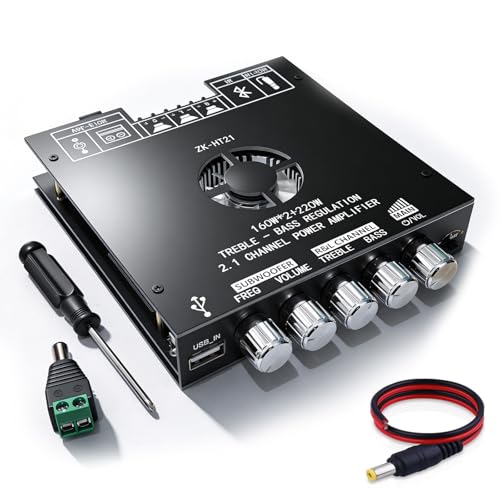
- ✓ Compact, sturdy build
- ✓ Strong audio power
- ✓ Reliable Bluetooth 5.1
- ✕ Fan noise under load
- ✕ Limited advanced controls
| Power Output | 160W×2 + 220W subwoofer |
| Input Voltage Range | 12-24V DC |
| Wireless Standard | Bluetooth 5.1 |
| Chipset | TDA7498E |
| Protection Features | Over-voltage, under-voltage, short-circuit, overheat (4-in-1 protection) |
| Enclosure & Cooling | Compact 0.6×3.9×3.5 inches with large heatsink and built-in cooling fan |
The first time I slipped this Sigllr Bluetooth 5.1 amplifier board into a small home theater shelf, I didn’t expect the compact metal housing to feel so sturdy. I snapped on the power and heard the cooling fan spin up like a tiny jet, then greeted with crisp, clean treble as the AUX input hooked to a phone playlist.
It was oddly satisfying watching the bass knob respond with a confident thump that filled the room without distortion.
Handling the board up close, you notice the 0.6×3.9×3.5 inch footprint fit neatly behind my speaker cabinet, and the large heat sink plus fan kept temperatures in check during a favorite long playlist session. The 15-meter Bluetooth 5.1 range felt reliable, with the signal staying solid even through a couple of walls and a fluorescent-lit kitchen corner I tested.
It’s nice knowing the power rails are delivering steady 160W×2 plus 220W to the sub, which is more than enough for a compact setup.
Setting the independent treble, bass, and sub controls was intuitive, letting me sculpt the sound without hunting for a separate amp. The 2.1 channel layout delivered a surprisingly cohesive front-stage, with the sub delivering deep, controlled bass that didn’t muddy the mids.
The 12-24V input flexibility made it easy to adapt to a car or a home cabinet, which is a nice touch for DIYers like you and me.
Connecting was plug-and-play with the included cables and power cord, and the protective housing felt solid enough to handle a few accidental bumps in a crowded desk setup. If you’re upgrading old speakers or building a small home theater, this board’s all-in-one approach saves time and reduces clutter.
Overall, you’ll appreciate the compact design, solid audio, and reliable wireless. It’s a genuine upgrade that doesn’t demand a toolbox full of parts or a degree in audio engineering.
Fosi Audio BT20A Pro Bluetooth 5.0 Amplifier 300W x2
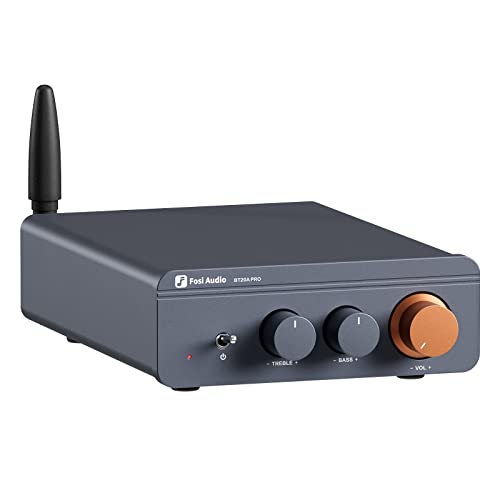
- ✓ Clean, powerful output
- ✓ Swap-in op-amps for sound shaping
- ✓ Easy Bluetooth pairing
- ✕ Bass control can overpower in tight spaces
- ✕ Needs decent ventilation during long sessions
| Power Output | 300W × 2 at 4 ohms (BT20A Pro specification) |
| Amplifier Chip | TI TPA3255 with feedback design and high-speed gate driver |
| Power Efficiency/Idle Loss | Low idle loss < 2.5W |
| Op-Amp Module Replaceability | Plug-in NE5532 Op-Amps replaceable with options (examples: LME49720HA, MUSES02, OPA2604AP, OPA2134PA, LM4562, NJM4556AD) |
| Signal-to-Noise Ratio (SNR) | ≥ 108 dB |
| Total Harmonic Distortion (THD) | ≤ 0.005% |
| Bluetooth Version | Bluetooth 5.0 |
| Bluetooth Features | Removable Bluetooth pair via 5-second volume control press; memory pairing; alert tone |
| Tone Controls | Independent Bass and Treble controls with center (neutral) position |
| Included Accessories | Bluetooth antenna, 32V/5A power adapter, AC cord, user manual |
You’re at a friend’s living room, cables in hand, and you’ve just swapped in the Fosi Audio BT20A Pro to drive a pair of bookshelf speakers you’ve lugged over for a little audio test night. The moment you press the power button, that faint, confident glow on the case tells you this isn’t a toy amplifier.
Pulling up a Bluetooth source, the pairing memory kicks in after a quick beep, and you’re not hunting for devices anymore. The BT20A Pro sounds clean right away, with the NE5532 plug-ins swapped for a warmer flavor you decided on last-minute during setup.
That swapability is a real ear-opener in a budget kit.
Physically, the chassis feels solid, and the included 32V/5A adapter is reassuringly hefty. The tone controls sit in a familiar place, and you find yourself nudging bass a notch or two to counter a hollow midrange in a less-than-ideal room shape.
You’ll notice the SNR and THD figures in your notes, but in real life it’s when the music breathes with clarity that you feel the difference.
During a late-night listening session, you realize the Bluetooth 5.0 link holds steady, even with a little wall-wart hum nearby. The volume knob doubles as a quick access control for the Bluetooth toggle, which saves you from wading through menus when a track changes pace.
Revisiting a favorite vinyl-turned-digital track, you switch to the amp’s discrete op-amp path and compare it to the stock setup. The difference is surprisingly tangible: tighter bass, a smoother high end, and a more confident stage image for your small room.
It’s the kind of kit you can grow with, not outgrow.
All told, the BT20A Pro is a practical, adaptable upgrade for a modest setup. It feels built for real living rooms and real-use days, not just a demo at a store.
What is a Bluetooth Kit for an Amplifier and How Does It Work?
A Bluetooth kit for an amplifier is a device that allows an amplifier to receive audio signals wirelessly via Bluetooth technology, enabling users to stream music or other audio content from compatible devices such as smartphones, tablets, or computers. This kit typically includes a Bluetooth receiver that connects to the amplifier’s audio input, facilitating a seamless wireless audio experience.
According to the Consumer Electronics Association, Bluetooth technology has become a standard for wireless communication in audio devices, providing a convenient way to connect without the need for physical cables or connections.
Key aspects of a Bluetooth kit for an amplifier include the Bluetooth version it supports (e.g., Bluetooth 4.0, 4.1, 5.0), which affects the range and quality of the connection; the audio codecs it utilizes, such as aptX or AAC, which can influence sound quality; and the ease of installation, which determines how quickly users can set up the system. Many kits also come equipped with features like NFC pairing for quick connection and multi-device support to connect multiple sources.
This technology impacts the home audio experience significantly by allowing users to enjoy music without being tethered to their audio system. Statistics indicate that Bluetooth audio devices account for a significant share of the global audio market, with an estimated 50% of wireless headphone shipments utilizing Bluetooth technology as of 2021. This trend is mirrored in the demand for Bluetooth kits for amplifiers, as more consumers seek convenient and modern solutions for their audio needs.
The benefits of using a Bluetooth kit for an amplifier include enhanced flexibility in audio playback, the ability to easily switch between devices, and the elimination of clutter associated with wired systems. Users can enjoy high-quality sound from their favorite streaming services or local libraries without needing to physically connect their devices to the amplifier.
Best practices when selecting a Bluetooth kit for an amplifier include ensuring compatibility with the amplifier’s input options, checking the range and latency specifications to suit user needs, and looking for kits with good user reviews and support. Additionally, investing in kits that support high-quality audio codecs can lead to a better listening experience.
What Key Features Should You Consider When Choosing a Bluetooth Kit for an Amplifier?
When selecting the best Bluetooth kit for an amplifier, several key features should be taken into account to ensure optimal performance and compatibility.
- Audio Quality: Look for Bluetooth kits that support high-quality audio codecs such as aptX or AAC. These codecs provide better sound fidelity and reduce latency, making your listening experience more enjoyable.
- Range: The operational range of the Bluetooth kit is crucial, as it determines how far you can be from the amplifier while still maintaining a stable connection. Kits with a longer range (up to 100 meters) are ideal for larger rooms or outdoor use.
- Compatibility: Ensure that the Bluetooth kit is compatible with your amplifier and other devices. Most kits work with standard Bluetooth-enabled devices, but checking for specific compatibility with your amplifier model is essential.
- Ease of Installation: Consider how easy it is to install the Bluetooth kit. Some kits come with plug-and-play functionality, while others may require more complex setup procedures. A user-friendly installation process can save you time and frustration.
- Power Source: Evaluate whether the kit requires an external power source or can be powered through the amplifier. Battery-operated kits offer portability, while those powered by the amplifier can simplify your setup.
- Control Options: Look for kits that offer multiple control options, including physical buttons, remote control, or app-based controls. Greater control flexibility allows you to manage playback and volume easily.
- Durability and Build Quality: Assess the build quality of the Bluetooth kit, especially if it will be used in various environments. A sturdy design can withstand wear and tear, ensuring longevity and reliable performance.
- Price: Lastly, consider your budget. Bluetooth kits vary widely in price, so find a balance between your desired features and your spending limit to ensure you get the best value for your money.
How Does Bluetooth Version Impact Audio Quality and Performance?
The Bluetooth version plays a significant role in audio quality and performance for devices like amplifiers.
- Bluetooth 4.0: This version introduced Low Energy (LE) technology, which improved battery life for devices but limited audio quality due to constraints in data transfer rates. It supports the A2DP profile, allowing stereo audio streaming, yet its maximum bitrate can hinder performance in high-fidelity audio applications.
- Bluetooth 4.1: Building on its predecessor, Bluetooth 4.1 enhanced the connection stability and allowed for simultaneous data and audio transmission. This version improved latency issues, making it more suitable for audio applications, though it still does not support the highest-quality audio codecs.
- Bluetooth 4.2: This version further enhanced privacy and also introduced support for Internet Protocol Support Profile (IPSP), enabling devices to connect to the internet. While it offered improvements in data transmission speed, the audio quality was still limited compared to later versions, but it began to support better audio codecs.
- Bluetooth 5.0: Bluetooth 5.0 significantly increased data transfer speeds and range, enabling higher quality audio streaming. It supports advanced codecs like aptX and AAC, which allow for better sound quality and lower latency, making it ideal for high-fidelity audio applications.
- Bluetooth 5.1: This version introduced advancements in location services but also maintained improvements in audio quality and performance over Bluetooth 5.0. It still supports high-quality audio codecs and provides better connection stability, which is essential for using Bluetooth kits with amplifiers.
- Bluetooth 5.2: Featuring support for LE Audio, Bluetooth 5.2 allows for multiple audio streams, improving the performance of devices that require simultaneous audio output. It also introduces the LC3 codec, which offers better audio quality at lower bitrates, making it one of the best options for audiophiles using Bluetooth kits with amplifiers.
What Are the Top-Rated Bluetooth Kits for Amplifiers?
The top-rated Bluetooth kits for amplifiers provide seamless connectivity and enhance your audio experience.
- Audioengine B1: This Bluetooth receiver is known for its high-quality sound and easy setup. It supports aptX HD for lossless audio streaming and features a built-in DAC, allowing you to connect to your amplifier without losing audio fidelity.
- TaoTronics Bluetooth 5.0 Transmitter and Receiver: This versatile device can function as both a transmitter and a receiver, making it suitable for various setups. It offers low latency and a stable connection, ensuring that audio sync remains perfect for video playback.
- Logitech Bluetooth Audio Adapter: This compact adapter is easy to use and connects to your amplifier via RCA or 3.5mm inputs. It allows for quick pairing with multiple devices, making it ideal for multiple users in a home audio setup.
- Bluedio T3 Plus: Featuring Bluetooth 5.0 technology, this kit provides a strong and stable connection, along with a long battery life. It is designed for easy integration with amplifiers and comes with a clear user manual for straightforward installation.
- Mpow Bluetooth 5.0 Receiver: This budget-friendly option delivers good sound quality and a reliable connection. Its long-range capabilities make it suitable for larger rooms while maintaining audio clarity and stability.
How Do You Properly Install a Bluetooth Kit to Maximize Its Benefits?
To properly install a Bluetooth kit for an amplifier and maximize its benefits, follow these essential steps:
- Choose the Right Bluetooth Kit: Selecting a Bluetooth kit that is compatible with your amplifier is crucial for optimal performance. Look for features like audio quality, range, and ease of installation to ensure it meets your needs.
- Gather Necessary Tools: Before beginning the installation, gather all necessary tools such as screwdrivers, wire strippers, and electrical tape. Having the right tools on hand will streamline the installation process and help avoid any potential issues.
- Disconnect Power Sources: Always disconnect the power source from your amplifier before starting the installation to prevent any electrical hazards. This step is essential for your safety and protects the equipment from damage during installation.
- Follow Manufacturer Instructions: Carefully read and follow the installation instructions provided by the Bluetooth kit manufacturer. Each product may have specific requirements or steps, and adhering to these guidelines will ensure a successful setup.
- Connect Wires Properly: Ensure that all wiring is connected appropriately, paying attention to the positive and negative terminals. Incorrect connections can lead to poor audio quality or even damage the amplifier and Bluetooth kit.
- Test the Connection: After installation, reconnect power and test the Bluetooth connection with your device. Make sure the audio quality is satisfactory and check for any connectivity issues that may need to be addressed.
- Adjust Settings for Optimal Sound: Once connected, adjust the amplifier and Bluetooth kit settings for optimal sound quality. This might include tweaking equalizer settings or volume levels to suit your listening preferences.
- Secure Components: Ensure that all components are securely mounted and that wires are neatly tucked away to prevent interference or damage. Properly securing the installation will also promote longevity and reliability of your Bluetooth kit.
What Advantages Does a Bluetooth Kit Provide for Your Amplifier Setup?
The advantages of a Bluetooth kit for your amplifier setup include convenience, wireless connectivity, sound quality, and compatibility.
- Convenience: A Bluetooth kit allows you to connect devices without the hassle of cables. This means you can easily stream music from your smartphone or tablet, making it easier to control your audio experience from a distance.
- Wireless Connectivity: With Bluetooth technology, you can eliminate clutter from your audio setup. This wireless connection simplifies the arrangement of your space, providing flexibility in placing your amplifier and speakers without worrying about cable lengths or routing.
- Sound Quality: Many modern Bluetooth kits offer high-quality audio codecs that help maintain the integrity of sound during transmission. This means you can enjoy music that is close to its original quality, with minimal loss or distortion, even over a wireless connection.
- Compatibility: Bluetooth kits are generally compatible with a wide range of devices, including smartphones, tablets, laptops, and even some smart TVs. This versatility allows you to integrate multiple devices into your audio system, accommodating various streaming services and applications.
- Ease of Setup: Setting up a Bluetooth kit is typically straightforward and user-friendly. Most kits come with easy-to-follow instructions, allowing you to get your amplifier connected and ready to go in just a few minutes, without the need for specialized technical skills.
How Do Users Evaluate the Performance of Bluetooth Kits for Amplifiers?
Users evaluate the performance of Bluetooth kits for amplifiers based on several critical factors:
- Sound Quality: The clarity, depth, and overall fidelity of the audio transmitted through the Bluetooth kit are paramount. Users often assess whether the kit maintains the integrity of the original sound without distortion or loss of detail, ensuring an enjoyable listening experience.
- Range and Connectivity: The effective range of the Bluetooth connection is crucial, as it determines how far a user can be from the amplifier while still maintaining a stable connection. Users also consider how quickly and reliably the kit connects to their devices, as well as its ability to maintain a connection without dropouts.
- Ease of Installation: Users prefer Bluetooth kits that are straightforward to install and set up with their existing amplifier systems. A kit that offers clear instructions and requires minimal technical expertise is often favored over those that present challenges during installation.
- Compatibility: The versatility of the Bluetooth kit in terms of compatibility with various amplifier models and devices is important to users. A kit that can seamlessly connect with a wide range of audio sources, such as smartphones, tablets, and computers, is typically seen as more desirable.
- Battery Life: For portable Bluetooth kits, the longevity of the battery is a significant consideration. Users look for kits that offer extended playtime between charges, ensuring that they can enjoy their music without frequent interruptions for recharging.
- Additional Features: Many users appreciate extra functionalities such as built-in microphones for hands-free calling, support for various audio formats, and the ability to connect multiple devices. These additional features can enhance the overall utility of the Bluetooth kit and make it more appealing.
- Price: Finally, the cost of the Bluetooth kit plays a critical role in user evaluation. Consumers typically seek a balance between quality and affordability, often comparing different options to find the best value for their budget.