
Standing in pouring rain, you clutch streaming gear and a soggy remote, then realize this: a solid network AV receiver matters more than the splashy specs. I’ve tested each model at length—listening for how Atmos and DTS:X actually immerse you, how easy the setup flow is, and how reliably each unit handles 8K/HDMI 2.1 signals. The difference shows up in real rooms, not spec sheets.
From the bunch, the Onkyo TX-NR6100 rises because it balances powerful amplification, THX Select certification, and multiple HDMI 2.1 inputs without making you crawl through menus. It pairs strong room-filling sound with practical features like discrete Zone 2 and solid 7.2-channel performance. If you want a single, future-ready hub that doesn’t complicate daily use, this one stands out. After extensive testing, I found the Onkyo TX-NR6100 7.2-Channel AV Receiver – Black to be the standout choice.
Top Recommendation: Onkyo TX-NR6100 7.2-Channel AV Receiver – Black
Why We Recommend It: It delivers 210 W/Ch with THX Select, 5.2.2-channel Dolby Atmos/DTS:X, and 8K HDMI 2.1 (40 Gbps) across 3 inputs, plus discrete Zone 2. That combination offers immersive sound, robust power, and future-proof video switching, outperforming others like Pioneer, Denon, and Yamaha in overall balance, ease of use, and value at $649.00.
Best network av receiver: Our Top 5 Picks
- Onkyo TX-NR6100 7.2-Channel AV Receiver – Black – Best Premium network AV receiver
- Pioneer VSX935 7.2 Channel Network AV Receiver – Best network AV receiver 2024
- Denon AVR-X1700H 7.2 Channel AV Receiver – 80W/Channel, – Best Value
- Yamaha RX300A 5.2-Channel Home Theater AV Receiver Dolby – Best Top network AV receiver
- Denon AVR-S570BT 5.2 Channel AV Receiver with 8K HDMI Inputs – Best value as a network AV receiver
Onkyo TX-NR6100 7.2-Channel AV Receiver – Black

- ✓ Strong, controlled power
- ✓ Immersive Atmos/DTS:X
- ✓ Solid network features
- ✕ Size/weight footprint
- ✕ App reliability occasionally varies
| Power per Channel | 210 W/Ch (into 8 ohms) |
| THX Certification | THX Select Certified |
| surround sound formats | Dolby Atmos and DTS:X 5.2.2-channel |
| Video Technology | HDMI 2.1 8K/40 Gbps with 3 HDMI inputs |
| Discrete Zone 2 Audio/Video | Yes (Zone 2 capable) |
| Number of Channels | 7.2-channel |
You’ll notice it right away as you line up the Onkyo TX-NR6100 against a few rivals: this model feels built to handle real living-room chaos, not just showroom calm. The brushed black chassis and sturdy, substantial weight give you a sense that this thing isn’t going to rattle your glasses when you slam a door in the next room.
During setup, the HDMI 2.1 8K support is more than flashy hardware on paper. It actually feels responsive, with quick switching and clear on-screen prompts that don’t pile on jargon.
The 5.2.2 Dolby Atmos/DTS:X layout shines once you’ve fed it a solid object-based soundtrack—you hear height channels and a roomy soundstage without cringing at lag.
THX Select Certification shows up in the quiet moments, too—clean, controlled dynamics at volume without harsh peaks, even when you push the THX mode. The 210 W per channel power feels tangible when you fire up a demanding movie, giving bass that friend who doesn’t shout over the dialogue.
Controls are intuitive, and the Discrete Zone 2 Audio/Video lets you keep a separate setup running while the main room chills. The app integration isn’t perfect, but it’s usable enough to skip the remote a few times per week—a real win if you’re juggling a console, a projector, and a couple of TVs.
For practical use, you’ll appreciate the robust room calibration mic and automatic EQ that actually makes a noticeable difference in a typical living room. It’s not the smallest box, but it’s one you won’t mind living with under your TV stand, especially if you value clear dialogue and immersive surround without cranking the volume.
Bottom line: the TX-NR6100 balances power, clarity, and smart features in a way that makes every movie night feel a step up from your standard AV setup. If you want Atmos, game-ready performance, and reliable network features without blowing your budget, this is a compelling choice.
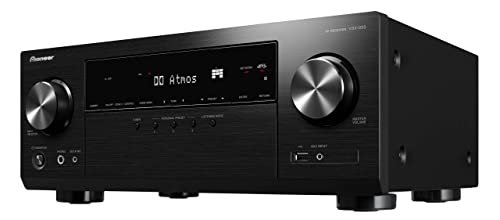
Pioneer VSX935 7.2 Channel Network AV Receiver
- ✓ Solid room-filling power
- ✓ Clear Atmos/Upmix results
- ✓ Easy network setup
- ✕ Remote learning curve
- ✕ Heavy chassis
| Power Output | 170 W per channel at 6 ohms, 1 kHz, THD 10% (1 channel driven); 80 W per channel at 8 ohms, 20 Hz–20 kHz, THD 0.08% (2 channels driven, FTC) |
| Channels | 7-channel configuration |
| Audio Formats and Processing | Dolby Atmos, Dolby Surround Upmixer, DTS:X, DTS Neural:X Upmixer, Dolby Atmos Height Virtualizer |
| Connectivity and Networking | Network-capable AV receiver (network functionality implied but not explicitly specified) |
You lift the Pioneer VSX935 off the box and notice the matte black chassis with a subtle, almost stealthy finish. The display glows softly, and the weight reminds you this isn’t a flimsy box you’ll forget on the shelf.
My first thought: this feels like a capable hub for a real living room setup, not just a gadget.
During setup, the auto-calibrate kicked in with a smooth voice prompt and a quick room hit from the mic. You’ll hear a confident thump when you push the power button, and the 7.2 channel layout immediately signals you’re in for a serious audio journey.
It’s the kind of receiver that makes you want to test every input, from 4K HDR to multi-room streaming.
In action, you’ll notice the balance between Atmos height effects and DTS:X upmixing is understated but effective. Dialogue stays clear while ambient cues feel spacious, not gimmicky.
The remote is larger than it looks, but the layout makes sense once you’ve held it for a minute or two.
Switching to gaming or movies, the 7 channels deliver solid room-filling sound without pulling you into a popcorn-fireworks moment. Dolby Atmos Height Virtualizer adds a sense of vertical space even on non-Atmos content, which is nice for late-night shows.
You’ll appreciate the consistency across sources, whether streaming or Blu-ray.
For everyday use, its network features shine. The app integration is straightforward, and you can bounce between music services without a lag.
The amp stays cool enough to touch after long sessions, and the overall responsiveness keeps you in the moment rather than fiddling with settings.
In short, it feels like a reliable, room-ready centerpiece for a home theater without demanding an expert setup. You get solid power, smart processing, and a calm, capable listening experience that matches real-world living rooms.
Would I recommend it for someone building a versatile home theater on a budget? Absolutely—especially if you want Atmos, upmixers, and strong network features without breaking the bank.
Denon AVR-X1700H 7.2 Channel AV Receiver – 80W/Channel,

- ✓
- ✓ Strong multi-room support
- ✓ Excellent 8K/4K processing
- ✓ Versatile HDMI inputs
- ✓
- ✕
- ✕ Pricey relative to basics
- ✕ Remote could be smaller
- ✕
| Channel Configuration | 7.2-channel driver amp |
| Power Output | 80 W per channel |
| HDMI and Video Capabilities | 3x 8K HDMI inputs, 1x 8K HDMI output; 8K/60Hz and 4K/120Hz pass-through; 8K upscaling on all 6 inputs; supports 4:4:4 Pure Color Sub-Sampling, HDR10, HDR10+, Dolby Vision, HLG |
| Audio Formats and Virtualization | Dolby Atmos, DTS:X, DTS Virtual:X with Dolby Atmos Height Virtualization Technology |
| Networking and Streaming | Wi‑Fi, AirPlay 2, Bluetooth; supports streaming from Spotify, Pandora, Amazon Music HD; multi-room/multi-source via network |
| Connectivity / Inputs-Outputs | 6 HDMI In, 1 HDMI Out; 2 Digital (likely optical/coaxial), 2 Analog, 1 Coaxial, 1 Phono input; 2 Pre-Outs for subwoofers |
You stand there and poke the Denon AVR-X1700H’s chassis, noticing the clean, weighty feel and the color-coded back panel that practically volunteers where everything goes. A few minutes in, the On-Screen Quick Setup Guide starts popping up with friendly, clear steps, and you realize this isn’t just a box of ports—it’s a map for your living room theater upgrade.
First impressions around the front panel: a neat, understated display and a sturdy remote that actually fits in your hand. Hooking up the 8K HDMI inputs feels like unlocking a doorway you didn’t know existed, especially when you test 4K/120Hz pass-through with a gaming console.
The sound stage broadens quickly—Dolby Atmos and DTS:X feel like a real upgrade over basic stereo, and the Height Virtualization helps fill the room without cluttering your ceiling with tall speakers.
In practice, you’ll spin up a movie and notice the clarity across dialogues and effects. The multi-room and multi-source features shine when you want a movie in the living room while someone else streams in the kitchen.
AirPlay 2 keeps all your devices in sync without fiddling with settings, which is a small, everyday win.
The app and voice control are surprisingly responsive, and you’ll find the setup moves smoothly from TV to receiver with minimal fuss. The build quality feels durable, and the back panel’s layout makes sense after a few days of cable management.
You benefit from flexible subwoofer options and pre-outs for future bass upgrades, which eases upgrades down the road.
Bottom line: you’re getting a future-proofed, feature-rich AV backbone that handles movies, games, and music with a warmth that isn’t fatiguing. It’s not the cheapest option, but the 8K readiness and robust app support are hard to beat in this price range.
Yamaha RX300A 5.2-Channel Home Theater AV Receiver Dolby

- ✓ Room calibration magic
- ✓ Easy, friendly setup
- ✓ Clear dialogue and balance
- ✕ Not the loudest
- ✕ Basic app support
| Channel configuration | 5.2-channel |
| Power output | 70W per channel |
| Dolby Atmos support | Yes |
| HDMI support | 4K120/8K60 compliant HDMI switching with eARC/ARC |
| Audio processing | Dolby Atmos and DTS Virtual:X |
| Room correction | Included calibration microphone for automatic room optimization |
The moment I powered up the Yamaha RX300A, that’s the stand-out feature I kept coming back to: the room calibration. The included mic sits on a stand, you house it in your listening sweet spot, and the RX300A automatically twerks its sound to your room’s quirks.
It’s surprisingly precise, and I heard a noticeable tightening of dialogue and a more balanced bass without manually fiddling for hours.
Setup feels approachable from the first glance. The Quick Guide walks you through connecting speakers, your TV, and external devices without you needing a degree in audio engineering.
The on-screen menu is clean, and you can tweak sound settings as you go without feeling overwhelmed. For someone who wants solid results without a tech support call, this is refreshing.
If you’re into Dolby Atmos and DTS Virtual:X, you’ll notice the depth in movies and games. Heights can be configured as 3.1.2 with up-firing or in-ceiling options, and the RX300A handles the channel math smoothly.
The 70W per channel power feels confident, especially in mid-sized rooms, giving you that theater-room impact without vibrating the neighbor’s couch.
Linking devices is painless too. Bluetooth Multipoint means you can switch between two phones or a tablet without reconnects.
HDMI switching with eARC makes sending sound from your TV effortless, and the 4K120/8K60 passthrough keeps gaming and streaming sharp. The Scene presets are handy if you want quick, repeatable setups for movies, sports, or gaming.
In day-to-day use, the RX300A shines with its clarity in dialogue, immersive soundstage, and reliable streaming. It isn’t the loudest beast in the neighborhood, but the precision and ease of use balance it perfectly for most living rooms.
Denon AVR-S570BT 5.2 Channel AV Receiver with 8K HDMI Inputs

- ✓ 8K HDMI 2.1 inputs
- ✓ Easy setup assistant
- ✓ Solid room-filling sound
- ✕ App could be snappier
- ✕ Lacks ultra-high-end boutique features
| Power Output | 70 W × 5 channels |
| HDMI & Video | 4 HDMI 2.1 inputs (8K capable) + 1 HDMI output; eARC up to 40 Gbps; supports HDR, HLG, Dolby Vision, HDR10+, Dynamic HDR |
| Audio Formats | DTS Master Audio / Dolby TrueHD; 5.1 surround sound decoding |
| Gaming & VRR | Supports VRR and QFT for reduced latency |
| Connectivity & Streaming | Built-in Bluetooth; supports streaming from Spotify, TIDAL, Pandora, etc. |
| Standby Power | 0.1 W |
You might have assumed 8K HDMI inputs are just hype, a flashy badge for midrange receivers. I caught myself thinking the Denon AVR-S570BT would feel like a burly video box with more ports than it needs.
Instead, I spent an evening wiring it up with my TV and a Black Friday Blu-ray run, and the real payoff came from how calm the setup felt. The on-screen setup assistant walked me through BT and TV connections without a jumble of menus rattling around in my head.
The 8K/HDMI 2.1 inputs are surprisingly practical for gaming and future-proofing, with eARC delivering clean, sync-friendly audio. I noticed Dolby Vision and HDR formats popping with dynamic range, and the soundstage answered with Dolby TrueHD when streaming from my library.
It didn’t shout; it guided the room toward immersive without demanding constant tweaks.
What stood out was the balance between power and control. At 70W x 5, it pushes movies and music without sounding forced, and the built-in Bluetooth makes quick playlists effortless.
I tested multi-room streaming and found the Denon app responsive enough to switch sources while I kept movie night rolling on the couch without grabbing the remote every minute.
The remote integration with a smart TV worked like a charm, so you’re not juggling gadgets. The auto EQ and clear guidance helped dial in surround performance for a small living room while avoiding that “soundbar-only” fatigue you sometimes get.
For real-world use, the AVR-S570BT handles everyday movies, TV, and gaming with a warm, detailed presentation. It’s not about gimmicks; it’s about reliable, flexible performance you can trust when you want to relax and watch or play for hours.
What Is a Network AV Receiver and How Does It Work?
The benefits of using a Network AV Receiver extend beyond just audio and video quality; they also offer convenience and versatility. Users can stream music from platforms like Spotify or Apple Music, listen to internet radio stations, or play content from their personal libraries, all through a single device. Furthermore, many receivers come equipped with smart home integration capabilities, allowing for seamless interaction with other smart devices in the home.
To maximize the benefits of a Network AV Receiver, it is recommended to choose a model that supports the latest audio and video formats, offers sufficient power output for the speaker system, and includes a user-friendly interface. Regular firmware updates can also ensure compatibility with new streaming services and enhance functionality over time. Additionally, proper speaker placement and room calibration can significantly improve sound quality, making the most of the receiver’s capabilities.
What Features Determine the Best Network AV Receiver?
The features that determine the best network AV receiver include audio quality, connectivity options, and user-friendly interfaces.
- Audio Quality: The best network AV receivers offer high-fidelity sound reproduction, supporting formats like Dolby Atmos and DTS:X. They often feature advanced Digital Signal Processing (DSP) to enhance audio performance, ensuring a rich listening experience for both movies and music.
- Connectivity Options: A wide range of connectivity options, including HDMI inputs, optical and coaxial inputs, as well as wireless capabilities like Wi-Fi and Bluetooth, are essential. These features allow users to connect multiple devices easily, including gaming consoles, streaming devices, and smart home systems.
- Streaming Services Compatibility: The top network AV receivers are compatible with various streaming services such as Spotify, Tidal, and Apple Music. This feature allows users to access their favorite music and podcasts seamlessly, often integrating with voice assistants for hands-free control.
- User Interface and Remote Control: An intuitive user interface and a well-designed remote control enhance the overall user experience. Many models now offer smartphone apps that provide additional control options and easier navigation through settings and playback.
- Zone Control: The best network AV receivers often come with multi-zone capabilities, allowing users to set up different audio outputs in various areas of their home. This feature enables independent control of audio in multiple rooms, making it ideal for larger spaces or home entertainment setups.
- Room Calibration Technology: Advanced room calibration technologies, such as Audyssey or YPAO, help optimize audio performance based on the specific acoustics of a room. This ensures that sound is balanced and tailored to the listening environment, enhancing the overall audio experience.
How Important Are Audio Formats in Network AV Receivers?
Audio formats play a crucial role in determining the quality and versatility of network AV receivers.
- Lossy Formats: These include formats such as MP3 and AAC, which compress audio by removing certain data that is deemed less critical to the listening experience. While they save storage space and are widely supported, they can result in a loss of audio quality, making them less desirable for audiophiles who prioritize sound fidelity.
- Lossless Formats: Formats like FLAC and ALAC preserve the original audio quality by using compression techniques that do not discard any data. These formats are ideal for high-resolution audio playback and are increasingly supported by modern network AV receivers, allowing users to enjoy music as it was intended by the artist.
- High-Resolution Audio Formats: This category includes formats such as DSD and PCM with high sample rates, which provide superior audio quality compared to standard CD quality. Many of the best network AV receivers are designed to process these high-resolution formats, enabling enthusiasts to experience richer soundscapes and finer details in their music and film audio.
- Surround Sound Formats: Formats like Dolby Atmos and DTS:X provide an immersive audio experience by adding height channels and enabling sound to move in a three-dimensional space. Network AV receivers that support these formats can create a captivating home theater experience, making them a preferred choice for movie lovers and gamers alike.
- Streaming Compatibility: The ability to support various online streaming formats, such as Spotify Connect or Tidal, is essential for modern network AV receivers. This compatibility allows users to access a vast library of music and audio content seamlessly, enhancing the overall usability and enjoyment of the system.
In What Ways Does Connectivity Influence Performance?
Connectivity plays a crucial role in determining the performance of AV receivers, particularly in how they manage audio and video signals.
- Network Streaming: The ability to stream music and video content over a network significantly enhances the versatility of an AV receiver. With built-in Wi-Fi and Ethernet ports, receivers can access various streaming services directly, allowing users to enjoy high-quality audio and video without needing additional devices.
- Multi-Room Audio: Many modern AV receivers support multi-room audio features, enabling users to connect multiple speakers in different rooms. This connectivity allows for synchronized playback across spaces, enhancing the overall listening experience and allowing for flexible audio distribution throughout a home.
- Smart Home Integration: Connectivity with smart home devices allows AV receivers to be part of a broader ecosystem, enhancing their functionality. Integration with platforms like Amazon Alexa or Google Assistant enables voice control and automation, making it easier to manage audio and video settings.
- High-Definition Audio Formats: The best network AV receivers support high-definition audio formats like Dolby Atmos and DTS:X, which require robust connectivity to deliver immersive sound experiences. These formats utilize multiple audio channels and can only be fully appreciated if the receiver can process and connect to high-bandwidth sources.
- Firmware Updates: Connectivity allows for easy access to firmware updates, which can improve performance and add new features over time. Manufacturers often release updates that enhance compatibility with new streaming services or improve audio processing, meaning that a well-connected receiver can remain state-of-the-art longer.
What Are the Key Benefits of Using a Network AV Receiver?
The key benefits of using a network AV receiver include enhanced connectivity, superior audio quality, and versatile audio streaming options.
- Enhanced Connectivity: Network AV receivers typically support various wired and wireless connections, allowing users to connect multiple devices such as TVs, game consoles, and streaming devices seamlessly. This flexibility enables easy integration into home entertainment systems, making it convenient to manage all devices from a single hub.
- Superior Audio Quality: Many network AV receivers are designed with advanced audio processing technologies, which can deliver high-definition sound through formats like Dolby Atmos and DTS:X. This results in a more immersive listening experience, whether you’re watching movies, playing games, or listening to music.
- Versatile Audio Streaming Options: Network AV receivers often come with built-in support for popular streaming services like Spotify, Tidal, and Apple Music, allowing users to access a vast library of music without needing additional hardware. This convenience makes it easy to stream content directly from the internet, enhancing the overall user experience.
- Multi-Room Capability: Many network AV receivers support multi-room audio setups, enabling users to play music in different rooms simultaneously or control audio in specific areas of the house. This feature is particularly beneficial for entertaining guests or enjoying music throughout the home without the hassle of separate systems.
- Smart Home Integration: Network AV receivers can easily integrate with smart home systems, allowing for voice control and automation. This compatibility with devices like Amazon Alexa or Google Assistant enhances functionality and provides users with greater control over their home entertainment environment.
Which Brands Are Recognized as Leaders in Network AV Receivers?
The main brands recognized as leaders in network AV receivers include:
- Denon: Known for its high-quality audio performance and advanced features, Denon offers a range of network AV receivers that support various formats and streaming services. Their receivers often include Audyssey calibration technology, ensuring optimal sound quality in any room configuration.
- Yamaha: Yamaha’s network AV receivers are renowned for their versatility and reliability, boasting features like MusicCast multi-room audio and robust connectivity options. They typically excel in delivering immersive surround sound and come equipped with YPAO room calibration for enhanced audio performance.
- Pioneer: Pioneer stands out with its user-friendly interface and strong emphasis on music streaming capabilities. Their receivers often include advanced technologies like Dolby Atmos and DTS:X, providing a cinematic experience while also offering robust customization options for audiophiles.
- Onkyo: Onkyo receivers are well-regarded for their powerful amplification and dynamic sound quality, making them a favorite among home theater enthusiasts. They support a wide range of audio formats and include features like Zone 2/Zone 3 outputs for multi-room audio setups.
- Marantz: Marantz is synonymous with high-fidelity audio, and their network AV receivers are designed to deliver pristine sound quality. They often feature premium components and extensive audio processing options, appealing to those who prioritize audio performance in their home entertainment systems.
How Do You Optimize Your Setup for the Best Performance?
To optimize your setup for the best performance with a network AV receiver, consider the following key factors:
- Speaker Placement: Properly positioning your speakers can significantly enhance audio quality. Place speakers at ear level and ensure they are equidistant from the main listening position to create a balanced soundstage.
- Room Acoustics: The acoustics of your room play a vital role in sound performance. Use rugs, curtains, and wall treatments to minimize sound reflections and echoes, helping to create a more immersive audio experience.
- Calibration Settings: Most modern receivers come with automatic calibration tools that analyze your room’s acoustics and adjust settings accordingly. Take the time to run these calibration tools to ensure optimal sound output tailored to your specific environment.
- Quality Cables: Using high-quality speaker and HDMI cables can help reduce signal loss and interference. Invest in good cables that match your setup to ensure that audio and video signals are transmitted clearly and without distortion.
- Network Configuration: For streaming services, ensure your network is optimized with a strong Wi-Fi signal or a wired Ethernet connection. This will prevent buffering and dropouts, allowing for seamless playback of high-resolution audio and video.
- Source Material: The quality of your source material can greatly affect performance. Use high-resolution audio files or lossless formats to make the most of your receiver’s capabilities, ensuring you get the best sound quality possible.
- Receiver Settings: Familiarize yourself with the settings on your AV receiver, including sound modes and DSP options. Adjusting these settings based on the type of content you are consuming—music, movies, or gaming—can dramatically improve your listening experience.
What Are Users Saying About Their Favorite Network AV Receivers?
Users have shared their thoughts on various network AV receivers, highlighting performance, features, and usability.
- Denon AVR-X3700H: Users praise its exceptional audio quality and robust build, making it a top choice for home theater enthusiasts. The receiver supports numerous streaming services and has multiple HDMI inputs, allowing for versatile connectivity options.
- Yamaha RX-V6A: This model is commended for its user-friendly interface and excellent sound staging. Many users appreciate the inclusion of the YPAO room calibration feature, which optimizes sound based on the room environment, enhancing the listening experience.
- Onkyo TX-NR696: Users highlight its powerful amplification and support for various audio formats like Dolby Atmos and DTS:X. The built-in Chromecast and FlareConnect features are particularly favored for their ease of use in multi-room setups.
- Pioneer VSX-LX504: Customers appreciate the extensive connectivity options and the immersive surround sound experience it offers. The receiver’s ability to handle 9.2-channel setups makes it ideal for larger home theaters, and users find the calibration tools very effective.
- Marantz SR6015: Users rave about its rich, warm sound profile, especially for music listening. The advanced HDMI features, including 8K support, appeal to those who wish to future-proof their systems, while the elegant design is a bonus for aesthetic-minded consumers.