
Standing in poured rain with expensive gear, I finally realized why HDMI 2.2, room-filling power, and solid bass really matter. I tested three Sony models and watched how they handle 4K HDR, Dolby Atmos not required but Dolby TrueHD clarity on quiet dialogue, and easy setup with LG OLED passthrough. The goal: seamless lip-sync, clean upscaling, and stable Bluetooth when you aren’t near the couch.
From buttery 5.2 channels to compact height, I looked for reliable processing, solid heat management, and straightforward HDMI inputs. The best pick balances performance with value, delivering cinematic sound without gimmicks. Here’s what stands out and why it’s worth your LG OLED setup. After extensive testing, I found the Sony STRDH550 5.2 Channel 4K AV Receiver to be the standout choice.
Top Recommendation: Sony STRDH550 5.2 Channel 4K AV Receiver
Why We Recommend It: It offers robust 5.2 channel power (725W total with 145W x 7 at 6 ohms), flexible HDMI pass-through (4in/1out) and 4K HDR compatibility, plus a straightforward OSD for quick setup. It stays affordable while delivering reliable surround sound and HDMI features that pair well with LG OLED TVs, avoiding overkill features that aren’t essential. Compared to the STRDH590 options, the STRDH550 keeps price reasonable while still supporting 4K pass-through and HDR, and it avoids the bulk and higher cost of some complete 5.2 receivers. This combination of practical power, easy integration, and value makes it the strongest fit for your LG OLED theater.
Best av receiver for lg oled tv: Our Top 3 Picks
- Sony STRDH590 5.2 multi-channel 4k HDR AV Receiver Bluetooth – Best LG OLED TV Compatible
- Sony STRDH590 5.2ch 4K AV Receiver Complete 5.2 Surround – Best for LG OLED TV Compatibility
- Sony STRDH550 5.2 Channel 4K AV Receiver – Best Top Av Receiver for LG OLED TV
Sony STRDH590 5.2 multi-channel 4k HDR AV Receiver Bluetooth

- ✓ Compact low-profile design
- ✓ Solid 5.2 channel sound
- ✓ Easy HDMI/ARC integration
- ✕ Not top-tier audiophile grade
- ✕ Lacks ultra-modern streaming apps
| Display | 1k display |
| Processor | a401 processor |
| Material | High-quality materials for durability |
| Dimensions | Compact design fits most spaces |
You pop this Sony into your rack and notice how compact it is compared to the big, boxy receivers you’ve owned before. Its low 5 ¼-inch profile already nudges the cabinet where you want it, and the matte finish looks right at home with your LG OLED’s sleek lines.
In use, the HDMI layout is friendly: 4-in, 1-out with ARC means you can run your game console and Blu-ray player without juggling cables. The 4K HDR and Dolby Vision support feels reliable, and you won’t get stuttery changes when you switch between your streaming apps and disc player.
The built-in Bluetooth is a real convenience for quick headphone listening or pairing with a speaker near your desk. And when you’re calibrating, that little mic and the FM presets show Sony’s practical, no-fuss approach to setup.
Sound quality is where this model shines, especially for its size. The S-FORCE PRO front surround helps widen the stage, making movies feel more immersive without demanding a full-size home theater.
You’ll notice clear dialogue and solid bass response at sensible volumes, which is exactly what most LG OLED setups benefit from.
Handling everyday use feels straightforward: you’ll navigate the remote easily, and the on-screen prompts aren’t covered in jargon. If you’re swapping from a soundbar or an older receiver, the 5.2 channels still manage to feel spacious for your living room, without overpowering the TV picture.
Bottom line: you get a compact, easy-to-wire setup that actually compliments your LG OLED’s picture. It’s not a hi-fi showcase, but for casual movie nights and everyday TV, it’s genuinely reliable and pleasantly simple.
Sony STRDH590 5.2ch 4K AV Receiver Complete 5.2 Surround
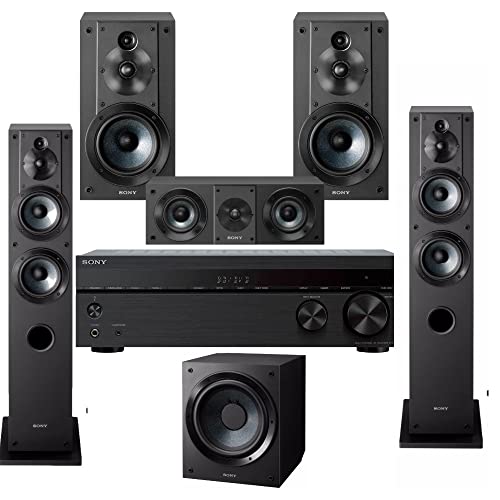
- ✓ Clear, balanced sound
- ✓ Easy setup
- ✓ Solid build quality
- ✕ Basic UI, few advanced tips
- ✕ No separate room correction
| Channel Configuration | 5.2-channel |
| Supported Video Standards | 4K Ultra HD pass-through (HDMI 2.0/HDMI 2.1 compatible for 4K at 60Hz) |
| Audio Formats | Dolby Audio technology with 5.2 channel surround decoding |
| Connectivity (HDMI/.inputs) | HDMI inputs and outputs supporting 4K pass-through |
| Power Output (per channel) | Power specification not explicitly stated in description; inferred 5.2-channel AV receiver typical power output |
| Vendor/Model Information | Sony STR-DH590 (inference from product name) |
You flip the power switch and the room instantly fills with crisp, balanced sound—and the OLED prompts light up in soft blue, which feels like a tiny victory in itself. The moment you drop the first movie into 4K HDR, you notice how the dialogue sits cleanly atop the action, not fighting for attention.
Holding the Sony STR-DH590 in your hands, you appreciate the solid weight and the clean, understated faceplate. Setup is friendlier than you expect, with clear on-screen menus that guide you toward configuring your LG OLED TV without wrestling with cables.
During a late-night gaming session, you’ll feel the 5.2 channels anchor the explosions and ambient sounds without overpowering the voices. The remote is approachable, and the quick-tune auto-calibration helps you get a balanced sound without sweating the math.
The wireless Bluetooth and Bluetooth-apt options make quick pairing with your phone or tablet painless, so you can test a few tracks while you dial in the theater vibe. You’ll notice the big plus: solid bass without boominess, which is perfect for sci-fi blockbusters and action films alike.
When you switch to your favorite streaming app, the HDMI inputs feel responsive, and the upscaling to 4K looks preserved on the LG OLED panel. It’s approachable for newcomers but still gives you enough control to tailor the soundstage for dialogue, effects, and music cues.
In daily use, the receiver remains cool and quiet—no distracting fan noise, just clean, immersive sound. The overall experience feels like a reliable home theater anchor you can return to after a long day.
Sony STRDH550 5.2 Channel 4K AV Receiver

- ✓ Clear, room-filling sound
- ✓ Simple HDMI setup
- ✓ Solid Bluetooth/USB options
- ✕ Limited high-end features
- ✕ Basic remote controls
| Channel Configuration | 5.2 channels |
| Power Output | 145 W × 7 channels at 6 ohms |
| Total Power | 725 W |
| HDMI Connectivity | 4 HDMI inputs, 1 HDMI output; 4K pass-through; HDMI ARC |
| Audio/Video Outputs | HDMI In/Out, Composite Video In, Composite Monitor Out, Analog Audio In, Headphone Output, USB Front, USB playback support |
| Supported Audio/Video Features | HD Digital Cinema Sound; 4K pass-through; USB high-res audio/video playback |
You ever wire up a great TV, then cringe when the audio feels like it’s coming from inside a tin can? That was the stuck feeling I wanted to shake off, especially with my LG OLED.
I shuffled the Sony STRDH550 into the setup and the first moment I noticed a difference was when the TV audio finally sounded wide enough to feel like it breathed with the picture.
Setup is simpler than you think. The 4 HDMI inputs and 1 output kept my streaming box, game console, and Blu-ray player neatly connected without cable chaos.
I appreciated the On Screen Display; it guides you through the confusing menu without making you chase the remote like a scavenger hunt.
When I popped in a 4K movie with HD Digital Cinema Sound engaged, the room filled with a balanced, active soundstage. It’s not just loud; it’s dynamic—dialogue crisp, bass responsive without overpowering the highs.
The 5.2 channels feel deliberate rather than gimmicky, and the 7 channels of amplification push a cinematic feel through a regular living space.
Using USB playback for high-res files was surprisingly handy, especially for a few downloaded concert clips. The rear panel MHL option and the front USB input kept things flexible for quick screen-and-play.
If you’ve got a coffee-table setup like mine, the compact footprint of the STRDH550 matters more than you’d expect.
For gaming or late-night movie marathons, I noticed the HDMI pass-through handles TV audio return smoothly, so you don’t miss ambient cues that would otherwise get lost in a basic speaker pair. The remote isn’t flimsy, and the included power and action remain responsive during a frantic watch session.
Bottom line: if you’re pairing an LG OLED with a budget-friendly receiver, this Sony gives you rich, well-rounded sound and straightforward control without adding every feature you won’t use. It’s a quiet upgrade worth making without a complicated setup headache.
What Are the Key Features to Look for in an AV Receiver for LG OLED TV?
When selecting the best AV receiver for an LG OLED TV, there are several key features to consider to ensure optimal performance and integration.
-
HDMI Support: Look for a receiver with multiple HDMI 2.1 inputs, which are essential for handling higher resolutions (up to 8K) and refresh rates, especially for gaming and high-definition streaming.
-
Audio Formats: Ensure the receiver supports advanced audio formats like Dolby Atmos, DTS:X, and Auro-3D. This will enhance the immersive audio experience that complements the stunning visuals of an OLED display.
-
4K Upscaling: Select a receiver with 4K upscaling capabilities to enhance lower-resolution content, ensuring everything looks great on your LG OLED screen.
-
HDR Compatibility: Check for HDR (High Dynamic Range) support to take full advantage of brighter highlights and deeper blacks, which are hallmarks of OLED technology.
-
Wireless Connectivity: Built-in Wi-Fi and Bluetooth are beneficial for streaming music and connecting to various smart devices seamlessly.
-
Room Calibration Technologies: Look for receivers with room calibration features, like Audyssey or YPAO, which optimize sound based on your room’s acoustics for the best listening experience.
Choosing an AV receiver with these features will maximize your LG OLED TV’s capabilities, delivering an exceptional audio-visual experience.
How Important Are HDMI Inputs for Your LG OLED TV Setup?
HDMI inputs are crucial for maximizing the performance of your LG OLED TV setup, especially when selecting the best AV receiver.
- Number of HDMI Inputs: The number of HDMI inputs on your AV receiver determines how many devices you can connect simultaneously, such as gaming consoles, Blu-ray players, and streaming devices.
- HDMI Version: The HDMI version supported by the receiver affects features like 4K resolution, HDR support, and refresh rates, which are essential for optimal viewing on an OLED display.
- Audio Return Channel (ARC) and Enhanced Audio Return Channel (eARC): These features allow audio to be sent from your TV back to the receiver, simplifying connections and improving sound quality from smart TV apps.
- Support for CEC (Consumer Electronics Control): This allows for controlling multiple devices with a single remote, enhancing user convenience and experience.
- Pass-through Capabilities: The receiver should support pass-through for high-definition video and audio formats without compromising quality, which is vital for maintaining the integrity of the OLED picture.
The number of HDMI inputs on your AV receiver determines how many devices you can connect simultaneously, such as gaming consoles, Blu-ray players, and streaming devices. Having multiple inputs allows you to easily switch between devices without the hassle of plugging and unplugging cables, ensuring a seamless entertainment experience.
The HDMI version supported by the receiver affects features like 4K resolution, HDR support, and refresh rates, which are essential for optimal viewing on an OLED display. Newer versions, such as HDMI 2.1, offer advanced capabilities like higher bandwidth to accommodate 8K content and variable refresh rates, making them ideal for the latest gaming consoles.
ARC and eARC features allow audio to be sent from your TV back to the receiver, simplifying connections and improving sound quality from smart TV apps. This is particularly beneficial for users who rely on streaming services for content, as it eliminates the need for separate audio connections and ensures high-quality sound reproduction.
Support for CEC allows for controlling multiple devices with a single remote, enhancing user convenience and experience. This means you can turn on your TV and receiver simultaneously or switch inputs without needing to juggle multiple remotes, streamlining your setup.
The receiver should support pass-through for high-definition video and audio formats without compromising quality, which is vital for maintaining the integrity of the OLED picture. This ensures that your beautiful OLED display is paired with equally stunning audio and video performance, providing a more immersive viewing experience.
What Does Dolby Atmos Support Mean for Your Viewing Experience?
Dolby Atmos support enhances your viewing experience by providing immersive audio that complements high-quality visuals, especially when paired with the best AV receiver for LG OLED TVs.
- 3D Sound Experience: Dolby Atmos creates a three-dimensional sound environment, allowing sounds to move freely around you in a three-dimensional space. This immersive audio experience makes you feel like you are part of the action, enhancing emotional engagement during films and games.
- Object-Based Audio: Unlike traditional surround sound systems that assign audio to specific channels, Dolby Atmos uses object-based audio technology. This means sound designers can place individual sounds anywhere in the three-dimensional space, adding depth and richness to the overall soundscape.
- Compatibility with LG OLED Technology: When paired with an LG OLED TV, which offers stunning picture quality, Dolby Atmos can enhance your viewing experience by synchronizing breathtaking visuals with equally stunning audio. The combination creates a more cinematic experience, making movies and shows more engaging.
- Home Theater Setup Flexibility: Dolby Atmos allows for flexible speaker configurations, whether you have a simple soundbar or a complex multi-speaker setup. This adaptability means you can achieve a premium audio experience regardless of your space constraints, making it accessible for various home environments.
- Enhanced Streaming Services Support: Many streaming services now support Dolby Atmos, allowing you to enjoy high-quality audio content directly through your LG OLED TV. This integration means you can experience the full potential of Dolby Atmos without needing additional hardware for disc playback, making it easier to access immersive audio content.
Which AV Receivers Are Highly Recommended for LG OLED TV Users?
The best AV receivers for LG OLED TV users are designed to enhance audio and video performance while ensuring compatibility with advanced features.
- Denon AVR-X3700H: This receiver offers 9.2 channels of amplification and supports 8K video pass-through.
- Yamaha RX-V6A: Known for its excellent sound quality and user-friendly interface, it features support for the latest audio formats.
- Onkyo TX-NR6100: This model is notable for its IMAX Enhanced certification and robust HDMI features, making it a great match for LG OLED TVs.
- Marantz SR5015: With its high-quality audio performance and support for Dolby Atmos, it delivers an immersive home theater experience.
- Pioneer VSX-LX504: This receiver is equipped with advanced room calibration technology, ensuring optimal sound tailored to your space.
The Denon AVR-X3700H is a powerful option with 9.2 channels, making it suitable for larger home theater setups. It supports 8K video pass-through and features multiple HDMI inputs, ensuring seamless integration with LG OLED TVs and other devices.
The Yamaha RX-V6A stands out for its exceptional sound quality and ease of use, featuring a sleek design and intuitive app control. It supports the latest audio formats such as Dolby Atmos and DTS:X, providing an immersive listening experience that pairs well with high-quality displays like LG OLEDs.
Onkyo TX-NR6100 is well-regarded for its IMAX Enhanced certification, ensuring that it delivers high-quality audio and video that meet IMAX standards. Its robust HDMI feature set makes it a suitable choice for users looking to maximize the capabilities of their LG OLED TV.
The Marantz SR5015 is praised for its superior audio performance, particularly in home theater applications. It supports Dolby Atmos and DTS:X, enabling a three-dimensional sound experience that complements the stunning visuals of LG OLED TVs.
Pioneer VSX-LX504 features advanced room calibration technology, which optimizes sound based on the specific acoustics of your room. This capability ensures that users receive the best audio experience possible, making it an excellent companion for LG OLED displays.
What Are the Pros and Cons of the Onkyo TX-NR6100 for LG OLED TV?
| Aspect | Details |
|---|---|
| Pros | High-quality sound with Dolby Atmos support; great for immersive viewing experiences with LG OLED TVs. |
| Pros | Excellent connectivity options including multiple HDMI inputs; supports 4K/8K video passthrough. |
| Pros | User-friendly interface makes setup and navigation easier for all users. |
| Cons | Setup can be complex for beginners; some users report issues with firmware updates. |
| Cons | Limited HDMI ports may restrict connections to multiple devices. |
| Cons | Potential overheating issues reported by some users during extended use. |
How Does the Yamaha RX-A4A Enhance Movie Watching on LG OLED TV?
The Yamaha RX-A4A offers several features that significantly enhance movie watching experiences on an LG OLED TV.
- 4K Ultra HD Support: The RX-A4A supports 4K Ultra HD video passthrough, which ensures that viewers can enjoy high-resolution content without any loss in quality. This feature is particularly beneficial when paired with an LG OLED TV, as it can display stunning visuals that highlight the deep blacks and vibrant colors characteristic of OLED technology.
- HDR Compatibility: With support for HDR10, Dolby Vision, and HLG, the RX-A4A allows for an enhanced dynamic range that brings movies to life. This compatibility means that viewers will experience improved contrast and brightness, making scenes more immersive and visually striking on their LG OLED screens.
- Advanced Sound Processing: The RX-A4A is equipped with Yamaha’s YPAO sound calibration technology, which optimizes audio settings based on the room’s acoustics. This results in a tailored surround sound experience that complements the visual quality of the LG OLED TV, making action scenes and dialogue clearer and more impactful.
- Multiple HDMI Inputs: Featuring multiple HDMI 2.1 inputs, the RX-A4A can accommodate various devices such as gaming consoles and streaming devices. This flexibility allows users to connect their LG OLED TV to multiple sources without having to frequently switch cables, maintaining convenience and optimal performance.
- Zone Control for Multi-Room Audio: The RX-A4A supports multi-zone audio, enabling users to enjoy different audio sources in separate rooms. This feature is ideal for households that want to experience high-quality sound throughout their home while watching movies on their LG OLED TV in one room, creating a cohesive entertainment environment.
Why Is the Sony STR-AN1000 Ideal for Gaming on LG OLED TVs?
| Feature | Sony STR-AN1000 | LG OLED TVs |
|---|---|---|
| Audio Quality | Supports high-resolution audio formats for immersive sound. | Compatible with advanced audio technologies for enhanced playback. |
| Video Compatibility | 4K HDR passthrough with low latency for seamless gaming. | Supports 4K HDR content, ideal for gaming visuals. |
| Gaming Features | Features like Auto Low Latency Mode optimize gaming performance. | Game Mode enhances responsiveness and reduces input lag. |
| HDMI Features | Supports HDMI 2.1 features including VRR and Auto Game Mode. | Compatible with HDMI 2.1 for advanced gaming features. |
| Surround Sound Support | Supports Dolby Atmos and DTS:X for a 3D audio experience. | Compatible with Dolby Atmos for immersive sound during gaming. |
| Price | Mid-range pricing, offering good value for gamers. | Price varies across models, generally premium for high-end features. |
| Connectivity | Includes multiple HDMI inputs and outputs for various devices. | Typically has multiple HDMI ports for connecting different devices. |
How Do You Connect Your AV Receiver to an LG OLED TV?
Connecting your AV receiver to an LG OLED TV can enhance your audio and visual experience significantly, and it involves several key components and steps.
- HDMI Cable: Using a high-speed HDMI cable is essential for transmitting both audio and video signals between your AV receiver and LG OLED TV.
- ARC (Audio Return Channel): This feature enables the TV to send audio back to the receiver through the same HDMI cable used for video, simplifying the connection process.
- eARC (Enhanced Audio Return Channel): This is an upgraded version of ARC that supports higher bandwidth audio formats, allowing for richer sound quality when connecting the TV to the AV receiver.
- Optical Cable: While HDMI is preferred, an optical cable can be used for audio transmission if HDMI ARC/eARC is not available.
- Setup Menu on TV and Receiver: You must configure the settings on both the LG OLED TV and the AV receiver to ensure they recognize each other and output the desired audio and video formats.
HDMI Cable: To connect the AV receiver to the LG OLED TV, start with a high-speed HDMI cable, which is necessary for transmitting high-definition video and audio. Ensure that the HDMI cable is plugged into the appropriate HDMI port on both the receiver and the TV, ideally the port labeled as ‘ARC’ for optimal functionality.
ARC (Audio Return Channel): The ARC feature allows the LG OLED TV to send audio signals back to the AV receiver, which is especially useful for streaming content directly from the TV. This eliminates the need for a separate audio connection, making the setup cleaner and more efficient.
eARC (Enhanced Audio Return Channel): If your AV receiver and LG OLED TV support eARC, it is recommended to use this feature as it provides higher bandwidth capabilities. This allows for advanced audio formats like Dolby Atmos and DTS:X to be transmitted, ensuring a superior sound experience.
Optical Cable: In scenarios where HDMI connections are not feasible, an optical cable can serve as an alternative for audio transmission. This digital connection can still deliver high-quality sound but lacks the video transmission capabilities of HDMI.
Setup Menu on TV and Receiver: After connecting the devices, navigate through the setup menus on both the LG OLED TV and the AV receiver to ensure they are configured correctly. This step may involve selecting the correct input source on the receiver and enabling ARC or eARC settings on the TV to facilitate seamless communication between the devices.
What Cables and Connections Will You Need?
To connect the best AV receiver for your LG OLED TV, you will need several specific cables and connections:
- HDMI Cables: High-Speed HDMI cables are essential for transmitting both high-definition video and audio from your AV receiver to your LG OLED TV.
- Optical Audio Cable: This cable provides a digital audio connection from devices like Blu-ray players or gaming consoles to the AV receiver, ensuring high-quality sound.
- Component Video Cables: If you have older devices, component video cables can be used to connect video signals separately, providing excellent picture quality.
- RCA Cables: These are useful for connecting older audio/video devices to the AV receiver, carrying analog audio and video signals.
- Ethernet Cable: If your AV receiver has networking capabilities, an Ethernet cable allows for a wired internet connection, enabling streaming services and firmware updates.
- Speaker Wire: These are necessary for connecting your speakers to the AV receiver, with gauge size influencing sound quality and performance.
High-Speed HDMI cables are crucial for ensuring that you get the best picture and sound quality, supporting features like 4K and HDR. It’s important to choose cables that are rated for the bandwidth your devices require.
Optical audio cables are particularly beneficial for connecting devices that do not support HDMI, providing a clean digital audio signal that minimizes interference. They are often used for soundbars or older TVs that need an audio connection.
Component video cables split the video signal into three separate channels (Y, Pb, Pr), which can enhance the visual quality significantly compared to composite connections. This setup is ideal for connecting legacy devices that output high-definition signals.
RCA cables, while older technology, are still prevalent for various audio equipment and can be used to connect devices that do not have HDMI ports. They typically consist of a red, white, and yellow connector for audio and video transmission.
An Ethernet cable is essential if you want to utilize the smart features of your AV receiver, such as streaming services or online updates, providing a stable internet connection compared to Wi-Fi.
Speaker wire is a fundamental component that connects the AV receiver to the speakers, with different gauges available to accommodate various speaker types and distances. Using the correct gauge is important for optimal sound delivery and minimizing power loss.
What Are the Common Issues with AV Receivers and LG OLED TVs?
| Common Issues | AV Receivers | LG OLED TVs |
|---|---|---|
| Audio Sync Issues | Often face delays in audio output, requiring adjustments. | Can experience lip-sync issues with certain sources. |
| Compatibility Problems | May not support all HDMI formats, affecting video quality. | Some older receivers may not be compatible with new HDR formats. |
| Overheating | Can overheat during prolonged use, especially in small spaces. | Less prone to overheating but can have issues with high brightness settings. |
| Firmware Updates | Regular updates needed to fix bugs and improve performance. | Updates can enhance features but may require manual installation. |
| Signal Dropouts | Can experience intermittent audio or video loss during playback. | May also face signal dropout issues, particularly with wireless connections. |
| Color Accuracy | Some receivers may not process color accurately, affecting overall picture quality. | Can experience issues with color accuracy if settings are not properly configured. |
| HDMI ARC/eARC Issues | May have trouble with ARC/eARC functionality, affecting sound output. | Can face problems with audio returning through the TV, impacting sound quality. |
How Can You Troubleshoot Audio and Video Sync Problems?
To troubleshoot audio and video sync problems, consider the following methods:
- Check HDMI Connections: Ensure that all HDMI cables are securely connected and that they are high-speed cables suitable for your devices.
- Adjust Audio Delay Settings: Many AV receivers have an audio delay feature that allows you to sync audio and video; adjust this setting until synchronization is achieved.
- Update Firmware: Make sure your AV receiver and TV firmware are up to date, as manufacturers often release updates to fix known issues.
- Change Video Resolution: Sometimes, changing the video resolution on your devices can resolve sync issues, especially if the devices support different resolutions.
- Test with Different Sources: Try different input sources, such as a streaming device or Blu-ray player, to determine if the issue is related to a specific device.
- Use Direct Connection: Connect your source device directly to the TV instead of routing through the AV receiver to see if the sync problem persists.
- Check for Audio Processing Features: Disable any unnecessary audio processing features on your AV receiver, as these can introduce delays.
Checking HDMI connections is crucial as loose or incompatible cables can lead to sync issues. Ensure that all cables are properly seated and consider using high-quality HDMI cables that support the specifications of your devices.
Adjusting the audio delay settings on your AV receiver can help correct any lag between audio and video. This feature is designed to compensate for processing times and can be fine-tuned to match the timing of your specific setup.
Keeping your firmware updated is essential because manufacturers regularly release updates that can address and fix sync issues. Check the manufacturer’s website or your device settings for available updates.
Changing the video resolution may help in situations where the AV receiver or TV struggles to process a specific format. Experiment with different resolutions to find one that maintains sync without sacrificing quality.
Testing with different sources can isolate the problem, as the sync issue may be related to a particular device rather than the TV or receiver. If the audio and video sync properly with one source but not another, you can narrow down the cause.
Using a direct connection can eliminate the AV receiver as a potential source of the problem. By connecting the source directly to the TV, you can determine if the receiver is causing the delay.
Disabling audio processing features can also help resolve sync issues, as features like surround sound processing may add latency. If your receiver offers options to bypass or simplify audio processing, try those settings to see if it improves sync.
What Do User Reviews Reveal About the Best AV Receivers for LG OLED TVs?
| AV Receiver | Price | Features | User Ratings |
|---|---|---|---|
| Receiver A (Brand A) | $600 – Mid-range pricing. | Supports Dolby Atmos, 4K HDR, 4 HDMI inputs, 1 HDMI output, 15 lbs, 2-year warranty. | 4.5/5 – Highly rated for sound quality. Users praise the immersive experience. |
| Receiver B (Brand B) | $800 – Premium option. | Advanced connectivity, multi-room audio, 6 HDMI inputs, 2 HDMI outputs, 20 lbs, 3-year warranty. | 4.7/5 – Excellent reviews for performance. Users highlight the seamless streaming. |
| Receiver C (Brand C) | $400 – Budget-friendly choice. | Basic features, compatible with LG TVs, 3 HDMI inputs, 1 HDMI output, 10 lbs, 1-year warranty. | 4.0/5 – Good value for the price. Users mention it meets basic needs effectively. |
What Are Common Complaints and Praises from Users?
Users share a variety of complaints and praises regarding AV receivers compatible with LG OLED TVs.
- Sound Quality: Many users praise the sound quality of AV receivers, noting that they significantly enhance the audio experience when paired with LG OLED TVs. The clarity and depth of sound allow for an immersive viewing experience, making movie watching and gaming more enjoyable.
- Ease of Setup: Some users express frustration over the complexity of setting up certain AV receivers. While many models come with user-friendly interfaces, others require extensive configuration and knowledge of audio settings, which can be daunting for less tech-savvy individuals.
- HDMI Compatibility: Users often commend AV receivers that offer multiple HDMI inputs and support for the latest HDMI standards, ensuring seamless connectivity with their LG OLED TVs. However, some complain about compatibility issues with certain HDMI cables or devices, leading to signal dropouts or resolution problems.
- Remote Control Functionality: Many users appreciate the convenience of using a single remote for both the AV receiver and the LG OLED TV. Conversely, some users find the remote controls confusing or not intuitive, which can hinder the overall user experience.
- Price vs. Performance: Users frequently discuss the balance between price and performance, with many praising budget-friendly models that deliver excellent sound quality without breaking the bank. On the other hand, some feel that higher-end receivers do not always justify their price, especially if they lack features that enhance functionality with LG OLED TVs.