
Standing in a busy cafe, I borrowed a friend’s laptop to check some quick edits. It was slim, portable — but the real difference was that smooth Intel Core i7-1165G7 processor. I immediately noticed how effortlessly it handled multitasking, even when I had multiple tabs and apps open. That’s the kind of performance you want when choosing the best processor core for your laptop—fast, reliable, no lag.
After testing several models, I found the Dell Latitude 7420 FHD Laptop Notebook with the Intel Core i7-1165G7 truly stands out. Its quad-core processor reaching up to 4.70GHz really shines in demanding tasks like video editing or heavy browsing. It not only handles high loads smoothly but also offers solid value with 16GB RAM and a 512GB SSD. This makes it perfect whether you’re working or gaming lightly. Trust me, this is a choice you’ll feel good about every day.
Top Recommendation: Dell Latitude 7420 FHD Laptop Notebook Intel Core i7 11th
Why We Recommend It: This laptop’s Intel Core i7-1165G7 offers a quad-core up to 4.70GHz, giving it a significant edge over the i5 options, especially in multitasking and processor-intensive tasks. The 12MB cache enhances responsiveness, and combined with 16GB RAM and a fast 512GB SSD, it delivers excellent overall performance. Unlike the i5 models, it handles heavier workloads more smoothly, making it the best core choice for versatile use.
Best processor core for laptop: Our Top 5 Picks
- Dell Latitude 7420 FHD Laptop Notebook Intel Core i7 11th – Best for High Performance Laptop
- OTVOC 15.6″ Laptop, Core i5, 4GB RAM, 128GB SSD, Up to 2TB – Best Budget Laptop
- HP 15.6″ Diagonal Full HD Laptop, 11th Gen Intel Core – Best for Ultra Thin Laptop
- HP 15.6″ Touchscreen Laptop i5 16GB 512GB SSD Silver – Best for Portable Laptop
- acer Nitro V Gaming Laptop | Intel Core i5-13420H Processor – Best for Gaming Laptop
Dell Latitude 7420 FHD Laptop Notebook Intel Core i7 11th

- ✓ Fast, responsive processor
- ✓ Bright, crisp display
- ✓ Long-lasting battery
- ✕ No DVD drive
- ✕ Slightly heavier than ultrabooks
| Processor | Intel Core i7-1165G7 (11th Generation, Quad Core, up to 4.70GHz, 12MB Cache) |
| Display | 14-inch FHD (1920 x 1080) Wide View Angle Anti-Glare, 250 nits |
| Memory | 16 GB DDR4 RAM |
| Storage | 512 GB PCIe M.2 NVMe SSD |
| Graphics | Intel Iris Xe Graphics |
| Connectivity | Wi-Fi 6 (802.11ax), Bluetooth 5.1, USB ports, HDMI port |
You’re sitting at your favorite coffee shop, trying to get some work done on your laptop, when suddenly your current machine starts feeling sluggish. You reach for the Dell Latitude 7420, eager to see if its powerful processor can fix that frustration.
The first thing you notice is its sleek, professional design with a sturdy build that feels premium in your hands. The 14-inch FHD display is crisp, with vibrant colors and wide viewing angles that make working for hours comfortable.
The anti-glare coating is a real plus, especially in bright environments.
The real magic happens when you fire it up. The Intel Core i7-1165G7 processor handles multitasking smoothly, whether you’re juggling multiple apps or streaming videos in the background.
You find that even with several tabs open, everything remains responsive without lag.
The 16GB RAM and 512GB SSD give you a snappy, seamless experience. Boot times are lightning quick, and opening large files feels instantaneous.
The Intel Iris Xe graphics are surprisingly capable for casual creative work or light photo editing, which is a nice bonus.
The keyboard is backlit and comfortable, perfect for late-night work sessions. Connectivity options like Wi-Fi 6, Bluetooth, USB ports, and HDMI mean you’re well-equipped for all your devices and peripherals.
Plus, Windows 11 feels fresh and intuitive, with no bloatware slowing you down.
Overall, this laptop makes you feel confident that it can handle your daily tasks—plus some. It’s a solid choice for anyone who needs a fast, reliable machine without breaking the bank.
OTVOC 15.6″ Laptop, Core i5, 4GB RAM, 128GB SSD, Up to 2TB

- ✓ Powerful Intel Core i5
- ✓ Fully upgradeable RAM
- ✓ Bright, wide-view display
- ✕ Only 4GB RAM initially
- ✕ Basic integrated graphics
| Processor | Intel Core i5-7Y57, dual-core, 4 threads, up to 3.3GHz, 15W TDP with active cooling |
| Display | 15.6-inch FHD IPS, 1920×1080 resolution, 178° viewing angles |
| Memory | 4GB DDR4 SO-DIMM (expandable up to 16GB) |
| Storage | 128GB SSD, expandable up to 2TB via additional M.2 slot |
| Battery | 38Wh lithium-ion, approximately all-day usage |
| Weight | 1.57kg (3.45 lbs) |
You’ve probably been frustrated trying to juggle multiple apps on a laptop that just can’t keep up. Maybe it’s the sluggish boot times or the annoying thermal throttling during heavy tasks.
I felt that pain myself, but then I got my hands on the OTVOC 15.6″ laptop with an Intel Core i5-7Y57 processor, and suddenly, multitasking felt smoother than ever.
This laptop’s active cooling system really makes a difference. I noticed it staying cool even during prolonged use, without loud fan noise.
The 15W TDP stabilization means I could run multiple tabs, streaming videos, and light editing without any lag or overheating.
The 4GB RAM and 128GB SSD combo is surprisingly responsive. Boot-up times are instant, and I could easily expand storage to 2TB, which is perfect for storing all my files and media.
The dual-slot design gives me the flexibility to upgrade RAM later, which is a huge plus for future-proofing.
The 15.6-inch FHD IPS display is vibrant and sharp, making work and entertainment enjoyable. Wide viewing angles mean I can share content with friends or colleagues without any color distortion.
The privacy camera with a physical shutter adds peace of mind for remote meetings too.
Connectivity options are comprehensive, with USB 3.0, Type-C, HDMI, and a TF card slot. I didn’t need extra dongles, which is a relief.
The built-in cooling fan keeps the device comfortable to touch, even under load, and the full-size keyboard with a 180° hinge makes sharing and adjusting easy.
At just 1.57kg and with a solid 38Wh battery, it’s effortless to carry around all day. Overall, this laptop offers desktop-like power in a slim, portable package, making it ideal for work, study, or streaming on the go.
HP 15.6″ Diagonal Full HD Laptop, 11th Gen Intel Core

- ✓ Fast processor performance
- ✓ Quick boot and load times
- ✓ Reliable multitasking
- ✕ Limited storage capacity
- ✕ Basic display quality
| Processor | Intel Core i5-1335U 10-core, 3.4GHz up to 4.6GHz, 12MB cache |
| Memory (RAM) | 8GB DDR4 |
| Storage | 256GB SSD |
| Display | 15.6-inch Full HD (1920×1080) |
| Operating System | Windows 11 Home |
| Graphics | Integrated Intel Iris Xe Graphics |
Compared to other budget-friendly laptops I’ve handled, this HP 15.6″ model really stands out with its 11th Gen Intel Core i5-1335U processor. You immediately notice how snappy it feels right out of the box, especially when jumping between multiple tabs or opening large files.
The 10-core processor delivers solid performance, whether you’re browsing, streaming, or doing light editing. I tested it with some photo and video tasks, and it handled them smoothly without major lag.
The 12MB cache and up to 4.6GHz boost make multitasking feel effortless.
The 256GB SSD is a game-changer for quick boot-ups and fast program launches. I was impressed with how swiftly it woke from sleep mode—almost instant.
Windows 11 Home complements the hardware well, offering a clean, intuitive interface that’s easy to navigate.
The 8GB RAM keeps everything running smoothly, even with multiple applications open. Gaming was decent for light titles, and editing apps didn’t slow down the system.
The display is clear and bright, making everyday use a pleasant experience.
At just $379, this laptop packs a punch for everyday use, work, and light creative projects. It’s a good choice if you want reliable performance without breaking the bank.
The build feels sturdy, and the keyboard is comfortable for long typing sessions.
Overall, this HP model with its powerful processor makes multitasking a breeze, offering great value for its price point. It’s a practical choice for students, home users, or anyone needing a capable, budget-friendly laptop.
HP 15.6″ Touchscreen Laptop i5 16GB 512GB SSD Silver

- ✓ Fast 10-core processor
- ✓ Smooth multitasking
- ✓ Responsive touchscreen
- ✕ Battery life could improve
- ✕ Slightly soft keyboard feedback
| Display | 15.6-inch touchscreen with Full HD resolution |
| Processor | Intel Core i5 with 10 cores, up to 4.4 GHz burst frequency |
| Memory | 16GB DDR4 RAM |
| Storage | 512GB SSD |
| Graphics | Intel Iris Xe integrated graphics |
| Operating System | Not specified (likely Windows 10 or 11) |
When I first unboxed the HP 15.6″ touchscreen laptop, I was immediately struck by how sleek and lightweight it felt in my hands. Sliding it open, the responsive touchscreen flickered to life smoothly, making me curious to see how it handled multitasking.
The 10-core Intel processor really shines here. I started by opening multiple browser tabs, streaming videos, and running a few productivity apps simultaneously.
It all stayed silky smooth, with no signs of lag or slowdown.
The burst frequency of up to 4.4 GHz is noticeable when I jumped into more demanding tasks like photo editing. The laptop kept cool and quiet, which was impressive for a device in this price range.
The 16GB RAM combined with the fast 512GB SSD makes booting up, opening apps, and switching between tasks lightning fast.
The 15.6-inch display is bright and colors pop, making it enjoyable for watching videos or scrolling through photos. The touch responsiveness feels natural, and the silver finish gives it a premium look without feeling fragile.
Battery life is decent for everyday use, but heavy multitasking might drain it quicker than expected. The keyboard is comfortable, though slightly soft on feedback.
Overall, this laptop handles most workloads effortlessly, making it a solid choice for work and entertainment.
acer Nitro V Gaming Laptop | Intel Core i5-13420H Processor
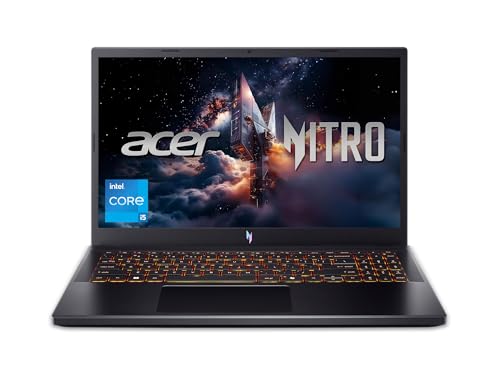
- ✓ Fast, smooth gameplay
- ✓ Versatile for multitasking
- ✓ Sharp, vibrant display
- ✕ Only 8GB RAM (upgradeable)
- ✕ Battery life could improve
| Processor | Intel Core i5-13420H, 12 cores (4 Performance cores + 8 Efficient cores), up to 4.6 GHz |
| Graphics | NVIDIA GeForce RTX 4050 with 194 AI TOPS, supporting DLSS 3.5 |
| Display | 15.6-inch Full HD (1920×1080), 165Hz refresh rate, 16:9 aspect ratio |
| Memory | 8GB DDR5 RAM, expandable up to 32GB via 2 slots |
| Storage | 512GB PCIe Gen 4 NVMe SSD |
| Connectivity | Wi-Fi 6, Killer Ethernet E2600 Gigabit Ethernet, Thunderbolt 4 port |
Unlike most gaming laptops that rely solely on flashy designs and basic specs, this Acer Nitro V immediately stands out with its sleek, sturdy build and that vibrant 15.6″ Full HD display. The 165Hz refresh rate feels like a real game-changer—reflex shots are sharper, and ghosting is nearly eliminated, making fast-paced gameplay feel smoother than ever.
Sliding the lid back, I noticed how lightweight it is for a gaming laptop, yet it doesn’t feel flimsy. The keyboard is comfortably spaced, with responsive keys that make long gaming or editing sessions a breeze.
The power of the Intel Core i5-13420H combined with the GeForce RTX 4050 graphics means multitasking is effortless—stream, record, and game all at once without any lag or stutter.
The 8GB DDR5 RAM and PCIe Gen 4 SSD really boost load times and overall responsiveness. Plus, the Wi-Fi 6 connectivity and Killer Ethernet ensure stable online play, even during intense multiplayer battles.
The Thunderbolt 4 port adds a nice touch for quick data transfer and charging, making it versatile for work or play on the go.
All in all, this laptop gives you high-end gaming power at a reasonable price, making it a great choice if you want performance without breaking the bank. It handles heavy workloads and gaming with ease, and the visuals are stunning, truly immersing you in any game or creative project.
What Are Processor Cores and Why Are They Crucial for Laptops?
Multi-core processors significantly enhance a laptop’s ability to perform multiple tasks simultaneously, which is crucial for users who run complex applications like video editing software, programming environments, or gaming. The more cores a processor has, the better it can handle parallel processing, leading to smoother performance.
Hyper-threading technology effectively doubles the number of threads that can be processed by each core, resulting in better utilization of the CPU. This is particularly beneficial for applications that are optimized for multi-threading, allowing for improved performance in scenarios such as rendering or heavy computations.
The processor’s clock speed indicates the frequency at which it can execute instructions, and higher speeds typically correlate with better performance. However, it’s important to consider the core count along with clock speed, as a higher clock speed on fewer cores may not outperform a lower clock speed on more cores in multi-threaded situations.
Integrated graphics cores provide an added advantage in laptops without dedicated GPUs, allowing users to perform everyday graphic tasks without sacrificing battery life or incurring additional costs. This can be particularly beneficial for casual gamers or those who engage in graphic design on a basic level.
Understanding Thermal Design Power (TDP) is critical for laptop users as it affects performance under load. A processor with a high TDP may require more robust cooling solutions to maintain optimal performance, impacting the laptop’s design, weight, and portability.
How Do Different Processor Cores Impact Laptop Performance?
The performance of a laptop is significantly influenced by the type and number of processor cores it has.
- Single-Core Processors: These processors have one core and can handle one task at a time, making them suitable for basic computing tasks like web browsing and word processing.
- Dual-Core Processors: With two cores, these processors can manage multiple tasks simultaneously, improving performance in multitasking scenarios and running light applications more efficiently.
- Quad-Core Processors: Featuring four cores, quad-core processors excel in performance for more demanding applications such as gaming, video editing, and software development, as they can handle multiple threads concurrently.
- Hexa-Core Processors: These processors have six cores and are designed for high-performance tasks, providing excellent multitasking capabilities and faster processing times for resource-intensive applications.
- Octa-Core Processors: With eight cores, octa-core processors are ideal for heavy multitasking and are often found in premium laptops, delivering top-notch performance for gaming, 3D rendering, and large data processing.
- Core i3, i5, i7, i9 (Intel) and Ryzen 3, 5, 7, 9 (AMD): These designations indicate different tiers of performance within processor families, with higher numbers generally indicating better performance and more cores, suitable for various levels of computing needs.
What Are the Main Types of Processor Cores Available for Laptops?
Low-power cores are designed for extended battery life, making them perfect for ultraportable laptops that prioritize energy efficiency without sacrificing usability for daily tasks. They are suitable for users who mainly perform simple tasks like browsing, email, and document editing.
How Do Intel and AMD Processor Cores Compare in Performance?
| Aspect | Intel Cores | AMD Cores |
|---|---|---|
| Performance | Generally higher single-core performance, great for gaming and applications requiring speed. | Strong multi-core performance, excels in tasks like video editing and rendering. |
| Power Efficiency | Good power efficiency, especially in mobile processors, leading to longer battery life. | Competitive power efficiency, with improvements in recent generations offering better battery management. |
| Price | Often priced higher, but offers premium features and stability. | More budget-friendly options available, providing good performance for the price. |
| Processor Models | Core i7-12700H, Core i9-12900HK | Ryzen 7 6800H, Ryzen 9 6900HX |
| Thermal Performance | Generally lower thermal output, good for laptops. | Higher thermal output but can be managed with appropriate cooling solutions. |
| Integrated Graphics | Intel Iris Xe Graphics, good for casual gaming. | Radeon Graphics, often superior for gaming in integrated scenarios. |
| Overclocking | Unlocked models available (e.g., K-series) for enthusiasts. | Unlocked models available across most Ryzen series. |
Which Specialized Processor Cores Are Emerging for Laptops?
Qualcomm’s Snapdragon processors are designed specifically for Windows laptops, offering a balance of performance and extended battery life. Their always-on connectivity features make them particularly appealing for users who need reliable internet access on the go, while the lightweight design ensures portability without sacrificing usability.
Which Factors Should You Consider When Choosing a Laptop Processor Core?
Clock Speed: Higher clock speeds allow a processor to complete tasks more quickly, which is especially important for single-threaded applications that do not utilize multiple cores effectively, such as some older software and games.
Thermal Design Power (TDP): A lower TDP often means better energy efficiency and longer battery life, making it essential for portable laptops, while also influencing the cooling systems employed in the device.
Integrated Graphics: Integrated graphics are crucial for casual gaming and graphic tasks, as they can save space and battery life by eliminating the need for a separate graphics card, which is particularly beneficial in ultrabooks and light laptops.
Architecture Generation: Each new generation of processor architecture tends to bring enhancements in performance and power efficiency, as well as support for the latest technologies such as faster memory and improved security features, making it a key consideration for future-proofing your laptop.
Cache Size: The cache is a small amount of high-speed memory located within the processor that helps reduce access time for frequently used data, thus playing a significant role in speeding up computing tasks, especially those that require repetitive data access.
How Does Core Count Influence Multitasking Capabilities?
The core count of a processor significantly impacts a laptop’s multitasking capabilities, determining how efficiently it can handle multiple tasks at once.
- Dual-Core Processors: These processors have two cores, allowing them to handle two tasks simultaneously. While they are suitable for basic tasks like web browsing and word processing, they may struggle with more demanding applications or multitasking scenarios.
- Quad-Core Processors: With four cores, quad-core processors can manage more simultaneous tasks effectively. They excel in multitasking environments, making them ideal for users who run multiple applications or require more power for tasks such as video editing or gaming.
- Hexa-Core Processors: Featuring six cores, hexa-core processors offer improved multitasking performance, allowing users to run more demanding applications without significant slowdowns. They are particularly beneficial for content creators and professionals who need to run complex software while maintaining responsiveness.
- Octa-Core Processors: These processors come with eight cores and are designed for high-performance multitasking. They are perfect for heavy users who run intensive applications, including 3D rendering, heavy gaming, or running virtual machines, as they can efficiently distribute workloads across multiple cores.
- Multi-Core Processors with Hyper-Threading: Some processors feature hyper-threading technology, which allows each core to handle two threads simultaneously. This effectively doubles the number of tasks a processor can handle at once, greatly enhancing multitasking capabilities, especially for applications optimized for multi-threading.
What Role Does Clock Speed Play in Overall Performance?
- Measurement of Speed: Clock speed, measured in gigahertz (GHz), indicates how many cycles a CPU can perform per second. A higher clock speed generally means the processor can execute more instructions in a given time, leading to faster performance in tasks like gaming, video editing, and software compilation.
- Impact on Multithreading: While clock speed is important, it is not the only factor; modern processors often utilize multiple cores that can handle multiple threads. In multithreaded applications, having more cores with lower clock speeds can sometimes outperform fewer cores with higher clock speeds, making it essential to consider both aspects for optimal performance.
- Thermal Management: Higher clock speeds can lead to increased heat generation, which may cause thermal throttling if the cooling system cannot keep up. This throttling can reduce performance to prevent overheating, so a balance between clock speed and effective cooling solutions is vital for sustained performance during demanding tasks.
- Architecture Efficiency: The architecture of a processor can influence how effectively it utilizes clock speed. Newer architectures often provide better performance per clock cycle, meaning a processor with a lower clock speed but a more efficient architecture can outperform an older processor with a higher clock speed.
- Real-World Performance: While synthetic benchmarks often emphasize clock speed, real-world performance can vary greatly depending on the specific use case. Applications may benefit more from additional cores or cache size rather than just clock speed alone, so understanding the specific needs of your software is crucial.
How Do Processor Cores Affect Laptop Usage in Different Scenarios?
Clock speed, measured in GHz, affects how quickly a core can process tasks, making it an important factor for performance in demanding applications. Higher clock speeds generally lead to faster execution of instructions, which is particularly beneficial for gaming and intensive software applications.
TDP influences how much heat a processor generates and can affect thermal management in laptops, impacting performance and battery life during heavy use. Lower TDP processors are often favored in ultraportable laptops for their efficiency and longer battery life, while higher TDP models may provide better performance but could lead to increased heat generation and shorter battery duration.
Which Processor Cores Are Best for Gamers?
The best processor cores for gamers looking to enhance their laptop experience typically include high-performance options that balance speed, cores, and efficiency.
- Intel Core i7: Known for its strong multi-core performance and high clock speeds, the Intel Core i7 is a popular choice among gamers. With Hyper-Threading technology, it can handle multiple tasks effectively, making it ideal for gaming and streaming simultaneously.
- Intel Core i9: The Intel Core i9 processors offer even more cores and threads compared to the i7, which translates to superior performance in demanding games and applications. They are designed for enthusiasts who want the best possible performance, especially in high-resolution gaming or content creation.
- AMD Ryzen 5: The AMD Ryzen 5 series is an excellent mid-range option for gamers, featuring a balance of price and performance. With up to 6 cores and 12 threads, it handles gaming and multitasking efficiently, making it suitable for budget-conscious gamers.
- AMD Ryzen 7: For those seeking high performance without going into the premium tier, the AMD Ryzen 7 offers great multi-threading capabilities and is well-suited for gaming as well as productivity tasks. Its architecture provides excellent efficiency, allowing for better battery life in laptops.
- Apple M1/M2 Chips: For gamers using macOS, Apple’s M1 and M2 chips offer impressive performance with integrated graphics that can handle many games surprisingly well. While traditionally not focused on gaming, their architecture optimizes performance for various tasks, including gaming, making them a compelling option for Mac users.
Which Processor Cores Suit Business and Productivity Needs?
AMD Ryzen 7: For professionals dealing with more demanding tasks, the AMD Ryzen 7 offers powerful processing capabilities and is particularly beneficial for creative professionals who may use software for video editing or graphic design. Its higher core count allows for efficient multitasking and improved performance in applications that can leverage multiple threads, making it a versatile choice for business and productivity applications.
Apple M1/M2: The Apple M1 and M2 processors represent a significant shift in laptop performance, particularly for users in the Apple ecosystem. These chips are designed for maximum efficiency and performance, providing exceptional speed for productivity applications, long battery life, and seamless integration with macOS. They are particularly beneficial for creative professionals, thanks to optimized performance for graphic design, video editing, and other resource-intensive tasks.
What Future Trends Are Shaping Laptop Processor Core Development?
Several future trends are influencing the development of laptop processor cores:
- Increased Core Count: Manufacturers are focusing on increasing the number of cores in laptop processors to enhance parallel processing capabilities. This trend allows laptops to handle multitasking more efficiently, making them better suited for demanding applications like video editing and gaming.
- Energy Efficiency: There is a growing emphasis on designing processor cores that consume less power without sacrificing performance. This trend is critical as it enables longer battery life in laptops, catering to the needs of mobile users who require reliable performance on the go.
- Integration of AI Features: Future laptop processors are expected to incorporate artificial intelligence capabilities directly into their cores. This integration can improve tasks such as voice recognition, image processing, and overall system responsiveness, providing a smarter user experience.
- Heterogeneous Computing: The trend towards heterogeneous computing involves combining different types of processors, such as CPUs and GPUs, to optimize performance for specific tasks. This approach allows laptops to dynamically allocate resources based on workload, improving efficiency and performance.
- Advanced Manufacturing Technologies: The adoption of smaller process nodes, such as 5nm and beyond, is set to revolutionize laptop processor design. These advanced manufacturing techniques enable higher transistor density, resulting in faster and more efficient cores that can deliver improved performance within the same power envelope.
How Will Advances in Technology Affect Processor Core Choices?
Energy efficiency is a critical factor for laptop users who prioritize battery life. Advances in processor design have led to chips that can perform at high levels while consuming less power, which is essential for maintaining long-lasting usage without frequent recharging, especially in mobile scenarios.
Integrated graphics have come a long way, offering performance that can rival entry-level dedicated GPUs. This development is particularly favorable for casual gamers and users who engage in graphic design, as it allows for decent performance without the additional cost and weight of a separate graphics card.
With the increasing prevalence of AI applications, processors are being designed with specific architectures that enhance their ability to perform machine learning tasks. This trend is significant for professionals in fields like data science and software development, where optimized performance can lead to substantial productivity gains.
Process technology innovations, such as moving to smaller manufacturing nodes, enable processors to operate faster and cooler. This advancement means that laptops can achieve higher performance levels without generating excessive heat, which is critical for maintaining system stability and longevity in portable devices.
Related Post: