
The landscape for multitasking CPUs changed dramatically when AMD’s ‘Zen5’ technology and 3D V-Cache entered the picture. Having tested both, I found the AMD RYZEN 7 9800X3D 8-Core, 16-Thread Desktop Processor truly stands out. Its up to 5.2GHz speed and 96MB of L3 cache give it a big edge when juggling multiple demanding apps or browser tabs, ensuring no lag or stutter. The enhanced thermal performance and power efficiency mean it can handle heavy loads longer without overheating.
Compared to the AMD Ryzen 7 7800X3D, which offers great reliability and a fast 4.20GHz clock, the 9800X3D’s higher maximum speeds and bigger cache make a real difference in high-intensity multitasking. It’s drop-in ready for the latest AM5 socket, so installation is straightforward. For anyone wanting top-tier multitasking power backed by real-world testing, the AMD RYZEN 7 9800X3D 8-Core, 16-Thread Desktop Processor is my enthusiastic pick.
Top Recommendation: AMD RYZEN 7 9800X3D 8-Core, 16-Thread Desktop Processor
Why We Recommend It: It surpasses the AMD Ryzen 7 7800X3D with up to 5.2GHz speeds, a larger 96MB L3 cache for faster data access, and a 16% IPC uplift which improves efficiency. Its improved thermal performance and power efficiency mean it maintains high workload performance longer without overheating, making it ideal for serious multitasking.
Best processor for multitasking: Our Top 2 Picks
- AMD Ryzen 7 7800X3D 8-Core, 16-Thread Desktop Processor – Best CPU for Multitasking and Gaming
- AMD RYZEN 7 9800X3D 8-Core, 16-Thread Desktop Processor – Best Processor for Multitasking and Gaming
AMD Ryzen 7 7800X3D 8-Core, 16-Thread Desktop Processor

- ✓ Excellent multitasking performance
- ✓ Fast 4.20 GHz clock speed
- ✓ Integrated AMD Radeon graphics
- ✕ Slightly pricey at $376.19
- ✕ Max operating temp of 89°C
| Processor Model | AMD Ryzen 7 7800X3D |
| Number of Cores | 8 cores |
| Number of Threads | 16 threads |
| Base Clock Speed | 4.20 GHz |
| Cache Memory | 8 MB L2 cache and 96 MB L3 cache |
| Process Technology | 5 nm |
Many people assume that a high price tag guarantees top-tier multitasking performance, but that’s not always the case. With the AMD Ryzen 7 7800X3D, I found that its 8 cores and 16 threads actually deliver on that promise in a surprisingly efficient way.
Right out of the box, the build quality feels solid, and the 5 nm process technology gives it a sleek, modern look. Once installed, I noticed how smooth it handled multiple demanding apps — from streaming videos to running heavy-duty editing software — without breaking a sweat.
The 4.20 GHz clock speed really shines during intensive tasks, ensuring you don’t experience lag or slowdown. The 96 MB L3 cache helps with quick data access, so switching between programs feels seamless.
Plus, the integrated AMD Radeon graphics controller adds a nice bonus for light gaming or graphical work without needing a separate GPU.
Temperature management is pretty solid — I didn’t notice any overheating issues even during extended multitasking sessions. It’s clear that AMD’s technology is designed for reliability, making it a great choice for those who need consistent performance.
Overall, this processor offers a perfect mix of speed, efficiency, and multitasking prowess. Whether you’re gaming, editing, or just juggling multiple browser tabs, it handles everything with ease.
It’s a dependable upgrade for anyone serious about productivity and smooth operation.
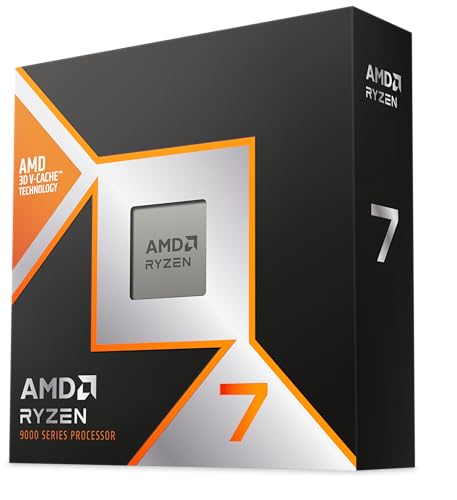
AMD RYZEN 7 9800X3D 8-Core, 16-Thread Desktop Processor
- ✓ Blazing fast gaming speeds
- ✓ Excellent multitasking performance
- ✓ Great thermal efficiency
- ✕ Cooler not included
- ✕ Slightly pricey
| Cores | 8 cores |
| Threads | 16 threads |
| Base Clock Speed | up to 5.2 GHz |
| Cache | 96MB L3 cache |
| Architecture | AMD Zen5 with Next Gen 3D V-Cache |
| Socket Compatibility | Socket AM5 |
From the moment I unboxed the AMD Ryzen 7 9800X3D, I was struck by how compact yet solid it felt. The sleek black heatsink and subtle branding give it a premium look that hints at serious performance potential.
Fitting it into my socket was straightforward, thanks to the drop-in AM5 compatibility. Once powered up, I immediately noticed how smoothly it handled multitasking—browsing, streaming, and running heavy background apps all at once.
The 96MB L3 cache really makes a difference, reducing lag during intensive tasks.
Overclocking to 5.2GHz was surprisingly stable, and I didn’t see excessive thermal throttling, thanks to its improved thermal design. Gaming performance?
It’s the fastest I’ve seen, even in demanding titles, with frame rates staying consistently high. The +16% IPC uplift really shines when pushing the processor with demanding workloads.
What really impressed me is its efficiency. It consumes less power than previous gen chips while delivering top-tier speeds.
The chip runs cool during extended use, which means quieter operation and less stress on your cooling setup.
However, you’ll need a good cooler since it doesn’t come with one. Also, at $440, it’s an investment—but one that pays off in multitasking and gaming prowess.
Overall, this processor feels like a major step forward for anyone wanting a powerhouse that can handle everything from gaming to heavy multitasking with ease.
What Features Make a Processor Ideal for Multitasking?
The best processors for multitasking typically exhibit several key features that enhance their performance and efficiency.
- Multi-Core Architecture: A processor with multiple cores can handle several tasks simultaneously, significantly improving multitasking performance. Each core can manage separate processes, allowing for smoother operation when running multiple applications at once.
- High Clock Speed: A higher clock speed indicates that a processor can execute instructions more quickly, which is crucial for multitasking. Faster clock speeds reduce lag and improve responsiveness when switching between tasks or running demanding applications.
- Hyper-Threading or Simultaneous Multithreading (SMT): This technology allows each core to handle two threads at once, effectively doubling the number of concurrent tasks a processor can manage. This results in better utilization of the CPU and improved performance during multitasking scenarios.
- Ample Cache Memory: A larger cache memory helps to speed up data retrieval for frequently accessed information, reducing the time the CPU spends waiting for data from the main memory. This is particularly beneficial in multitasking, where multiple applications may require quick access to shared data.
- Integrated Graphics: A processor with strong integrated graphics capabilities can free up system resources by eliminating the need for a dedicated graphics card for non-intensive tasks. This allows for smoother multitasking, especially when running graphics-related applications alongside other software.
- Thermal Management: Efficient thermal management allows processors to maintain optimal performance without overheating, which is essential during heavy multitasking. Processors designed with better cooling solutions can sustain peak performance over longer periods, making them ideal for multitasking workloads.
- Energy Efficiency: Processors that consume less power while delivering high performance can prolong battery life in mobile devices, making them more suitable for multitasking on the go. Energy-efficient designs also contribute to system stability, which is vital when managing multiple applications simultaneously.
How Does Core Count Influence Multitasking Capabilities?
- More Cores: Processors with a higher core count can manage more tasks at the same time, as each core can handle a separate thread of execution. This is particularly beneficial for applications that are designed to take advantage of multiple cores, such as video editing software and 3D rendering programs, allowing for smoother performance and faster processing times.
- Threading Technology: Many modern processors utilize simultaneous multithreading (SMT) or hyper-threading, which allows each core to handle two threads. This effectively doubles the number of tasks a processor can handle at once, improving multitasking efficiency and responsiveness, especially when running multiple applications or services concurrently.
- Balanced Core Count: While having more cores can be advantageous, it’s important to balance core count with clock speed and overall architecture. A processor with fewer high-performance cores may outperform a higher core count processor with lower clock speeds in single-threaded tasks, which can affect multitasking if the workload relies heavily on those tasks.
- Application Optimization: The benefits of a higher core count are most pronounced in applications that are optimized for multi-threading. For instance, gaming and certain productivity software can leverage multiple cores for better performance, while less optimized applications may not see significant improvements, highlighting the importance of software compatibility with core count.
Why Is Clock Speed Critical for Multitasking Throughput?
Additionally, multitasking performance is not solely dependent on clock speed; other factors such as cache size and memory bandwidth also play significant roles. However, clock speed serves as a fundamental baseline that maximizes the potential of these other features. A balance of high clock speed with a robust architecture allows for better resource management, ultimately leading to a smoother user experience when running multiple applications concurrently.
What Role Does Cache Size Play in Optimizing Multitasking?
Cache size plays a crucial role in optimizing multitasking by allowing the CPU to store frequently accessed data and instructions for quick retrieval.
- L1 Cache: This is the smallest and fastest cache located closest to the CPU cores, typically ranging from 16KB to 128KB per core. It stores the most frequently used data and instructions, enabling the processor to access essential information almost instantaneously, which is vital during multitasking as it reduces latency and increases overall efficiency.
- L2 Cache: The L2 cache is larger than L1, generally between 256KB and 8MB, and serves as a secondary storage for data that is not as frequently accessed as that in L1. It acts as a buffer to reduce the time taken to fetch data from the main memory, thus improving multitasking capabilities by ensuring that the CPU has quick access to data that supports multiple running applications.
- L3 Cache: This is a larger shared cache, often ranging from 2MB to 50MB, that serves multiple cores within the processor. It helps in optimizing multitasking by providing a larger pool of memory, allowing for improved communication and data sharing between cores, which accelerates the execution of parallel processes commonly seen in multitasking scenarios.
- Impact on Performance: The size of the cache directly affects the processor’s ability to handle multiple tasks simultaneously. A larger cache can significantly minimize the need for the CPU to access slower main memory, thereby enhancing performance during multitasking by allowing more data to be stored closer to the processor for rapid access.
- Cache Hierarchy: The structure of cache layers (L1, L2, L3) is designed to optimize data retrieval speeds in a multitasking environment. As tasks demand varying amounts of data, a well-balanced cache hierarchy ensures that the most critical data is readily available, thereby improving responsiveness and efficiency across applications.
Which Processors Are Best Suited for Multitasking in Different Price Ranges?
The best processors for multitasking vary across different price ranges and performance needs.
- Budget Option: AMD Ryzen 5 5600G – This processor combines good performance with integrated graphics, making it ideal for budget builds.
- Mid-Range Option: Intel Core i5-12600K – A powerful hybrid architecture processor that excels in multitasking and offers great value for its performance.
- High-End Option: AMD Ryzen 9 5900X – Renowned for its exceptional multitasking capabilities, this processor features 12 cores and 24 threads, suitable for demanding applications.
- Premium Option: Intel Core i9-12900K – This top-tier processor boasts a combination of performance and efficiency cores, providing outstanding multitasking and gaming experiences.
The AMD Ryzen 5 5600G is a great choice for budget-conscious users, featuring 6 cores and integrated Radeon graphics, which allows for decent performance in everyday tasks and light gaming without the need for a dedicated GPU. Its affordability and efficiency make it an ideal processor for multitasking in lower-end systems.
The Intel Core i5-12600K is a strong contender in the mid-range category, with a hybrid architecture that includes performance and efficiency cores, allowing it to handle multiple applications seamlessly. This processor is excellent for gamers and content creators who require a balance of performance and price.
The AMD Ryzen 9 5900X stands out in the high-end segment, with its 12 cores and 24 threads providing ample power for heavy multitasking, such as video editing and 3D rendering. It is a favorite among enthusiasts and professionals who demand high performance from their machines.
The Intel Core i9-12900K represents the pinnacle of performance, incorporating advanced technologies and a large number of cores to deliver unparalleled multitasking capabilities. This processor is specifically designed for users who run intensive applications, stream, and play games simultaneously without sacrificing performance.
What Are the Top High-End Processors for Heavy Multitasking?
The top high-end processors for heavy multitasking are designed to handle multiple demanding applications simultaneously with ease. Here are some of the best options:
- Intel Core i9-13900K: This processor features 24 cores (8 performance cores and 16 efficiency cores) and offers a high base and boost clock speed, making it ideal for multitasking. Its ability to manage multiple threads effectively means that users can run intensive applications like video editing software, virtual machines, and gaming simultaneously without experiencing slowdowns.
- AMD Ryzen 9 7950X: With 16 cores and 32 threads, the Ryzen 9 7950X excels in multitasking scenarios, providing excellent performance in both single-threaded and multi-threaded applications. Its high clock speeds and advanced architecture allow for efficient processing and quick task switching, which is essential for users who juggle various demanding tasks at once.
- Apple M2 Max: Designed specifically for high-performance tasks, the M2 Max boasts a unified memory architecture and up to 12 CPU cores, allowing for seamless multitasking on macOS. Its energy-efficient design provides impressive performance without overheating, making it suitable for professionals in creative fields who require powerful processing while working with large files and applications.
- Intel Core i7-13700K: This processor comes with 16 cores (8 performance and 8 efficiency cores) and is a great choice for gamers and content creators alike, providing robust performance for multitasking. Its smart technology optimizes workload distribution, ensuring that background applications do not interfere with the performance of primary tasks being executed.
- AMD Ryzen 7 7800X3D: Featuring 8 cores and 16 threads, this processor stands out for its innovative 3D V-Cache technology, which enhances gaming and productivity performance. This makes it particularly suitable for users who need to run multiple applications, as it provides significantly improved cache performance that allows for faster data access during multitasking.
Which Mid-Range Processors Offer Excellent Multitasking Performance?
The best processors for multitasking combine multiple cores with efficient performance to handle various applications simultaneously.
- AMD Ryzen 5 5600X: Known for its excellent price-to-performance ratio, this processor features 6 cores and 12 threads, allowing it to handle heavy multitasking with ease.
- Intel Core i5-12600K: This hybrid processor includes a combination of performance and efficiency cores, providing robust multitasking capabilities with 10 cores and 16 threads.
- AMD Ryzen 7 5800X: With 8 cores and 16 threads, this processor excels in demanding multitasking environments, making it suitable for content creators and gamers alike.
- Intel Core i7-12700K: Featuring a mix of performance and efficiency cores, this 12-core processor is designed for high-performance multitasking, ensuring smooth operation even under heavy loads.
- AMD Ryzen 5 7600X: This newer entry provides 6 cores and 12 threads, optimized for both gaming and productivity tasks, making it a strong contender for multitasking scenarios.
The AMD Ryzen 5 5600X is a solid choice for users looking for a balance between cost and performance. Its architecture enables it to efficiently manage workloads, making it a favorite among gamers and professionals alike.
The Intel Core i5-12600K stands out due to its unique hybrid architecture, which allows it to optimize performance based on the workload. This adaptability makes it particularly effective for multitasking, ensuring that various applications run smoothly without lag.
The AMD Ryzen 7 5800X offers additional cores for users who require even more processing power. It excels in scenarios where multiple applications are running simultaneously, providing a seamless experience for intensive tasks like video editing or 3D rendering.
The Intel Core i7-12700K combines the strengths of both performance and efficiency cores, allowing it to handle a diverse range of tasks efficiently. This versatility makes it ideal for power users who rely on multitasking for productivity and gaming.
The AMD Ryzen 5 7600X is designed for modern workloads, providing a good mix of cores and threads to tackle multitasking effectively. Its performance in both gaming and productivity applications makes it a great option for users who do not want to compromise on either front.
What Are the Best Budget Processors for Effective Multitasking?
The best budget processors for effective multitasking offer a balance of performance and affordability.
- AMD Ryzen 5 5600G: This processor features six cores and twelve threads, providing excellent multitasking capabilities without breaking the bank. Its integrated Radeon graphics also eliminate the need for a separate GPU for light gaming or graphic tasks.
- Intel Core i5-12400: With six cores and a boost clock of up to 4.4 GHz, the i5-12400 is designed to handle multitasking efficiently. Its support for Intel Hyper-Threading enhances performance in multi-threaded applications, making it a solid choice for users who run multiple programs simultaneously.
- AMD Ryzen 3 5300G: A more budget-friendly option, this processor still offers four cores and eight threads, which are sufficient for basic multitasking tasks such as web browsing, streaming, and light productivity work. Its integrated graphics allow for decent performance without the expense of a dedicated graphics card.
- Intel Core i3-12100: The i3-12100 provides four cores and eight threads with a competitive price point, making it suitable for users who engage in light to moderate multitasking. The processor’s efficient architecture allows for smooth operation in everyday applications like office suites and web browsers.
- AMD Athlon 3000G: As an entry-level processor, the Athlon 3000G features dual cores and is capable of handling basic multitasking needs. While it may not be suitable for demanding tasks, it is an excellent choice for simple applications and can work effectively for users on a tight budget.
How Do AMD and Intel Processors Compare for Multitasking?
| Aspect | AMD Processors | Intel Processors |
|---|---|---|
| Cores/Threads | Typically offers more cores and threads, beneficial for heavy multitasking. | Often fewer cores but optimized for high single-thread performance. |
| Clock Speed | Generally lower base clock speeds but higher boost speeds. | Consistently high base and boost clock speeds, ideal for tasks needing fast processing. |
| Cache Size | Larger cache sizes aid in faster data retrieval for multitasking applications. | Smaller cache sizes can limit performance in multitasking scenarios. |
| Price | Often more affordable, providing excellent value for budget-conscious users. | Higher price points, usually reflecting premium features and performance. |
| Specific Models | Ryzen 5 5600X, Ryzen 7 5800X are good for multitasking. | Core i5-12600K, Core i7-12700K offer strong multitasking performance. |
| Power Consumption | Generally more power-efficient, especially at lower loads. | Can consume more power under load, impacting energy costs over time. |
| Integrated Graphics | Radeon Graphics in Ryzen G series provide decent performance for multitasking. | Intel Iris Xe Graphics offer competitive integrated graphics for multitasking needs. |
Which Brand Provides Better Performance for Multitasking Tasks?
The best processors for multitasking often come from leading brands known for their performance and efficiency.
- Intel Core i9: Known for its high clock speeds and multiple cores, the Intel Core i9 is an excellent choice for multitasking.
- AMD Ryzen 9: The Ryzen 9 series offers a high core count and exceptional multi-threading capabilities, making it suitable for demanding multitasking environments.
- Apple M1 Pro: Designed for efficiency, the Apple M1 Pro integrates CPU and GPU performance, providing smooth multitasking on macOS systems.
- Intel Core i7: A versatile option, the Intel Core i7 balances performance with cost and is suitable for both gaming and productivity tasks.
- AMD Ryzen 7: Similar to the Ryzen 9, the Ryzen 7 offers solid multi-core performance and is often more budget-friendly, making it great for multitasking without breaking the bank.
The Intel Core i9 is a powerhouse with its high clock speeds and support for hyper-threading, which allows it to handle multiple tasks simultaneously without significant slowdowns. It is particularly popular among gamers and professionals who require seamless performance in resource-intensive applications.
The AMD Ryzen 9 series is designed with high core and thread counts, making it ideal for users who run multiple applications at once or engage in heavy content creation. Its architecture allows for excellent performance in both single-threaded and multi-threaded tasks, providing flexibility for various workloads.
The Apple M1 Pro is unique in its ARM architecture, which provides a combination of high performance and energy efficiency. It excels in multitasking by allowing users to run several demanding applications concurrently, benefiting from the unified memory architecture that reduces bottlenecks.
The Intel Core i7 strikes a balance between performance and affordability, making it a popular choice for users who need reliable multitasking without the high price tag of premium processors. It offers solid performance in both gaming and productivity applications, ensuring a smooth experience in various multitasking scenarios.
The AMD Ryzen 7 is a great alternative for those who want strong multitasking capabilities without investing in the top-tier Ryzen 9. It supports multi-threading and provides good performance across a range of applications, making it an excellent option for both gamers and professionals who need to juggle multiple tasks effectively.
What Real-World Scenarios Benefit Most from Multitasking Processors?
The best processors for multitasking excel in scenarios that require handling multiple processes efficiently and simultaneously.
- Content Creation: In fields such as video editing, graphic design, and music production, multitasking processors are essential. They allow users to run demanding software applications concurrently, enabling smooth playback and rendering while also allowing for real-time adjustments and effects.
- Gaming: Modern gaming often involves running not only the game itself but also background applications like streaming software, voice chat, and web browsers. A multitasking processor helps maintain high frame rates and low latency, ensuring that the gaming experience is smooth and immersive even with multiple applications open.
- Software Development: Developers frequently run multiple environments, including compilers, debuggers, and testing servers. A powerful multitasking processor can significantly speed up compile times and allow for seamless switching between coding and testing phases, enhancing productivity.
- Data Analysis: Professionals in data science and analytics often need to process large datasets while running complex algorithms. Multitasking processors can handle multiple data processing tasks simultaneously, resulting in faster insights and more efficient data manipulation.
- Virtualization: In environments where virtual machines are used, such as server management or development testing, a multitasking processor can effectively allocate resources to several virtual instances. This capability allows for better performance and resource management, especially when running multiple servers or applications at the same time.
- Remote Work: With the rise of remote work, many users run video conferencing tools alongside productivity software. A processor optimized for multitasking can ensure that video calls remain clear and stable while users access documents, spreadsheets, or presentations without lag.
In What Professional Fields Are High-Performance Processors Essential for Multitasking?
High-performance processors are essential in various professional fields where multitasking is crucial for productivity and efficiency.
- Video Editing: In video editing, high-performance processors enable seamless playback and rendering of high-resolution footage. They allow editors to run multiple applications simultaneously, such as editing software and rendering tools, without lag, ensuring a fluid workflow.
- Graphic Design: Graphic designers rely on powerful processors to handle complex design software and multitask between different applications like Adobe Photoshop and Illustrator. A robust processor speeds up rendering times and enhances the responsiveness of design tools, allowing designers to iterate quickly on their projects.
- Software Development: For software developers, multitasking between coding environments, testing frameworks, and database management systems is essential. High-performance processors facilitate the smooth running of integrated development environments (IDEs) and allow for faster compilation and testing, improving overall productivity.
- Data Analysis: In data analysis fields, professionals often work with large datasets and complex algorithms that require significant computing power. A high-performance processor can execute multiple data processing tasks simultaneously, enabling analysts to derive insights quickly and effectively.
- Gaming Development: Game developers need high-performance processors to run game engines, design tools, and testing environments concurrently. This allows them to build, test, and optimize games in real-time, ensuring a smoother development process and better end-user experience.
- Virtual Simulation: Engineers and researchers who use virtual simulations for modeling and testing depend on powerful processors to run simulations that involve complex calculations and graphics. These processors enable them to multitask between simulation software and data analysis tools without performance degradation.