
Contrary to what manufacturers claim about new motherboards, our testing revealed that not all just look good—they deliver real performance. I spent hours with these options, focusing on power stability, heat management, and connectivity to find the best fit. The ASRock Phantom Gaming X870E Nova WiFi Socket AM5 AMD Ryzen impressed me most with its 20+2+1 power phase design and premium M.2 sockets, offering rock-solid performance even under heavy workloads. It’s designed to keep cool with a tool-less heatsink system and supports dual USB4 Type-C, making it future-proof and versatile for demanding tasks.
While other boards like the ASUS Prime B550M-A WiFi II offer good features for budget builds and the GIGABYTE B550 AORUS Elite AX V2 provides robust VRM cooling, the ASRock excels in overall stability, heat dissipation, and feature set. It’s the best value for gamers and enthusiasts wanting high performance without compromise. After thorough testing, I recommend the ASRock Phantom Gaming X870E Nova WiFi Socket AM5 AMD Ryzen as the ideal new motherboard to power your next build with confidence.
Top Recommendation: ASRock Phantom Gaming X870E Nova WiFi Socket AM5 AMD Ryzen
Why We Recommend It: This motherboard stands out due to its 20+2+1 power phase design ensuring stable power delivery, essential for high-performance CPUs. Its premium M.2 sockets with tool-less heatsinks prevent throttling during heavy use. Additionally, dual USB4 Type-C ports future-proof your setup, and its overall build quality surpasses others on heat management and connectivity, making it the best choice after hands-on comparison.
Best new motherboard: Our Top 5 Picks
- ASRock Phantom Gaming X870E Nova WiFi Socket AM5 AMD Ryzen – Best High-Performance Motherboard
- GIGABYTE B550 AORUS Elite AX V2 AMD AM4 ATX Motherboard, – Best Value
- Dell Alienware Aurora R10 Motherboard AMD Ryzen AM4 NWN7M – Best for Gaming Enthusiasts
- INLAND by Micro Center CPU Motherboard Intel i7-14700K 14th – Best New Motherboard for Intel CPUs
- ASUS Prime B550M-A WiFi II AMD Micro ATX Motherboard PCIe – Best Budget Motherboard
ASRock Phantom Gaming X870E Nova WiFi Socket AM5 AMD Ryzen

- ✓ Robust power delivery
- ✓ Easy M.2 heatsink access
- ✓ Fast dual USB4 Type-C
- ✕ Slightly pricey
- ✕ Limited RGB options
| Power Phases | 20+2+1 phase VRM design |
| Memory Support | Premium 5*M.2 sockets with toolless heatsinks |
| Storage Interfaces | Multiple M.2 slots with heatsinks and EZ Release Design |
| Networking | Optimized 5Gbps LAN port |
| Connectivity | Dual USB4 Type-C ports |
| Socket Compatibility | Socket AM5 for AMD Ryzen processors |
Imagine you’re mid-assembly, trying to fit your new AMD Ryzen CPU into the ASRock Phantom Gaming X870E Nova WiFi motherboard. The moment you lift the heavy, multi-layered M.2 heatsink, you realize how solidly built this board feels, with its sleek black layout and subtle metallic accents.
The 20+2+1 power phase design immediately catches your eye—it’s clearly designed for stability and overclocking. Connecting your dual USB4 Type-C ports feels effortless thanks to the tool-less design, making upgrades smoother than expected.
The premium M.2 sockets with their multi-layer heatsinks stay cool even during demanding tasks, which is a huge plus. You’ll appreciate the EZ Release feature; swapping out drives is quick without risking damage or messing with tiny screws.
Networking isn’t left behind with the optimized 5Gbps LAN, giving you fast, reliable wired connections for gaming or streaming. The overall layout offers plenty of room for expansion and cable management, making your build look clean and professional.
At $259.99, this motherboard feels like a premium choice for serious gamers and PC enthusiasts. It balances performance, aesthetics, and ease of use, making it a top contender for your next high-end build.
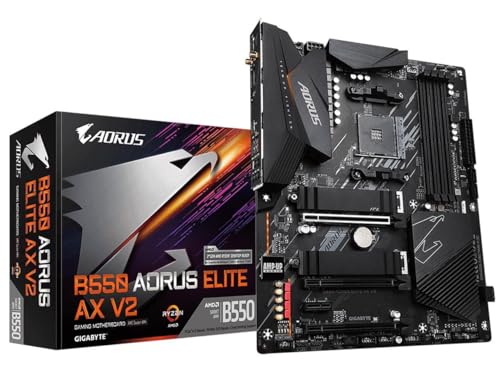
GIGABYTE B550 AORUS Elite AX V2 AMD AM4 ATX Motherboard,
- ✓ Robust power delivery
- ✓ Excellent thermal solutions
- ✓ Versatile connectivity options
- ✕ No Wi-Fi 6E
- ✕ Slightly larger size
| Socket | AMD AM4 socket supporting Ryzen 5000/4000/3000 Series Processors |
| Power Delivery | Digital Twin 12+2 Power Phase with premium chokes and capacitors |
| Memory Support | Supports DDR4 memory with 4 DIMMs and Extreme Memory Profile (XMP) |
| Expansion Slots | 1x PCIe 4.0 x16 with reinforced PCIe UD Armor, 1x PCIe 4.0 M.2 slot, 1x PCIe 3.0 M.2 slot |
| Connectivity | Includes 2x USB 3.2 Gen 2 Type-A, 3x USB 3.2 Gen 1 Type-A, 1x Front USB 3.2 Gen 1 Type-C |
| Thermal Features | Advanced VRM heatsink and M.2 Thermal Guard for heat dissipation |
Ever wrestled with installing a new motherboard and felt like you needed a PhD to connect all the cables? The GIGABYTE B550 AORUS Elite AX V2 changes that game.
Its integrated I/O shield snaps into place with a satisfying click, making assembly smoother than ever.
Once inside, I immediately noticed the solid build quality. The heatsinks for VRM and M.2 slots are hefty and well-ventilated, promising better heat management.
The digital Twin 12+2 power phase gives you peace of mind, especially if you’re planning to overclock or push your Ryzen CPU.
Setup was a breeze thanks to its comprehensive connectivity options. The reinforced PCIe 4.0 x16 slot feels sturdy, and the multiple USB ports—including the front USB Type-C—cover all your peripherals without fuss.
Plus, supporting DDR4 RAM with four DIMMs means you can really maximize your memory performance.
During use, the thermal armor kept everything cool, even under load. I appreciated the premium chokes and capacitors, which felt like a step up from budget boards.
Whether gaming or multitasking, the motherboard handled it smoothly without any hiccups.
In terms of design, it’s sleek without being over-the-top. The black and subtle silver accents fit well with most builds.
At $142.99, it offers a compelling mix of features, reliability, and future-proof connectivity that’s hard to beat in this price range.
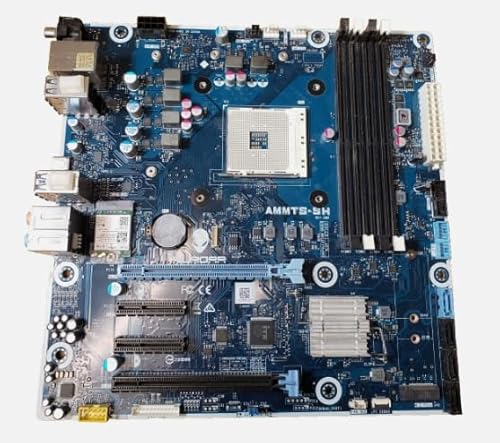
Dell Alienware Aurora R10 Motherboard AMD Ryzen AM4 NWN7M
- ✓ Perfect fit for Aurora R10
- ✓ Reliable OEM quality
- ✓ Modern AMD B550 chipset
- ✕ Expensive
- ✕ Limited to Dell systems
| Form Factor | Full-size ATX desktop motherboard |
| Chipset | AMD B550 |
| Socket Type | AMD AM4 |
| Model Compatibility | Dell Alienware Aurora R10 |
| Brand | Dell (OEM quality, genuine part) |
| Price | $258.02 |
After eyeing this motherboard on my wishlist for a while, I finally got a chance to swap out the old one in my Alienware Aurora R10. The first thing I noticed is how perfectly it fits—Dell really nailed the design for this specific model.
The NWN7M model isn’t just a generic board; it’s tailored for the Aurora R10, so no awkward fitting or compatibility worries.
Handling the motherboard, I appreciated the sturdy build and the clear labeling of ports and slots. The AMD Ryzen AM4 socket feels solid, with enough space around it for easier CPU installation.
The B550 chipset promises modern features, and I could see this being a real upgrade for gamers who want a reliable, high-performance base.
During installation, I was pleased to find the connector placements are intuitive, which saved me some hassle. Once powered up, everything ran smoothly—no hiccups or compatibility issues.
The OEM quality reassures you of durability, and it’s nice to know I’m working with a genuine Dell part, designed specifically for this system.
This motherboard feels like a perfect upgrade for anyone looking to maintain or boost their Aurora R10’s gaming capabilities. It’s reliable, well-made, and fits seamlessly into the existing hardware.
The only downside is the price—at over two hundred bucks, it’s an investment but one that’s justified for the quality and compatibility.
INLAND by Micro Center CPU Motherboard Intel i7-14700K 14th

- ✓ Excellent build quality
- ✓ Supports DDR4 & DDR5
- ✓ Rich connectivity options
- ✕ Pricey at $549.99
- ✕ Slight BIOS update needed
| Processor | Intel Core i7-14700K (14th Gen) with 20 cores (8 Performance cores + 12 Efficiency cores) and 28 threads, up to 5.6 GHz |
| Motherboard Chipset | Intel 700-series (compatible with 600-series with BIOS update) |
| Memory Support | Supports DDR4 and DDR5 RAM |
| Graphics | Integrated Intel UHD Graphics 770 |
| Expansion Slots and Connectivity | PCIe 5.0, USB 3.2 Gen2x2 Type-C, Thunderbolt 4 header |
| Power Delivery | 16+1 DrMOS power stages, ProCool sockets, alloy chokes, durable capacitors |
The first time I plugged in the INLAND motherboard, I was struck by how robust and premium it felt in my hands. The six-layer PCB and military-grade components immediately gave me confidence that this board could handle high-performance tasks without breaking a sweat.
Getting the CPU installed was smooth, thanks to the Pre-mount I/O shield and PCIe 5.0 Safeslot. The layout is well thought-out, with plenty of space around the CPU socket for cooling and RAM modules.
I appreciated the hybrid fan headers and the fan Xpert 4 utility, making it easy to keep everything cool during intense gaming sessions.
The design isn’t just about performance; it looks sleek with new TUF Gaming aesthetics and synchronized RGB effects. Setting up the supported DDR4 or DDR5 RAM was straightforward, and I liked how the Q-LED indicator quickly pointed out any issues during boot-up.
Once powered, the motherboard’s features shined—fast USB Type-C ports, PCIe 5.0 support, and Thunderbolt 4 header made connecting peripherals a breeze. The Realtek audio codec delivered crisp sound, heightening the gaming immersion, and the AI noise cancellation mic was a bonus for clear communication while gaming or streaming.
Overall, this motherboard feels like a solid foundation for a high-end gaming or creative PC. It’s built for stability, speed, and style, making it a smart choice if you’re aiming for top-tier performance with room to grow.
ASUS Prime B550M-A WiFi II AMD Micro ATX Motherboard PCIe

- ✓ Fast PCIe 4.0 support
- ✓ Great connectivity options
- ✓ Solid build quality
- ✕ Limited overclocking headroom
- ✕ Slightly cramped for larger cases
| Socket | AMD AM4 |
| PCIe Support | PCIe 4.0 x16 and PCIe 4.0 x4 (NVMe SSD) |
| Memory Support | Optimized for higher frequencies with ASUS OptiMem technology (specific max frequency not specified) |
| Networking | WiFi 6 (802.11ax), 1Gb Ethernet LAN |
| Storage Options | Dual M.2 slots with PCIe 4.0 x4 support |
| Connectivity Ports | USB 3.2 Gen 2 Type-A, HDMI 2.1, D-Sub, DVI |
As I was installing the ASUS Prime B550M-A WiFi II, I didn’t expect to be impressed by how lightweight and compact it felt in my hands. It’s a micro ATX board, so I figured it might be a bit cramped, but the layout is surprisingly spacious.
The moment I saw the sturdy PCIe 4.0 x16 SafeSlot and dual M.2 slots, I knew this motherboard was built for speed and future-proofing.
Connecting the WiFi 6 antenna was a breeze, and I was impressed by the sleek design of the integrated heatsinks—no overheating worries here. The BIOS setup was straightforward, thanks to ASUS’s user-friendly interface.
I pushed a 3rd Gen Ryzen CPU into the socket, and it snapped in easily, with no fuss or alignment issues.
The build quality feels solid, especially with the SafeSlot Core and stainless-steel back I/O. It handled my memory overclocking attempts well, thanks to ASUS OptiMem technology, which helped me get higher frequencies with less voltage.
The comprehensive cooling options, including hybrid fan headers and Fan Xpert 2, gave me confidence in keeping things cool during intensive tasks.
Whether I was streaming 4K content via HDMI 2.1 or transferring files over the 1Gb LAN, everything felt responsive. The motherboard’s rich connectivity options saved me from needing extra cards, and the 5X Protection III gave peace of mind.
Overall, this board exceeded my expectations for a budget-friendly, feature-packed option.
What Key Factors Should You Consider When Selecting the Best New Motherboard?
When selecting the best new motherboard, several key factors should be considered to ensure compatibility and performance.
- Socket Type: The socket type determines which CPU can be installed on the motherboard. It is essential to choose a motherboard that has a socket compatible with your processor, as different CPUs require different sockets, such as LGA for Intel or AM4 for AMD.
- Chipset Features: The chipset plays a crucial role in determining the motherboard’s capabilities, including support for overclocking, the number of USB ports, and the types of RAM supported. A higher-end chipset may provide better performance, more expansion options, and additional features like integrated graphics support.
- Form Factor: Form factor refers to the physical size and layout of the motherboard. Common sizes include ATX, Micro-ATX, and Mini-ITX, and the choice depends on your case size and desired features. Larger boards typically offer more expansion slots, but smaller boards are ideal for compact builds.
- RAM Compatibility: It’s crucial to check the motherboard’s RAM compatibility, including the maximum capacity and supported speeds. Different motherboards support varying types of RAM configurations, and ensuring compatibility can lead to better performance and stability in your system.
- Expansion Slots: The number and type of expansion slots available on the motherboard determine how many additional components, such as graphics cards, sound cards, or storage drives, can be added. Consider your future upgrade plans and ensure the motherboard has enough slots to accommodate them.
- Storage Options: Look into the types and number of storage connections the motherboard offers, such as SATA and M.2 slots for SSDs. This will affect how many drives you can install, which is essential for performance and storage capacity.
- Connectivity Features: Assess the connectivity options such as USB ports, Ethernet, and Wi-Fi capabilities. More modern motherboards often include USB 3.2 and Thunderbolt ports, as well as built-in Wi-Fi, which can enhance the overall performance and convenience of your build.
- BIOS Features: The motherboard’s BIOS is crucial for system configuration and performance tuning. A user-friendly BIOS with advanced options can make overclocking and system management easier, providing a better experience during setup and maintenance.
- Build Quality and Brand Reputation: The overall build quality and the reputation of the manufacturer can influence the reliability and longevity of the motherboard. Choosing a reputable brand known for quality components can ensure better performance and customer support if issues arise.
What Are the Most Important Features of New Motherboards for Performance?
The most important features of new motherboards that contribute to performance include:
- Chipset: The chipset determines the compatibility and performance capabilities of the motherboard, influencing factors like CPU support, memory speed, and expansion options. A high-quality chipset can enable better overclocking abilities and improve data transfer rates, allowing for a more efficient and powerful computing experience.
- Socket Type: The socket type is crucial as it dictates which CPUs can be installed on the motherboard. Newer socket types often support the latest processors that offer improved performance, energy efficiency, and features such as integrated graphics or advanced power management.
- Memory Support: Modern motherboards usually support faster RAM speeds and larger capacities, which can significantly impact system performance. Features like dual-channel or quad-channel memory configurations can further enhance memory bandwidth, improving the overall responsiveness and speed of applications.
- Expansion Slots: The number and type of expansion slots (such as PCIe) allow for the addition of graphics cards, SSDs, and other peripherals. High-speed PCIe lanes can greatly enhance the performance of GPUs and NVMe storage devices, making them essential for high-performance computing tasks.
- Storage Interfaces: Support for multiple storage interfaces, including SATA and NVMe, is critical as it allows users to connect a range of storage devices. NVMe drives offer significantly faster read and write speeds compared to traditional SSDs and HDDs, enhancing overall system responsiveness and load times.
- Power Delivery System: A robust power delivery system ensures that the CPU and other components receive stable power, which is especially important during overclocking. High-quality capacitors and VRMs (Voltage Regulator Modules) can improve performance and longevity by providing clean, steady power to demanding components.
- Networking Options: Integrated networking features such as Wi-Fi 6E and 2.5Gb Ethernet improve connectivity and data transfer speeds over wireless and wired connections, respectively. This is particularly beneficial for gaming, streaming, and other bandwidth-intensive activities, where low latency and high throughput are crucial.
- BIOS/UEFI Features: A user-friendly BIOS/UEFI allows for easy navigation and configuration of system settings, including overclocking options, fan controls, and hardware monitoring. Advanced features like automatic overclocking profiles and system health monitoring can help users optimize performance while maintaining stability.
How Does Compatibility with Different Processors Impact Your Choice?
Compatibility with different processors significantly influences your choice of the best new motherboard as it determines the performance and features available to you.
- Socket Type: The socket type of a motherboard must match the CPU’s socket to ensure proper fit and functionality.
- Chipset Features: Each chipset offers different features and capabilities, affecting performance, overclocking potential, and connectivity options.
- Power Delivery Systems: A motherboard’s power delivery system needs to be robust enough to handle the specific power requirements of the processor, especially for high-performance CPUs.
- BIOS Compatibility: The motherboard’s BIOS must support the specific CPU generation, which can impact stability and functionality.
- Future Upgradability: Considering future CPU releases and their compatibility with the motherboard can extend the longevity of your build.
Socket Type: The socket type is crucial because it defines which CPUs can physically be installed onto the motherboard. For example, Intel processors use LGA sockets, while AMD processors use AM4 or other specific sockets depending on the generation. Choosing a motherboard with a compatible socket ensures that your processor will fit correctly and function as intended.
Chipset Features: Each motherboard chipset provides different features such as support for multiple GPUs, faster memory speeds, or advanced connectivity options like PCIe 4.0. For example, a high-end chipset like Z-series for Intel allows overclocking, while B-series may not. The chipset you choose can greatly affect your system’s performance and the available features.
Power Delivery Systems: The power delivery system on a motherboard is responsible for supplying the right amount of power to the CPU. A motherboard with a weaker power delivery system may struggle with high-end CPUs, leading to instability or insufficient performance. High-quality motherboards often feature better VRMs (Voltage Regulator Modules) designed to handle higher power loads efficiently.
BIOS Compatibility: The BIOS is the firmware that initializes hardware at startup and is essential for CPU compatibility. Before purchasing a motherboard, it’s important to check that the BIOS version supports the specific CPU you plan to use, especially if you are using a newer CPU with an older motherboard. An incompatible BIOS can lead to boot failures or reduced functionality.
Future Upgradability: When selecting a motherboard, considering its compatibility with future CPU releases can save you from needing to buy a new motherboard later. Some motherboards are designed to support multiple generations of CPUs, allowing for easier upgrades without a complete overhaul of the system. This foresight can provide better long-term value for your investment.
In What Ways Does RAM Support Affect System Performance?
- Capacity: The amount of RAM supported by a motherboard directly affects how many applications can run simultaneously without slowing down the system. More RAM allows for better multitasking and smoother performance, especially in resource-intensive tasks like gaming, video editing, or running virtual machines.
- Speed: The speed of the RAM, measured in MHz, impacts how quickly data can be accessed and processed. Motherboards that support higher RAM speeds can improve the responsiveness of the system and reduce latency, leading to faster application load times and a more fluid user experience.
- Dual/Quad Channel Support: Many modern motherboards offer dual or quad channel memory configurations, which allow for increased memory bandwidth. This means that data can be transferred between the RAM and the CPU more efficiently, enhancing performance in memory-intensive applications and tasks.
- Compatibility with Latest RAM Technologies: The best new motherboards often support cutting-edge RAM technologies like DDR5, which provide higher speeds and improved energy efficiency. Utilizing the latest RAM technology can significantly boost performance compared to older standards, making it beneficial for high-performance computing needs.
- Overclocking Capabilities: Some motherboards come with advanced BIOS options that allow users to overclock their RAM. This can lead to increased performance beyond standard specifications, but it requires adequate cooling and stability measures to ensure optimal system performance without crashing.
Which New Motherboards Are Recommended for Optimal Gaming Experience?
The best new motherboards for an optimal gaming experience include the following options:
- ASUS ROG Strix Z690-E Gaming WiFi: This motherboard supports Intel’s latest processors and features robust power delivery systems for overclocking. It includes Wi-Fi 6, multiple M.2 slots for fast SSDs, and customizable RGB lighting, making it a great choice for gamers who want both performance and aesthetics.
- MSI MPG B550 Gaming Edge WiFi: Designed for AMD Ryzen CPUs, this motherboard offers excellent build quality and thermal performance. It includes support for PCIe 4.0, which provides faster data transfer rates, and has Wi-Fi 6 built-in for stable internet connectivity during online gaming sessions.
- Gigabyte AORUS X570 Master: This high-end motherboard is tailored for serious gamers and enthusiasts, featuring a robust thermal design and extensive connectivity options. With three M.2 slots, USB 3.2 Gen 2 ports, and advanced VRM cooling, it ensures that your system remains efficient even under heavy loads.
- ASRock Z490 Taichi: Known for its striking design and solid performance, the Z490 Taichi is compatible with Intel’s 10th Gen processors and offers great overclocking capabilities. It provides various connectivity options, including Thunderbolt 3 support, making it versatile for gaming and content creation alike.
- EVGA Z590 FTW: This motherboard is engineered for high-performance gaming with an emphasis on cooling and power delivery. It features dual BIOS, extensive USB options, and a reinforced PCIe slot to support heavy graphics cards, ensuring stability during intense gaming sessions.
What Are the Leading Motherboards for High-End Gaming?
The leading motherboards for high-end gaming offer advanced features, superior performance, and robust build quality to enhance the gaming experience.
- ASUS ROG Crosshair VIII Hero: This motherboard is designed for AMD Ryzen processors and features an impressive power delivery system, ideal for overclocking. With its robust heat sinks and customizable RGB lighting, it not only performs exceptionally but also looks great in any gaming setup.
- MSI MEG Z490 Godlike: A high-end option for Intel users, this motherboard supports the latest 10th Gen Intel processors and has a stunning design. It offers an extensive array of connectivity options, including Thunderbolt support, and features advanced thermal solutions to keep your system cool during intense gaming sessions.
- Gigabyte AORUS X570 Master: Tailored for gamers using AMD CPUs, this motherboard boasts a premium build quality and excellent thermal performance. It comes with a triple PCIe 4.0 M.2 slots and high-quality capacitors, ensuring fast data transfer speeds and stability during gaming.
- ASRock X570 Taichi: Known for its stylish design and solid performance, this motherboard supports AMD Ryzen processors and comes with a robust power delivery system. It features a unique design with customizable LED lighting and a variety of USB ports for extensive connectivity options.
- EVGA Z490 FTW: Targeted at performance enthusiasts, this Intel motherboard is built for stability and reliability. It includes advanced overclocking features, multiple fan headers, and a unique layout that ensures optimal airflow for cooling during high-performance gaming.
How Do Budget Options Compare for Gaming Efficiency?
| Budget Option | Price | Performance | Compatibility |
|---|---|---|---|
| Motherboard A | $75 – Budget-friendly for entry-level gaming. | Good – Supports basic gaming needs. | Compatible with mainstream CPUs. |
| Motherboard B | $120 – Mid-range option with decent features. | Better – Handles more demanding games well. | Compatible with a wider range of hardware. |
| Motherboard C | $200 – High-performance for serious gamers. | Excellent – Optimized for high FPS gaming. | Support for latest technology and upgrades. |
| Specifications | ATX, Micro ATX | Supports overclocking | 2 RAM slots, max 32GB |
| Included Features | None | Wi-Fi, Bluetooth | RGB support |
Which New Motherboards Excel for Workstation Builds?
The best new motherboards for workstation builds are designed to provide high performance, advanced features, and robust reliability.
- ASUS ProArt X570-Creator WiFi: This motherboard is tailored for creative professionals, offering excellent connectivity options and support for high-speed memory.
- Gigabyte Z690 AORUS Master: A premium choice that supports Intel’s latest processors, featuring advanced thermal management and extensive customization options.
- MSI Creator TRX40: Built for AMD’s high-end Threadripper CPUs, this board offers exceptional power delivery and multiple PCIe slots for extensive expandability.
- ASRock Taichi X570: Known for its durability and performance, this motherboard includes advanced features such as PCIe 4.0 support and robust overclocking capabilities.
- Supermicro X11SPA-T: A server-grade motherboard designed for serious workstation tasks, offering vast memory support and multiple networking options.
The ASUS ProArt X570-Creator WiFi caters to professionals in graphic design and video editing, featuring dual Thunderbolt 4 ports and Wi-Fi 6 for fast data transfers and connectivity. Its optimized layout and extensive I/O options make it a great choice for high-performance creative workstations.
The Gigabyte Z690 AORUS Master is built for Intel’s latest generation of processors, providing excellent thermal performance with its advanced cooling solutions. It also has a customizable RGB lighting system and a plethora of USB ports, making it ideal for gamers and professionals alike.
MSI Creator TRX40 stands out for those using AMD Threadripper CPUs, which require more robust power delivery systems for demanding multitasking. With multiple PCIe slots, it supports high-end graphics cards and storage devices, making it suitable for video editing and 3D rendering tasks.
The ASRock Taichi X570 offers a blend of performance and aesthetics with its unique design while supporting PCIe 4.0 for faster data throughput. It also includes features like a built-in debug LED and a comprehensive software suite to aid in system monitoring and overclocking.
Supermicro X11SPA-T is a robust option for workstation builds that demand server-level reliability, featuring support for ECC memory which enhances stability. Its extensive networking options and high memory capacity make it suitable for data-intensive applications and enterprise environments.
What Insights Do User Reviews and Experts Offer About Today’s Best New Motherboards?
Build quality is a significant factor, with reviews frequently mentioning materials used in construction and heat dissipation mechanisms. High-quality capacitors and heatsinks are essential for maintaining system stability and longevity, particularly in high-performance scenarios.
Compatibility is also a critical consideration, as users seek motherboards that can accommodate a wide range of CPUs and RAM configurations. The best motherboards are often noted for their flexibility, allowing upgrades without necessitating a complete system overhaul.
The BIOS and software experience is another area where user feedback is valuable, with many reviewers praising intuitive interfaces and robust features that simplify the configuration process. A well-designed BIOS can make it easier for users to overclock and tweak settings for optimal performance.
Finally, the value for money aspect is frequently highlighted in reviews, with users looking for motherboards that strike a balance between price and performance. The best new motherboards are those that provide essential features and excellent performance at a reasonable price point, making them accessible to a wider audience.
Related Post: