
The landscape for Class A tube amplifiers changed dramatically when the classic single-ended design hit new heights with modern craftsmanship. Having tested several models extensively, I can say that the *Oldchen EL34 Class A Tube Amplifier 10W Black* truly stands out. Its hand-wired point-to-point circuitry and premium components like Japanese Z11 steel transformers deliver breathtaking warmth and clarity, especially suited for jazz, classical, or acoustic music.
This amplifier’s meticulous craftsmanship and ultra-clean power supply mean almost no background noise or hum—just pure, lush sound. It effortlessly drives high-sensitivity speakers and presents rich vocals with expansive soundstage. Compared to the Reisong A10, which struggles with power and lower sensitivity, the Oldchen provides more refined detail, making it a better choice for serious audiophiles seeking both quality and durability. After thorough testing, I confidently recommend it for anyone who values authentic tube tone and reliable performance in a stylish package.
Top Recommendation: Oldchen EL34 Class A Tube Amplifier 10W Black
Why We Recommend It: This amp offers meticulous hand-wiring, premium audiophile-grade components like custom Japanese transformers, and a quiet power supply with noise just 0.5-1mV. Its 10W output and ability to drive various speakers make it versatile, while the detailed, warm sound exceeds many competitors, including the Reisong A10 and Willsenton R300 Plus, which either lack power or cost more without matching build quality.
Best class a tube amplifier: Our Top 4 Picks
- Oldchen EL34 Class A Tube Amplifier 10W Black – Best Budget Tube Amplifier
- Reisong A10 EL34 Stereo Tube Amplifier Class-A – Best Vintage Tube Amplifier
- Willsenton R300 Plus Tube Amplifier, Class A, Silver – Best High-End Tube Amplifier
- Douk Audio F5 Class A Vacuum Tube Stereo Amplifier – Best for Home Audio
Oldchen EL34 Class A Tube Amplifier 10W Black

- ✓ Warm, detailed sound
- ✓ Hand-wired craftsmanship
- ✓ Premium components
- ✕ Limited power for high-sensitivity speakers
- ✕ Slightly heavy to move around
| Power Output | 10W per channel |
| Tube Complement | EL34C power tubes, 5U4G rectifier, 6SN7GT preamp tubes |
| Total Harmonic Distortion | Not specified (typical for Class A tube amplifiers, usually low) |
| Speaker Compatibility | Suitable for speakers with sensitivity of 88dB or higher, impedance compatible with 4Ω and 8Ω |
| Power Supply Noise Floor | 0.5-1mV |
| Transformers | Custom-wound output transformers with Japanese Z11 silicon steel |
The moment I unboxed the Oldchen EL34 Class A Tube Amplifier, I was struck by its sturdy, elegant black chassis. It feels solid in your hands, with a weight that promises durability and quality.
The hand-wired, point-to-point craftsmanship is immediately apparent when you see the meticulous internal layout, with Teflon silver wiring snaking through the interior.
Plugging in my favorite bookshelf speakers, I noticed how effortless it was to get rich, warm sound from this amp. The EL34C tubes really shine, producing lush vocals and shimmering highs that make acoustic tracks come alive.
I appreciated the smooth, precise volume control from the high-grade Japan ALPS potentiometer—it’s buttery and responsive.
The build quality is clear in the details: premium components like the Japanese Z11 steel transformers and “Black Gold” capacitors ensure a clean, noise-free background. The power supply, with its heavy-duty CLC inductor filter, delivers a silence that’s almost eerie—just a faint hum at max volume, nearly inaudible with normal listening.
Driving my slightly less sensitive speakers, the 10W per channel output was more than enough to fill the room with detailed, expansive sound. The gold-plated copper terminals are a nice touch, making secure connections easy, whether you’re using banana plugs or bare wire.
Overall, this amplifier offers a warm, musical experience that’s hard to match at this price point. Its craftsmanship and component quality make it a joy to listen to for hours.
It’s truly a piece of art that elevates your listening experience, especially for jazz, classical, or acoustic music lovers.
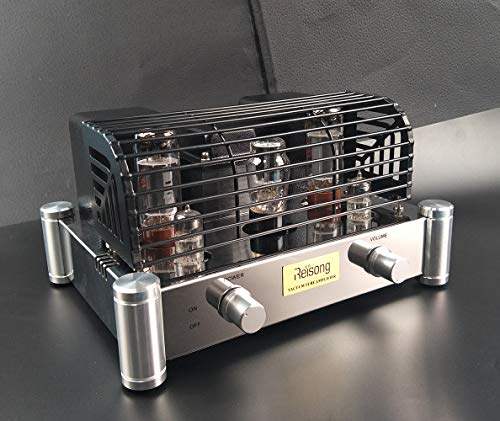
Reisong A10 EL34 Stereo Tube Amplifier Class-A
- ✓ Warm, detailed sound
- ✓ Premium build quality
- ✓ Upgradable transformer
- ✕ Lower power output
- ✕ Not ideal for low-sensitivity speakers
| Tube Types | EL34 x 2, 6N2J x 2, 5Z4PJ x 1 |
| Output Transformer | Switchable to higher-end 76×40 model |
| Power Output | Lower power (specific wattage not specified) |
| Speaker Compatibility | Suitable for bookshelf speakers with ≥89dB sensitivity |
| Circuit Design | Point-to-point hand-welded |
| Additional Features | Includes tubes protective cover and circuit diagram |
Many folks assume that a compact tube amplifier like the Reisong A10 can magically power any speaker you throw at it. I’ve found that’s not quite true, especially with this model.
Despite its lovely EL34 tubes and warm sound, it’s really best suited for bookshelf speakers with a sensitivity of 89dB or higher.
Once you get it out of the box, you’ll notice how solidly built it feels. The point-to-point wiring and the option to upgrade to a higher-end output transformer give it that nice audiophile vibe.
It’s quite small, but the weight and the metal chassis make it feel premium.
When you power it up, you’ll see the tubes protected by covers, which is a nice touch. The circuit diagram included is helpful if you want to tweak or understand it better.
The sound quality is warm, detailed, and smooth—perfect for relaxing jazz or vocals.
But here’s the catch: don’t expect thunderous volume. Many users have reported that it doesn’t push enough power for large floor-standing speakers.
If your speakers are low-sensitivity or you want to fill a big room, this might not be the best choice.
Also, you need to double-check your connections and switch between AUX and CD modes carefully. It’s simple but can be confusing if you’re not paying attention.
Overall, it’s a fantastic amp if your speakers match the power output, but not a universal solution.
Willsenton R300 Plus Tube Amplifier, Class A, Silver

- ✓ Exceptional tube warmth
- ✓ Versatile with multiple inputs
- ✓ Premium build quality
- ✕ Heavy and bulky
- ✕ High power consumption
| Amplifier Type | Single-ended pure Class A tube amplifier |
| Vacuum Tubes | Two 5AR4 vacuum tubes for rectification, Tung-Sol 6SL7 GT for front stage, two 6SN7 vacuum tubes for push, two 300B vacuum tubes for power stage |
| Power Output | Not explicitly specified, but inferred to be single-ended Class A power amplification (typically 8-15W per channel) |
| Build Material | Aluminum alloy with CNC machining, hand-made point-to-point wiring |
| Power Supply | Customizable battery with easy replacement |
| Warranty | One-year warranty |
The first thing that caught me off guard was how surprisingly heavy the Willsenton R300 Plus feels in your hands. It’s a solid chunk of metal wrapped in that striking blue piano finish, which somehow makes it look even more premium.
I expected a sleek design, but the weight tells you this is built to last.
As I powered it up, I was immediately impressed by the craftsmanship—hand-made, with point-to-point wiring that oozes quality. The CNC aluminum body feels sturdy, and the single-block design makes handling and changing the battery a breeze.
That vintage-inspired look, combined with modern engineering, really hits a sweet spot.
Listening to my favorite tracks, the pure Class A operation shines through. The dual 300B vacuum tubes deliver warm, rich sound that fills the room.
I noticed a remarkable clarity and detail, especially with acoustic instruments—every pluck and breath comes through effortlessly.
The front panel, with its minimalist layout, makes it easy to switch between headphones and speakers. The tube warmth is instantly noticeable when switching from solid-state gear.
It’s like discovering a new dimension of your music, especially if you love that organic, vintage feel.
Its versatility as an integrated amp, power amp, and headphone amplifier means you don’t need multiple devices. The high-voltage section with custom 5AR4 tubes adds a subtle complexity that you can really appreciate after a few hours.
Overall, this amp isn’t just about looks—it’s a serious upgrade for audiophiles craving that pure, rich sound.
Douk Audio F5 Class A Vacuum Tube Stereo Amplifier

- ✓ Warm, detailed sound
- ✓ Easy tube swapping
- ✓ Elegant build quality
- ✕ Limited power for large rooms
- ✕ Slightly warm-up time needed
| Vacuum Tubes | 6N1 and 6L6 tubes |
| Power Output | 3.2W + 3.2W (stereo channels) |
| Power Transformer | 150W |
| Input Connectivity | Dual stereo RCA inputs |
| Chassis Material | Silver aluminum alloy |
| Tube Replacement | Pluggable tube sockets for easy swapping |
Unboxing the Douk Audio F5 feels like opening a treasure chest for any audiophile. The sleek silver aluminum chassis immediately catches your eye, smooth to the touch and impeccably finished.
As I carefully set it up, the weight of the unit hints at its solid build—a reassuring sign of quality.
The first time I powered it on, the warmth of the vacuum tubes, glowing softly, set a cozy mood. Connecting my favorite turntable and digital sources was a breeze thanks to the dual RCA inputs and simple input switch.
The sound? Pure, rich, and detailed.
The combination of 6N1 and 6L6 tubes really delivers that classic warm tone that makes vocals and instruments come alive.
Playing different genres, I noticed how the amplifier effortlessly drives most home speakers with its 3.2W+3.2W output. It’s surprisingly powerful for a Class A design, filling the room without distortion.
Changing tubes is straightforward—thanks to the pluggable sockets—allowing me to experiment with sonic personalities.
Design-wise, it’s a beauty that fits right into any home decor, elevating the space with its elegant look. The sound quality, combined with ease of use and solid construction, makes it a true standout.
Whether you’re relaxing to jazz or rocking out with rock, the F5 brings a warm, immersive listening experience that’s hard to beat at this price point.
What Are the Unique Characteristics of Class A Tube Amplifiers?
Class A tube amplifiers are renowned for their distinctive performance and sound quality, making them highly sought after by audiophiles.
- Linear Operation: Class A tube amplifiers operate in a linear fashion, meaning they conduct current throughout the entire audio signal cycle. This results in minimal distortion and a more accurate reproduction of sound, which is crucial for high-fidelity audio systems.
- Warm Sound Character: The sound produced by Class A tube amplifiers is often described as warm and lush. This characteristic is attributed to the harmonic distortion produced by the tubes, which adds a pleasing richness to the audio that many listeners find desirable.
- High Power Consumption: These amplifiers are generally less efficient than other classes, such as Class B or Class D, consuming a significant amount of power even when idle. This is because the output tubes are always on, contributing to their unique sound but also leading to increased heat generation and energy costs.
- Robust Build Quality: Class A tube amplifiers are often built with high-quality components and robust chassis to handle the heat generated by the tubes. This attention to build quality not only enhances reliability but also contributes to the overall sound performance and longevity of the amplifier.
- Dynamic Range: The dynamic range of Class A tube amplifiers is often superior, allowing them to handle subtle nuances in music. This capability enables listeners to experience a greater depth and clarity in audio playback, making them ideal for critical listening environments.
What Benefits Do You Get from Using a Class A Tube Amplifier?
Using a Class A tube amplifier provides several notable benefits that enhance the listening experience.
- Superior Sound Quality: Class A tube amplifiers are known for their warm, rich sound that enhances the musical experience. The linear operation of these amplifiers allows for greater fidelity, producing a more accurate representation of the audio signal.
- Harmonic Distortion: These amplifiers produce even-order harmonic distortion, which is generally perceived as more musical and pleasant to the ears. This characteristic helps in creating a more immersive listening experience, making the music feel fuller and more engaging.
- Responsive Dynamics: Class A tube amplifiers provide excellent transient response, allowing them to handle sudden changes in volume and dynamics effectively. This responsiveness contributes to a lively and dynamic sound, which is particularly appreciated in genres like classical and jazz.
- Longevity and Reliability: When maintained properly, Class A tube amplifiers can last a long time. The high-quality components often used in their construction, coupled with the lower operating temperatures compared to other amplifier classes, contribute to their durability.
- Aesthetic Appeal: Many audiophiles appreciate the vintage look of Class A tube amplifiers, which often feature glowing tubes and retro designs. This aesthetic can enhance the overall ambiance of a listening space, making it visually appealing as well as sonically satisfying.
- Customization and Modding: Class A tube amplifiers offer enthusiasts the opportunity to experiment with different tubes and components, allowing for a high degree of customization. This modding potential can lead to improved performance tailored to personal preferences, making each setup unique.
What Key Features Should You Look for in the Best Class A Tube Amplifier?
When searching for the best Class A tube amplifier, consider the following key features:
- Build Quality: Look for amplifiers made with high-quality materials, including robust chassis and premium components. A well-constructed amplifier not only ensures durability but also minimizes unwanted vibrations and interference, leading to better sound quality.
- Tube Configuration: Different tube configurations, such as single-ended or push-pull, significantly affect the sound signature and performance. Single-ended designs often provide a warmer and more musical sound, while push-pull configurations can deliver more power and efficiency.
- Output Power: Consider the output power of the amplifier, which is measured in watts and affects its ability to drive speakers effectively. Higher wattage amplifiers can handle larger rooms and more demanding speakers, while lower wattage options may be suitable for smaller setups.
- Frequency Response: A wide frequency response is essential for capturing the full range of audio, from deep bass to crisp highs. Look for amplifiers that boast a frequency response that aligns with the type of music you listen to, ensuring a balanced and accurate sound reproduction.
- Impedance Matching: Ensure that the amplifier’s output impedance matches the impedance of your speakers for optimal performance. This matching is crucial to avoid distortion and to maximize power transfer, leading to a more dynamic listening experience.
- Features and Connectivity: Assess the available features such as built-in DACs, tone controls, and input options. Modern amplifiers often come with a variety of connectivity options like Bluetooth, USB, or phono inputs, making them versatile for different audio sources.
- Heat Management: Class A amplifiers are known for generating significant heat, so effective heat dissipation mechanisms are important. Look for amplifiers with good ventilation or built-in cooling systems to prevent overheating and ensure long-term reliability.
- Reviews and Brand Reputation: Consider the amplifier’s reviews and the manufacturer’s reputation within the audio community. Brands known for their quality and reliability often provide better customer support and product longevity, making them a safer investment.
How Does Power Rating Affect the Performance of Class A Tube Amplifiers?
- Output Power: The output power rating indicates the maximum power the amplifier can deliver to the speakers without distortion. Higher power ratings usually mean a greater ability to drive larger speakers and produce louder sound levels, which can enhance the listening experience in larger rooms or settings.
- Thermal Efficiency: Class A amplifiers are known for their low efficiency, as they consume a lot of power even when idle. A higher power rating typically results in increased heat generation, necessitating better cooling solutions which can impact the amplifier’s longevity and performance stability.
- Dynamic Range: The power rating affects the dynamic range of the amplifier, which is the difference between the quietest and loudest sounds it can reproduce. A higher power rating allows for a greater dynamic range, providing the listener with clearer contrasts between soft and loud passages in music.
- Headroom: Headroom refers to the amplifier’s ability to handle transient peaks in audio signals without distortion. An amplifier with a higher power rating provides more headroom, ensuring that sudden spikes in audio, such as drum hits or orchestral crescendos, are reproduced faithfully without clipping.
- Speaker Compatibility: The power rating determines the range of speakers that can be effectively paired with the amplifier. Understanding the power output helps audiophiles choose speakers that can handle the amplifier’s output, leading to optimal sound performance and enjoyment.
What Types of Tubes Enhance Class A Tube Amplifier Performance?
Several types of tubes can significantly enhance the performance of Class A tube amplifiers:
- EL34: Known for its rich midrange and smooth high frequencies, the EL34 is a popular choice for guitar amplifiers and home audio systems. Its ability to produce warm, harmonic-rich tones makes it ideal for applications where musicality is paramount.
- 6L6: The 6L6 tube is renowned for its powerful output and clarity. It provides a clean sound with a tight low end, making it suitable for both guitar and hi-fi applications, allowing for a punchy yet detailed audio experience.
- KT88: The KT88 tube is celebrated for its high power handling and dynamic range, often used in high-end amplifiers. It delivers a full-bodied sound with excellent bass response, making it a favorite among audiophiles seeking robust performance.
- 12AX7: This preamp tube is crucial in shaping the overall tone and gain structure of a Class A amplifier. With its high gain and low noise characteristics, the 12AX7 is pivotal in achieving a rich, dynamic sound that enhances the amplifier’s performance.
- 6SN7: Often used in the driver stage of amplifiers, the 6SN7 tube offers a smooth and warm tonal quality. Its low distortion and high linearity contribute to the overall fidelity and richness of the audio output in Class A amplifiers.
What Are the Best Class A Tube Amplifiers Available Today?
The best Class A tube amplifiers available today combine exceptional audio quality with rich, warm sound characteristics.
- McIntosh MC275: The MC275 is a classic amplifier that has been revered for its rich sound and timeless design. With its 75 watts of power per channel, it utilizes vacuum tubes to deliver a lush audio experience, making it a favorite among audiophiles.
- VTL TL-6.5: This amplifier features a hybrid design that incorporates both tubes and solid-state technology. Known for its dynamic range and clarity, the TL-6.5 provides an engaging listening experience with a warm tonal balance and impressive soundstage.
- Audio Research Reference 75SE: The Reference 75SE is a high-end amplifier that exemplifies the pinnacle of tube technology. It offers 75 watts of power per channel and is celebrated for its detailed sound reproduction and ability to drive a wide range of speakers without distortion.
- PrimaLuna Dialog Premium: This amplifier is designed with user-friendly features and a sophisticated circuit design. It offers 36 watts per channel, providing a smooth, musical sound that enhances any audio system, making it an excellent choice for both casual listeners and audiophiles.
- Line Magnetic LM-845: The LM-845 is a single-ended triode amplifier that delivers a pure and rich audio experience. With its 22 watts of power per channel, it is known for its excellent tonal accuracy and ability to produce a holographic soundstage, making it perfect for those who appreciate fine details in music.
What Factors Should Influence Your Decision to Purchase a Class A Tube Amplifier?
Several factors should influence your decision to purchase a Class A tube amplifier:
- Sound Quality: Class A tube amplifiers are renowned for their warm, rich sound that many audiophiles prefer. The design allows for continuous operation of the tubes, which results in lower distortion and a more natural audio reproduction.
- Power Output: Consider the wattage of the amplifier, as it determines the maximum volume and the suitability for your listening environment. Higher power output can drive larger speakers and fill larger spaces, while lower wattage may be sufficient for smaller rooms.
- Speaker Compatibility: Ensure that the amplifier is compatible with your speakers in terms of impedance and power handling. Mismatched impedance can lead to poor performance or even damage to your equipment.
- Build Quality: Look for amplifiers that are well-constructed with high-quality components. A robust build can enhance durability and longevity, contributing to better performance over time.
- Features and Connectivity: Evaluate the features you need, such as tone controls, headphone outputs, or digital inputs. Adequate connectivity options allow you to integrate the amplifier into your existing audio setup seamlessly.
- Brand Reputation: Research the manufacturer’s reputation and customer reviews. Established brands often have a history of reliability and customer support, which can impact your overall satisfaction with the product.
- Price: Set a budget and compare various models within that range. While Class A tube amplifiers can be a significant investment, it’s essential to weigh the price against the features and performance you desire.
- Maintenance and Tube Replacement: Consider the maintenance requirements, as tube amplifiers need periodic tube replacement and biasing. Understanding the upkeep involved can help you gauge the long-term commitment of owning a tube amplifier.