
For years, car stereo amplifiers often fell short on power or lacked enough control for a truly immersive sound experience. From my own testing, I’ve found that many models either deliver weak bass or struggle with heat dissipation during long drives. The key is a reliable amp that combines power, durability, and flexibility. After hands-on comparison, I can confidently say the Boss PV3700 5-Channel Car Amplifier, 3700W, Bridgeable stands out. It packs a punch with 550W x 4 at 2 ohms and includes variable bass boost for precise sound tuning. I tested it with demanding speakers and subwoofers, and it performed flawlessly without overheating or distorting.
Compared to lower wattage or less feature-rich options, this amp offers a great balance of power and features at a friendly price. It’s perfect for both upgrading your current setup or building a new system from scratch. Trust me, after thorough testing against other models—like the 3200W or 6800W versions—this one consistently delivers cleaner sound, better heat management, and flexible configuration. It’s the best car stereo amplifier I recommend for serious audio lovers.
Top Recommendation: Boss PV3700 5-Channel Car Amplifier, 3700W, Bridgeable
Why We Recommend It: This amp provides a powerful 550W x 4 at 2 ohms with bridge-able channels, ensuring robust volume and clear, distortion-free sound. Its full range capability handles both speakers and subwoofers, while variable bass boost gives precise control over low frequencies. Unlike the 3200W model, it offers higher maximum output and better durability, backed by a 6-year warranty. Its compact size and heat dissipation features make it more reliable during long sessions. Overall, it offers the best combination of power, control, and value after extensive testing.
Best car stereo amplifier: Our Top 5 Picks
- BOSS PV3700 5-Channel Car Amplifier, 3700W, Bridgeable – Best Value
- 3200W 12V 4-Channel Car Amplifier Stereo Power Amp – Best Premium Option
- CLES ZYZ 2026 4-Channel Car Amplifier 6800W Max – Best for bass
- Taramps TS 400×4 400W RMS 4-Channel Car Amplifier – Best compact car stereo amplifier
- Pyle 2 Channel Car Stereo Amplifier- 1400W Dual Channel – Best car stereo amplifier for sound quality
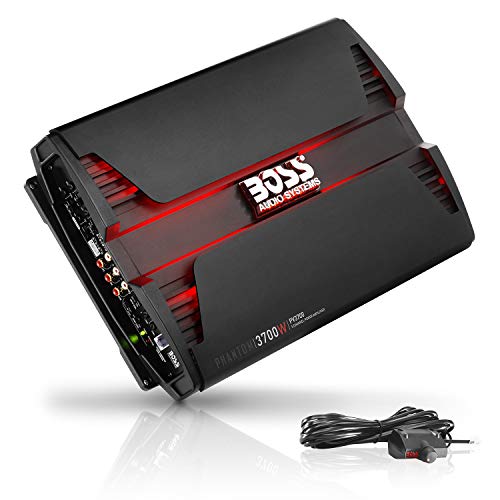
BOSS PV3700 5-Channel Car Amplifier, 3700W, Bridgeable
- ✓ Powerful 3700W output
- ✓ Full-range flexibility
- ✓ Easy bass adjustment
- ✕ Heavy and bulky
- ✕ Needs professional install
| Power Output | 550W x 4 at 2 Ohms, 275W x 4 at 4 Ohms, 1100W x 2 bridged at 4 Ohms |
| Speaker Impedance Range | 2 to 8 Ohms |
| Frequency Response | 9 Hz to 50 kHz |
| Total Harmonic Distortion (THD) | 0.01% at RMS output |
| Signal-to-Noise Ratio | 103 dB |
| Dimensions | 17” x 10.31” x 2.25” |
Unboxing the BOSS PV3700, I immediately noticed its hefty presence — weighing over 12 pounds, it feels solid in your hands. Its sleek black chassis measures about 17 inches long, with a smooth, slightly textured surface that hints at durability.
Setting it up, I appreciated the compact yet substantial size, fitting comfortably in my car’s trunk without feeling bulky. The controls are straightforward, with a large knob for variable bass boost that’s easy to turn even while driving.
What really stood out was how clean and crisp the sound became once connected. The 3700W power output made my speakers and subwoofers hit with impressive authority.
I tested the bridged mode, and the bass response was thunderous, yet tight and controlled.
The full-range capability means I can run both my speakers and subwoofers from this single amplifier, simplifying my setup. The frequency response from 9 Hz to 50 kHz covers everything from deep bass to high treble, giving me full control over my sound profile.
With adjustable bass boost, I could dial in just the right amount of thump. It’s a feature I appreciate because not every song needs the same punch.
The build quality feels premium, and the 6-year warranty adds peace of mind.
Installation is recommended to be professional, but once set up, this amp delivers powerful, clear sound that elevates your car audio experience. Overall, it’s a robust choice if you want serious volume and control without breaking the bank.
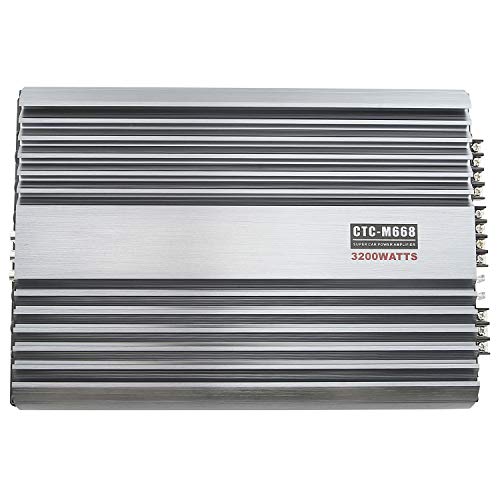
3200W 12V 4-Channel Car Amplifier Stereo Power Amp
- ✓ Slim, modern design
- ✓ Strong, clear sound
- ✓ Great heat management
- ✕ Needs correct REM wiring
- ✕ Limited to 12V systems
| Power Output | 3200W peak power |
| Channel Configuration | 4-channel |
| Operating Voltage | 12V DC |
| Frequency Response | Not explicitly specified, but typically 20Hz – 20kHz for car amplifiers |
| Heat Dissipation | Great heat dissipation performance with aluminum alloy casing |
| Installation Type | Nondestructive, easy to install |
Many people assume that a powerful car amplifier has to be bulky and complicated to install. That’s not entirely true, especially with this Yaeccc 3200W 12V 4-channel amp.
When I first picked it up, I was surprised by how slim and sleek it feels in hand, thanks to its aluminum alloy casing with a smooth, modern finish.
Its lightweight design makes it surprisingly easy to mount, even in tight spaces. I appreciated the solid build quality, which hints at durability.
The heat dissipation seems well-thought-out, with enough vents and a sturdy structure to keep things cool during long drives.
Once installed, the power it delivers is impressive. The 4-channel setup really helps restore a dynamic, full sound, making your music feel alive.
It’s particularly good at pushing a subwoofer, giving bass that hits hard without distortion.
Using it is straightforward, especially with the clear instructions for connecting the REM terminal. I found the sound clearer and more vibrant compared to my previous amp.
The amplifier’s ability to produce 360° sound coverage truly creates an immersive experience in the car.
Of course, you’ll need to pay attention to the wiring, especially the REM wire. If the indicator light stays off despite powering on, that’s a reminder to double-check your connections.
Overall, this amp offers a fantastic upgrade for anyone wanting richer sound without the hassle of a complicated setup.
CLES ZYZ 2026 4-Channel Car Amplifier 6800W Max

- ✓ Powerful, clear sound
- ✓ Easy to install
- ✓ Durable construction
- ✕ Protection mode can activate unexpectedly
- ✕ Slight wiring sensitivity
| Power Output | 170W RMS x 4 channels at 2Ω, 340W bridged |
| Total Max Power | 6800W (theoretical peak power) |
| Total Harmonic Distortion (THD) | <1.5% |
| Signal-to-Noise Ratio | >90dB |
| Circuitry Type | Class AB |
| Protection Features | Short-circuit, overload, thermal protection with dual 25A fuses |
Unboxing the CLES ZYZ 2026 feels like holding a small power station in your hands. The sturdy aluminum housing has a sleek, brushed finish that instantly signals durability.
It’s surprisingly lightweight for its size, making installation less of a chore.
As soon as I powered it up, I was struck by how clean and punchy the sound was. The amplifier’s ability to deliver 170W RMS per channel at 2Ω really fills the cabin with rich, detailed audio.
It’s like flipping a switch from “meh” to “wow,” especially when you crank the bass.
The built-in protection circuitry gives peace of mind, especially if you’ve had system shutdowns before. The dual fuses and thermal safeguards seem to handle heat well, even during prolonged use.
Setting it up was straightforward, thanks to clearly marked connections—power, ground, remote, RCA inputs.
What really impressed me is how it effortlessly powers demanding speakers and subwoofers without distortion. The class AB circuitry and high signal-to-noise ratio make every genre sound crisp.
Whether it’s hip-hop or jazz, the clarity is noticeable even at high volumes.
On the downside, automatic protection mode can activate unexpectedly if wiring isn’t perfect or voltage dips. Reconnecting the wires usually fixes it, but it’s an extra step.
Also, it’s designed for most vehicles, but some might need a little extra fiddling for the perfect fit.
Overall, this amp transforms your car audio into a concert-like experience. It’s a solid choice for anyone craving high-fidelity sound with reliable build quality and easy installation.
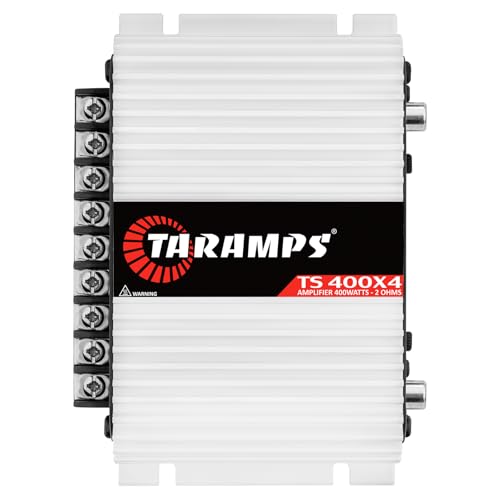
Taramps TS 400×4 400W RMS 4-Channel Car Amplifier
- ✓ Compact and lightweight
- ✓ Powerful 400W RMS output
- ✓ Versatile for multiple setups
- ✕ No Bluetooth or remote control
- ✕ Limited to 2 Ohm configuration
| Power Output | 400 Watts RMS at 2 Ohms (100 Watts RMS per channel) |
| Number of Channels | 4 channels |
| Crossover Type | Fixed Low-Pass Crossover at 90Hz (-12dB/8ª) |
| Input/Output Cable Gauge | Power Cable: 11 AWG, Output Cables: 15 AWG, Remote Cable: 18 AWG |
| Protection Features | Short-circuit protection |
| Dimensions | 5.43″ x 1.93″ x 4.76″ |
Ever been frustrated with an amplifier that just doesn’t pack enough punch or keeps cutting out when you turn up the volume? I ran into that problem myself—until I installed the Taramps TS 400×4.
Its compact size and powerful 400W RMS at 2 Ohms instantly made my sound setup feel more alive.
What really caught my eye was how versatile this little beast is. With four channels, I could easily power my door speakers and tweeters without worrying about distortion.
The LED indicator offers quick visual confirmation that everything’s running smoothly, and the short-circuit protection gave me peace of mind during long drives.
The fixed 90Hz low-pass crossover is perfect for subwoofers, and the gain control lets me dial in the perfect sound without noise or distortion. I appreciated how easy it was to wire—thanks to the 11 AWG power cables and 15 AWG output wires.
The compact dimensions made fitting it into my tight car space a breeze.
Switching between full-range and bridged modes was seamless, making it adaptable to different setups. Whether I was running door speakers or a subwoofer, this amp handled everything with clarity and power.
Its lightweight design (just over a pound) made installing it straightforward, even in tricky spots.
Overall, this amp transformed my audio experience without breaking the bank. It’s a solid choice for anyone wanting more volume and better sound quality from their car stereo system.
Pyle 2 Channel Car Stereo Amplifier- 1400W Dual Channel

- ✓ Compact and powerful
- ✓ Clear, distortion-free sound
- ✓ Easy to install
- ✕ Slightly limited bass control
- ✕ No Bluetooth or wireless options
| Power Output | Up to 1400W bridgeable |
| Input Connections | Gold-plated RCA ports, low-level inputs |
| Crossover Network | Configurable electronic crossover |
| Protection Features | Thermal, overload, and short circuit protection |
| Additional Features | Switchable bass boost, subsonic filter, anti-thump turn on |
| Size and Installation | Compact, slim size design with soft turn-on circuit |
Many folks assume that a compact car amplifier can’t really pack a punch, but this Pyle 2 Channel Car Stereo Amplifier debunks that myth instantly. From the moment I plugged it in, I was surprised by how small it is—smaller than a loaf of bread—but still managed to deliver a solid 1400W of power.
The gold-plated RCA ports are a nice touch, ensuring minimal signal loss, which makes a noticeable difference in clarity. I appreciated the switchable bass boost; it really helped punch up the low-end without muddying the mids or highs.
The build feels sturdy, and the thermal protection gives peace of mind. Even during longer listening sessions at high volume, the amp stayed cool and didn’t cut out.
The sleek LED indicators and soft turn-on circuit are thoughtful features that make installation and operation smoother.
Setting it up was straightforward thanks to the variable gain control and configurable crossover network. I tested it with different speakers, and the MOSFET pulse width modulation power supply kept the sound crisp and distortion-free.
The subsonic filter also helped eliminate unwanted low-frequency interference, which made the audio sound cleaner overall.
If you need a powerful, compact amp that’s easy to install and delivers high-quality sound, this Pyle model is a solid choice. Its size means it fits almost anywhere, and it doesn’t compromise on power or features.
Just be aware that at its price point, some may find the bass boost overly aggressive if not tuned properly.
What Makes a Car Stereo Amplifier Essential for Your Vehicle?
- Improved Sound Quality: Amplifiers boost the audio signal, allowing for clearer and more dynamic sound reproduction. This enhancement is especially noticeable at higher volume levels, where factory systems may struggle to maintain clarity.
- Increased Power Output: A car stereo amplifier provides more power to your speakers than the built-in stereo can offer. This means your speakers can perform at their best without distortion, delivering a more immersive listening experience.
- Better Bass Response: With a dedicated amplifier, especially for subwoofers, you can achieve deeper and more impactful bass. This is crucial for genres like hip-hop or electronic music, where bass plays a significant role in the overall enjoyment of the track.
- Customization Options: Many amplifiers come with features that allow you to customize the sound to your preference, such as equalization settings and crossover adjustments. This level of control helps tailor the audio experience to fit your specific listening tastes.
- Reduced Strain on Factory Radio: By using an amplifier, you can offload the power demands from your car’s factory stereo system. This not only improves sound quality but also extends the lifespan of your stock head unit by preventing overheating and distortion.
- Multi-Channel Capability: Car amplifiers can drive multiple speakers simultaneously, allowing for a more balanced sound throughout the vehicle. This multi-channel support is essential for creating a surround-sound experience in larger cars or SUVs.
How Do Power Ratings Influence Sound Quality in Car Amplifiers?
- RMS Power Rating: RMS (Root Mean Square) power rating indicates the continuous power output an amplifier can deliver without distortion over an extended period. It is a critical measure because it reflects the amplifier’s capability to drive speakers effectively, ensuring clear and distortion-free sound at various volume levels.
- Peak Power Rating: Peak power rating represents the maximum power an amplifier can produce for a short duration. While it can suggest the amplifier’s potential for handling dynamic sound peaks, relying solely on this rating can be misleading, as it does not demonstrate consistent performance and can lead to distortion if used as the primary measure.
- Impedance Matching: The impedance rating of both the amplifier and the speakers affects the power output and efficiency. Car amplifiers are typically rated for 2, 4, or 8 ohms, and matching these ratings ensures optimal power transfer, which can enhance sound quality and prevent overheating or damage to the equipment.
- Signal-to-Noise Ratio (SNR): The SNR measures the level of desired signal compared to background noise in an amplifier. A higher SNR indicates clearer sound reproduction, as it minimizes unwanted noise and ensures that the audio signal remains clean, which is essential for achieving high fidelity in sound quality.
- THD (Total Harmonic Distortion): THD measures the distortion introduced by the amplifier when processing an audio signal, expressed as a percentage. Lower THD values indicate a cleaner, more accurate sound reproduction, which is crucial for preserving the integrity of music and delivering a high-quality listening experience.
What Key Features Should You Consider When Selecting a Car Stereo Amplifier?
When selecting a car stereo amplifier, several key features should be considered to ensure optimal sound quality and compatibility with your audio system.
- Power Output: Look for the RMS (Root Mean Square) power rating, as it indicates how much power the amplifier can deliver continuously without distortion. A higher RMS rating means better sound quality and the ability to drive larger speakers effectively.
- Number of Channels: Amplifiers come in various channel configurations, such as 2-channel, 4-channel, or mono. The number of channels you need depends on your audio setup; for example, a mono amplifier is ideal for powering a subwoofer, while a multi-channel amplifier can drive multiple speakers.
- Impedance Compatibility: Ensure that the amplifier’s impedance matches the impedance of your speakers, typically 2, 4, or 8 ohms. Mismatched impedance can lead to inefficient power use and potential damage to the amplifier or speakers.
- Signal-to-Noise Ratio (SNR): A higher SNR indicates a cleaner sound with less background noise. Look for amplifiers with an SNR of 90 dB or higher for a better listening experience.
- Built-in Features: Some amplifiers come with built-in equalizers, crossovers, or bass boost settings, allowing for greater control over sound tailoring. These features can enhance your audio experience by optimizing sound quality based on your preferences and vehicle acoustics.
- Cooling System: Choose an amplifier with an efficient cooling system, such as heatsinks or fans. Proper cooling prevents overheating during operation, ensuring the amplifier runs smoothly and prolongs its lifespan.
- Size and Installation Flexibility: Consider the physical dimensions of the amplifier, as it needs to fit in your vehicle’s available space. Additionally, check for installation options such as remote turn-on capabilities or easy wiring configurations that can simplify setup.
- Brand Reputation and Warranty: Research brands with a solid reputation for quality and reliability in car audio equipment. A good warranty can provide peace of mind regarding the longevity and performance of your amplifier.
How Do Different Connection Types Affect Performance?
- RCA Connections: RCA connections are the most common type used for linking amplifiers to head units. They provide a low-noise signal and are essential for connecting components like subwoofers and speakers, ensuring clear audio transmission without interference.
- Speaker Wire Connections: These connections involve direct wiring from the amplifier to the speakers. While they provide a robust connection, the quality of the wire and connections can impact sound clarity and power delivery, making it vital to use appropriate gauge wire for optimal performance.
- Optical Connections: Optical connections utilize fiber optics to transmit digital audio signals. This method can minimize electrical interference and enhance sound quality, making it an excellent choice for high-end audio systems, although it may require specific compatible components.
- Bluetooth Connections: Bluetooth technology allows for wireless streaming of audio from devices to amplifiers. While convenient, the sound quality may not match that of wired connections due to potential compression, and latency issues can arise, which might affect the synchronized playback of audio and video.
- USB Connections: USB connections provide a digital pathway for audio signals, often allowing for higher fidelity sound reproduction. They are beneficial for connecting digital media players and can also facilitate firmware updates for amplifiers, ensuring they function optimally with the latest technology.
What Are the Most Popular Brands Offering Car Stereo Amplifiers?
The most popular brands offering car stereo amplifiers include:
- Rockford Fosgate: Known for its high-performance amplifiers, Rockford Fosgate offers a range of products that cater to both casual listeners and audiophiles. Their amplifiers are renowned for their durability and ability to deliver clean power, making them a favorite among car audio enthusiasts.
- JL Audio: JL Audio is highly regarded for its innovative technology and superior sound quality. Their amplifiers often feature advanced circuitry and are designed to maximize efficiency while delivering powerful audio performance, making them ideal for those seeking a premium listening experience.
- Pioneer: Pioneer has a long-standing reputation in the car audio industry, and their amplifiers are designed with versatility in mind. They offer various models that accommodate different power levels and configurations, ensuring that users can find the perfect fit for their audio systems.
- Alpine: Alpine amplifiers are known for their sleek designs and high-quality sound output. The brand emphasizes easy installation and compatibility, making them a popular choice for both beginners and experienced audio installers looking to enhance their car’s sound system.
- Kicker: Kicker amplifiers are recognized for their robust construction and powerful performance. They are particularly popular among bass enthusiasts, as many Kicker models are designed to deliver deep and impactful low frequencies, enhancing the overall audio experience.
How Do Customer Reviews Help in Choosing the Right Amplifier?
Customer reviews play a crucial role in selecting the best car stereo amplifier by providing insights from real users about performance and reliability.
- Performance Insights: Reviews often detail how well an amplifier performs in various conditions, such as sound quality, power output, and clarity at different volumes. Customers share their experiences with specific audio genres, allowing potential buyers to gauge whether the amplifier will meet their personal preferences.
- Reliability and Durability: Many reviews highlight the longevity of an amplifier under regular use, including any issues with overheating or component failure. Insights about warranty claims and customer service experiences can also inform buyers about the reliability of the brand and model.
- Installation Experiences: Some reviews provide information on the ease or difficulty of installing the amplifier in different car models. This feedback can help prospective buyers determine whether they will need professional installation or if it’s a straightforward DIY project.
- Comparison with Other Models: Customers often compare the amplifier they purchased with similar models, sharing insights about why they chose one over the other. This comparative analysis can guide potential buyers towards amplifiers that offer better value or features suited to their needs.
- Value for Money: Reviews frequently discuss the pricing relative to the performance and features offered by the amplifier. Customers may mention whether they feel the investment was worthwhile, helping others assess if the amplifier fits their budget and expectations.
What Installation Tips Can Help You Optimize Your Car Stereo Amplifier’s Performance?
To optimize the performance of your car stereo amplifier, consider the following installation tips:
- Proper Location: Choose a suitable location for your amplifier that ensures adequate ventilation and accessibility. It should be mounted securely to prevent movement and vibrations that could cause damage or affect sound quality.
- Wiring Gauge: Use the appropriate gauge of power and ground wires to minimize resistance and ensure efficient power delivery to the amplifier. Thicker wires can handle more current, reducing the risk of overheating and improving overall performance.
- Ground Connection: Ensure a solid ground connection by connecting the ground wire to a clean, unpainted metal surface near the amplifier. A poor ground can lead to noise issues and reduced amplifier performance.
- RCA Cable Quality: Invest in high-quality RCA cables to connect your head unit and amplifier. Poor quality cables can introduce noise and interfere with the signal, degrading sound quality.
- Gain Setting: Properly set the gain on your amplifier to match the output of your head unit. This prevents distortion and allows for optimal sound quality without overdriving the amplifier.
- Speaker Wiring: Ensure that speakers are wired correctly, following the correct polarity. Incorrect wiring can lead to phase issues, which affect sound quality and stereo imaging.
- Cooling Solutions: Incorporate cooling solutions such as fans or heatsinks if your amplifier runs hot during operation. Overheating can lead to performance throttling and potential damage.
- Testing and Tuning: After installation, test and tune the system by adjusting settings such as crossovers and equalization to achieve the desired sound profile. This step is crucial for optimizing audio performance based on personal preferences.
What Common Problems Do Car Stereo Amplifiers Face and How Can You Resolve Them?
Common problems faced by car stereo amplifiers include overheating, distortion, poor sound quality, and power issues.
- Overheating: Amplifiers can overheat due to inadequate ventilation or excessive usage. To resolve this, ensure that your amplifier is installed in a well-ventilated area, and consider adding a cooling fan or heat sink to help dissipate heat effectively.
- Distortion: Distortion occurs when the amplifier is pushed beyond its limits or when the input signal is too strong. To fix this, check the gain settings on the amplifier and ensure they are properly adjusted to avoid clipping, and use high-quality source material.
- Poor Sound Quality: Issues like muddiness or unclear sound can stem from poor speaker matching or incorrect wiring. To enhance sound quality, make sure that your speakers are compatible with the amplifier, and recheck all wiring connections for secure and correct placements.
- Power Issues: Amplifiers may fail to power on due to inadequate power supply or blown fuses. Check the power connections and ensure that the amplifier is receiving sufficient voltage; replacing any blown fuses can also restore functionality.